Contact Me By Email

Saturday, February 24, 2018

Google Assistant testing new look, preps widget editing, and more about ‘Google Temperature’ [Gallery] | 9to5Google


"Rolling out earlier this week, version 7.22 of the Google app contained strings that detailed how users will be able to customize the search widget. We’ve now been able to activate that new interface, as well as a slightly new look for the Google Assistant and shed more light on “Google Temperature.”


About APK Insight: In this ‘APK Insight’ post, we’ve decompiled the latest version of an application that Google uploaded to the Play Store. When we decompile these files (called APKs, in the case of Android apps), we’re able to see various lines of code within that hint at possible future features. Keep in mind that Google may or may not ever ship these features, and our interpretation of what they are may be imperfect. We’ll try to enable those that are closer to being finished, however, to show you how they’ll look in the case that they do ship. With that in mind, read on.


Redesigned Google Assistant panel

Since its launch, the Google Assistant’s UI has undergone several tweaks. Initially, responses from the Assistant were encapsulated in a block-ish bubble, before switching to the current outline of a rounded one.


In version 7.22, we’ve been able to activate an interface that lacks any bubbles. In fact, the text of Assistant’s replies are now much larger and appear underneath the logo. It’s unclear whether this is the final design as user replies are still gray bubbled, though that design has mostly persisted through several UI iterations..."


Google Assistant testing new look, preps widget editing, and more about ‘Google Temperature’ [Gallery] | 9to5Google
ASUS just released a Chromebook Flip C302 with a Core m7 and 16GB of RAM, but you shouldn't buy it


"ASUS has made some of the best all-around Chromebooks over the years. Just over a year ago, the company released the Chromebook Flip C302CA, a $499 model competing with the Samsung Chromebook Plus/Pro. It's still one of the best Chrome OS devices on the market, with its full-HD 13-inch display, 2-in-1 design, backlit keyboard, and dual Type-C ports. I've used one as my main laptop for about eight months now, and it served me well.


The C302 was initially only available with an Intel Core m3 CPU and 4GB of RAM, which is certainly speedy on Chrome OS, but wasn't quite enough for power users. ASUS released a Core m5 model a few months ago for $650, but if you desperately needed more horsepower, the company is now selling a C302 with the Intel Core m7 CPU and 16GB of RAM. The only problem? It costs $979.


While the Intel Core m7 6Y75 processor is certainly a step up from the m3 and m5, it can't quite justify the high asking price. The base model Pixelbook, which is currently $899 ($100 off) from the Google Store, has a much beefier Intel Core i5-7Y57. Not only is the i5 a newer chip design (7th gen vs 6th gen), but it has more powerful integrated graphics and a slightly higher boost clock. Even though that Pixelbook model only has 8GB of RAM, Chrome OS is much lighter on memory usage than Windows or macOS, and you get the Pixelbook's more premium design and 3:2 display."


ASUS just released a Chromebook Flip C302 with a Core m7 and 16GB of RAM, but you shouldn't buy it

Monday, February 12, 2018

Snapdragon 845 speed test: Galaxy S9 should be insanely fast - CNET

snapdragon-845-benchmarking-2


"There's little doubt the upcoming Samsung Galaxy S9 will be fast. And on a warm, sunny day at Qualcomm's headquarters in San Diego, California, we found out exactly how fast that might be.
The Galaxy S9 is expected to be one of the first phones in 2018 to use Qualcomm's Snapdragon 845 chipset. The chipset is the phone's brain. You can't run the operating system, connect to the internet or process photos without it. The Snapdragon 845 also comes with advanced features that will produce more colorful photos and videos, longer battery life and biometric security that guards your privacy with your fingerprint or face.
snapdragon-845-benchmarking-2Here's the Snapdragon 845 reference device, running a graphics test…"

Sunday, February 11, 2018

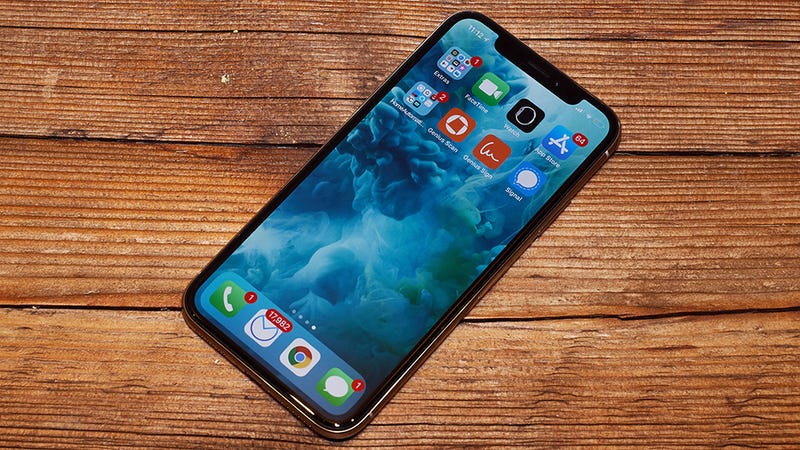
Why You Don't Need an iPhone X—Or Any Other Expensive New Phone


"In the not-too-distant past, buying a mid-range phone meant a woefully out-of-date operating system, sluggish performance straight out of the box, and cameras that could easily be outperformed by the webcam on the front of your laptop.


That situation has changed, and has been changing for a while. Today’s mid-rangers come with at least Full HD screens, performance that won’t make you want to throw them at the wall in frustration, and cameras that do a fine job unless you’re trying to shoot photos in the shadows or enter a photography competition.


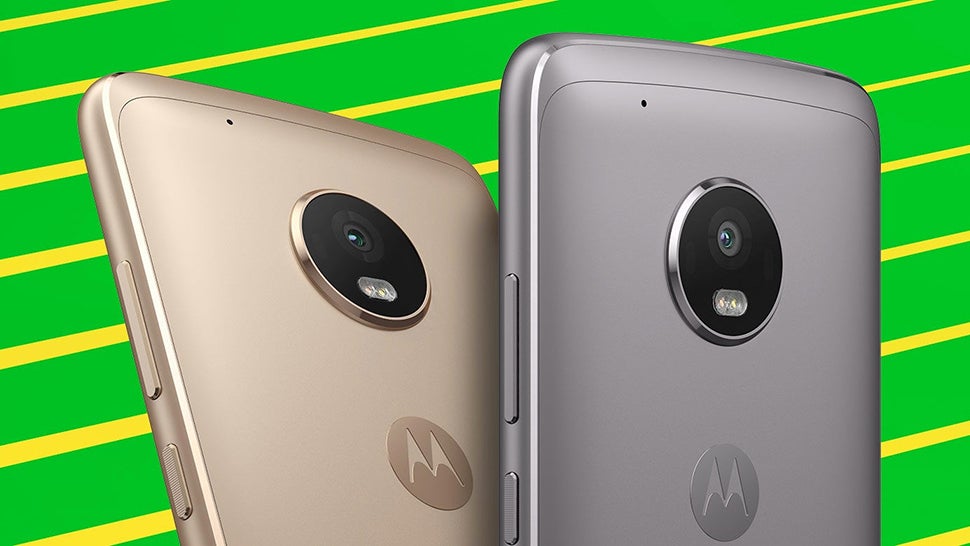
The Moto G5 Plus, for example, has a good claim to being the best budget phone of the year. For less than $300, you get a capable Snapdragon 625 processor, a 5.2-inch 1,920 x 1,800 pixel screen, and a generous 4GB of RAM—that’s the same amount of RAM as you’ll find in, say, the Samsung Galaxy S8.


We’re not trying to pretend there’s no noticeable difference in performance between the various phone tiers, because there is, but whether it’s actually worth the price markup is another question. When’s the last time you ventured outside the likes of WhatsApp and Twitter to do something that really pushed your phone’s hardware?...


Why You Don't Need an iPhone X—Or Any Other Expensive New Phone

Why Comparing Smartphone Specs is a Waste of Time


"...Even when manufacturers claim a chip is 30-percent faster than its predecessor, it’s going to depend on what you’re doing with it. The speed of the associated memory, the architecture of the processor chip, even the way your favorite apps are written can all have an impact on just how responsive your apps actually are. Unless you’re editing 4K video or playing the most demanding mobile games, those speed benefits might not be noticeable.


More RAM allows your phone to hold more stuff—whether apps or files or background renders—in memory at the same time, but again a phone with more RAM isn’t necessarily going to operate more smoothly than its rivals. The OnePlus 5T goes all the way up to a whopping 8GB of RAM, compared with 4GB on the Google Pixel 2 and 3GB on the iPhone X, but Apple can still achieve top-class performance thanks to the efficiency of its internal memory management.


Image: Alex Cranz/Gizmodo

There’s another factor to consider, which is that Android apps have to be designed to run on many different types of devices and configurations, whereas iOS apps largely know exactly what hardware they’re going to be dealing with. That makes for a more streamlined app execution process, and fewer demands in terms of free RAM.


Both processor speed and RAM are worth looking up on your next purchase, but just remember there’s a lot more to the story than these specs or any benchmarks you see quoted on the web. More so than your laptop or your desktop, your smartphone’s performance is reliant on all of its internal circuitry working in unison, which means isolating just one or two key specs isn’t all that useful for comparing them...


Why Comparing Smartphone Specs is a Waste of Time

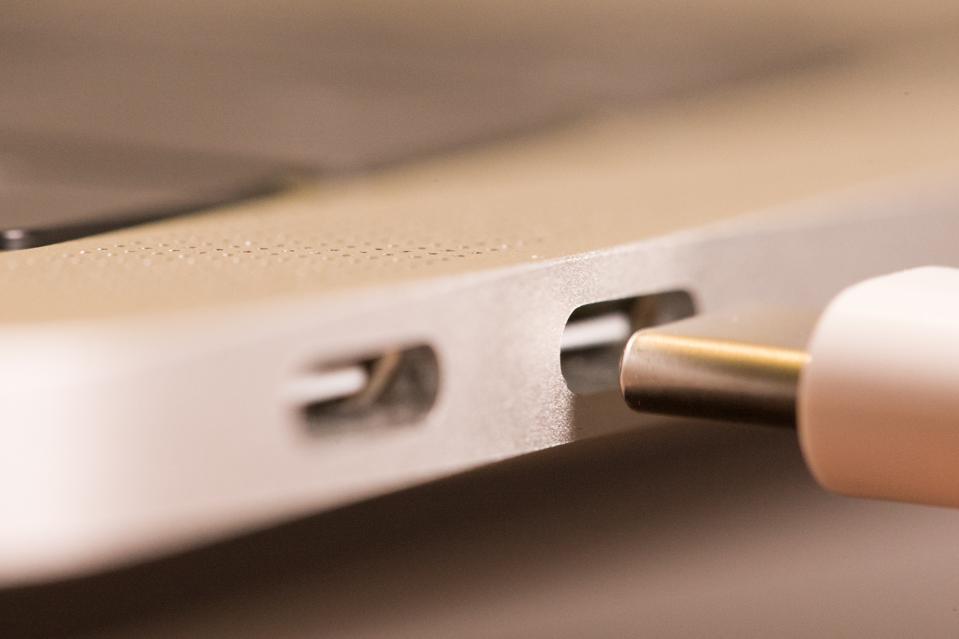
Three Things Wrong And Three Things Right With Apple's New MacBook Pro


"...Many of the changes also contributed to the biggest advantage of the new MacBook machines. By going for thin and light, by working with more efficient silicon, smaller components and thinner screens, even the most powerful MacBook Pro machines are thinner and lighter than ever before.


Major steps forward are easy to see, and when they are in hardware the numbers in the specifications do not lie. And getting more power, longer battery life or a lighter machine are all hard benefits to turn down. But the MacBook Pro has lost something in the last few years. It has lost the small touches, the human commitment to higher quality that lifted it above the competition and gave customers little surprises at every turn.


As the MacBook Pro becomes ‘the standard’ laptop of the world at the top of the digital mountain, the loss of these human elements is perhaps the hardest loss to take..."


Three Things Wrong And Three Things Right With Apple's New MacBook Pro