Disney to Offer Some ABC Programs Free on the Web - New York TimesApril 10, 2006
By JOHN HOLUSHA
In an effort to extend its broadcast economic model to the Internet, the Walt Disney Company said today that it would offer some of its most popular ABC programs free on its Web sites but with commercials that cannot be eliminated.
The shows include "Desperate Housewives," "Lost," "Commander in Chief" and "Alias." The first two would become available in May, with the others starting in June.
The shows will be available on the Web the morning after they are broadcast on ABC and will be archived so that viewers can eventually watch a whole season of shows. They will be available on the ABC and Disney Channel Web sites.
By making viewers watch commercials if they want to see the popular ABC shows, Disney is gambling that a formula that worked from the early days of broadcast entertainment can be transferred to people who get most of their information from computers, not TV sets.
ABC News reported Disney's plans on its Web site today, confirming a report published this morning in The Wall Street Journal.
The move by Disney and ABC appears to reflect a conclusion by company executives that consumer are willing to pay for so much on-demand programming and may be willing to accept commercials to see programs thy want.
In an interview last month with iMedia Connection, an online report on developments in the entertainment industry, Albert Cheng, the ABC Television Group's executive vice president for digital media, expressed that view.
"There will be a limit on the share of the consumer's wallet that can be spent on pay-per-programs," he said. "Because people may not be able to afford to purchase every show they want to view on demand, other shows could potentially be viewed online in an ad-supported environment."
To view the ABC shows on the Web, people will need a broadband Internet connection.
Disney's Soapnet cable channel is also moving to the Web, and will be available starting next Monday on the Soapnetic site.
Advertisers that are expected to sponsor the Webcasts include Proctor & Gamble, Toyota, Ford, AT&T and Unilever, The Associated Press reported.
Monday, April 10, 2006


Sunday, April 02, 2006
Jackie McLean; Saxophonist Who Advanced Study of Jazz
Jackie McLean; Saxophonist Who Advanced Study of JazzJackie McLean; Saxophonist Who Advanced Study of Jazz
By Matt Schudel
Washington Post Staff Writer
Sunday, April 2, 2006; C09
Jackie McLean, 74, one of the foremost alto saxophone players of the past 50 years, who also helped elevate jazz studies to a serious academic discipline, died March 31 at his home in Hartford, Conn. His family said that he died of "a long illness" and that the cause of death would be announced later.
A musical descendant of bebop master Charlie Parker, Mr. McLean developed a strong, uncompromising style in the 1950s and remained a prominent voice on his instrument for decades. He recorded more than 60 albums and was a mentor to younger musicians as a bandleader and as a teacher.
He grew up in Harlem, where his neighbors included such jazz greats as Duke Ellington, Don Redman, Nat "King" Cole and Thelonious Monk. He often recalled those heady days in interviews and was a principal interview subject in Ken Burns's 10-part documentary on jazz in 2000.
For the past 35 years, he lived in Hartford, where he established the jazz studies program at the Hartt School of Music at the University of Hartford, now called the Jackie McLean Institute of Jazz. It was one of the country's first comprehensive jazz programs.
With his wife, Dollie, he also founded the Artists Collective, a cultural arts center in Hartford that has educated thousands of primarily African American students in music, dance, drama and the visual arts. He also maintained a long involvement in civil rights, dating from the 1960s.
His interest in education derived from his experiences with the jazz giants of an earlier era. At 16, he met bebop pianist Bud Powell, who often invited the young saxophonist to his house to study and practice. In his teens, Mr. McLean would wait at subway stops to meet Parker and walk with him to nightclubs, gleaning musical insights from his idol.
The younger musician copied both Parker's playing style on alto saxophone and his addiction to heroin. For much of the 1950s and early 1960s, Mr. McLean struggled with narcotics and often found himself in legal trouble.
After Parker's death in 1955, Mr. McLean worked with bassist and bandleader Charles Mingus, who encouraged him to find his own style, free from Parker's influence. From 1956 to 1958, Mr. McLean was a member of Art Blakey's Jazz Messengers, where he honed his powerful searing tone, which was usually slightly sharp.
"He had his own sound," said critic Ira Gitler, who knew Mr. McLean for 55 years. "He had a cry in his playing and a lot of fire."
The late 1950s and early '60s were perhaps Mr. McLean's most fruitful musical period, during which he composed such memorable tunes as "Melody for Melonae," "Appointment in Ghana," "Dr. Jackie" and "Minor March." He also made a series of outstanding recordings, including "4, 5 and 6" and "McLean's Scene" (both 1956), "Jackie's Bag" (1959), "Let Freedom Ring" (1962) and "One Step Beyond" (1963).
After making 21 albums for Blue Note Records between 1959 and 1967, Mr. McLean turned more toward teaching and grew less active as a performer. In the 1980s and 1990s, he returned to the stage and the recording studio with renewed vigor, and he often performed with his son, saxophonist Rene McLean.
"It was my most rewarding, my most exciting and my most challenging musical experience," Rene McLean said yesterday. "I had to rise to the occasion. It made no difference if I was his son or brother.
"We had very magical musical moments together."
John Lenwood McLean was born in New York City on May 17, 1931. His father was a jazz guitarist who died in 1939, and his childhood friends included future jazz stars Sonny Rollins, Walter Bishop Jr., Kenny Drew and Art Taylor.
Mr. McLean made his recording debut in 1951 with Rollins on Miles Davis's "Dig!," often considered the first "hard-bop" album in jazz, blending bebop complexity, blues feeling and rhythmic drive.
He adopted modal and free-jazz techniques later in his career, but he retained the same intensity he had in his youth.
On one of his final efforts, "Nature Boy" (2000), he showed a more sensitive side of his musical persona with an album of ballads. In 2001, he was recognized as an American Jazz Master by the National Endowment for the Arts.
Mr. McLean was especially popular in Japan and once came across a tiny club in Yokohama called the "Jackie McLean Coffeehouse" that was a virtual shrine to his career. He gave his final performances during a tour of Europe and the Middle East in 2004.
"Many times, we could finish each other's ideas," said Rene McLean, who was with his father on that final tour. "It was just unique and mystical."
Besides his son, of New York, survivors include his wife, Dollie McLean of Hartford; a daughter, Melonae McLean, and son, Vernone McLean, both of Hartford; five grandchildren; and five great-grandchildren.
By Matt Schudel
Washington Post Staff Writer
Sunday, April 2, 2006; C09
Jackie McLean, 74, one of the foremost alto saxophone players of the past 50 years, who also helped elevate jazz studies to a serious academic discipline, died March 31 at his home in Hartford, Conn. His family said that he died of "a long illness" and that the cause of death would be announced later.
A musical descendant of bebop master Charlie Parker, Mr. McLean developed a strong, uncompromising style in the 1950s and remained a prominent voice on his instrument for decades. He recorded more than 60 albums and was a mentor to younger musicians as a bandleader and as a teacher.
He grew up in Harlem, where his neighbors included such jazz greats as Duke Ellington, Don Redman, Nat "King" Cole and Thelonious Monk. He often recalled those heady days in interviews and was a principal interview subject in Ken Burns's 10-part documentary on jazz in 2000.
For the past 35 years, he lived in Hartford, where he established the jazz studies program at the Hartt School of Music at the University of Hartford, now called the Jackie McLean Institute of Jazz. It was one of the country's first comprehensive jazz programs.
With his wife, Dollie, he also founded the Artists Collective, a cultural arts center in Hartford that has educated thousands of primarily African American students in music, dance, drama and the visual arts. He also maintained a long involvement in civil rights, dating from the 1960s.
His interest in education derived from his experiences with the jazz giants of an earlier era. At 16, he met bebop pianist Bud Powell, who often invited the young saxophonist to his house to study and practice. In his teens, Mr. McLean would wait at subway stops to meet Parker and walk with him to nightclubs, gleaning musical insights from his idol.
The younger musician copied both Parker's playing style on alto saxophone and his addiction to heroin. For much of the 1950s and early 1960s, Mr. McLean struggled with narcotics and often found himself in legal trouble.
After Parker's death in 1955, Mr. McLean worked with bassist and bandleader Charles Mingus, who encouraged him to find his own style, free from Parker's influence. From 1956 to 1958, Mr. McLean was a member of Art Blakey's Jazz Messengers, where he honed his powerful searing tone, which was usually slightly sharp.
"He had his own sound," said critic Ira Gitler, who knew Mr. McLean for 55 years. "He had a cry in his playing and a lot of fire."
The late 1950s and early '60s were perhaps Mr. McLean's most fruitful musical period, during which he composed such memorable tunes as "Melody for Melonae," "Appointment in Ghana," "Dr. Jackie" and "Minor March." He also made a series of outstanding recordings, including "4, 5 and 6" and "McLean's Scene" (both 1956), "Jackie's Bag" (1959), "Let Freedom Ring" (1962) and "One Step Beyond" (1963).
After making 21 albums for Blue Note Records between 1959 and 1967, Mr. McLean turned more toward teaching and grew less active as a performer. In the 1980s and 1990s, he returned to the stage and the recording studio with renewed vigor, and he often performed with his son, saxophonist Rene McLean.
"It was my most rewarding, my most exciting and my most challenging musical experience," Rene McLean said yesterday. "I had to rise to the occasion. It made no difference if I was his son or brother.
"We had very magical musical moments together."
John Lenwood McLean was born in New York City on May 17, 1931. His father was a jazz guitarist who died in 1939, and his childhood friends included future jazz stars Sonny Rollins, Walter Bishop Jr., Kenny Drew and Art Taylor.
Mr. McLean made his recording debut in 1951 with Rollins on Miles Davis's "Dig!," often considered the first "hard-bop" album in jazz, blending bebop complexity, blues feeling and rhythmic drive.
He adopted modal and free-jazz techniques later in his career, but he retained the same intensity he had in his youth.
On one of his final efforts, "Nature Boy" (2000), he showed a more sensitive side of his musical persona with an album of ballads. In 2001, he was recognized as an American Jazz Master by the National Endowment for the Arts.
Mr. McLean was especially popular in Japan and once came across a tiny club in Yokohama called the "Jackie McLean Coffeehouse" that was a virtual shrine to his career. He gave his final performances during a tour of Europe and the Middle East in 2004.
"Many times, we could finish each other's ideas," said Rene McLean, who was with his father on that final tour. "It was just unique and mystical."
Besides his son, of New York, survivors include his wife, Dollie McLean of Hartford; a daughter, Melonae McLean, and son, Vernone McLean, both of Hartford; five grandchildren; and five great-grandchildren.
Friday, March 31, 2006
Long mobile phone use raises brain tumor risk @ Mobility Today
Long mobile phone use raises brain tumor risk @ Mobility Today
Long mobile phone use raises brain tumor risk
By agent680, posted 4 hours ago
Reader Comments: 0
Here we go again!
Last year, the Dutch Health Council, in an overview of research from around the world, found no evidence that radiation from mobile phones and TV towers was harmful. A four-year British survey in January also showed no link between regular, long-term use of cell phones and the most common type of tumor.
But researchers at the Swedish National Institute for Working Life looked at mobile phone use of 2,200 cancer patients and an equal number of healthy control cases.
Of the cancer patients, aged between 20 and 80, 905 had a malignant brain tumor and about a tenth of them were also heavy users of mobile phones.
"Of these 905 cases, 85 were so-called high users of mobile phones, that is they began early to use mobile and/or wireless telephones and used them a lot," said the authors of the study in a statement issued by the Institute.
Published in the International Archives of Occupational and Environmental Health, the study defines heavy use as 2,000 plus hours, which "corresponds to 10 years' use in the work place for one hour per day".
Early use was defined as having begun to use a mobile phone before the age of 20.
There was also shown to be a marked increase in the risk of tumor on the side of the head where the telephone was generally used, said the study, which took into account factors such as smoking habits, working history and exposure to other agents.
Kjell Mild, who led the study, said the figures meant that heavy users of mobile phones had a 240 percent increased risk of a malignant tumor on the side of the head the phone is used.
"The way to get the risk down is to use handsfree," he told Reuters.
He said his study was the biggest yet to look at long-term users of the wireless phone, which has been around in Sweden in a portable form since 1984, longer than in many other countries.
Via Reuters
Long mobile phone use raises brain tumor risk
By agent680, posted 4 hours ago
Reader Comments: 0
Here we go again!
Last year, the Dutch Health Council, in an overview of research from around the world, found no evidence that radiation from mobile phones and TV towers was harmful. A four-year British survey in January also showed no link between regular, long-term use of cell phones and the most common type of tumor.
But researchers at the Swedish National Institute for Working Life looked at mobile phone use of 2,200 cancer patients and an equal number of healthy control cases.
Of the cancer patients, aged between 20 and 80, 905 had a malignant brain tumor and about a tenth of them were also heavy users of mobile phones.
"Of these 905 cases, 85 were so-called high users of mobile phones, that is they began early to use mobile and/or wireless telephones and used them a lot," said the authors of the study in a statement issued by the Institute.
Published in the International Archives of Occupational and Environmental Health, the study defines heavy use as 2,000 plus hours, which "corresponds to 10 years' use in the work place for one hour per day".
Early use was defined as having begun to use a mobile phone before the age of 20.
There was also shown to be a marked increase in the risk of tumor on the side of the head where the telephone was generally used, said the study, which took into account factors such as smoking habits, working history and exposure to other agents.
Kjell Mild, who led the study, said the figures meant that heavy users of mobile phones had a 240 percent increased risk of a malignant tumor on the side of the head the phone is used.
"The way to get the risk down is to use handsfree," he told Reuters.
He said his study was the biggest yet to look at long-term users of the wireless phone, which has been around in Sweden in a portable form since 1984, longer than in many other countries.
Via Reuters
Friday, March 24, 2006
US government supports Apple stand on French law - Engadget
US government supports Apple stand on French law - EngadgetUS government supports Apple stand on French law
Posted Mar 23rd 2006 6:30PM by Marc Perton
Filed under: Portable Audio
In what's shaping up to be the biggest Franco-American battle since US lawmakers renamed their favorite side dish "Freedom Fries," the US government has now declared its support for Apple in the company's dispute with France over DRM interoperability. US Secretary of Commerce Carlos Gutierrez, questioned about the case on CNBC, declared that he would "compliment [Apple] because we need for companies to also stand up for their intellectual property rights. At issue is a draft law that would require Apple and other companies to open up their DRM to competitors or allow consumers to do so on their own, so that music purchased in an online music store could be played in any manufacturer's digital audio player. Earlier this week, Apple referred to the French bill as part of a "state-sponsored culture of piracy." While Guiterrez didn't say whether the US government would do anything specific on Apple's behalf, he did say that it's a good policy to "have the government work with other governments." We assume this will continue to escalate, and it'll only be a matter of days before French students start burning iPods in the streets and Americans retaliate by torching Archos Gminis. And it looks like the cafeteria in Cupertino will have to start serving iToast for breakfast.
Posted Mar 23rd 2006 6:30PM by Marc Perton
Filed under: Portable Audio
In what's shaping up to be the biggest Franco-American battle since US lawmakers renamed their favorite side dish "Freedom Fries," the US government has now declared its support for Apple in the company's dispute with France over DRM interoperability. US Secretary of Commerce Carlos Gutierrez, questioned about the case on CNBC, declared that he would "compliment [Apple] because we need for companies to also stand up for their intellectual property rights. At issue is a draft law that would require Apple and other companies to open up their DRM to competitors or allow consumers to do so on their own, so that music purchased in an online music store could be played in any manufacturer's digital audio player. Earlier this week, Apple referred to the French bill as part of a "state-sponsored culture of piracy." While Guiterrez didn't say whether the US government would do anything specific on Apple's behalf, he did say that it's a good policy to "have the government work with other governments." We assume this will continue to escalate, and it'll only be a matter of days before French students start burning iPods in the streets and Americans retaliate by torching Archos Gminis. And it looks like the cafeteria in Cupertino will have to start serving iToast for breakfast.
Wednesday, March 22, 2006
Windows Vista for Consumer in January 2007
Windows Vista for Consumer in January 2007
Microsoft Corp. has confirmed that Windows Vista, the next generation of the Windows client operating system, is on target to go into broad consumer beta to approximately 2 million users in the second quarter of 2006. Microsoft is on track to complete the product this year, with business availability in November 2006 and broad consumer availability in January 2007.
The company says Windows Vista will deliver greater value to businesses by seamlessly connecting people to information, enabling increased mobile and remote productivity, significantly reducing deployment and support costs, and providing a more secure and compliant desktop platform.
More than half a million customers have received the latest community technology preview for Windows Vista.
Microsoft will start distributing the new operating systems to businesses first, saying that the way businesses test and deploy software is a factor. Microsoft volume licensing customers will receive windows Windows Vista starting in November of this year. Availability for consumers and on new PCs will follow in January 2007.
Microsoft Corp. has confirmed that Windows Vista, the next generation of the Windows client operating system, is on target to go into broad consumer beta to approximately 2 million users in the second quarter of 2006. Microsoft is on track to complete the product this year, with business availability in November 2006 and broad consumer availability in January 2007.
The company says Windows Vista will deliver greater value to businesses by seamlessly connecting people to information, enabling increased mobile and remote productivity, significantly reducing deployment and support costs, and providing a more secure and compliant desktop platform.
More than half a million customers have received the latest community technology preview for Windows Vista.
Microsoft will start distributing the new operating systems to businesses first, saying that the way businesses test and deploy software is a factor. Microsoft volume licensing customers will receive windows Windows Vista starting in November of this year. Availability for consumers and on new PCs will follow in January 2007.
Monday, March 20, 2006
BBC NEWS | Technology | Google ordered to hand over data
BBC NEWS | Technology | Google ordered to hand over data Google ordered to hand over data
A federal judge has ordered internet search engine Google to turn over some search data, including 50,000 web addresses, to the US government.
However, Judge James Ware denied a request that Google hand over a list of people's search requests.
The Justice Department had wanted access to search records to help prevent access to online pornography.
The judge said privacy considerations led him to deny part of the department's request.
"This concern, combined with the prevalence of internet searches for sexually explicit material, gives this court pause as to whether the search queries themselves may constitute potentially sensitive information," he said in his ruling.
Google lawyer Nicole Wong said it was reassuring that the judge's decision had "sent a clear message about privacy".
"What his ruling means is that neither the government nor anyone else has carte blanche when demanding data from internet companies," she said.
Public perceptions
The ruling said the request for 50,000 web addresses, or URLs, was relevant for use in a statistical study the government is undertaking to defend the constitutionality of its child anti-pornography law.
Earlier, the government had reduced its request to just 50,000 web addresses and roughly 5,000 search terms from the millions or potentially billions of addresses it had initially sought.
"The expectation of privacy by some Google users may not be reasonable," Judge Ware wrote, "but may nonetheless have an appreciable impact on the way in which Google is perceived, and consequently the frequency with which users use Google."
The case has focused attention on the issue of personal information held by internet companies.
The US Government is seeking to defend the 1998 Child Online Protection Act, which has been blocked by the Supreme Court because of legal challenges over how it is enforced.
It wants the data from the search engines to prove how easy it is to stumble over porn on the net.
Three of Google's competitors in internet search technology - AOL, Yahoo and MSN - have complied with subpoenas in the case.
Story from BBC NEWS:
http://news.bbc.co.uk/go/pr/fr/-/2/hi/technology/4821858.stm
A federal judge has ordered internet search engine Google to turn over some search data, including 50,000 web addresses, to the US government.
However, Judge James Ware denied a request that Google hand over a list of people's search requests.
The Justice Department had wanted access to search records to help prevent access to online pornography.
The judge said privacy considerations led him to deny part of the department's request.
"This concern, combined with the prevalence of internet searches for sexually explicit material, gives this court pause as to whether the search queries themselves may constitute potentially sensitive information," he said in his ruling.
Google lawyer Nicole Wong said it was reassuring that the judge's decision had "sent a clear message about privacy".
"What his ruling means is that neither the government nor anyone else has carte blanche when demanding data from internet companies," she said.
Public perceptions
The ruling said the request for 50,000 web addresses, or URLs, was relevant for use in a statistical study the government is undertaking to defend the constitutionality of its child anti-pornography law.
Earlier, the government had reduced its request to just 50,000 web addresses and roughly 5,000 search terms from the millions or potentially billions of addresses it had initially sought.
"The expectation of privacy by some Google users may not be reasonable," Judge Ware wrote, "but may nonetheless have an appreciable impact on the way in which Google is perceived, and consequently the frequency with which users use Google."
The case has focused attention on the issue of personal information held by internet companies.
The US Government is seeking to defend the 1998 Child Online Protection Act, which has been blocked by the Supreme Court because of legal challenges over how it is enforced.
It wants the data from the search engines to prove how easy it is to stumble over porn on the net.
Three of Google's competitors in internet search technology - AOL, Yahoo and MSN - have complied with subpoenas in the case.
Story from BBC NEWS:
http://news.bbc.co.uk/go/pr/fr/-/2/hi/technology/4821858.stm
Tuesday, March 14, 2006
Forbes.com - Magazine Article
Forbes.com - Magazine ArticleMarket Scan
Google Still Has Long-Term Potential
03.14.06, 8:51 AM ET
Google shares still have long-term potential despite recent negative news, according to Bear Stearns.
"We continue to believe that the Street’s perception of Google as just a search company is too narrow," wrote analyst Robert Peck in a research note today.
The analyst said page views on Google owned sites in the U.S. increased 56% over the past 15 months but continue to trail far behind the major portals like Yahoo!, Microsoft MSN and AOL, a unit of Time Warner.
"However, Google's page views have increased 45% year-over-year so far this year while its competitors' page views have declined," the analyst said.
Last week, Google settled a click-fraud class action suit that alleged the company had improperly billed advertisers. Google also disclosed it had accidentally published revenue guidance figures for 2006.
Google's stock price declined approximately 11% last week due these announcements.
Bear Stearns lowered the year-end price target on Google to $525 from $550, citing increased capital expenditures and increased stock-based compensation
The research firm slightly lowered the full-year 2006 and 2007 pro-forma earnings-per-share estimates on Google to $8.91 and $13.08, respectively, from $9.00 and $13.10.
Google Still Has Long-Term Potential
03.14.06, 8:51 AM ET
Google shares still have long-term potential despite recent negative news, according to Bear Stearns.
"We continue to believe that the Street’s perception of Google as just a search company is too narrow," wrote analyst Robert Peck in a research note today.
The analyst said page views on Google owned sites in the U.S. increased 56% over the past 15 months but continue to trail far behind the major portals like Yahoo!, Microsoft MSN and AOL, a unit of Time Warner.
"However, Google's page views have increased 45% year-over-year so far this year while its competitors' page views have declined," the analyst said.
Last week, Google settled a click-fraud class action suit that alleged the company had improperly billed advertisers. Google also disclosed it had accidentally published revenue guidance figures for 2006.
Google's stock price declined approximately 11% last week due these announcements.
Bear Stearns lowered the year-end price target on Google to $525 from $550, citing increased capital expenditures and increased stock-based compensation
The research firm slightly lowered the full-year 2006 and 2007 pro-forma earnings-per-share estimates on Google to $8.91 and $13.08, respectively, from $9.00 and $13.10.
Sunday, March 12, 2006
As Internet TV Aims at Niche Audiences, the Slivercast Is Born - New York Times
As Internet TV Aims at Niche Audiences, the Slivercast Is Born - New York TimesMarch 12, 2006
As Internet TV Aims at Niche Audiences, the Slivercast Is Born
By SAUL HANSELL
ANDY STEWARD, a successful London computer consultant and sailboat racer, became exasperated when trying to watch his favorite sport on television. There were a few half-hour recaps of some major sailing races, but they were always shown late at night.
Mr. Steward looked into creating a sailing channel on the Sky satellite service in Britain, but his idea was soon dead in the water. He would have had to pay £85,000 (nearly $150,000) to start the channel and £40,000 a month (nearly $70,000), as well as the production costs. That was a lot of money for an untested concept.
But in January, he did introduce a sailing channel, one that is rapidly filling with sailing talk shows, product reviews, programs on sailing techniques and, most important, intense coverage of the sort of smaller races that don't make it onto traditional television.
His new channel, however, will not be available over the air. And it won't be found on cable or even on satellite, at least not yet. The channel, called Sail.tv, is broadcast only on the Internet, which enables video to reach a much larger worldwide audience at a much lower initial cost than a satellite channel. Because "we didn't have any idea how big the audience would be," Mr. Steward said, he wanted to keep his expenses as low as possible. "Internet television is an investment we can grow into," he said.
In the last six months, major media companies have received much attention for starting to move their own programming online, whether downloads for video iPods or streaming programs that can be watched over high-speed Internet connections.
Perhaps more interesting — and, arguably, more important — are the thousands of producers whose programming would never make it into prime time but who have very dedicated small audiences. It's a phenomenon that could be called slivercasting.
In 2004, Wired magazine popularized the phrase "the long tail" to refer to the large number of specialized offerings that in themselves appeal to a small number of people, but cumulatively represent a large market that can be easily aggregated on the Internet. Plotted on a graph along with best sellers, these specialized products trail off like a long tail that never reaches zero.
Indeed, the Internet's ability to offer an almost infinite selection is part of what makes it so appealing: people can find things that don't sell well enough to warrant shelf space in a neighborhood music store or video rental shop — think of the obscure books on Amazon.com. The ease of digital video production and the ubiquity of high-speed Internet connections are sending the long tail of video into the living rooms of the world, live and in color.
"The next wave of media is to unleash the power of serving people's special interests," said John Hendricks, the chief executive of Discovery Communications, which is developing a series of specialized video services. "Every time I walk into a Borders bookstore, I spend a lot of time looking at the magazine rack — because staring at you are all the passions of America. The bride who is about to get married, there is a magazine for her. And for the person who is a little older, there are wonderful travel and leisure magazines."
Already, there are specialized video services serving hundreds of specialties, including poker, bicycling, lacrosse, photography, vegetarian cooking, fine wine, horror films, obscure sitcoms and Japanese anime. There is also a growing market for Webcasts of local news and entertainment from every country and in every language, aimed at expatriates.
"We're adding two or three new channels a week," said Iolo Jones, the chief executive of NarrowStep, a company in London that provides technology and support for specialized Webcasts. Among his clients is Sail.tv, which says it attracted 70,000 viewers in its first month.
NEARLY 15 years ago, when the advent of digital cable offered the possibility of 500 channels, many people were skeptical that there would be enough programs to fill them. But then came specialized broadcasters — including the Speed Channel (for auto racing fans), the Military Channel and Home and Garden Television — and now cable and satellite systems are largely full.
"It has become almost impossible for a channel to increase its distribution the old way," said Lauren Zalaznick, the president of Bravo and Trio, two cable channels owned by NBC Universal. "To get distribution it takes a lot of effort and negotiation. You have to give up a lot to get very little."
Indeed, after DirecTV dropped Trio, a channel devoted to pop culture, among other things, Ms. Zalaznick decided to move it from pay-TV systems to the Internet. "To survive we had to find a new way," she said. The new way, she quickly realized, could also help Trio resolve its identity crisis. The cable channel mixed documentaries about pop culture, original music programming, reruns of obscure television shows and a fair bit of programming aimed at gay and lesbian viewers.
Moving to the Internet allowed her to break Trio into three distinct sites; they will be introduced over the rest of this year. One, called TrioTV.com, will have the music and pop culture programming. Another, BrilliantButCancelled.com, will have the old TV shows. And the third, OutZone.com, will have gay and lesbian programming created in conjunction with PlanetOut, a media and entertainment company focused on that audience.
Other big media companies are also creating narrower Internet extensions of their channels. Scripps Networks, which runs the HGTV network, for example, created HGTVPro, with programming aimed at contractors and builders.
Discovery Communications, which has been a master of the current system, creating 15 different cable channels including Animal Planet and Discovery Health, is now exploring even more specialized services over the Internet. One will be introduced tomorrow for $9.95 a month. It will offer 30,000 video clips excerpted from its library of documentaries and other educational programs to help grade school and high school students with their homework. In the future, other services will offer content focused on narrow topics in travel, science and health.
Discovery, Mr. Hendricks says, is in a good position to create such services because of its large archive. "We have a wealth of programming just related to cancer, just related to Alaska and so on," he said.
In addition to offering Internet distribution, Discovery will start to broadcast some of these programs late at night on its regular channels and encourage people to record them, he said.
To be sure, there are doubters. "I've never been a believer that we should create channels for all these niches like beach volleyball," said John Skipper, a senior vice president of ESPN, a unit of the Walt Disney Company. "They just don't pencil out. Because if you have 12,000 people, you can't afford to do it. And if you can't afford to do it, you can't make any money on it."
One reason that ESPN has shied away from this sort of niche programming, he said, is that its brand stands for a level of high-quality visual production that would be difficult for small channels to afford. Indeed, ESPN has been investing millions of dollars to produce programs in high-definition formats.
But reticence by some big media companies is making room for independent programmers to explore all sorts of niches.
Marie Oser, a vegetarian cooking writer and food promoter, has been creating television programs for cable networks for several years. She is now working on developing a site, VegTV.com, which features 160 clips, mainly cooking demonstrations, as well as coverage of events like the Tofu Festival in Los Angeles and interviews about vegetarianism with celebrities including Jane Goodall and Daryl Hannah. The most popular viewing times, perhaps not surprisingly, are at lunch time and just before dinner.
Viewers call up about 1,000 videos each day, Ms. Oser said. "That's not huge," she said, "but it's growing." She makes money promoting her books, the food products she creates and the products of paying sponsors.
She offers her video by way of the Roo Group, a New York company that handles the technology for storing and sending the video to users; it also sells advertising on behalf of VegTV and a stable of other specialized sites. In the past, Roo has brought American Express, Honda and other national advertisers to Ms. Oser's site, although no major campaigns are running now. Roo also provides links to her programming from some other sites it works with, including Local10.com, the site of WPLG, a Miami television station, which supplements clips from its local news with additional video from Roo.
Another Roo-based slivercaster is Yuks TV (www.yuks.com), started by Dailey Pike, a Los Angeles comedian who earns most of his money these days warming up studio audiences for sitcoms. Mr. Pike said he was outraged when he saw a Comedy Central poll asking viewers to rate the 100 best comedians of all time. "Bob Hope was well below Bill Maher," he said.
He decided to create programming around clips from classic comedy television shows that have fallen into the public domain, including routines by Jack Benny, Red Skelton and George Burns with Gracie Allen. Mr. Pike also has some exuberant classic commercials, like ones featuring the dancing Lucky Strike cigarettes and the skydiver who delivered a can of Colt 45.
At first, he, too, made a program for late-night cable television, but in 2004 he switched to the Internet. The site has had as many as 200,000 visitors in a month, he said, but only if he buys advertising to attract them. "I can't make enough money to cover my costs at this point," he said. But he hopes that this will change, he said, as Roo builds up its advertising sales prowess.
Robert Petty, Roo's chief executive, has been trying to build an Internet broadcast system for years, but the idea has attracted attention only recently. "In the last few weeks, we've had a lot of people in saying they want to build out five TV stations for broadband," said Mr. Petty, a former executive at Telstra, the Australian telephone company. "We went for a lot of years without any attention at all. We're really enjoying it now."
He added that viewers were quickly warming up to Internet video. "Now we are talking about three- to five-minute videos," he said, "but there's no question that in a year's time we are talking about 22-minute to one-hour videos." Roo works with 100 sites, which show 40 million videos a month, Mr. Petty said.
While advertising on small video sites has been sporadic so far, many companies, including Roo and NarrowStep, say they see an opportunity to match video commercials to specialized audiences, as Google does with Internet searches and Web pages.
"The real analogy here is not with television but with magazine publishing," said Mr. Jones of NarrowStep. "Narrow publications can get very high rates."
In any case, companies that have thrived largely by selling specialized DVD's, often through obscure mail-order dealers, are now turning to the Internet as well. One company, Brain Damage Films, which produces and distributes horror films too obscure to show in theaters, has started renting its movies through Akimbo, a service that uses the Internet to distribute video programming. (Brain Damage's biggest hit so far has been "Death Factory," which involves an accident in a chemical plant and a worker who starts to mutate.) Akimbo can send programs either to a specialized set-top box that it sells for $69 or to a PC with Microsoft Media Center software.
Darrin G. Ramage, the chief executive of Maxim Media Marketing, which runs Brain Damage, says the company has no choice but to move to online distribution. "The bottom line is that for independent horror movie fans — people from 18 to 25 — the Internet is where they are," he said. "Anything they want to know about, they go on the Internet. If they want a movie, they go on the Internet."
Online distribution now accounts for 10 percent of Brain Damage's revenue, he said, and the company plans to start selling downloadable versions of its films directly from its Web site.
Kostas Metaxas is also shifting his video production online, although he serves an older audience more interested in diamonds than blood. Mr. Metaxas runs Exero, an Australian company that produces interviews with jewelers, fashion designers, chefs and others who cater to the preoccupations of the rich. "It's eyeball candy, basically," he explained.
He has accumulated 500 such interviews and packaged them for cable networks, DVD sales and in-flight viewing on Malaysia Airlines. Exero, too, is now finding a new audience through Akimbo, offering some programs free and selling others.
Instructional videos are also becoming available on the Web. TotalVid, which is owned by Landmark Communications, the parent of the Weather Channel, offers 2,300 programs for download, many of them videos teaching everything from how to play a guitar to the best techniques in tae kwon do. "There is a huge group of men who aspire to do martial arts," said Karl B. Quist, TotalVid's president. "They are not going to take lessons at a dojo, but they will watch a 60-minute video."
Viewers can pay for limited-time access to individual TotalVid programs, which include videos on extreme sports, music, parenting and travel, or they can pay $9.95 a month for a subscription that allows unlimited viewing of its films.
"I offered to help my son's basketball team, and I wound up as head coach," said Michael Katz, a marketing consultant in Hopkinton, Mass. A friend recommended TotalVid, and Mr. Katz used it to find a 45-minute video about how to coach youth basketball.
"The production quality wasn't great, but I could actually see the demonstrations of how to do the drills," he said, boasting that his team finished third in its league.
Looming over all of the smaller companies that distribute specialized video is the question of Google's ultimate role. Google's early video service was criticized as hard to use, but it is nonetheless attracting a lot of programming from major networks as well as independents — and of course, it has a huge traffic flow that no independent site can match. Google allows programmers to offer video free, to rent it or to sell copies that viewers download to their computers; Google gets a commission for videos that are sold and rented. Eventually, it plans to sell advertising on some videos as well, sharing the revenue with the producers.
Mr. Quist, for one, says he plans to deal with Google as a partner rather than as a competitor by making much of the TotalVid's accumulated content available for rent through Google Video. Some producers who license programs to TotalVid can cut out the middleman, of course, and deal with Google directly. Mr. Quist said he hoped to help these producers market their programming on Google as well as on Apple's iTunes and other online video stores.
Among the niche audiences that are considered both large and attractive to Internet broadcasters are immigrants and expatriates seeking news and entertainment from their home countries. But arranging cross-border deals, especially those in less-developed countries, can be difficult, complex and sometimes harrowing.
Kaleil Isaza Tuzman was reminded of this last month when someone stole his watch while he was taking a shower in a shared bathroom at his hotel in Khartoum, Sudan. Still, Mr. Tuzman said he considered the trip a success because he was able to secure the rights to broadcast Sudan TV, the national television station, on JumpTV, the company he runs.
JumpTV, which is based in Toronto, has evolved into a service that offers live Internet transmission of television station broadcasts from more than 60 countries to expatriates around the world. Among its channels are VTV4 from Vietnam, Channel 10 from Greece, Amazon Sat from Brazil and, perhaps most notably, the original Arabic-language version of Al Jazeera, the news channel based in Qatar.
This service has made a great difference to Joe Wityk, 83, of Calgary, an immigrant from Ukraine.
His son, Steve Wityk, said, "My dad has been bugging me for 20 years to get TV from the Ukraine." The younger Mr. Wityk did not want to buy a receiver to get the specialized satellite channels, which could have cost as much as $1,000, he said. So he was delighted to find that he could subscribe to TV5 from Ukraine through JumpTV. He installed an inexpensive computer in his home that he connected through a hole he drilled in his ceiling to the television set of his father, who lives above him.
"He had subscribed to Ukrainian newsletters but by the time the news got to him it was old," the son said. "The TV is much better."
MR. TUZMAN travels the world to manage relationships with television stations and oversee construction of the global network of satellite receivers and Internet servers needed to operate the system. He declined to say how many subscribers he had, but each typically pays $9.95 a month for a single channel, or up to $26 a month for a package of related channels.
Mr. Tuzman — a founder of GovWorks.com during the dot-com boom, allowing people to pay parking tickets and otherwise deal online with local governments — faces competition from cable and satellite services. That is especially the case in the United States, where there is already much programming for the largest ethnic groups. So he focuses on smaller groups.
"The Bengali community in the U.S. is not the size of Dominicans'," he said. "But guess what? They can't watch Bengali TV anywhere else." Moreover, the audience for the Internet is worldwide.
"If you are a Mexican in North America, you are much better served by cable and satellite than if you are a Moroccan in Europe," he said. "Our company is a very exciting company because we aggregate a lot of different audiences, but any one of those audiences is a very small niche."
As Internet TV Aims at Niche Audiences, the Slivercast Is Born
By SAUL HANSELL
ANDY STEWARD, a successful London computer consultant and sailboat racer, became exasperated when trying to watch his favorite sport on television. There were a few half-hour recaps of some major sailing races, but they were always shown late at night.
Mr. Steward looked into creating a sailing channel on the Sky satellite service in Britain, but his idea was soon dead in the water. He would have had to pay £85,000 (nearly $150,000) to start the channel and £40,000 a month (nearly $70,000), as well as the production costs. That was a lot of money for an untested concept.
But in January, he did introduce a sailing channel, one that is rapidly filling with sailing talk shows, product reviews, programs on sailing techniques and, most important, intense coverage of the sort of smaller races that don't make it onto traditional television.
His new channel, however, will not be available over the air. And it won't be found on cable or even on satellite, at least not yet. The channel, called Sail.tv, is broadcast only on the Internet, which enables video to reach a much larger worldwide audience at a much lower initial cost than a satellite channel. Because "we didn't have any idea how big the audience would be," Mr. Steward said, he wanted to keep his expenses as low as possible. "Internet television is an investment we can grow into," he said.
In the last six months, major media companies have received much attention for starting to move their own programming online, whether downloads for video iPods or streaming programs that can be watched over high-speed Internet connections.
Perhaps more interesting — and, arguably, more important — are the thousands of producers whose programming would never make it into prime time but who have very dedicated small audiences. It's a phenomenon that could be called slivercasting.
In 2004, Wired magazine popularized the phrase "the long tail" to refer to the large number of specialized offerings that in themselves appeal to a small number of people, but cumulatively represent a large market that can be easily aggregated on the Internet. Plotted on a graph along with best sellers, these specialized products trail off like a long tail that never reaches zero.
Indeed, the Internet's ability to offer an almost infinite selection is part of what makes it so appealing: people can find things that don't sell well enough to warrant shelf space in a neighborhood music store or video rental shop — think of the obscure books on Amazon.com. The ease of digital video production and the ubiquity of high-speed Internet connections are sending the long tail of video into the living rooms of the world, live and in color.
"The next wave of media is to unleash the power of serving people's special interests," said John Hendricks, the chief executive of Discovery Communications, which is developing a series of specialized video services. "Every time I walk into a Borders bookstore, I spend a lot of time looking at the magazine rack — because staring at you are all the passions of America. The bride who is about to get married, there is a magazine for her. And for the person who is a little older, there are wonderful travel and leisure magazines."
Already, there are specialized video services serving hundreds of specialties, including poker, bicycling, lacrosse, photography, vegetarian cooking, fine wine, horror films, obscure sitcoms and Japanese anime. There is also a growing market for Webcasts of local news and entertainment from every country and in every language, aimed at expatriates.
"We're adding two or three new channels a week," said Iolo Jones, the chief executive of NarrowStep, a company in London that provides technology and support for specialized Webcasts. Among his clients is Sail.tv, which says it attracted 70,000 viewers in its first month.
NEARLY 15 years ago, when the advent of digital cable offered the possibility of 500 channels, many people were skeptical that there would be enough programs to fill them. But then came specialized broadcasters — including the Speed Channel (for auto racing fans), the Military Channel and Home and Garden Television — and now cable and satellite systems are largely full.
"It has become almost impossible for a channel to increase its distribution the old way," said Lauren Zalaznick, the president of Bravo and Trio, two cable channels owned by NBC Universal. "To get distribution it takes a lot of effort and negotiation. You have to give up a lot to get very little."
Indeed, after DirecTV dropped Trio, a channel devoted to pop culture, among other things, Ms. Zalaznick decided to move it from pay-TV systems to the Internet. "To survive we had to find a new way," she said. The new way, she quickly realized, could also help Trio resolve its identity crisis. The cable channel mixed documentaries about pop culture, original music programming, reruns of obscure television shows and a fair bit of programming aimed at gay and lesbian viewers.
Moving to the Internet allowed her to break Trio into three distinct sites; they will be introduced over the rest of this year. One, called TrioTV.com, will have the music and pop culture programming. Another, BrilliantButCancelled.com, will have the old TV shows. And the third, OutZone.com, will have gay and lesbian programming created in conjunction with PlanetOut, a media and entertainment company focused on that audience.
Other big media companies are also creating narrower Internet extensions of their channels. Scripps Networks, which runs the HGTV network, for example, created HGTVPro, with programming aimed at contractors and builders.
Discovery Communications, which has been a master of the current system, creating 15 different cable channels including Animal Planet and Discovery Health, is now exploring even more specialized services over the Internet. One will be introduced tomorrow for $9.95 a month. It will offer 30,000 video clips excerpted from its library of documentaries and other educational programs to help grade school and high school students with their homework. In the future, other services will offer content focused on narrow topics in travel, science and health.
Discovery, Mr. Hendricks says, is in a good position to create such services because of its large archive. "We have a wealth of programming just related to cancer, just related to Alaska and so on," he said.
In addition to offering Internet distribution, Discovery will start to broadcast some of these programs late at night on its regular channels and encourage people to record them, he said.
To be sure, there are doubters. "I've never been a believer that we should create channels for all these niches like beach volleyball," said John Skipper, a senior vice president of ESPN, a unit of the Walt Disney Company. "They just don't pencil out. Because if you have 12,000 people, you can't afford to do it. And if you can't afford to do it, you can't make any money on it."
One reason that ESPN has shied away from this sort of niche programming, he said, is that its brand stands for a level of high-quality visual production that would be difficult for small channels to afford. Indeed, ESPN has been investing millions of dollars to produce programs in high-definition formats.
But reticence by some big media companies is making room for independent programmers to explore all sorts of niches.
Marie Oser, a vegetarian cooking writer and food promoter, has been creating television programs for cable networks for several years. She is now working on developing a site, VegTV.com, which features 160 clips, mainly cooking demonstrations, as well as coverage of events like the Tofu Festival in Los Angeles and interviews about vegetarianism with celebrities including Jane Goodall and Daryl Hannah. The most popular viewing times, perhaps not surprisingly, are at lunch time and just before dinner.
Viewers call up about 1,000 videos each day, Ms. Oser said. "That's not huge," she said, "but it's growing." She makes money promoting her books, the food products she creates and the products of paying sponsors.
She offers her video by way of the Roo Group, a New York company that handles the technology for storing and sending the video to users; it also sells advertising on behalf of VegTV and a stable of other specialized sites. In the past, Roo has brought American Express, Honda and other national advertisers to Ms. Oser's site, although no major campaigns are running now. Roo also provides links to her programming from some other sites it works with, including Local10.com, the site of WPLG, a Miami television station, which supplements clips from its local news with additional video from Roo.
Another Roo-based slivercaster is Yuks TV (www.yuks.com), started by Dailey Pike, a Los Angeles comedian who earns most of his money these days warming up studio audiences for sitcoms. Mr. Pike said he was outraged when he saw a Comedy Central poll asking viewers to rate the 100 best comedians of all time. "Bob Hope was well below Bill Maher," he said.
He decided to create programming around clips from classic comedy television shows that have fallen into the public domain, including routines by Jack Benny, Red Skelton and George Burns with Gracie Allen. Mr. Pike also has some exuberant classic commercials, like ones featuring the dancing Lucky Strike cigarettes and the skydiver who delivered a can of Colt 45.
At first, he, too, made a program for late-night cable television, but in 2004 he switched to the Internet. The site has had as many as 200,000 visitors in a month, he said, but only if he buys advertising to attract them. "I can't make enough money to cover my costs at this point," he said. But he hopes that this will change, he said, as Roo builds up its advertising sales prowess.
Robert Petty, Roo's chief executive, has been trying to build an Internet broadcast system for years, but the idea has attracted attention only recently. "In the last few weeks, we've had a lot of people in saying they want to build out five TV stations for broadband," said Mr. Petty, a former executive at Telstra, the Australian telephone company. "We went for a lot of years without any attention at all. We're really enjoying it now."
He added that viewers were quickly warming up to Internet video. "Now we are talking about three- to five-minute videos," he said, "but there's no question that in a year's time we are talking about 22-minute to one-hour videos." Roo works with 100 sites, which show 40 million videos a month, Mr. Petty said.
While advertising on small video sites has been sporadic so far, many companies, including Roo and NarrowStep, say they see an opportunity to match video commercials to specialized audiences, as Google does with Internet searches and Web pages.
"The real analogy here is not with television but with magazine publishing," said Mr. Jones of NarrowStep. "Narrow publications can get very high rates."
In any case, companies that have thrived largely by selling specialized DVD's, often through obscure mail-order dealers, are now turning to the Internet as well. One company, Brain Damage Films, which produces and distributes horror films too obscure to show in theaters, has started renting its movies through Akimbo, a service that uses the Internet to distribute video programming. (Brain Damage's biggest hit so far has been "Death Factory," which involves an accident in a chemical plant and a worker who starts to mutate.) Akimbo can send programs either to a specialized set-top box that it sells for $69 or to a PC with Microsoft Media Center software.
Darrin G. Ramage, the chief executive of Maxim Media Marketing, which runs Brain Damage, says the company has no choice but to move to online distribution. "The bottom line is that for independent horror movie fans — people from 18 to 25 — the Internet is where they are," he said. "Anything they want to know about, they go on the Internet. If they want a movie, they go on the Internet."
Online distribution now accounts for 10 percent of Brain Damage's revenue, he said, and the company plans to start selling downloadable versions of its films directly from its Web site.
Kostas Metaxas is also shifting his video production online, although he serves an older audience more interested in diamonds than blood. Mr. Metaxas runs Exero, an Australian company that produces interviews with jewelers, fashion designers, chefs and others who cater to the preoccupations of the rich. "It's eyeball candy, basically," he explained.
He has accumulated 500 such interviews and packaged them for cable networks, DVD sales and in-flight viewing on Malaysia Airlines. Exero, too, is now finding a new audience through Akimbo, offering some programs free and selling others.
Instructional videos are also becoming available on the Web. TotalVid, which is owned by Landmark Communications, the parent of the Weather Channel, offers 2,300 programs for download, many of them videos teaching everything from how to play a guitar to the best techniques in tae kwon do. "There is a huge group of men who aspire to do martial arts," said Karl B. Quist, TotalVid's president. "They are not going to take lessons at a dojo, but they will watch a 60-minute video."
Viewers can pay for limited-time access to individual TotalVid programs, which include videos on extreme sports, music, parenting and travel, or they can pay $9.95 a month for a subscription that allows unlimited viewing of its films.
"I offered to help my son's basketball team, and I wound up as head coach," said Michael Katz, a marketing consultant in Hopkinton, Mass. A friend recommended TotalVid, and Mr. Katz used it to find a 45-minute video about how to coach youth basketball.
"The production quality wasn't great, but I could actually see the demonstrations of how to do the drills," he said, boasting that his team finished third in its league.
Looming over all of the smaller companies that distribute specialized video is the question of Google's ultimate role. Google's early video service was criticized as hard to use, but it is nonetheless attracting a lot of programming from major networks as well as independents — and of course, it has a huge traffic flow that no independent site can match. Google allows programmers to offer video free, to rent it or to sell copies that viewers download to their computers; Google gets a commission for videos that are sold and rented. Eventually, it plans to sell advertising on some videos as well, sharing the revenue with the producers.
Mr. Quist, for one, says he plans to deal with Google as a partner rather than as a competitor by making much of the TotalVid's accumulated content available for rent through Google Video. Some producers who license programs to TotalVid can cut out the middleman, of course, and deal with Google directly. Mr. Quist said he hoped to help these producers market their programming on Google as well as on Apple's iTunes and other online video stores.
Among the niche audiences that are considered both large and attractive to Internet broadcasters are immigrants and expatriates seeking news and entertainment from their home countries. But arranging cross-border deals, especially those in less-developed countries, can be difficult, complex and sometimes harrowing.
Kaleil Isaza Tuzman was reminded of this last month when someone stole his watch while he was taking a shower in a shared bathroom at his hotel in Khartoum, Sudan. Still, Mr. Tuzman said he considered the trip a success because he was able to secure the rights to broadcast Sudan TV, the national television station, on JumpTV, the company he runs.
JumpTV, which is based in Toronto, has evolved into a service that offers live Internet transmission of television station broadcasts from more than 60 countries to expatriates around the world. Among its channels are VTV4 from Vietnam, Channel 10 from Greece, Amazon Sat from Brazil and, perhaps most notably, the original Arabic-language version of Al Jazeera, the news channel based in Qatar.
This service has made a great difference to Joe Wityk, 83, of Calgary, an immigrant from Ukraine.
His son, Steve Wityk, said, "My dad has been bugging me for 20 years to get TV from the Ukraine." The younger Mr. Wityk did not want to buy a receiver to get the specialized satellite channels, which could have cost as much as $1,000, he said. So he was delighted to find that he could subscribe to TV5 from Ukraine through JumpTV. He installed an inexpensive computer in his home that he connected through a hole he drilled in his ceiling to the television set of his father, who lives above him.
"He had subscribed to Ukrainian newsletters but by the time the news got to him it was old," the son said. "The TV is much better."
MR. TUZMAN travels the world to manage relationships with television stations and oversee construction of the global network of satellite receivers and Internet servers needed to operate the system. He declined to say how many subscribers he had, but each typically pays $9.95 a month for a single channel, or up to $26 a month for a package of related channels.
Mr. Tuzman — a founder of GovWorks.com during the dot-com boom, allowing people to pay parking tickets and otherwise deal online with local governments — faces competition from cable and satellite services. That is especially the case in the United States, where there is already much programming for the largest ethnic groups. So he focuses on smaller groups.
"The Bengali community in the U.S. is not the size of Dominicans'," he said. "But guess what? They can't watch Bengali TV anywhere else." Moreover, the audience for the Internet is worldwide.
"If you are a Mexican in North America, you are much better served by cable and satellite than if you are a Moroccan in Europe," he said. "Our company is a very exciting company because we aggregate a lot of different audiences, but any one of those audiences is a very small niche."
Tuesday, March 07, 2006
Lenovo ThinkPad T60 review by PC Magazine
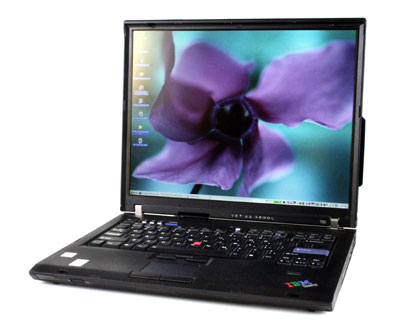
Lenovo ThinkPad T60 review by PC Magazine Lenovo ThinkPad T60
REVIEW DATE: 03.06.06
BOTTOM LINE:
Once again, the ThinkPad continues its winning streak of Editors' Choices for business notebooks, this time with the Lenovo ThinkPad T60. It's an expensive system, but the Intel Core Duo processor, built-in EV-DO, and long battery life justify the price.
PROS:
Intel Core Duo processor. Better performance. Built-in EV-DO capability. Solid management utility. Three USB ports. Good battery life.
CONS:
The tested configuration is pricey. Battery is no longer compatible with previous ThinkPads.
COMPANY:
Lenovo
SPEC DATA
Price: $2,599.00 Direct
Type: Business
Operating System: MS Windows XP Professional
Processor Name: Intel Pentium M T2500
Processor Speed: 2 GHz
RAM: 1024 MB
Hard Drive Capacity: 100 GB
Graphics: ATI Mobility Radeon X1400
Primary Optical Drive: Dual-Layer DVD+/-RW
Wireless: 802.11a/g
Screen Size: 15 inches
Screen Size Type: standard
System Weight: 6.2 lbs
EDITOR RATING:
By Cisco Cheng
For years, the Lenovo (formerly IBM) ThinkPad T series has been racking up our Editors' Choice awards for business notebooks—and this year is no different. The ThinkPad T60 is Lenovo's newest corporate dream machine. Not only has the addition of the latest Intel Core Duo technology increased the performance monumentally, but Lenovo integrates 3G wireless with Verizon's EV-DO, so now you can get broadband access almost anywhere at any time you want.
The T60 comes in the traditional black, which may disappoint those who were anticipating a titanium cover like the one found on the Lenovo ThinkPad Z60m. In general, the design doesn't deviate from that of its predecessor, the ThinkPad T43. The only subtle differences are the EV-DO antenna protruding from the right side of the screen and the base, which is now covered with magnesium alloy (while the cover still uses a titanium composite), making the T60 a very durable notebook.
The "Access IBM" blue button is now a "ThinkVantage" blue button, which accesses a critically acclaimed abundance of management utilities. The Alt key has shrunk by half to accommodate the addition of a Windows key, which can be combined with other keys for Microsoft Windows and Office shortcuts. The keyboard feels stiffer, but it's still the best keyboard out there for typing. Lenovo's TrackPoint technology is also the best in the business, and we prefer it over the touchpad, both of which are included. Our T60 review unit is on the heavy side, tipping the scales at 6.2 pounds. But the extra weight is mostly due to the 15-inch screen and the 9-cell battery, which sticks out about an inch from the back. The display's resolution (1,400-by-1,050)is higher than that of the Z60t's widescreen (1,280-by-768).
* Acer TravelMate 8204WLMi
* Dell Inspiron E1705
* HP Pavilion dv4000
* IBM ThinkPad T43
We are happy to see three USB ports, instead of the two that come in the T43. The T60 still doesn't have a FireWire port or a memory card reader, which we can forgive, considering that this is a business-focused machine. The 100GB hard drive is plenty of storage for basic documents and productivity files—not to mention the occasional video for when you travel—and the dual-layer DVD±R drive can burn up to 8.5GB of data, provided you have the right media.
The T60 uses the Intel Core Duo T2500 (2.0 GHz) processor and 1GB of RAM, making it a very powerful system. Its configuration is similar to that of the Dell Inspiron E1705, and it performed about the same on our SYSMark 2004 SE tests. The Acer TravelMate 8204WLMi, which also includes an Intel Core Duo, surpassed the T60 by a 10 percent margin, thanks in part to its whopping 2GB of RAM. But more important, at least to ThinkPad diehards, the T60's performance improved drastically over that of the single-core T43, by 55 percent. Of course, some of that is due to the doubling in RAM (the T43 has 512MB); nevertheless, it's an impressive gain.
The T60 uses discrete graphics with the ATI Mobility Radeon X1400, which is a step down from the Radeon X1600 loaded on the Acer. The T60 could not complete any of our gaming tests, but it's not meant for gaming—you probably won't be playing Doom 3 on it.
The ThinkPad T60 beats the Acer on battery life. It lasted 5 hours 16 minutes on our MobileMark 2005 tests; the Acer system lasted 3:47. Unfortunately, the T60 is using a new battery design that is not backward-compatible with previous ThinkPad models.
The protruding antenna we mentioned is your ticket to broadband access using Verizon's EV-DO network. On our throughput tests, the EV-DO antenna showed downstream rates at expected levels, with an average rate of 650 Kbps when measured from our Manhattan offices. We were able to get around 600 to 680 Kbps throughout various locations in New York (Manhattan and Queens), which approaches the 1 Mbps threshold for true broadband throughput.
Verizon's VZAccess Manager client utility is preconfigured with the EV-DO wireless module, and the interface is simple to use, but it doesn't manage your Wi-Fi or Bluetooth connections. We actually prefer managing the EV-DO connection through Lenovo's Access Connections, along with our other wireless connections. Access Connections lets you create user profiles and switch between an EV-DO profile, a Wi-Fi profile, and a wired profile. It's the only management utility that lets you do this. The EV-DO subscription price is still steep ($59.99 for unlimited service if you already have a Verizon voice plan), but if you travel frequently, pay for hotel Wi-Fi, and need to be constantly connected, the plan will pay off.
Access Connections is part of the impressive ThinkVantage management suite. The new interface launches as quickly as the Windows Start menu, and every utility is conveniently tied into the interface. You can choose to back up your drive or restore it to factory defaults if it goes bad. The maintenance utility runs your hard drive cleanups, virus scans, and disc backups when you're away from your computer. Enabling Whisper mode lets the user control the how much of the system's resources are used by a particular program. That is helpful with something like a virus scan, which runs in the background and can leave you short of resources for your other programs.
This particular configuration is rather expensive at $2,599, but simpler versions start at $1,299. The Lenovo ThinkPad T60 gives you a big bump in performance with the Core Duo technology, and it has built-in EV-DO. It's our pick for the ultimate boardroom companion.
Monday, March 06, 2006
Huge Phone Deal Seeks to Thwart Smaller Rivals - New York Times
Huge Phone Deal Seeks to Thwart Smaller Rivals - New York TimesMarch 6, 2006
Huge Phone Deal Seeks to Thwart Smaller Rivals
By KEN BELSON
The AT&T Corporation, in announcing plans yesterday to buy BellSouth Corporation for $67 billion after months of speculation, took the offensive against low-cost rivals in the free-for-all for phone, wireless and television customers.
With cable providers and technology companies entering the phone business, the former Baby Bells starting to sell television programming and more and more services available on mobile phones and on the Internet, companies like AT&T are trying to bulk up and turn themselves into one-stop shops for all communications needs.
"We literally have hundreds of competitors coming in every day; it's nothing like the old days," said Edward E. Whitacre, Jr., the chairman and chief executive of AT&T, the country's largest phone company. "If we're going to have the strength to compete, we better get our companies together."
The new company, with $120 billion in sales, about 317,000 workers and 71 million local phone customers in 22 states, would recreate a big chunk of the former AT&T monopoly that was broken up a generation ago. With the deal, only three Baby Bells would remain: AT&T, the former SBC Communications that provided service in the Southwest and elsewhere; Qwest and Verizon, the $90 billion company which is AT&T's chief rival. The latter two might now face renewed pressure to build themselves up.
The merger, one of the dozen largest deals ever, was long the subject of speculation and got a major push in January when the chiefs of both companies went bird hunting together in Georgia.
The deal still must pass muster with regulators and it will probably face close scrutiny from consumer groups and AT&T's main competitors who argue the merger would give AT&T too much power and will ultimately lead to higher prices.
But while AT&T — which was formed last year when SBC bought the long-distance carrier, AT&T — might look much like its old self, the landscape where it competes is completely different. In 1984, when the old Ma Bell was broken up, the Internet and cellphone service barely existed and the cable industries was far smaller.
The new, more complex environment is a big reason why anti-trust watchdogs have not blocked large phone deals in recent years. Regulators in the Bush Administration have also been generally sympathetic to mergers, which has not escaped AT&T's attention, analysts said.
Indeed, AT&T and BellSouth consider themselves complementary partners because they compete very little for local phone and Internet customers, and they jointly own Cingular Wireless.
As a result, consumers buying services from AT&T, BellSouth and Cingular are unlikely to see much immediate impact. Ultimately, the companies hope that their new size will help them hold down their prices and potentially undercut cable and satellite companies with cheaper television programming, which they are just beginning to introduce.
Any benefits to customers notwithstanding, consumer groups expressed concern about a deal to merge the two companies.
"Things were already quite bad, but this eliminates any possibility of phone companies competing against each other," said Gene Kimmelman, the vice president for federal policy at Consumers Union, which publishes Consumer Reports. "The bottom line for consumers is that you can kiss goodbye the declining cellphone and long distance prices that people have become used to." Investors have considered a union between AT&T and BellSouth likely because of their mutual stake in Cingular and because of their shared history as Baby Bells.
Mr. Whitacre has not been shy about paying top dollar for rivals to scare away other bidders. In the past decade, he bought three other local phone companies, Pacific Telesis Group, Southern New England Telecommunications and Ameritech Corp.
In 2004, Cingular bought AT&T Wireless for $41 billion, and last year, SBC bought AT&T for $16.8 billion and adopted its name.
"The empire-building continues," said Jeffrey Halpern, an industry analyst at Sanford Bernstein. "He has a track record of gobbling competitors at premium prices."
AT&T said it would pay $37.09 for BellSouth's shares, which is 17.9 percent above the closing stock price on Friday. The company, whose headquarters will remain in San Antonio, said it expected to save about $2 billion a year by buying BellSouth, some of which would come from an unspecified number of job cuts. AT&T planned to keep its name if the merger is approved, and Mr. Whitacre would remain at the helm.
With the deal, Duane Ackerman, the chairman of BellSouth, and several of his top lieutenants stand to collect hefty special payments, according to the terms of their employment contracts. Mr. Ackerman, who 63 years old and nearing retirement, could sell $28,374,000 worth of restricted stock and options if he is asked to leave the company, according to publicly filed documents.
Mr. Whitacre and Mr. Ackerman have been inching closer to a deal for years. In the fall of 2004, the companies held extensive negotiations, but the talks collapsed after BellSouth pushed for a price that included a premium of more than 30 percent, people involved in those talks said.
Mr. Whitacre then turned his attention to buying AT&T. Just days before that deal was signed, BellSouth tried to return to the bargaining table, seeking a premium of slightly more than 20 percent, these people said. But it was too late for Mr. Whitacre to turn back.
When SBC absorbed AT&T in November, Mr. Whitacre turned once again to BellSouth because, among other reasons, the two companies were having trouble managing Cingular. In mid-January, Mr. Whitacre sent one of his bankers, Roger Altman, who worked in the Treasury Department under President Clinton, to approach Mr. Ackerman again and make an informal proposal. The next day, Mr. Whitacre and Mr. Ackerman went bird hunting, these people said.
After their day out, the men promised to go to their boards and pursue a deal. Several weeks later, the executives met again privately and shook hands on a deal, setting off another three-week marathon of conference calls and meetings.
The deal was given the code name Project Mountain, while AT&T was referred to as Aspen, BellSouth was called Birch and Cingular Cedar. The mountain theme was chosen because, as one person put it, "This deal has been a long climb."
Over the last three weeks, both sides camped out at the midtown Manhattan offices of Sullivan & Cromwell, which represented AT&T. Mr. Whitacre called in from Turino, where he was watching the Olympics. On Saturday, the boards of both companies met to approve the transaction.
The new company would dwarf its nearest competitor, Verizon, which has in the past reacted to Mr. Whitacre's deals by following with ones of its own. After SBC bought AT&T last year, for example, Verizon outbid Qwest Communications for control of MCI Inc., the long-distance carrier.
Verizon's next move will probably be to try to dissolve its relationship with Vodafone, which owns 45 percent of Verizon Wireless. Verizon has expressed interest in buying Vodafone's share, but the price tag is likely to be steep because Verizon Wireless is extremely profitable.
Less likely, Verizon could also pursue Qwest, the primary local phone provider in the western United States, which is saddled with heavy debts. Verizon may also look more closely at Alltel, the country's fifth-largest wireless carrier.
"Verizon's business plan remains unchanged," said Peter Thonis, a Verizon spokesman. "We are focused on integrating MCI, divesting our directories business and working to acquire from Vodafone the remaining 45 percent of Verizon Wireless."
Verizon, like AT&T, is also trying to head off its rivals by offering its own television services. But the construction of the networks to carry their programming is proving expensive and the carriers have had to acquire permission from municipalities to sell their service.
The Bells have asked lawmakers in Washington to help them streamline the process, alarming cable companies that have moved closer together to defend themselves.
In addition to selling home phone lines, Comcast, Time Warner Cable and other cable companies are working with Sprint-Nextel, the third-largest cellphone company, to introduce mobile phone services that compete with Cingular and Verizon Wireless.
Cable companies are also using Sprint's long-distance network to carry its phone calls to rely less on AT&T and Verizon.
"Cable and Sprint are the counter force to the Bells," said Daniel Berninger, an analyst at Tier 1 Research. "The cable guys may get more aggressive and stick it to the Bells" as a result of an AT&T-BellSouth deal, he said.
Mr. Berninger said cable companies might distance themselves from a plan by the Bells to charge content providers like Amazon and Yahoo to guarantee that their content is delivered to customers faster. Consumer groups, technology companies and lawmakers worry that such a service would destroy the open nature of the Internet.
Andrew Ross Sorkin and Eric Dash contributed reporting for this article.
Huge Phone Deal Seeks to Thwart Smaller Rivals
By KEN BELSON
The AT&T Corporation, in announcing plans yesterday to buy BellSouth Corporation for $67 billion after months of speculation, took the offensive against low-cost rivals in the free-for-all for phone, wireless and television customers.
With cable providers and technology companies entering the phone business, the former Baby Bells starting to sell television programming and more and more services available on mobile phones and on the Internet, companies like AT&T are trying to bulk up and turn themselves into one-stop shops for all communications needs.
"We literally have hundreds of competitors coming in every day; it's nothing like the old days," said Edward E. Whitacre, Jr., the chairman and chief executive of AT&T, the country's largest phone company. "If we're going to have the strength to compete, we better get our companies together."
The new company, with $120 billion in sales, about 317,000 workers and 71 million local phone customers in 22 states, would recreate a big chunk of the former AT&T monopoly that was broken up a generation ago. With the deal, only three Baby Bells would remain: AT&T, the former SBC Communications that provided service in the Southwest and elsewhere; Qwest and Verizon, the $90 billion company which is AT&T's chief rival. The latter two might now face renewed pressure to build themselves up.
The merger, one of the dozen largest deals ever, was long the subject of speculation and got a major push in January when the chiefs of both companies went bird hunting together in Georgia.
The deal still must pass muster with regulators and it will probably face close scrutiny from consumer groups and AT&T's main competitors who argue the merger would give AT&T too much power and will ultimately lead to higher prices.
But while AT&T — which was formed last year when SBC bought the long-distance carrier, AT&T — might look much like its old self, the landscape where it competes is completely different. In 1984, when the old Ma Bell was broken up, the Internet and cellphone service barely existed and the cable industries was far smaller.
The new, more complex environment is a big reason why anti-trust watchdogs have not blocked large phone deals in recent years. Regulators in the Bush Administration have also been generally sympathetic to mergers, which has not escaped AT&T's attention, analysts said.
Indeed, AT&T and BellSouth consider themselves complementary partners because they compete very little for local phone and Internet customers, and they jointly own Cingular Wireless.
As a result, consumers buying services from AT&T, BellSouth and Cingular are unlikely to see much immediate impact. Ultimately, the companies hope that their new size will help them hold down their prices and potentially undercut cable and satellite companies with cheaper television programming, which they are just beginning to introduce.
Any benefits to customers notwithstanding, consumer groups expressed concern about a deal to merge the two companies.
"Things were already quite bad, but this eliminates any possibility of phone companies competing against each other," said Gene Kimmelman, the vice president for federal policy at Consumers Union, which publishes Consumer Reports. "The bottom line for consumers is that you can kiss goodbye the declining cellphone and long distance prices that people have become used to." Investors have considered a union between AT&T and BellSouth likely because of their mutual stake in Cingular and because of their shared history as Baby Bells.
Mr. Whitacre has not been shy about paying top dollar for rivals to scare away other bidders. In the past decade, he bought three other local phone companies, Pacific Telesis Group, Southern New England Telecommunications and Ameritech Corp.
In 2004, Cingular bought AT&T Wireless for $41 billion, and last year, SBC bought AT&T for $16.8 billion and adopted its name.
"The empire-building continues," said Jeffrey Halpern, an industry analyst at Sanford Bernstein. "He has a track record of gobbling competitors at premium prices."
AT&T said it would pay $37.09 for BellSouth's shares, which is 17.9 percent above the closing stock price on Friday. The company, whose headquarters will remain in San Antonio, said it expected to save about $2 billion a year by buying BellSouth, some of which would come from an unspecified number of job cuts. AT&T planned to keep its name if the merger is approved, and Mr. Whitacre would remain at the helm.
With the deal, Duane Ackerman, the chairman of BellSouth, and several of his top lieutenants stand to collect hefty special payments, according to the terms of their employment contracts. Mr. Ackerman, who 63 years old and nearing retirement, could sell $28,374,000 worth of restricted stock and options if he is asked to leave the company, according to publicly filed documents.
Mr. Whitacre and Mr. Ackerman have been inching closer to a deal for years. In the fall of 2004, the companies held extensive negotiations, but the talks collapsed after BellSouth pushed for a price that included a premium of more than 30 percent, people involved in those talks said.
Mr. Whitacre then turned his attention to buying AT&T. Just days before that deal was signed, BellSouth tried to return to the bargaining table, seeking a premium of slightly more than 20 percent, these people said. But it was too late for Mr. Whitacre to turn back.
When SBC absorbed AT&T in November, Mr. Whitacre turned once again to BellSouth because, among other reasons, the two companies were having trouble managing Cingular. In mid-January, Mr. Whitacre sent one of his bankers, Roger Altman, who worked in the Treasury Department under President Clinton, to approach Mr. Ackerman again and make an informal proposal. The next day, Mr. Whitacre and Mr. Ackerman went bird hunting, these people said.
After their day out, the men promised to go to their boards and pursue a deal. Several weeks later, the executives met again privately and shook hands on a deal, setting off another three-week marathon of conference calls and meetings.
The deal was given the code name Project Mountain, while AT&T was referred to as Aspen, BellSouth was called Birch and Cingular Cedar. The mountain theme was chosen because, as one person put it, "This deal has been a long climb."
Over the last three weeks, both sides camped out at the midtown Manhattan offices of Sullivan & Cromwell, which represented AT&T. Mr. Whitacre called in from Turino, where he was watching the Olympics. On Saturday, the boards of both companies met to approve the transaction.
The new company would dwarf its nearest competitor, Verizon, which has in the past reacted to Mr. Whitacre's deals by following with ones of its own. After SBC bought AT&T last year, for example, Verizon outbid Qwest Communications for control of MCI Inc., the long-distance carrier.
Verizon's next move will probably be to try to dissolve its relationship with Vodafone, which owns 45 percent of Verizon Wireless. Verizon has expressed interest in buying Vodafone's share, but the price tag is likely to be steep because Verizon Wireless is extremely profitable.
Less likely, Verizon could also pursue Qwest, the primary local phone provider in the western United States, which is saddled with heavy debts. Verizon may also look more closely at Alltel, the country's fifth-largest wireless carrier.
"Verizon's business plan remains unchanged," said Peter Thonis, a Verizon spokesman. "We are focused on integrating MCI, divesting our directories business and working to acquire from Vodafone the remaining 45 percent of Verizon Wireless."
Verizon, like AT&T, is also trying to head off its rivals by offering its own television services. But the construction of the networks to carry their programming is proving expensive and the carriers have had to acquire permission from municipalities to sell their service.
The Bells have asked lawmakers in Washington to help them streamline the process, alarming cable companies that have moved closer together to defend themselves.
In addition to selling home phone lines, Comcast, Time Warner Cable and other cable companies are working with Sprint-Nextel, the third-largest cellphone company, to introduce mobile phone services that compete with Cingular and Verizon Wireless.
Cable companies are also using Sprint's long-distance network to carry its phone calls to rely less on AT&T and Verizon.
"Cable and Sprint are the counter force to the Bells," said Daniel Berninger, an analyst at Tier 1 Research. "The cable guys may get more aggressive and stick it to the Bells" as a result of an AT&T-BellSouth deal, he said.
Mr. Berninger said cable companies might distance themselves from a plan by the Bells to charge content providers like Amazon and Yahoo to guarantee that their content is delivered to customers faster. Consumer groups, technology companies and lawmakers worry that such a service would destroy the open nature of the Internet.
Andrew Ross Sorkin and Eric Dash contributed reporting for this article.
Sunday, March 05, 2006
Cingular's Parents to Merge: AT&T to buy BellSouth (MobileBurn)
Cingular's Parents to Merge: AT&T to buy BellSouth (MobileBurn): Cingular's Parents to Merge: AT&T to buy BellSouth
News by Michael Oryl (editor) on Sunday March 05, 2006.
Note: Sponsored advertising links, if any, are in green.
According to the Wall Street Journal, US telecom firm AT&T (formerly SBC) is planning to purchase BellSouth. AT&T and BellSouth are the co-owners of Cingular, the largest wireless carrier in the United States. The deal is supposedly worth US$65 Billion, and would create a company that is 50% larger than Verizon (majority owner of Verizon Wireless).
AT&T had said in the past that it did not plan on changing Cingular's name to AT&T, but we'll see if that holds true now that Cingular will be 100% owned by the company.
News by Michael Oryl (editor) on Sunday March 05, 2006.
Note: Sponsored advertising links, if any, are in green.
According to the Wall Street Journal, US telecom firm AT&T (formerly SBC) is planning to purchase BellSouth. AT&T and BellSouth are the co-owners of Cingular, the largest wireless carrier in the United States. The deal is supposedly worth US$65 Billion, and would create a company that is 50% larger than Verizon (majority owner of Verizon Wireless).
AT&T had said in the past that it did not plan on changing Cingular's name to AT&T, but we'll see if that holds true now that Cingular will be 100% owned by the company.
Friday, March 03, 2006
Settlement reached in BlackBerry patent dispute - BlackBerry Battle - MSNBC.com
Settlement reached in BlackBerry patent dispute - BlackBerry Battle - MSNBC.comSettlement reached in BlackBerry patent case
Research in Motion pays NTP $612.5 million; devices to stay on
Research In Motion Ltd., the maker of the BlackBerry e-mail device, announced Friday it has settled its long-running patent dispute with a small Virginia-based firm, averting a possible court-ordered shutdown of the BlackBerry system.
RIM has paid NTP $612.5 million in a “full and final settlement of all claims,” the companies said.
At a hearing last week, NTP had asked a federal court in Richmond, Va., for an injunction blocking the continued use of key technologies underpinning the BlackBerry wireless e-mail service.
Research in Motion pays NTP $612.5 million; devices to stay on
Research In Motion Ltd., the maker of the BlackBerry e-mail device, announced Friday it has settled its long-running patent dispute with a small Virginia-based firm, averting a possible court-ordered shutdown of the BlackBerry system.
RIM has paid NTP $612.5 million in a “full and final settlement of all claims,” the companies said.
At a hearing last week, NTP had asked a federal court in Richmond, Va., for an injunction blocking the continued use of key technologies underpinning the BlackBerry wireless e-mail service.
Sunday, February 26, 2006
In Sony's Stumble, the Ghost of Betamax - New York Times
In Sony's Stumble, the Ghost of Betamax - New York TimesFebruary 26, 2006
In Sony's Stumble, the Ghost of Betamax
By KEN BELSON
AT first glance, Amir Majidimehr does not look like a game-changer in the battle to develop the next generation of DVD players and discs. As the vice president for Windows digital media at Microsoft, he neither steers a Hollywood studio nor controls one of the many consumer electronics giants that are betting billions of dollars on one of the two new formats that promise to play high-definition movies and television shows.
Yet when he and his team in Redmond, Wash., decided last September to abandon their neutral stance and to support Toshiba and its HD-DVD standard over the Blu-ray format led by Sony, the unexpected change of heart reverberated through the technology industry.
Suddenly, Toshiba's seemingly quixotic defense of its format had new life. Intel joined Microsoft in backing HD-DVD. Hewlett-Packard withdrew its exclusive support of Blu-ray. This month, another member of the Blu-ray camp, LG Electronics, hedged its bets, too, signing a deal to license Toshiba's technology.
And earlier this month, one of the main reasons underpinning Microsoft's move to shuck its neutrality — the complexity of producing Blu-ray technology — led to Sony's acknowledgment that it might delay this spring's scheduled release of its PlayStation 3 game console partly because the needed technology was still being worked out.
The possible delay and the Blu-ray group's loss of its once-commanding lead are not encouraging developments for Sony in its attempt to revive its electronics group after a series of bungles. PlayStation 3 is crucial to Sony's future, and not only because the latest version of its gaming consoles could generate billions in revenue; the new machines will include disc drives that will turn them into Blu-ray DVD players as well.
"The PlayStation is more than a game system to them; it's one of their attempts to own the digital living room," said Robert Heiblim, a consultant to electronics companies. "Blu-ray is also critically important to get right. They don't want to be weak in an area they feel they can dominate."
A DECADE ago, a prospective death match between competing first-generation DVD players was averted when Sony and Philips agreed to back down and join the Toshiba/Warner Brothers side, in exchange for a share of royalties that all DVD player producers pay to the format's creator. Now, no truce seems near, as neither side wants to settle for a small piece of what could be a big electronics success.
So consumers and retailers may be in for a reprise of the confusing VHS-Betamax showdown of the early 1980's, with Toshiba replacing Matsushita as Sony's adversary. But Sony hopes to have a happier resolution this time. Sony lost the battle two decades ago when its highly regarded Betamax technology was defeated by VHS, a more widely accepted alternative.
Once again, the differences between the two technologies are not huge. And a growing chorus of critics, including some studio chiefs eager to sell new products as quickly as possible, call the Blu-ray format unnecessarily elaborate and expensive.
The first HD-DVD machines from Toshiba and the competing Blu-ray players from Sony, Samsung and the other Blu-ray companies will all play movies with crisper pictures, enhanced sound and a bevy of interactive features like pictures within pictures and links to the Internet. The machines will also play older DVD's.
Technophiles got a preview of the HD-DVD technology on Wednesday at an electronics store on the Upper West Side of Manhattan. As Jessica Simpson and Johnny Knoxville cavorted in the movie "The Dukes of Hazzard," prospective buyers were able to see the difference between a plain old DVD and the high-definition kind. But the main feature was the price. Toshiba will sell two players starting in March; one will cost just $499, half the price of the cheapest Blu-ray machines, the first of which will hit the stores this spring. Samsung's first machine will cost $1,000, while Pioneer's Blu-ray player will run $1,800.
Toshiba executives have said that because more high-definition movies will be distributed over the Internet in coming years, they have essentially upgraded existing DVD technology to keep prices down. Blu-ray discs, however, include an architecture that Sir Howard Stringer, Sony's chairman, calls "revolutionary, not evolutionary."
The Blu-ray camp is trying to create a brand-new technology that will accommodate features that are still to be created. In preparation for that future, Blu-ray discs will store 25 gigabytes of data, compared with the 15 gigabytes on comparable Toshiba discs and 4.7 gigabytes on today's DVD's.
The first batch of high-definition DVD's from the studios' vaults will highlight rich graphics, vivid scenery and fast-moving action. The films include "Rambo," science fiction thrillers like "The Matrix" and "Dune" and animated features like "Ice Age." The DVD's are generally expected to cost $19 to $25.
But movies are only one front in the format war. In throwing its weight behind Toshiba, Microsoft has expanded the fight into the computer and game industries. Later this year, Microsoft will start selling an external drive for its Xbox game that will play HD-DVD discs, countering Sony's effort to turn PlayStation into a high-definition DVD player by adding Blu-ray technology. Microsoft and its ally Intel have also convinced Hewlett-Packard to consider making HD-DVD drives for computers. This would give Toshiba an answer to Dell, which remains committed to the Blu-ray format.
"The pendulum is swinging back to the HD-DVD camp," said John Freeman, who runs a technology research firm, Strategic Marketing Decisions, which last year declared Blu-ray the front-runner. "It will be interesting to see if the Blu-ray group can recover. It's only a matter of time before people start backing out of the Blu-ray camp."
Still, even with Microsoft on board, Toshiba may have only closed the gap, not overtaken the Blu-ray group. With Samsung, Panasonic and others siding with Sony, consumers will see more Blu-ray machines in the stores. And Blu-ray has more studios in its camp, which means more choice in movies. Every major studio except Universal plans to release Blu-ray DVD's, while Toshiba has commitments from only Universal, Warner Brothers and Paramount.
But one thing is clear: given Microsoft's growing power and scope in the entertainment realm — thanks to its Xbox machines, its media player software and forays into Internet television — its support of HD-DVD has deepened, and has probably prolonged, the format battle. That means consumers must figure out each format's advantages and risk being stuck with obsolete machines if one camp backs down.
This is giving retailers fits, not only because they have to carry twice as many machines and discs, but also because they have to train their employees to explain the differences between the standards.
"Both sides are digging in their heels and stupidity has prevailed," said Joe McGuire, the chief executive of Tweeter, a high-end electronics chain. Mr. McGuire called the failure of the two camps to agree on a single format "criminal" and said he would have a hard time advising consumers. "The answer to which is better is: 'We don't know,' " he said. "I'm tempted not to sell anyone these machines."
But sell they will, because retailers — and studios — need something new to throw at consumers now that DVD players are in 82 percent of American homes. Sales of DVD players are "pretty dead," said John LaRegina, a senior buyer at P.C. Richards, which has 49 stores in the New York area.
But Mr. LaRegina said format battles confused consumers and gave them an excuse not to buy. The uncertainty over who may win also forces film studios and electronics companies to hedge their bets.
Warner Brothers and Paramount, which were originally committed only to HD-DVD, decided last fall to make movies in both formats.
"It was very, very clear that Sony was not going to back down from Blu-ray, and they are basically betting their company on it," said Kevin Tsujihara, the president of Warner Brothers Home Entertainment Group. But, he added, Toshiba has mounted "something of a comeback" by winning endorsements from Microsoft and Intel.
Some Blu-ray companies are also waiting to see how the market develops before jumping in with machines of their own. If the PlayStation 3 is priced below Toshiba's $500 player, it could double as the poor man's Blu-Ray player and undercut Sony's partners. (It will also cost Sony dearly; Merrill Lynch issued a report on Feb. 17 estimating that the first PlayStation 3 players would cost about $900 to produce. If so, Sony could end up with substantial losses on those machines if they are priced around $299, as analysts expect, to compete with the Xbox 360, which has been out since November.)
"It's too early to move into this market," said Katsuhiko Machida, the president of Sharp, a Blu-ray company that has not released details for its players in the United States. "Blu-Ray won't be a big business until probably 2008," he said, so "we can watch and see what happens."
Those doubts are a far cry from Blu-ray's bravado last summer and fall, when it won endorsements from Fox, Lions Gate, Warner Brothers and Paramount. Those agreements, coupled with the presumed sway of the PlayStation 3, led industry analysts at Forrester and elsewhere to predict that Blu-ray would ultimately win the format war.
But two unexpected and little-noticed decisions by the Blu-ray group last spring managed to alienate Microsoft and ultimately revive Toshiba's sagging fortunes.
First, Sony and the Blu-ray group adopted a Java program for interactive features. Microsoft favored a rival called iHD because, among other things, it would work better with its new Vista operating system. The Blu-ray group's board also approved an encryption technology called BD+, which Mr. Majidimehr, Microsoft's vice president for Windows digital media, deemed superfluous.
THESE decisions led Mr. Majidimehr to take a deeper look at the Blu-ray format and whether it would be more expensive to produce, as Toshiba had long contended. Mr. Majidimehr and his deputy, Jordi Ribas, spent the next few months on the phones and flying to Asia to meet with Sony, Panasonic and the other Blu-ray companies.
"We asked them if they are serious, and they told us they were," Mr. Majidimehr said, referring to the added software. Microsoft also received more data that showed that the Blu-ray group was not meeting its targets for producing discs and optical drives. "We were getting a lot of data saying the HD-DVD format was a walk in the park and Blu-ray was having trouble developing theirs," Mr. Majidimehr said.
Microsoft's announcement last September raised alarm bells at Hewlett-Packard, which was coming to similar conclusions. Hewlett-Packard worried that the software included in the Blu-ray format would cost so much in royalties that H-P would be unable to add affordable DVD drives to its computers.
Blu-ray drives cost up to 75 percent more than HD-DVD drives, according to Maureen Weber, the general manager of the personal storage group at Hewlett-Packard and a former spokeswoman for the Blu-ray coalition. "There's not a lot of elbow room," she said of the thin profit margins on computers. "The economics of HD-DVD make a lot more sense for us. I'm starting to wonder about the manufacturing ability of Blu-ray."
A Blu-ray spokesman, Andy Parsons, says his group's royalties, which have not yet been set, will be far lower than critics expect. He also disputed the idea that Toshiba had any advantage because Microsoft or Hewlett-Packard might promote the use of HD-DVD in computers.
"DVD's are about movies and people watch them in their living rooms," he said. "How many people actually use their computer drives to sit and watch movies?"
He added that the price of Blu-ray machines and discs was bound to fall as volume rose. Besides, he said, Toshiba is missing the point by selling cheaper machines, because the first people who buy new technologies typically care less about cost and more about the technology.
There are other industry analysts who contend that Microsoft is simply propping up Toshiba to further its own aims, like countering the PlayStation and combating the spread of Sun's Java software. Nonetheless, Toshiba is happy for the backing, given that the format was written off for dead just a few months ago.
"There's no doubt that everyone has various agendas," said Mark Knox, an adviser to the Toshiba promotion group. "But whatever their agenda, Microsoft's support has been a huge boon to HD-DVD."
For Sony, a fortified rival spells trouble. Not only does it make it harder for Blu-ray to catch on, but it raises questions about Sony's approach of trying to create new formats when consumers turn out to be content with something less ambitious.
That is the lesson Sony learned the hard way in the 1980's with Betamax, and more recently when Apple outdid the Walkman with the iPod. Now it is Toshiba's and Microsoft's turn to challenge Sony's strategy.
Martin Fackler contributed reporting for this article.
In Sony's Stumble, the Ghost of Betamax
By KEN BELSON
AT first glance, Amir Majidimehr does not look like a game-changer in the battle to develop the next generation of DVD players and discs. As the vice president for Windows digital media at Microsoft, he neither steers a Hollywood studio nor controls one of the many consumer electronics giants that are betting billions of dollars on one of the two new formats that promise to play high-definition movies and television shows.
Yet when he and his team in Redmond, Wash., decided last September to abandon their neutral stance and to support Toshiba and its HD-DVD standard over the Blu-ray format led by Sony, the unexpected change of heart reverberated through the technology industry.
Suddenly, Toshiba's seemingly quixotic defense of its format had new life. Intel joined Microsoft in backing HD-DVD. Hewlett-Packard withdrew its exclusive support of Blu-ray. This month, another member of the Blu-ray camp, LG Electronics, hedged its bets, too, signing a deal to license Toshiba's technology.
And earlier this month, one of the main reasons underpinning Microsoft's move to shuck its neutrality — the complexity of producing Blu-ray technology — led to Sony's acknowledgment that it might delay this spring's scheduled release of its PlayStation 3 game console partly because the needed technology was still being worked out.
The possible delay and the Blu-ray group's loss of its once-commanding lead are not encouraging developments for Sony in its attempt to revive its electronics group after a series of bungles. PlayStation 3 is crucial to Sony's future, and not only because the latest version of its gaming consoles could generate billions in revenue; the new machines will include disc drives that will turn them into Blu-ray DVD players as well.
"The PlayStation is more than a game system to them; it's one of their attempts to own the digital living room," said Robert Heiblim, a consultant to electronics companies. "Blu-ray is also critically important to get right. They don't want to be weak in an area they feel they can dominate."
A DECADE ago, a prospective death match between competing first-generation DVD players was averted when Sony and Philips agreed to back down and join the Toshiba/Warner Brothers side, in exchange for a share of royalties that all DVD player producers pay to the format's creator. Now, no truce seems near, as neither side wants to settle for a small piece of what could be a big electronics success.
So consumers and retailers may be in for a reprise of the confusing VHS-Betamax showdown of the early 1980's, with Toshiba replacing Matsushita as Sony's adversary. But Sony hopes to have a happier resolution this time. Sony lost the battle two decades ago when its highly regarded Betamax technology was defeated by VHS, a more widely accepted alternative.
Once again, the differences between the two technologies are not huge. And a growing chorus of critics, including some studio chiefs eager to sell new products as quickly as possible, call the Blu-ray format unnecessarily elaborate and expensive.
The first HD-DVD machines from Toshiba and the competing Blu-ray players from Sony, Samsung and the other Blu-ray companies will all play movies with crisper pictures, enhanced sound and a bevy of interactive features like pictures within pictures and links to the Internet. The machines will also play older DVD's.
Technophiles got a preview of the HD-DVD technology on Wednesday at an electronics store on the Upper West Side of Manhattan. As Jessica Simpson and Johnny Knoxville cavorted in the movie "The Dukes of Hazzard," prospective buyers were able to see the difference between a plain old DVD and the high-definition kind. But the main feature was the price. Toshiba will sell two players starting in March; one will cost just $499, half the price of the cheapest Blu-ray machines, the first of which will hit the stores this spring. Samsung's first machine will cost $1,000, while Pioneer's Blu-ray player will run $1,800.
Toshiba executives have said that because more high-definition movies will be distributed over the Internet in coming years, they have essentially upgraded existing DVD technology to keep prices down. Blu-ray discs, however, include an architecture that Sir Howard Stringer, Sony's chairman, calls "revolutionary, not evolutionary."
The Blu-ray camp is trying to create a brand-new technology that will accommodate features that are still to be created. In preparation for that future, Blu-ray discs will store 25 gigabytes of data, compared with the 15 gigabytes on comparable Toshiba discs and 4.7 gigabytes on today's DVD's.
The first batch of high-definition DVD's from the studios' vaults will highlight rich graphics, vivid scenery and fast-moving action. The films include "Rambo," science fiction thrillers like "The Matrix" and "Dune" and animated features like "Ice Age." The DVD's are generally expected to cost $19 to $25.
But movies are only one front in the format war. In throwing its weight behind Toshiba, Microsoft has expanded the fight into the computer and game industries. Later this year, Microsoft will start selling an external drive for its Xbox game that will play HD-DVD discs, countering Sony's effort to turn PlayStation into a high-definition DVD player by adding Blu-ray technology. Microsoft and its ally Intel have also convinced Hewlett-Packard to consider making HD-DVD drives for computers. This would give Toshiba an answer to Dell, which remains committed to the Blu-ray format.
"The pendulum is swinging back to the HD-DVD camp," said John Freeman, who runs a technology research firm, Strategic Marketing Decisions, which last year declared Blu-ray the front-runner. "It will be interesting to see if the Blu-ray group can recover. It's only a matter of time before people start backing out of the Blu-ray camp."
Still, even with Microsoft on board, Toshiba may have only closed the gap, not overtaken the Blu-ray group. With Samsung, Panasonic and others siding with Sony, consumers will see more Blu-ray machines in the stores. And Blu-ray has more studios in its camp, which means more choice in movies. Every major studio except Universal plans to release Blu-ray DVD's, while Toshiba has commitments from only Universal, Warner Brothers and Paramount.
But one thing is clear: given Microsoft's growing power and scope in the entertainment realm — thanks to its Xbox machines, its media player software and forays into Internet television — its support of HD-DVD has deepened, and has probably prolonged, the format battle. That means consumers must figure out each format's advantages and risk being stuck with obsolete machines if one camp backs down.
This is giving retailers fits, not only because they have to carry twice as many machines and discs, but also because they have to train their employees to explain the differences between the standards.
"Both sides are digging in their heels and stupidity has prevailed," said Joe McGuire, the chief executive of Tweeter, a high-end electronics chain. Mr. McGuire called the failure of the two camps to agree on a single format "criminal" and said he would have a hard time advising consumers. "The answer to which is better is: 'We don't know,' " he said. "I'm tempted not to sell anyone these machines."
But sell they will, because retailers — and studios — need something new to throw at consumers now that DVD players are in 82 percent of American homes. Sales of DVD players are "pretty dead," said John LaRegina, a senior buyer at P.C. Richards, which has 49 stores in the New York area.
But Mr. LaRegina said format battles confused consumers and gave them an excuse not to buy. The uncertainty over who may win also forces film studios and electronics companies to hedge their bets.
Warner Brothers and Paramount, which were originally committed only to HD-DVD, decided last fall to make movies in both formats.
"It was very, very clear that Sony was not going to back down from Blu-ray, and they are basically betting their company on it," said Kevin Tsujihara, the president of Warner Brothers Home Entertainment Group. But, he added, Toshiba has mounted "something of a comeback" by winning endorsements from Microsoft and Intel.
Some Blu-ray companies are also waiting to see how the market develops before jumping in with machines of their own. If the PlayStation 3 is priced below Toshiba's $500 player, it could double as the poor man's Blu-Ray player and undercut Sony's partners. (It will also cost Sony dearly; Merrill Lynch issued a report on Feb. 17 estimating that the first PlayStation 3 players would cost about $900 to produce. If so, Sony could end up with substantial losses on those machines if they are priced around $299, as analysts expect, to compete with the Xbox 360, which has been out since November.)
"It's too early to move into this market," said Katsuhiko Machida, the president of Sharp, a Blu-ray company that has not released details for its players in the United States. "Blu-Ray won't be a big business until probably 2008," he said, so "we can watch and see what happens."
Those doubts are a far cry from Blu-ray's bravado last summer and fall, when it won endorsements from Fox, Lions Gate, Warner Brothers and Paramount. Those agreements, coupled with the presumed sway of the PlayStation 3, led industry analysts at Forrester and elsewhere to predict that Blu-ray would ultimately win the format war.
But two unexpected and little-noticed decisions by the Blu-ray group last spring managed to alienate Microsoft and ultimately revive Toshiba's sagging fortunes.
First, Sony and the Blu-ray group adopted a Java program for interactive features. Microsoft favored a rival called iHD because, among other things, it would work better with its new Vista operating system. The Blu-ray group's board also approved an encryption technology called BD+, which Mr. Majidimehr, Microsoft's vice president for Windows digital media, deemed superfluous.
THESE decisions led Mr. Majidimehr to take a deeper look at the Blu-ray format and whether it would be more expensive to produce, as Toshiba had long contended. Mr. Majidimehr and his deputy, Jordi Ribas, spent the next few months on the phones and flying to Asia to meet with Sony, Panasonic and the other Blu-ray companies.
"We asked them if they are serious, and they told us they were," Mr. Majidimehr said, referring to the added software. Microsoft also received more data that showed that the Blu-ray group was not meeting its targets for producing discs and optical drives. "We were getting a lot of data saying the HD-DVD format was a walk in the park and Blu-ray was having trouble developing theirs," Mr. Majidimehr said.
Microsoft's announcement last September raised alarm bells at Hewlett-Packard, which was coming to similar conclusions. Hewlett-Packard worried that the software included in the Blu-ray format would cost so much in royalties that H-P would be unable to add affordable DVD drives to its computers.
Blu-ray drives cost up to 75 percent more than HD-DVD drives, according to Maureen Weber, the general manager of the personal storage group at Hewlett-Packard and a former spokeswoman for the Blu-ray coalition. "There's not a lot of elbow room," she said of the thin profit margins on computers. "The economics of HD-DVD make a lot more sense for us. I'm starting to wonder about the manufacturing ability of Blu-ray."
A Blu-ray spokesman, Andy Parsons, says his group's royalties, which have not yet been set, will be far lower than critics expect. He also disputed the idea that Toshiba had any advantage because Microsoft or Hewlett-Packard might promote the use of HD-DVD in computers.
"DVD's are about movies and people watch them in their living rooms," he said. "How many people actually use their computer drives to sit and watch movies?"
He added that the price of Blu-ray machines and discs was bound to fall as volume rose. Besides, he said, Toshiba is missing the point by selling cheaper machines, because the first people who buy new technologies typically care less about cost and more about the technology.
There are other industry analysts who contend that Microsoft is simply propping up Toshiba to further its own aims, like countering the PlayStation and combating the spread of Sun's Java software. Nonetheless, Toshiba is happy for the backing, given that the format was written off for dead just a few months ago.
"There's no doubt that everyone has various agendas," said Mark Knox, an adviser to the Toshiba promotion group. "But whatever their agenda, Microsoft's support has been a huge boon to HD-DVD."
For Sony, a fortified rival spells trouble. Not only does it make it harder for Blu-ray to catch on, but it raises questions about Sony's approach of trying to create new formats when consumers turn out to be content with something less ambitious.
That is the lesson Sony learned the hard way in the 1980's with Betamax, and more recently when Apple outdid the Walkman with the iPod. Now it is Toshiba's and Microsoft's turn to challenge Sony's strategy.
Martin Fackler contributed reporting for this article.
Tuesday, January 24, 2006
T-Mobile's SDA and MDA get prices and dates - Engadget

T-Mobile's SDA and MDA get prices and dates - EngadgetT-Mobile's SDA and MDA get prices and dates
Posted Jan 24th 2006 9:21AM by Ryan Block
Filed under: Cellphones, Handhelds
We're pretty sure some of you are well sick of hearing about T-Mobile's forthcoming MDA and SDA Windows Mobile handhelds due out next month -- but for those whose attention we've still got, we have solid prices and still somewhat tentative release dates for ya. Expect the SDA (aka the HTC Tornado) to run you $299.99 , and for it to probably be released on February 13th, and the MDA (the HTC Wizard) will set you back $399.99 and should probably be released a week later on February 20th. Whomever said the best things in life are free obviously wasn't addicted to cellphones.
Sunday, January 22, 2006
Mobile-review.com Communicators, smartphones and PDA in 2006 - the forecast
Mobile-review.com Communicators, smartphones and PDA in 2006 - the forecastCommunicators, smartphones and PDA in 2006 - the forecast
In the beginning of the new year it's customary to sum up the previous year and also make forecasts, guess trends of the upcoming year. We've try to imagine what we are for in 2006, which models will come out, which trends will be most clear and bright. We'll build our forecast on the facts. The accuracy of it doesn't depend on the author's insight, but on how the companies will complete their plans for 2006, marked in their documents as "confidential".
The nature of our occupation makes us be in the know of the facts, announcements and company's plans for the next year. We use the gathered info to prepare some analytical reports and usually do not publish it, so why have we decided to publish such material this time? In the second half of 2005 there emerged plenty of "secret" info on companies' plans by way of rumors and unverified data, it had been exaggerated and reprinted many times by electronic and then print mass media sources. In some cases the leaders of the companies were too open to the press. Many things we discuss today had been already published. Our task is rather to systematize the info, whether to support it or contradict. In result we'll come to some conclusions. We are not to unveil all the plans by the companies, we don't mean to affect the current sales, by publishing full specifications and photos (this won't happen, I'd repeat, many things have already been voiced). Well, we'll just slightly unveil the curtain.
About PDA market prospects in brief
To say the truth, the idea of this article came up after I tried to write about the year results for PDA. However the theme has events for several paragraphs, moreover the key points were discussed in the article "Idea crisis on the PDA market". The falling sales are kept on, the number of new models is minimum, there is no new PDA with a VGA-screen, the final end of Palm OS has taken place, we see the increasing average price of the sold PDA. At the same time the PDA market in 2006 will feature the following:
* PDA sales are on a swift fall, the number of new PDA models will be even less. Over the year the sales will drop by some 15%. GPS popularity will prevent from a sharper fall. All manufacturers are gradually turning down PDA in favor of communicators;
* Almost all vendors will release models with built-in GPS-receiver. There will be extremely few handhelds without the built-in satellite navigation module. In its turn the process of total GPS integration will result in higher average price of the PDA;
* Another player (the second echelon) will leave the market;
* The slot for Compact Flash cards will eventually become the history, it will no longer be installed in the new PDA, Secure Digital memory format will strengthen its positions;
* Built-in cameras will follow the way of Compact Flash standard, the manufacturers realized that built-in cameras are useless in PDA;
* The manufacturers won't use integrated HDD in PDA, only Palm will offer the update of its LifeDrive with higher capacity HDD. Some models will be supplied with large flash-memory size - 128 - 512 MB and higher, as the alternative to the built-in HDD;
* We expect at least 5 PDA models with a VGA-screen: 2 tiny Acer n300 series models (the most interesting), 2 Fujitsu Siemens PDA (one with GPS, the other without it), 1 model by Asus under the code name Leipzig meant for GPS use mainly - a 4" LCD, the car use;
* In 4Q 2006 there will come out several models on a new Intel processor;
* HP doesn't plan to release PDA in near future. The update to WM 5.0 for HP iPaq hx 4700 will be cancelled with a 50% probability, in April 2006 the production of the model will be stopped;
* Inspired by the success of Sony PSP some players will try to enter the market of portable game consoles with Windows devices. These attempts will fail as in case with Tapwave Zodiac with Palm OS. By the end of 2006 the sales of the PSP only will exceed annual sales of all PDA twice as much at least.
As we see the picture is far from being rosy. Like anything related to the future any of the points can get changed, happen with higher or less probability, but we think these events are most likely. We've done with PDA and let's pass over to communicators and smartphones.
Cancelled models
Plans are just plans, the reality makes its corrections. The companies delay the release of several models or even cancel them for some reasons. Let's see which models had been cancelled.
Asus P515 slider based on Windows Mobile 5.0 should have come out late in 2005, but the delay of Asus P505 and the preparation of new models forced the company to cancel this device. As far as the model is cancelled we decided to publish its photo. In functionality it is similar to Samsung i750 communicator. It wasn't announced.
The HTC model under the code name Blizzard should have also appeared in late 2005, but it was cancelled. It should have offered a combination of the smartphone without the touchscreen and the communicator with the touchscreen (the touchscreen plus the ordinary digital keyboard). The model wasn't announced.
The long-awaited announced Moto Q smartphone was cancelled in the end of 2005, as well as the number of Motorola handsets. The model will keep on roaming from one exhibition to another, but it won't get to the shops, exactly the same story was with Motorola MPx.
Operating systems
According to IDC in 2004 the share of Symbian OS in communicator and smartphone sales (converged device - the company's terminology) made up 55.9% and Windows Mobile - 12.7%. The company predicts that Symbian share will grow to 60% by 2009, and Windows Mobile - to 17.3%.
In near future there will be no sense in differing the terms of the smartphone and the communicator. Given the operating systems the distinctions will be erased.
At the Mobius 2005 conference Microsoft officially confirmed that the next Windows Mobile version (the code name Photon) will eventually unite both branches: Windows Mobile for Pocket PC and Windows Mobile for Smartphone. There will be a single operating system instead of two. The main works to merge both branches were held in Windows Mobile 5.0.
The similar erasing of borders between communicators and smartphones will be inside the Symbian platform. The company blabbed out not intending to. We can read the following at the official FAQ at S60.com site, "Nokia has produced two other platforms, the Series 40 Platform and the Series 80 Platform, and it has a device, the Nokia 7710 widescreen smartphone, that is based on Symbian OS. <…> Note that features of the Nokia 7710 smartphone will be fully integrated into the S60 platform in 2006". You shouldn't be wise to understand it deals with the merger of two platforms, the support of touchscreen in the S60 platform.
We'll see devices based on new OS not earlier than 2007. Alas, we won't wait till the implementation of Linux in smartphones, which could have been the standard, the fact will contain much the development of this operating system. Now let's pass over to the vendors.
Devices on Symbian core
The market of Symbian-based devices tends ever to monopolization. Nokia fortifies its positions, Sony Ericsson keeps the stability. Panasonic announced it closed the GSM-phone direction as well as the smartphone direction, BenQ-Siemens turned down Symbian. There are just two nominal rivals left - Samsung and Lenovo, which can't make a strong competition to Nokia. The Finnish company stays the price and technology leader.
Nokia. The lion's share of smartphone sales falls on Nokia's S60 platform. We can say that the Symbian destiny is in hands of Nokia. In 2006 the number of new S60 models by Nokia will double (8 models have been already announced, which will be commercially available in 2006).
We won't speak about the models announced and much discussed, let's see what is to expect in 2006. All new products will be based mainly on the S60 3d edition platform. Several models, for example, the budget Nokia 2250 will be based on the old S60 version. Old programs are incompatible with the new S60, they need to be recompiled and signed. About half a year will pass, till we have a necessary set of programs for the new operating system. The Bluetooth and Wi-Fi pair will become the standard as the miniSD memory standard.
This is the clamshell with 3-megapixel camera (3x optical zoom - for the first time) and a large screen. The model is in a classical shell with the functionality of Nokia N80. In various combinations we'll see such functions as HDD, large internal flash-memory, mobile digital DVB-H, satellite GPS navigation. There won't be a Nokia model that would absorb all these functions. In the second half of the year Nokia will step over the 3-megapixel line. The company will keep on experimenting with the form-factor.
By closing the development of the Series 80 platform Nokia faced a temporally vacuum, when the life cycle of Nokia 7710 is approaching to the end and it's still far till the touchscreen in the S60 platform. In part it is replaced by Nokia 770, but this is the PDA, not the communicator. The company redeemed BenQ P31, a UIQ communicator, from BenQ and called it Nokia 6708. Thus the company hit 3 goals: the model filled the vacuum, there appeared a direct rival to Sony Ericsson communicators, money wasn't spent on the development.
Sony Ericsson. In addition to the already announced Sony Ericsson P990 (the review is here) the company is preparing a simplified version with the keyboard similar to some BlackBerry models. The device will have smaller size and there won't be a camera. The models will emerge on the market with a short time gap. A fundamentally new device is to appear only in 2007.
Nokia is the unconditional leader in the Symbian-segment, Sony Ericsson is staying apart. Other companies are following with at least a year's technological gap and a limited model line. The year of 2006 won't break this alignment of forces, it'll only strengthen Nokia's positions.
Windows Mobile devices
This operating system is trying to win its share of the market. If in the Symbian-segment we'll clearly see the monopolization, the Windows Mobile segment in 2006 will show us a burst of the number of manufacturers (we mean manufacturers and not trademarks). Until this year the big share of new smartphones and communicators was recorded by the Taiwanese company High tech Computer (HTC). In 2006 this trend will be broken for the first time, the company will get strong rivals, but keep its leadership in sales volume and the number of new models. It's hard to believe, at least 16 vendors (mainly Taiwanese companies) will fight their place under the sun. And there will be ever more trademarks for the devices.
Vendors of Windows Mobile smartphones / communicators in 2006:
* HTC
* Samsung
* Asus
* Kinpo
* BenQ-Siemens
* Quanta Computer
* GIGABYTE
* Motorola
* Acer
* Wistron (Annextek)
* Sharp
* Lenovo
* CMCS
* E-Ten
* MiTAC
* Tatung
HTC. Last year the company's plans were published in the Internet (specs, photos), so we can talk about them in details. In all, the company expects to release 6 communicators and 2 smartphones in 2006. 4 of them support UMTS and another 4 - GSM/EDGE. The majority of new devices (except for modifications of old models) will be switched to microSD memory standard.
Let's have a look at the upcoming models in the light of the current models:
* HTC Wizard - the model with the side sliding keyboard. It had been developed in two directions. Firstly, we have a UMTS version, HTC Hermes, the models are similar in design and functionality. Secondly, HTC Herald is set for the end of the year, it's the same HTC Wizard but in thin shell (18 mm thin), with less capacious battery and microSD memory standard.
* The keyboard-less HTC Magician has got the successor HTC Prophet (the European premier has been suspended till March, read the review here), not everybody welcomed the model enthusiastically. HTC Magician will be really continued in 3Q 2006. This will be HTC Trinity based on Intel processor, built-in Wi-Fi and Bluetooth, A-GPS and HSDPA support. The design has been inherited from HTC Prophet.
* A fundamentally new model, HTC Muse , will come out in the mid of the year. It has been obviously created under the iPod popularity. It has a square (2.4") LCD, there is enough space for the digital keyboard, but instead we see a big navigation and soft keys (that makes it closer to the iPod design). I'd note 4GB of built-in flash-memory, an FM-radio, a remote control, a TV-out. We see the device is first of all oriented at the opportunity to listen to the music and watch video, including on a big screen. The weak points are the square LCD and the lack of Wi-Fi, in the rest the model is interesting.
* Another new direction is with the navigation model HTC Artimes. It lacks Wi-Fi and UMTS, however it attracts attention with a GPS-receiver, a digital compass and a scrolling wheel instead of the navigation button (like in Samsung i300). The release date is set for the mid of the year.
* At last we see a clamshell among HTC smartphones (HTC Star Track). There will be also a UMTS-smartphone (HTC Breeze). Both models will be slim. The release date - the end of 2Q-the beginning of 3Q.
What won't we see by HTC? Independently of Motorola the company has started developing a slim smartphone with the QWERTY-keyboard and landscape screen orientation. The model has got the code name HTC Excalibur. Should we mention that it was very like as Moto Q. Following the Motorola announcement HTC decided to cancel its model. Besides we won't see the successor of HTC Universal. The heir of HTC Universal will come out only in 2007. Now let's mention the companies, which will release HTC products under their brands.
HP (HTC production). The company took the course on communicators instead of PDA. It plans to release 4 new models in 2006 - 3 communicators and 1 smartphone. In the beginning of the year HP will introduce HP iPaq hw6900, an update of HP iPaq hw6515 (the review is available here) with Wi-Fi and one slot for expansion, Windows Mobile 5.0. By the end of the year the company will unveil two more communicators. One of them will be a slightly changed HP iPaq hw6900, the other will have a sliding keyboard like HTC Wizard. Besides the company will release HTC Tornado smartphone in slightly different design under its brand (the review is available here).
Fujitsu Siemens (HTC production). In the middle of the year the company expects to release its 3G communicator with the QWERTY-keyboard and the square LCD (like Palm Treo 700w and HP iPaq hw6xxx), it will also have built-in GPS. There will be both Bluetooth and Wi-Fi. The model will get the index FS Pocket LOOX T810/T830 (the modifications differ in the camera availability). It will be announced in 1Q and offered for sale in the end of 2Q.
Palm (HTC production). On early dates of the new year there has appeared the first Palm model powered by Windows Mobile OS - Palm Treo 700W communicator. According to the company the demand suppressed all expectations. The leaders of Palm turned to speak much surprisingly and unveiled their plans for the year (after a shareholder of Palm had published the info): in 2006 there will be 4 new communicators. During 6 months the Treo 700w will be exclusively manufactured for Verizon CDMA-network, and only then we see a GSM-version for the rest of the world (summer 2006). Palm Treo 700p is the same 700w, but with Palm OS Garnet and a higher quality LCD. It will be an exclusive for the US network Sprint for some period. The model under the code name Hollywood is the top of the line with the support of 3G-networks and the absence of the external antenna. It will be introduced in 2Q. And finally the last model - the budget Lowrider, the approximate price is $300. Well, we've finished with HTC products.
Asus. The company has impressive plans - the release of 2 smartphones and 3 communicators. In April the company will demonstrate its communicator under the code name Galaxy (see the photo above). It features an ordinary digital keyboard and needless to say Bluetooth and Wi-Fi, a 2-megapixel auto focus camera. In 3Q there will be the announcement of the model called Mars standing out for 3G support. And later we will see Mars II, which will have a side sliding keyboard like HTC Wizard. Asus P305 smartphone will be announced in April (a dull 3G-clamshell), it will be replaced by the Scorpio model in the end of the year, it will differ in a better camera and built-in GPS, the miniSD slot will be replaced with the microSD slot. It's hard to believe that Asus will complete its plans, most likely we'll see 2 models on the market.
Samsung. This Korean company will offer 4 new GSM-devises based on Windows Mobile. They are Samsung i300x with higher capacity disk and new OS, Samsung i400 with 10 GB HDD, Samsung d300 smartphone, a slim slider with the functions of Samsung i750, new OS and a 3-megapixel camera.
Kinpo. It's a relatively young player on the market. There is just one announced model - Kinpo S600 (known under Qool trademark). In future it will get Wi-Fi and WM 5.0 operating system. In 2006 the company plans to release 7 (!) communicators, gradually upgrading the functionality of the initial model and using slider and side slider form-factors. One of the models will be with built-in GPS. I'd note the "planet" code names of the products, for example, Jupiter, Titan, Mercury. Most likely we'll see maximum 2-3 models by Kinpo in 2006.
GIGABYTE. A new and ambitious manufacturer has already managed to stand out with its unique slider GIGABYTE g-Smart (a built-in analog TV-receiver, for the first time). The company plans to release 6-8 new communicators in 2006 (with such functions as GPS, digital TV DVB-H, extended multimedia opportunities like in HTC Muse).
We've told you about the most interesting models. We'd also note the Acer communicator expected in the middle of the year, the return of MiTAC and the market entry of Tatung (however, with one model).
Conclusion and trends
We've summed up the PDA market in the beginning of the article, here we just draw main forecasts for communicator and smartphone market in 2006:
* Two main operating systems on the market - Symbian and Windows Mobile derivatives - will keep their positions, Symbian leading greatly (the lion's share falls on Nokia). Linux OS won't get outside the Asian region;
* There will run diametrically opposite processes inside the segments: growing monopolization around Nokia in the Symbian segment and a burst of the number of vendors in the Windows Mobile segment;
* The growth of Windows Mobile OS share will depend solely on the success of negotiations with operators, international companies/brands like Dell. "Paper" plans of many companies are deliberately impossible to held more successful negotiations;
* There will be kept the trend to unify smartphones and communicators, branches of one operating system will be merging.
Technological trends in 2006:
* Manufacturers refuse MMC memory standard and its derivatives in favor of miniSD and microSD, the overwhelming majority of devices will use these very memory standards;
* Half of the devices will support 3G, some models will support HSDPA (3.5G). The GPS-receiver will be found often - one of the main trends;
* Wi-Fi will become the standard for the most devices;
* There will appear special multimedia-oriented devices with large memory size (large built-in flash-memory will be more frequent than HDD);
* Devices with the support of DVB-H will come out in the second half of the year;
* The side slider form-factor (like in HTC Wizard) will be most popular;
* Windows Mobile devices will be after Symbian-devices in camera quality, 2-megapixel resolution will be the typical one. Half of the devices will be offered for sale in 2 modifications - with the camera and without it;
* Business card recognition will become the standard utility.
In the beginning of the new year it's customary to sum up the previous year and also make forecasts, guess trends of the upcoming year. We've try to imagine what we are for in 2006, which models will come out, which trends will be most clear and bright. We'll build our forecast on the facts. The accuracy of it doesn't depend on the author's insight, but on how the companies will complete their plans for 2006, marked in their documents as "confidential".
The nature of our occupation makes us be in the know of the facts, announcements and company's plans for the next year. We use the gathered info to prepare some analytical reports and usually do not publish it, so why have we decided to publish such material this time? In the second half of 2005 there emerged plenty of "secret" info on companies' plans by way of rumors and unverified data, it had been exaggerated and reprinted many times by electronic and then print mass media sources. In some cases the leaders of the companies were too open to the press. Many things we discuss today had been already published. Our task is rather to systematize the info, whether to support it or contradict. In result we'll come to some conclusions. We are not to unveil all the plans by the companies, we don't mean to affect the current sales, by publishing full specifications and photos (this won't happen, I'd repeat, many things have already been voiced). Well, we'll just slightly unveil the curtain.
About PDA market prospects in brief
To say the truth, the idea of this article came up after I tried to write about the year results for PDA. However the theme has events for several paragraphs, moreover the key points were discussed in the article "Idea crisis on the PDA market". The falling sales are kept on, the number of new models is minimum, there is no new PDA with a VGA-screen, the final end of Palm OS has taken place, we see the increasing average price of the sold PDA. At the same time the PDA market in 2006 will feature the following:
* PDA sales are on a swift fall, the number of new PDA models will be even less. Over the year the sales will drop by some 15%. GPS popularity will prevent from a sharper fall. All manufacturers are gradually turning down PDA in favor of communicators;
* Almost all vendors will release models with built-in GPS-receiver. There will be extremely few handhelds without the built-in satellite navigation module. In its turn the process of total GPS integration will result in higher average price of the PDA;
* Another player (the second echelon) will leave the market;
* The slot for Compact Flash cards will eventually become the history, it will no longer be installed in the new PDA, Secure Digital memory format will strengthen its positions;
* Built-in cameras will follow the way of Compact Flash standard, the manufacturers realized that built-in cameras are useless in PDA;
* The manufacturers won't use integrated HDD in PDA, only Palm will offer the update of its LifeDrive with higher capacity HDD. Some models will be supplied with large flash-memory size - 128 - 512 MB and higher, as the alternative to the built-in HDD;
* We expect at least 5 PDA models with a VGA-screen: 2 tiny Acer n300 series models (the most interesting), 2 Fujitsu Siemens PDA (one with GPS, the other without it), 1 model by Asus under the code name Leipzig meant for GPS use mainly - a 4" LCD, the car use;
* In 4Q 2006 there will come out several models on a new Intel processor;
* HP doesn't plan to release PDA in near future. The update to WM 5.0 for HP iPaq hx 4700 will be cancelled with a 50% probability, in April 2006 the production of the model will be stopped;
* Inspired by the success of Sony PSP some players will try to enter the market of portable game consoles with Windows devices. These attempts will fail as in case with Tapwave Zodiac with Palm OS. By the end of 2006 the sales of the PSP only will exceed annual sales of all PDA twice as much at least.
As we see the picture is far from being rosy. Like anything related to the future any of the points can get changed, happen with higher or less probability, but we think these events are most likely. We've done with PDA and let's pass over to communicators and smartphones.
Cancelled models
Plans are just plans, the reality makes its corrections. The companies delay the release of several models or even cancel them for some reasons. Let's see which models had been cancelled.
Asus P515 slider based on Windows Mobile 5.0 should have come out late in 2005, but the delay of Asus P505 and the preparation of new models forced the company to cancel this device. As far as the model is cancelled we decided to publish its photo. In functionality it is similar to Samsung i750 communicator. It wasn't announced.
The HTC model under the code name Blizzard should have also appeared in late 2005, but it was cancelled. It should have offered a combination of the smartphone without the touchscreen and the communicator with the touchscreen (the touchscreen plus the ordinary digital keyboard). The model wasn't announced.
The long-awaited announced Moto Q smartphone was cancelled in the end of 2005, as well as the number of Motorola handsets. The model will keep on roaming from one exhibition to another, but it won't get to the shops, exactly the same story was with Motorola MPx.
Operating systems
According to IDC in 2004 the share of Symbian OS in communicator and smartphone sales (converged device - the company's terminology) made up 55.9% and Windows Mobile - 12.7%. The company predicts that Symbian share will grow to 60% by 2009, and Windows Mobile - to 17.3%.
In near future there will be no sense in differing the terms of the smartphone and the communicator. Given the operating systems the distinctions will be erased.
At the Mobius 2005 conference Microsoft officially confirmed that the next Windows Mobile version (the code name Photon) will eventually unite both branches: Windows Mobile for Pocket PC and Windows Mobile for Smartphone. There will be a single operating system instead of two. The main works to merge both branches were held in Windows Mobile 5.0.
The similar erasing of borders between communicators and smartphones will be inside the Symbian platform. The company blabbed out not intending to. We can read the following at the official FAQ at S60.com site, "Nokia has produced two other platforms, the Series 40 Platform and the Series 80 Platform, and it has a device, the Nokia 7710 widescreen smartphone, that is based on Symbian OS. <…> Note that features of the Nokia 7710 smartphone will be fully integrated into the S60 platform in 2006". You shouldn't be wise to understand it deals with the merger of two platforms, the support of touchscreen in the S60 platform.
We'll see devices based on new OS not earlier than 2007. Alas, we won't wait till the implementation of Linux in smartphones, which could have been the standard, the fact will contain much the development of this operating system. Now let's pass over to the vendors.
Devices on Symbian core
The market of Symbian-based devices tends ever to monopolization. Nokia fortifies its positions, Sony Ericsson keeps the stability. Panasonic announced it closed the GSM-phone direction as well as the smartphone direction, BenQ-Siemens turned down Symbian. There are just two nominal rivals left - Samsung and Lenovo, which can't make a strong competition to Nokia. The Finnish company stays the price and technology leader.
Nokia. The lion's share of smartphone sales falls on Nokia's S60 platform. We can say that the Symbian destiny is in hands of Nokia. In 2006 the number of new S60 models by Nokia will double (8 models have been already announced, which will be commercially available in 2006).
We won't speak about the models announced and much discussed, let's see what is to expect in 2006. All new products will be based mainly on the S60 3d edition platform. Several models, for example, the budget Nokia 2250 will be based on the old S60 version. Old programs are incompatible with the new S60, they need to be recompiled and signed. About half a year will pass, till we have a necessary set of programs for the new operating system. The Bluetooth and Wi-Fi pair will become the standard as the miniSD memory standard.
This is the clamshell with 3-megapixel camera (3x optical zoom - for the first time) and a large screen. The model is in a classical shell with the functionality of Nokia N80. In various combinations we'll see such functions as HDD, large internal flash-memory, mobile digital DVB-H, satellite GPS navigation. There won't be a Nokia model that would absorb all these functions. In the second half of the year Nokia will step over the 3-megapixel line. The company will keep on experimenting with the form-factor.
By closing the development of the Series 80 platform Nokia faced a temporally vacuum, when the life cycle of Nokia 7710 is approaching to the end and it's still far till the touchscreen in the S60 platform. In part it is replaced by Nokia 770, but this is the PDA, not the communicator. The company redeemed BenQ P31, a UIQ communicator, from BenQ and called it Nokia 6708. Thus the company hit 3 goals: the model filled the vacuum, there appeared a direct rival to Sony Ericsson communicators, money wasn't spent on the development.
Sony Ericsson. In addition to the already announced Sony Ericsson P990 (the review is here) the company is preparing a simplified version with the keyboard similar to some BlackBerry models. The device will have smaller size and there won't be a camera. The models will emerge on the market with a short time gap. A fundamentally new device is to appear only in 2007.
Nokia is the unconditional leader in the Symbian-segment, Sony Ericsson is staying apart. Other companies are following with at least a year's technological gap and a limited model line. The year of 2006 won't break this alignment of forces, it'll only strengthen Nokia's positions.
Windows Mobile devices
This operating system is trying to win its share of the market. If in the Symbian-segment we'll clearly see the monopolization, the Windows Mobile segment in 2006 will show us a burst of the number of manufacturers (we mean manufacturers and not trademarks). Until this year the big share of new smartphones and communicators was recorded by the Taiwanese company High tech Computer (HTC). In 2006 this trend will be broken for the first time, the company will get strong rivals, but keep its leadership in sales volume and the number of new models. It's hard to believe, at least 16 vendors (mainly Taiwanese companies) will fight their place under the sun. And there will be ever more trademarks for the devices.
Vendors of Windows Mobile smartphones / communicators in 2006:
* HTC
* Samsung
* Asus
* Kinpo
* BenQ-Siemens
* Quanta Computer
* GIGABYTE
* Motorola
* Acer
* Wistron (Annextek)
* Sharp
* Lenovo
* CMCS
* E-Ten
* MiTAC
* Tatung
HTC. Last year the company's plans were published in the Internet (specs, photos), so we can talk about them in details. In all, the company expects to release 6 communicators and 2 smartphones in 2006. 4 of them support UMTS and another 4 - GSM/EDGE. The majority of new devices (except for modifications of old models) will be switched to microSD memory standard.
Let's have a look at the upcoming models in the light of the current models:
* HTC Wizard - the model with the side sliding keyboard. It had been developed in two directions. Firstly, we have a UMTS version, HTC Hermes, the models are similar in design and functionality. Secondly, HTC Herald is set for the end of the year, it's the same HTC Wizard but in thin shell (18 mm thin), with less capacious battery and microSD memory standard.
* The keyboard-less HTC Magician has got the successor HTC Prophet (the European premier has been suspended till March, read the review here), not everybody welcomed the model enthusiastically. HTC Magician will be really continued in 3Q 2006. This will be HTC Trinity based on Intel processor, built-in Wi-Fi and Bluetooth, A-GPS and HSDPA support. The design has been inherited from HTC Prophet.
* A fundamentally new model, HTC Muse , will come out in the mid of the year. It has been obviously created under the iPod popularity. It has a square (2.4") LCD, there is enough space for the digital keyboard, but instead we see a big navigation and soft keys (that makes it closer to the iPod design). I'd note 4GB of built-in flash-memory, an FM-radio, a remote control, a TV-out. We see the device is first of all oriented at the opportunity to listen to the music and watch video, including on a big screen. The weak points are the square LCD and the lack of Wi-Fi, in the rest the model is interesting.
* Another new direction is with the navigation model HTC Artimes. It lacks Wi-Fi and UMTS, however it attracts attention with a GPS-receiver, a digital compass and a scrolling wheel instead of the navigation button (like in Samsung i300). The release date is set for the mid of the year.
* At last we see a clamshell among HTC smartphones (HTC Star Track). There will be also a UMTS-smartphone (HTC Breeze). Both models will be slim. The release date - the end of 2Q-the beginning of 3Q.
What won't we see by HTC? Independently of Motorola the company has started developing a slim smartphone with the QWERTY-keyboard and landscape screen orientation. The model has got the code name HTC Excalibur. Should we mention that it was very like as Moto Q. Following the Motorola announcement HTC decided to cancel its model. Besides we won't see the successor of HTC Universal. The heir of HTC Universal will come out only in 2007. Now let's mention the companies, which will release HTC products under their brands.
HP (HTC production). The company took the course on communicators instead of PDA. It plans to release 4 new models in 2006 - 3 communicators and 1 smartphone. In the beginning of the year HP will introduce HP iPaq hw6900, an update of HP iPaq hw6515 (the review is available here) with Wi-Fi and one slot for expansion, Windows Mobile 5.0. By the end of the year the company will unveil two more communicators. One of them will be a slightly changed HP iPaq hw6900, the other will have a sliding keyboard like HTC Wizard. Besides the company will release HTC Tornado smartphone in slightly different design under its brand (the review is available here).
Fujitsu Siemens (HTC production). In the middle of the year the company expects to release its 3G communicator with the QWERTY-keyboard and the square LCD (like Palm Treo 700w and HP iPaq hw6xxx), it will also have built-in GPS. There will be both Bluetooth and Wi-Fi. The model will get the index FS Pocket LOOX T810/T830 (the modifications differ in the camera availability). It will be announced in 1Q and offered for sale in the end of 2Q.
Palm (HTC production). On early dates of the new year there has appeared the first Palm model powered by Windows Mobile OS - Palm Treo 700W communicator. According to the company the demand suppressed all expectations. The leaders of Palm turned to speak much surprisingly and unveiled their plans for the year (after a shareholder of Palm had published the info): in 2006 there will be 4 new communicators. During 6 months the Treo 700w will be exclusively manufactured for Verizon CDMA-network, and only then we see a GSM-version for the rest of the world (summer 2006). Palm Treo 700p is the same 700w, but with Palm OS Garnet and a higher quality LCD. It will be an exclusive for the US network Sprint for some period. The model under the code name Hollywood is the top of the line with the support of 3G-networks and the absence of the external antenna. It will be introduced in 2Q. And finally the last model - the budget Lowrider, the approximate price is $300. Well, we've finished with HTC products.
Asus. The company has impressive plans - the release of 2 smartphones and 3 communicators. In April the company will demonstrate its communicator under the code name Galaxy (see the photo above). It features an ordinary digital keyboard and needless to say Bluetooth and Wi-Fi, a 2-megapixel auto focus camera. In 3Q there will be the announcement of the model called Mars standing out for 3G support. And later we will see Mars II, which will have a side sliding keyboard like HTC Wizard. Asus P305 smartphone will be announced in April (a dull 3G-clamshell), it will be replaced by the Scorpio model in the end of the year, it will differ in a better camera and built-in GPS, the miniSD slot will be replaced with the microSD slot. It's hard to believe that Asus will complete its plans, most likely we'll see 2 models on the market.
Samsung. This Korean company will offer 4 new GSM-devises based on Windows Mobile. They are Samsung i300x with higher capacity disk and new OS, Samsung i400 with 10 GB HDD, Samsung d300 smartphone, a slim slider with the functions of Samsung i750, new OS and a 3-megapixel camera.
Kinpo. It's a relatively young player on the market. There is just one announced model - Kinpo S600 (known under Qool trademark). In future it will get Wi-Fi and WM 5.0 operating system. In 2006 the company plans to release 7 (!) communicators, gradually upgrading the functionality of the initial model and using slider and side slider form-factors. One of the models will be with built-in GPS. I'd note the "planet" code names of the products, for example, Jupiter, Titan, Mercury. Most likely we'll see maximum 2-3 models by Kinpo in 2006.
GIGABYTE. A new and ambitious manufacturer has already managed to stand out with its unique slider GIGABYTE g-Smart (a built-in analog TV-receiver, for the first time). The company plans to release 6-8 new communicators in 2006 (with such functions as GPS, digital TV DVB-H, extended multimedia opportunities like in HTC Muse).
We've told you about the most interesting models. We'd also note the Acer communicator expected in the middle of the year, the return of MiTAC and the market entry of Tatung (however, with one model).
Conclusion and trends
We've summed up the PDA market in the beginning of the article, here we just draw main forecasts for communicator and smartphone market in 2006:
* Two main operating systems on the market - Symbian and Windows Mobile derivatives - will keep their positions, Symbian leading greatly (the lion's share falls on Nokia). Linux OS won't get outside the Asian region;
* There will run diametrically opposite processes inside the segments: growing monopolization around Nokia in the Symbian segment and a burst of the number of vendors in the Windows Mobile segment;
* The growth of Windows Mobile OS share will depend solely on the success of negotiations with operators, international companies/brands like Dell. "Paper" plans of many companies are deliberately impossible to held more successful negotiations;
* There will be kept the trend to unify smartphones and communicators, branches of one operating system will be merging.
Technological trends in 2006:
* Manufacturers refuse MMC memory standard and its derivatives in favor of miniSD and microSD, the overwhelming majority of devices will use these very memory standards;
* Half of the devices will support 3G, some models will support HSDPA (3.5G). The GPS-receiver will be found often - one of the main trends;
* Wi-Fi will become the standard for the most devices;
* There will appear special multimedia-oriented devices with large memory size (large built-in flash-memory will be more frequent than HDD);
* Devices with the support of DVB-H will come out in the second half of the year;
* The side slider form-factor (like in HTC Wizard) will be most popular;
* Windows Mobile devices will be after Symbian-devices in camera quality, 2-megapixel resolution will be the typical one. Half of the devices will be offered for sale in 2 modifications - with the camera and without it;
* Business card recognition will become the standard utility.
Saturday, January 21, 2006
Pocket PC Addict - Home
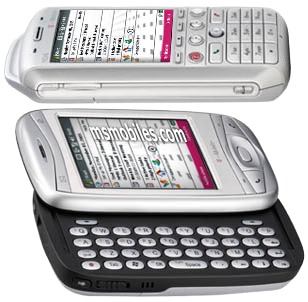
Pocket PC Addict - Home
Attention T-Mobile US customers! Not all is lost. Big daddy Deustche Telekom still loves you!
T-Mobile US finally gets some devices or interest. Smile Coming February 2006 T-Mobile US will be picking up the MDA Pocket PC Phone (HTC Wizard) and the SDA Smartphone (HTC Feeler) that have been popular in Europe. Pre-Order yours today!
T-Mobile MDA Handheld
The new T-Mobile MDA is a messaging powerhouse, with a full keyboard that slides in the sleek device. It offers messaging options from simple text and instant messaging to powerful picture and video messaging. Plus the T-Mobile MDA is designed to take advantage of the T-Mobile Total Internet network with GSM, GPRS, EDGE, and the extra speed you need at thousands of T-Mobile HotSpot WiFi locations.
T-Mobile SDA Smartphone
The T-Mobile SDA is a super sleek smartphone that makes it easy to stay connected and organized. With the familiar features of Microsoft Outlook, you can keep your calendar, contacts, and e-mail always up to date and with you on the go... without the bulkiness of a standard PDA.
Now all you iPAQ h6315 users have something to look forward to.
msmobiles.com - Moto Q cancelled

msmobiles.com - Moto Q cancelledMoto Q cancelled
January 20, 2006 [MS Smartphone]
Update: apparently Motorola Q is not cancelled - just being delayed...
After Motorola MPx100 MS Smartphone, Motorola MPx Pocket PC phone, now also Motorola Q:
... has been cancelled. Motorola has been advertising Moto Q smartphone with phrase "11.5 mm - the thinnest QWERTY phone available to-date", but clearly the word "available" was an exaggeration.
Apparently Motorola France informed that launch of Moto Q was cancelled in Europe. Moto Q may be launched still in USA but despite the fact, that previously Verizon-branded images of Moto Q leaked, Moto Q was not launched at CES 2006 and it looks like Motorola has problems to find mobile operator in USA also for CDMA version of Moto Q.
It looks also that Motorola's alliance with Apple corporation is wobbly: Motorola ROKR E2 has no iTunes at all and new Motorola RAZR V3x is sold without iTunes, despite initial announcements that it will have iTunes on board. So also hopes that we will see, thanks to Motorola, a Windows Mobile phones with iTunes on board - are also gone...
Nothing is certain yet and we are rather in rumor phase, but it looks like Motorola has not found mobile operators willing to sponsor launch of Moto Q. Particularly: Verizon Wireless is selling now the fantastic Windows Mobile Treo and introducing Moto Q could probably confuse consumers and finally Verizon decided not to sell Moto Q.
Sunday, January 15, 2006
UPDATE: OQO Model 01+ @ Mobility Today
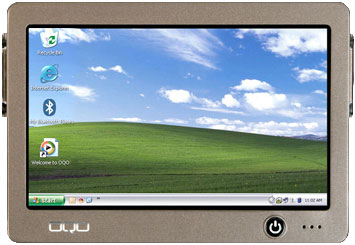
UPDATE: OQO Model 01+ @ Mobility Today
UPDATE: OQO Model 01+
By David Ciccone, posted Yesterday
Reader Comments: 11
Bringing the mobile professional true portability!
The box arrives!
For the past 5 years Jory Bell has had a vision to deliver one of the most portable laptop computers in the world. One of the most interesting parts of this story was that 5 years ago I actually received a call from Jory telling me about this innovative product. We chatted for a while and were looking to meet up at Princeton University so he could show me the concept device. Unfortunately due to a scheduling conflict he had to cancel and I was not able to actually see the concept device. As the years went buy I continually checked back with OQO to see where things stand and was starting to wonder if this OQO was vaporware. To my surprise a year and a half ago OQO announced the OQO Model 01. With every first model that goes out many consumers tend to sit back and see what the majority says about the computer. For one, the OQO was a hit from the beginning! Majority of the time OQO could not keep this device in stock nor keep up with the huge demand of the smallest ultra portable to ever hit the market.
Box Contents
On September 27th, 2005 OQO announced the second generation OQO named the OQO Model 01+. The 01+ packed some more juicy features such as a 1 GHz processor, 30GB HD, 512MB RAM, Wi-Fi®, Bluetooth®, USB 2.0, FireWire®, audio, thumb keyboard, 800x480 indoor/outdoor readable LCD (ships with: removable lithium polymer battery, docking cable, desktop stand, universal power supply, carrying sleeve, and digital pen.). During this review I will go over all aspects of the Model 01+ such as box contents, design, look and feel and functionality
The OQO Model 01+ has the smallest footprint out on the market today measuring 4.9”x3.4”x0.9”. When you receive your OQO Model 01+ you will be pleasantly greeted with a black box perfectly nesting your new ultra portable. Inside the box you receive Universal power supply (air/auto adapters included) ,Docking cable , Desktop stand , Digital pen and a Carrying sleeve. Many people have complained about the docking cable stating it was just too cumbersome to carry with you. Honestly with all the negativity I have heard I was expecting a cord the size of a human intestine, I was way off! The cord is actually smaller than my power cord for my IBM Thinkpad. If you look at the photo below you will notice is isn’t nearly as bad as many have said. The OQO docking cable has a bunch of nice add-ons such as 3D Accelerated 1280x1024 VGA video output, additional usb, additional Firewire, Ethernet, DC power and Audio out.
Subscribe to:
Posts (Atom)