Settlement reached in BlackBerry patent dispute - BlackBerry Battle - MSNBC.comSettlement reached in BlackBerry patent case
Research in Motion pays NTP $612.5 million; devices to stay on
Research In Motion Ltd., the maker of the BlackBerry e-mail device, announced Friday it has settled its long-running patent dispute with a small Virginia-based firm, averting a possible court-ordered shutdown of the BlackBerry system.
RIM has paid NTP $612.5 million in a “full and final settlement of all claims,” the companies said.
At a hearing last week, NTP had asked a federal court in Richmond, Va., for an injunction blocking the continued use of key technologies underpinning the BlackBerry wireless e-mail service.
Friday, March 03, 2006


Sunday, February 26, 2006
In Sony's Stumble, the Ghost of Betamax - New York Times
In Sony's Stumble, the Ghost of Betamax - New York TimesFebruary 26, 2006
In Sony's Stumble, the Ghost of Betamax
By KEN BELSON
AT first glance, Amir Majidimehr does not look like a game-changer in the battle to develop the next generation of DVD players and discs. As the vice president for Windows digital media at Microsoft, he neither steers a Hollywood studio nor controls one of the many consumer electronics giants that are betting billions of dollars on one of the two new formats that promise to play high-definition movies and television shows.
Yet when he and his team in Redmond, Wash., decided last September to abandon their neutral stance and to support Toshiba and its HD-DVD standard over the Blu-ray format led by Sony, the unexpected change of heart reverberated through the technology industry.
Suddenly, Toshiba's seemingly quixotic defense of its format had new life. Intel joined Microsoft in backing HD-DVD. Hewlett-Packard withdrew its exclusive support of Blu-ray. This month, another member of the Blu-ray camp, LG Electronics, hedged its bets, too, signing a deal to license Toshiba's technology.
And earlier this month, one of the main reasons underpinning Microsoft's move to shuck its neutrality — the complexity of producing Blu-ray technology — led to Sony's acknowledgment that it might delay this spring's scheduled release of its PlayStation 3 game console partly because the needed technology was still being worked out.
The possible delay and the Blu-ray group's loss of its once-commanding lead are not encouraging developments for Sony in its attempt to revive its electronics group after a series of bungles. PlayStation 3 is crucial to Sony's future, and not only because the latest version of its gaming consoles could generate billions in revenue; the new machines will include disc drives that will turn them into Blu-ray DVD players as well.
"The PlayStation is more than a game system to them; it's one of their attempts to own the digital living room," said Robert Heiblim, a consultant to electronics companies. "Blu-ray is also critically important to get right. They don't want to be weak in an area they feel they can dominate."
A DECADE ago, a prospective death match between competing first-generation DVD players was averted when Sony and Philips agreed to back down and join the Toshiba/Warner Brothers side, in exchange for a share of royalties that all DVD player producers pay to the format's creator. Now, no truce seems near, as neither side wants to settle for a small piece of what could be a big electronics success.
So consumers and retailers may be in for a reprise of the confusing VHS-Betamax showdown of the early 1980's, with Toshiba replacing Matsushita as Sony's adversary. But Sony hopes to have a happier resolution this time. Sony lost the battle two decades ago when its highly regarded Betamax technology was defeated by VHS, a more widely accepted alternative.
Once again, the differences between the two technologies are not huge. And a growing chorus of critics, including some studio chiefs eager to sell new products as quickly as possible, call the Blu-ray format unnecessarily elaborate and expensive.
The first HD-DVD machines from Toshiba and the competing Blu-ray players from Sony, Samsung and the other Blu-ray companies will all play movies with crisper pictures, enhanced sound and a bevy of interactive features like pictures within pictures and links to the Internet. The machines will also play older DVD's.
Technophiles got a preview of the HD-DVD technology on Wednesday at an electronics store on the Upper West Side of Manhattan. As Jessica Simpson and Johnny Knoxville cavorted in the movie "The Dukes of Hazzard," prospective buyers were able to see the difference between a plain old DVD and the high-definition kind. But the main feature was the price. Toshiba will sell two players starting in March; one will cost just $499, half the price of the cheapest Blu-ray machines, the first of which will hit the stores this spring. Samsung's first machine will cost $1,000, while Pioneer's Blu-ray player will run $1,800.
Toshiba executives have said that because more high-definition movies will be distributed over the Internet in coming years, they have essentially upgraded existing DVD technology to keep prices down. Blu-ray discs, however, include an architecture that Sir Howard Stringer, Sony's chairman, calls "revolutionary, not evolutionary."
The Blu-ray camp is trying to create a brand-new technology that will accommodate features that are still to be created. In preparation for that future, Blu-ray discs will store 25 gigabytes of data, compared with the 15 gigabytes on comparable Toshiba discs and 4.7 gigabytes on today's DVD's.
The first batch of high-definition DVD's from the studios' vaults will highlight rich graphics, vivid scenery and fast-moving action. The films include "Rambo," science fiction thrillers like "The Matrix" and "Dune" and animated features like "Ice Age." The DVD's are generally expected to cost $19 to $25.
But movies are only one front in the format war. In throwing its weight behind Toshiba, Microsoft has expanded the fight into the computer and game industries. Later this year, Microsoft will start selling an external drive for its Xbox game that will play HD-DVD discs, countering Sony's effort to turn PlayStation into a high-definition DVD player by adding Blu-ray technology. Microsoft and its ally Intel have also convinced Hewlett-Packard to consider making HD-DVD drives for computers. This would give Toshiba an answer to Dell, which remains committed to the Blu-ray format.
"The pendulum is swinging back to the HD-DVD camp," said John Freeman, who runs a technology research firm, Strategic Marketing Decisions, which last year declared Blu-ray the front-runner. "It will be interesting to see if the Blu-ray group can recover. It's only a matter of time before people start backing out of the Blu-ray camp."
Still, even with Microsoft on board, Toshiba may have only closed the gap, not overtaken the Blu-ray group. With Samsung, Panasonic and others siding with Sony, consumers will see more Blu-ray machines in the stores. And Blu-ray has more studios in its camp, which means more choice in movies. Every major studio except Universal plans to release Blu-ray DVD's, while Toshiba has commitments from only Universal, Warner Brothers and Paramount.
But one thing is clear: given Microsoft's growing power and scope in the entertainment realm — thanks to its Xbox machines, its media player software and forays into Internet television — its support of HD-DVD has deepened, and has probably prolonged, the format battle. That means consumers must figure out each format's advantages and risk being stuck with obsolete machines if one camp backs down.
This is giving retailers fits, not only because they have to carry twice as many machines and discs, but also because they have to train their employees to explain the differences between the standards.
"Both sides are digging in their heels and stupidity has prevailed," said Joe McGuire, the chief executive of Tweeter, a high-end electronics chain. Mr. McGuire called the failure of the two camps to agree on a single format "criminal" and said he would have a hard time advising consumers. "The answer to which is better is: 'We don't know,' " he said. "I'm tempted not to sell anyone these machines."
But sell they will, because retailers — and studios — need something new to throw at consumers now that DVD players are in 82 percent of American homes. Sales of DVD players are "pretty dead," said John LaRegina, a senior buyer at P.C. Richards, which has 49 stores in the New York area.
But Mr. LaRegina said format battles confused consumers and gave them an excuse not to buy. The uncertainty over who may win also forces film studios and electronics companies to hedge their bets.
Warner Brothers and Paramount, which were originally committed only to HD-DVD, decided last fall to make movies in both formats.
"It was very, very clear that Sony was not going to back down from Blu-ray, and they are basically betting their company on it," said Kevin Tsujihara, the president of Warner Brothers Home Entertainment Group. But, he added, Toshiba has mounted "something of a comeback" by winning endorsements from Microsoft and Intel.
Some Blu-ray companies are also waiting to see how the market develops before jumping in with machines of their own. If the PlayStation 3 is priced below Toshiba's $500 player, it could double as the poor man's Blu-Ray player and undercut Sony's partners. (It will also cost Sony dearly; Merrill Lynch issued a report on Feb. 17 estimating that the first PlayStation 3 players would cost about $900 to produce. If so, Sony could end up with substantial losses on those machines if they are priced around $299, as analysts expect, to compete with the Xbox 360, which has been out since November.)
"It's too early to move into this market," said Katsuhiko Machida, the president of Sharp, a Blu-ray company that has not released details for its players in the United States. "Blu-Ray won't be a big business until probably 2008," he said, so "we can watch and see what happens."
Those doubts are a far cry from Blu-ray's bravado last summer and fall, when it won endorsements from Fox, Lions Gate, Warner Brothers and Paramount. Those agreements, coupled with the presumed sway of the PlayStation 3, led industry analysts at Forrester and elsewhere to predict that Blu-ray would ultimately win the format war.
But two unexpected and little-noticed decisions by the Blu-ray group last spring managed to alienate Microsoft and ultimately revive Toshiba's sagging fortunes.
First, Sony and the Blu-ray group adopted a Java program for interactive features. Microsoft favored a rival called iHD because, among other things, it would work better with its new Vista operating system. The Blu-ray group's board also approved an encryption technology called BD+, which Mr. Majidimehr, Microsoft's vice president for Windows digital media, deemed superfluous.
THESE decisions led Mr. Majidimehr to take a deeper look at the Blu-ray format and whether it would be more expensive to produce, as Toshiba had long contended. Mr. Majidimehr and his deputy, Jordi Ribas, spent the next few months on the phones and flying to Asia to meet with Sony, Panasonic and the other Blu-ray companies.
"We asked them if they are serious, and they told us they were," Mr. Majidimehr said, referring to the added software. Microsoft also received more data that showed that the Blu-ray group was not meeting its targets for producing discs and optical drives. "We were getting a lot of data saying the HD-DVD format was a walk in the park and Blu-ray was having trouble developing theirs," Mr. Majidimehr said.
Microsoft's announcement last September raised alarm bells at Hewlett-Packard, which was coming to similar conclusions. Hewlett-Packard worried that the software included in the Blu-ray format would cost so much in royalties that H-P would be unable to add affordable DVD drives to its computers.
Blu-ray drives cost up to 75 percent more than HD-DVD drives, according to Maureen Weber, the general manager of the personal storage group at Hewlett-Packard and a former spokeswoman for the Blu-ray coalition. "There's not a lot of elbow room," she said of the thin profit margins on computers. "The economics of HD-DVD make a lot more sense for us. I'm starting to wonder about the manufacturing ability of Blu-ray."
A Blu-ray spokesman, Andy Parsons, says his group's royalties, which have not yet been set, will be far lower than critics expect. He also disputed the idea that Toshiba had any advantage because Microsoft or Hewlett-Packard might promote the use of HD-DVD in computers.
"DVD's are about movies and people watch them in their living rooms," he said. "How many people actually use their computer drives to sit and watch movies?"
He added that the price of Blu-ray machines and discs was bound to fall as volume rose. Besides, he said, Toshiba is missing the point by selling cheaper machines, because the first people who buy new technologies typically care less about cost and more about the technology.
There are other industry analysts who contend that Microsoft is simply propping up Toshiba to further its own aims, like countering the PlayStation and combating the spread of Sun's Java software. Nonetheless, Toshiba is happy for the backing, given that the format was written off for dead just a few months ago.
"There's no doubt that everyone has various agendas," said Mark Knox, an adviser to the Toshiba promotion group. "But whatever their agenda, Microsoft's support has been a huge boon to HD-DVD."
For Sony, a fortified rival spells trouble. Not only does it make it harder for Blu-ray to catch on, but it raises questions about Sony's approach of trying to create new formats when consumers turn out to be content with something less ambitious.
That is the lesson Sony learned the hard way in the 1980's with Betamax, and more recently when Apple outdid the Walkman with the iPod. Now it is Toshiba's and Microsoft's turn to challenge Sony's strategy.
Martin Fackler contributed reporting for this article.
Tuesday, January 24, 2006
T-Mobile's SDA and MDA get prices and dates - Engadget

T-Mobile's SDA and MDA get prices and dates - EngadgetT-Mobile's SDA and MDA get prices and dates
Posted Jan 24th 2006 9:21AM by Ryan Block
Filed under: Cellphones, Handhelds
We're pretty sure some of you are well sick of hearing about T-Mobile's forthcoming MDA and SDA Windows Mobile handhelds due out next month -- but for those whose attention we've still got, we have solid prices and still somewhat tentative release dates for ya. Expect the SDA (aka the HTC Tornado) to run you $299.99 , and for it to probably be released on February 13th, and the MDA (the HTC Wizard) will set you back $399.99 and should probably be released a week later on February 20th. Whomever said the best things in life are free obviously wasn't addicted to cellphones.
Sunday, January 22, 2006
Mobile-review.com Communicators, smartphones and PDA in 2006 - the forecast
Mobile-review.com Communicators, smartphones and PDA in 2006 - the forecastCommunicators, smartphones and PDA in 2006 - the forecast
In the beginning of the new year it's customary to sum up the previous year and also make forecasts, guess trends of the upcoming year. We've try to imagine what we are for in 2006, which models will come out, which trends will be most clear and bright. We'll build our forecast on the facts. The accuracy of it doesn't depend on the author's insight, but on how the companies will complete their plans for 2006, marked in their documents as "confidential".
The nature of our occupation makes us be in the know of the facts, announcements and company's plans for the next year. We use the gathered info to prepare some analytical reports and usually do not publish it, so why have we decided to publish such material this time? In the second half of 2005 there emerged plenty of "secret" info on companies' plans by way of rumors and unverified data, it had been exaggerated and reprinted many times by electronic and then print mass media sources. In some cases the leaders of the companies were too open to the press. Many things we discuss today had been already published. Our task is rather to systematize the info, whether to support it or contradict. In result we'll come to some conclusions. We are not to unveil all the plans by the companies, we don't mean to affect the current sales, by publishing full specifications and photos (this won't happen, I'd repeat, many things have already been voiced). Well, we'll just slightly unveil the curtain.
About PDA market prospects in brief
To say the truth, the idea of this article came up after I tried to write about the year results for PDA. However the theme has events for several paragraphs, moreover the key points were discussed in the article "Idea crisis on the PDA market". The falling sales are kept on, the number of new models is minimum, there is no new PDA with a VGA-screen, the final end of Palm OS has taken place, we see the increasing average price of the sold PDA. At the same time the PDA market in 2006 will feature the following:
* PDA sales are on a swift fall, the number of new PDA models will be even less. Over the year the sales will drop by some 15%. GPS popularity will prevent from a sharper fall. All manufacturers are gradually turning down PDA in favor of communicators;
* Almost all vendors will release models with built-in GPS-receiver. There will be extremely few handhelds without the built-in satellite navigation module. In its turn the process of total GPS integration will result in higher average price of the PDA;
* Another player (the second echelon) will leave the market;
* The slot for Compact Flash cards will eventually become the history, it will no longer be installed in the new PDA, Secure Digital memory format will strengthen its positions;
* Built-in cameras will follow the way of Compact Flash standard, the manufacturers realized that built-in cameras are useless in PDA;
* The manufacturers won't use integrated HDD in PDA, only Palm will offer the update of its LifeDrive with higher capacity HDD. Some models will be supplied with large flash-memory size - 128 - 512 MB and higher, as the alternative to the built-in HDD;
* We expect at least 5 PDA models with a VGA-screen: 2 tiny Acer n300 series models (the most interesting), 2 Fujitsu Siemens PDA (one with GPS, the other without it), 1 model by Asus under the code name Leipzig meant for GPS use mainly - a 4" LCD, the car use;
* In 4Q 2006 there will come out several models on a new Intel processor;
* HP doesn't plan to release PDA in near future. The update to WM 5.0 for HP iPaq hx 4700 will be cancelled with a 50% probability, in April 2006 the production of the model will be stopped;
* Inspired by the success of Sony PSP some players will try to enter the market of portable game consoles with Windows devices. These attempts will fail as in case with Tapwave Zodiac with Palm OS. By the end of 2006 the sales of the PSP only will exceed annual sales of all PDA twice as much at least.
As we see the picture is far from being rosy. Like anything related to the future any of the points can get changed, happen with higher or less probability, but we think these events are most likely. We've done with PDA and let's pass over to communicators and smartphones.
Cancelled models
Plans are just plans, the reality makes its corrections. The companies delay the release of several models or even cancel them for some reasons. Let's see which models had been cancelled.
Asus P515 slider based on Windows Mobile 5.0 should have come out late in 2005, but the delay of Asus P505 and the preparation of new models forced the company to cancel this device. As far as the model is cancelled we decided to publish its photo. In functionality it is similar to Samsung i750 communicator. It wasn't announced.
The HTC model under the code name Blizzard should have also appeared in late 2005, but it was cancelled. It should have offered a combination of the smartphone without the touchscreen and the communicator with the touchscreen (the touchscreen plus the ordinary digital keyboard). The model wasn't announced.
The long-awaited announced Moto Q smartphone was cancelled in the end of 2005, as well as the number of Motorola handsets. The model will keep on roaming from one exhibition to another, but it won't get to the shops, exactly the same story was with Motorola MPx.
Operating systems
According to IDC in 2004 the share of Symbian OS in communicator and smartphone sales (converged device - the company's terminology) made up 55.9% and Windows Mobile - 12.7%. The company predicts that Symbian share will grow to 60% by 2009, and Windows Mobile - to 17.3%.
In near future there will be no sense in differing the terms of the smartphone and the communicator. Given the operating systems the distinctions will be erased.
At the Mobius 2005 conference Microsoft officially confirmed that the next Windows Mobile version (the code name Photon) will eventually unite both branches: Windows Mobile for Pocket PC and Windows Mobile for Smartphone. There will be a single operating system instead of two. The main works to merge both branches were held in Windows Mobile 5.0.
The similar erasing of borders between communicators and smartphones will be inside the Symbian platform. The company blabbed out not intending to. We can read the following at the official FAQ at S60.com site, "Nokia has produced two other platforms, the Series 40 Platform and the Series 80 Platform, and it has a device, the Nokia 7710 widescreen smartphone, that is based on Symbian OS. <…> Note that features of the Nokia 7710 smartphone will be fully integrated into the S60 platform in 2006". You shouldn't be wise to understand it deals with the merger of two platforms, the support of touchscreen in the S60 platform.
We'll see devices based on new OS not earlier than 2007. Alas, we won't wait till the implementation of Linux in smartphones, which could have been the standard, the fact will contain much the development of this operating system. Now let's pass over to the vendors.
Devices on Symbian core
The market of Symbian-based devices tends ever to monopolization. Nokia fortifies its positions, Sony Ericsson keeps the stability. Panasonic announced it closed the GSM-phone direction as well as the smartphone direction, BenQ-Siemens turned down Symbian. There are just two nominal rivals left - Samsung and Lenovo, which can't make a strong competition to Nokia. The Finnish company stays the price and technology leader.
Nokia. The lion's share of smartphone sales falls on Nokia's S60 platform. We can say that the Symbian destiny is in hands of Nokia. In 2006 the number of new S60 models by Nokia will double (8 models have been already announced, which will be commercially available in 2006).
We won't speak about the models announced and much discussed, let's see what is to expect in 2006. All new products will be based mainly on the S60 3d edition platform. Several models, for example, the budget Nokia 2250 will be based on the old S60 version. Old programs are incompatible with the new S60, they need to be recompiled and signed. About half a year will pass, till we have a necessary set of programs for the new operating system. The Bluetooth and Wi-Fi pair will become the standard as the miniSD memory standard.
This is the clamshell with 3-megapixel camera (3x optical zoom - for the first time) and a large screen. The model is in a classical shell with the functionality of Nokia N80. In various combinations we'll see such functions as HDD, large internal flash-memory, mobile digital DVB-H, satellite GPS navigation. There won't be a Nokia model that would absorb all these functions. In the second half of the year Nokia will step over the 3-megapixel line. The company will keep on experimenting with the form-factor.
By closing the development of the Series 80 platform Nokia faced a temporally vacuum, when the life cycle of Nokia 7710 is approaching to the end and it's still far till the touchscreen in the S60 platform. In part it is replaced by Nokia 770, but this is the PDA, not the communicator. The company redeemed BenQ P31, a UIQ communicator, from BenQ and called it Nokia 6708. Thus the company hit 3 goals: the model filled the vacuum, there appeared a direct rival to Sony Ericsson communicators, money wasn't spent on the development.
Sony Ericsson. In addition to the already announced Sony Ericsson P990 (the review is here) the company is preparing a simplified version with the keyboard similar to some BlackBerry models. The device will have smaller size and there won't be a camera. The models will emerge on the market with a short time gap. A fundamentally new device is to appear only in 2007.
Nokia is the unconditional leader in the Symbian-segment, Sony Ericsson is staying apart. Other companies are following with at least a year's technological gap and a limited model line. The year of 2006 won't break this alignment of forces, it'll only strengthen Nokia's positions.
Windows Mobile devices
This operating system is trying to win its share of the market. If in the Symbian-segment we'll clearly see the monopolization, the Windows Mobile segment in 2006 will show us a burst of the number of manufacturers (we mean manufacturers and not trademarks). Until this year the big share of new smartphones and communicators was recorded by the Taiwanese company High tech Computer (HTC). In 2006 this trend will be broken for the first time, the company will get strong rivals, but keep its leadership in sales volume and the number of new models. It's hard to believe, at least 16 vendors (mainly Taiwanese companies) will fight their place under the sun. And there will be ever more trademarks for the devices.
Vendors of Windows Mobile smartphones / communicators in 2006:
* HTC
* Samsung
* Asus
* Kinpo
* BenQ-Siemens
* Quanta Computer
* GIGABYTE
* Motorola
* Acer
* Wistron (Annextek)
* Sharp
* Lenovo
* CMCS
* E-Ten
* MiTAC
* Tatung
HTC. Last year the company's plans were published in the Internet (specs, photos), so we can talk about them in details. In all, the company expects to release 6 communicators and 2 smartphones in 2006. 4 of them support UMTS and another 4 - GSM/EDGE. The majority of new devices (except for modifications of old models) will be switched to microSD memory standard.
Let's have a look at the upcoming models in the light of the current models:
* HTC Wizard - the model with the side sliding keyboard. It had been developed in two directions. Firstly, we have a UMTS version, HTC Hermes, the models are similar in design and functionality. Secondly, HTC Herald is set for the end of the year, it's the same HTC Wizard but in thin shell (18 mm thin), with less capacious battery and microSD memory standard.
* The keyboard-less HTC Magician has got the successor HTC Prophet (the European premier has been suspended till March, read the review here), not everybody welcomed the model enthusiastically. HTC Magician will be really continued in 3Q 2006. This will be HTC Trinity based on Intel processor, built-in Wi-Fi and Bluetooth, A-GPS and HSDPA support. The design has been inherited from HTC Prophet.
* A fundamentally new model, HTC Muse , will come out in the mid of the year. It has been obviously created under the iPod popularity. It has a square (2.4") LCD, there is enough space for the digital keyboard, but instead we see a big navigation and soft keys (that makes it closer to the iPod design). I'd note 4GB of built-in flash-memory, an FM-radio, a remote control, a TV-out. We see the device is first of all oriented at the opportunity to listen to the music and watch video, including on a big screen. The weak points are the square LCD and the lack of Wi-Fi, in the rest the model is interesting.
* Another new direction is with the navigation model HTC Artimes. It lacks Wi-Fi and UMTS, however it attracts attention with a GPS-receiver, a digital compass and a scrolling wheel instead of the navigation button (like in Samsung i300). The release date is set for the mid of the year.
* At last we see a clamshell among HTC smartphones (HTC Star Track). There will be also a UMTS-smartphone (HTC Breeze). Both models will be slim. The release date - the end of 2Q-the beginning of 3Q.
What won't we see by HTC? Independently of Motorola the company has started developing a slim smartphone with the QWERTY-keyboard and landscape screen orientation. The model has got the code name HTC Excalibur. Should we mention that it was very like as Moto Q. Following the Motorola announcement HTC decided to cancel its model. Besides we won't see the successor of HTC Universal. The heir of HTC Universal will come out only in 2007. Now let's mention the companies, which will release HTC products under their brands.
HP (HTC production). The company took the course on communicators instead of PDA. It plans to release 4 new models in 2006 - 3 communicators and 1 smartphone. In the beginning of the year HP will introduce HP iPaq hw6900, an update of HP iPaq hw6515 (the review is available here) with Wi-Fi and one slot for expansion, Windows Mobile 5.0. By the end of the year the company will unveil two more communicators. One of them will be a slightly changed HP iPaq hw6900, the other will have a sliding keyboard like HTC Wizard. Besides the company will release HTC Tornado smartphone in slightly different design under its brand (the review is available here).
Fujitsu Siemens (HTC production). In the middle of the year the company expects to release its 3G communicator with the QWERTY-keyboard and the square LCD (like Palm Treo 700w and HP iPaq hw6xxx), it will also have built-in GPS. There will be both Bluetooth and Wi-Fi. The model will get the index FS Pocket LOOX T810/T830 (the modifications differ in the camera availability). It will be announced in 1Q and offered for sale in the end of 2Q.
Palm (HTC production). On early dates of the new year there has appeared the first Palm model powered by Windows Mobile OS - Palm Treo 700W communicator. According to the company the demand suppressed all expectations. The leaders of Palm turned to speak much surprisingly and unveiled their plans for the year (after a shareholder of Palm had published the info): in 2006 there will be 4 new communicators. During 6 months the Treo 700w will be exclusively manufactured for Verizon CDMA-network, and only then we see a GSM-version for the rest of the world (summer 2006). Palm Treo 700p is the same 700w, but with Palm OS Garnet and a higher quality LCD. It will be an exclusive for the US network Sprint for some period. The model under the code name Hollywood is the top of the line with the support of 3G-networks and the absence of the external antenna. It will be introduced in 2Q. And finally the last model - the budget Lowrider, the approximate price is $300. Well, we've finished with HTC products.
Asus. The company has impressive plans - the release of 2 smartphones and 3 communicators. In April the company will demonstrate its communicator under the code name Galaxy (see the photo above). It features an ordinary digital keyboard and needless to say Bluetooth and Wi-Fi, a 2-megapixel auto focus camera. In 3Q there will be the announcement of the model called Mars standing out for 3G support. And later we will see Mars II, which will have a side sliding keyboard like HTC Wizard. Asus P305 smartphone will be announced in April (a dull 3G-clamshell), it will be replaced by the Scorpio model in the end of the year, it will differ in a better camera and built-in GPS, the miniSD slot will be replaced with the microSD slot. It's hard to believe that Asus will complete its plans, most likely we'll see 2 models on the market.
Samsung. This Korean company will offer 4 new GSM-devises based on Windows Mobile. They are Samsung i300x with higher capacity disk and new OS, Samsung i400 with 10 GB HDD, Samsung d300 smartphone, a slim slider with the functions of Samsung i750, new OS and a 3-megapixel camera.
Kinpo. It's a relatively young player on the market. There is just one announced model - Kinpo S600 (known under Qool trademark). In future it will get Wi-Fi and WM 5.0 operating system. In 2006 the company plans to release 7 (!) communicators, gradually upgrading the functionality of the initial model and using slider and side slider form-factors. One of the models will be with built-in GPS. I'd note the "planet" code names of the products, for example, Jupiter, Titan, Mercury. Most likely we'll see maximum 2-3 models by Kinpo in 2006.
GIGABYTE. A new and ambitious manufacturer has already managed to stand out with its unique slider GIGABYTE g-Smart (a built-in analog TV-receiver, for the first time). The company plans to release 6-8 new communicators in 2006 (with such functions as GPS, digital TV DVB-H, extended multimedia opportunities like in HTC Muse).
We've told you about the most interesting models. We'd also note the Acer communicator expected in the middle of the year, the return of MiTAC and the market entry of Tatung (however, with one model).
Conclusion and trends
We've summed up the PDA market in the beginning of the article, here we just draw main forecasts for communicator and smartphone market in 2006:
* Two main operating systems on the market - Symbian and Windows Mobile derivatives - will keep their positions, Symbian leading greatly (the lion's share falls on Nokia). Linux OS won't get outside the Asian region;
* There will run diametrically opposite processes inside the segments: growing monopolization around Nokia in the Symbian segment and a burst of the number of vendors in the Windows Mobile segment;
* The growth of Windows Mobile OS share will depend solely on the success of negotiations with operators, international companies/brands like Dell. "Paper" plans of many companies are deliberately impossible to held more successful negotiations;
* There will be kept the trend to unify smartphones and communicators, branches of one operating system will be merging.
Technological trends in 2006:
* Manufacturers refuse MMC memory standard and its derivatives in favor of miniSD and microSD, the overwhelming majority of devices will use these very memory standards;
* Half of the devices will support 3G, some models will support HSDPA (3.5G). The GPS-receiver will be found often - one of the main trends;
* Wi-Fi will become the standard for the most devices;
* There will appear special multimedia-oriented devices with large memory size (large built-in flash-memory will be more frequent than HDD);
* Devices with the support of DVB-H will come out in the second half of the year;
* The side slider form-factor (like in HTC Wizard) will be most popular;
* Windows Mobile devices will be after Symbian-devices in camera quality, 2-megapixel resolution will be the typical one. Half of the devices will be offered for sale in 2 modifications - with the camera and without it;
* Business card recognition will become the standard utility.
Saturday, January 21, 2006
Pocket PC Addict - Home
Pocket PC Addict - Home
Attention T-Mobile US customers! Not all is lost. Big daddy Deustche Telekom still loves you!
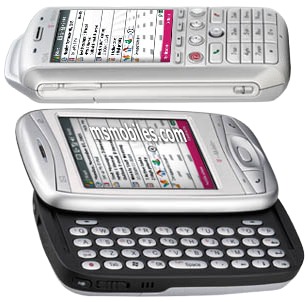
T-Mobile US finally gets some devices or interest. Smile Coming February 2006 T-Mobile US will be picking up the MDA Pocket PC Phone (HTC Wizard) and the SDA Smartphone (HTC Feeler) that have been popular in Europe. Pre-Order yours today!
T-Mobile MDA Handheld
The new T-Mobile MDA is a messaging powerhouse, with a full keyboard that slides in the sleek device. It offers messaging options from simple text and instant messaging to powerful picture and video messaging. Plus the T-Mobile MDA is designed to take advantage of the T-Mobile Total Internet network with GSM, GPRS, EDGE, and the extra speed you need at thousands of T-Mobile HotSpot WiFi locations.
T-Mobile SDA Smartphone
The T-Mobile SDA is a super sleek smartphone that makes it easy to stay connected and organized. With the familiar features of Microsoft Outlook, you can keep your calendar, contacts, and e-mail always up to date and with you on the go... without the bulkiness of a standard PDA.
Now all you iPAQ h6315 users have something to look forward to.
msmobiles.com - Moto Q cancelled

msmobiles.com - Moto Q cancelledMoto Q cancelled
January 20, 2006 [MS Smartphone]
Update: apparently Motorola Q is not cancelled - just being delayed...
After Motorola MPx100 MS Smartphone, Motorola MPx Pocket PC phone, now also Motorola Q:
... has been cancelled. Motorola has been advertising Moto Q smartphone with phrase "11.5 mm - the thinnest QWERTY phone available to-date", but clearly the word "available" was an exaggeration.
Apparently Motorola France informed that launch of Moto Q was cancelled in Europe. Moto Q may be launched still in USA but despite the fact, that previously Verizon-branded images of Moto Q leaked, Moto Q was not launched at CES 2006 and it looks like Motorola has problems to find mobile operator in USA also for CDMA version of Moto Q.
It looks also that Motorola's alliance with Apple corporation is wobbly: Motorola ROKR E2 has no iTunes at all and new Motorola RAZR V3x is sold without iTunes, despite initial announcements that it will have iTunes on board. So also hopes that we will see, thanks to Motorola, a Windows Mobile phones with iTunes on board - are also gone...
Nothing is certain yet and we are rather in rumor phase, but it looks like Motorola has not found mobile operators willing to sponsor launch of Moto Q. Particularly: Verizon Wireless is selling now the fantastic Windows Mobile Treo and introducing Moto Q could probably confuse consumers and finally Verizon decided not to sell Moto Q.
Sunday, January 15, 2006
UPDATE: OQO Model 01+ @ Mobility Today
UPDATE: OQO Model 01+ @ Mobility Today
UPDATE: OQO Model 01+
By David Ciccone, posted Yesterday
Reader Comments: 11
Bringing the mobile professional true portability!
The box arrives!
For the past 5 years Jory Bell has had a vision to deliver one of the most portable laptop computers in the world. One of the most interesting parts of this story was that 5 years ago I actually received a call from Jory telling me about this innovative product. We chatted for a while and were looking to meet up at Princeton University so he could show me the concept device. Unfortunately due to a scheduling conflict he had to cancel and I was not able to actually see the concept device. As the years went buy I continually checked back with OQO to see where things stand and was starting to wonder if this OQO was vaporware. To my surprise a year and a half ago OQO announced the OQO Model 01. With every first model that goes out many consumers tend to sit back and see what the majority says about the computer. For one, the OQO was a hit from the beginning! Majority of the time OQO could not keep this device in stock nor keep up with the huge demand of the smallest ultra portable to ever hit the market.
Box Contents
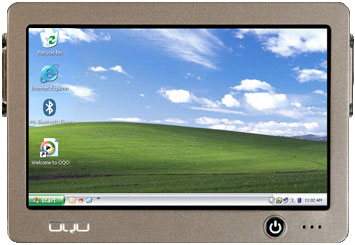
On September 27th, 2005 OQO announced the second generation OQO named the OQO Model 01+. The 01+ packed some more juicy features such as a 1 GHz processor, 30GB HD, 512MB RAM, Wi-Fi®, Bluetooth®, USB 2.0, FireWire®, audio, thumb keyboard, 800x480 indoor/outdoor readable LCD (ships with: removable lithium polymer battery, docking cable, desktop stand, universal power supply, carrying sleeve, and digital pen.). During this review I will go over all aspects of the Model 01+ such as box contents, design, look and feel and functionality
The OQO Model 01+ has the smallest footprint out on the market today measuring 4.9”x3.4”x0.9”. When you receive your OQO Model 01+ you will be pleasantly greeted with a black box perfectly nesting your new ultra portable. Inside the box you receive Universal power supply (air/auto adapters included) ,Docking cable , Desktop stand , Digital pen and a Carrying sleeve. Many people have complained about the docking cable stating it was just too cumbersome to carry with you. Honestly with all the negativity I have heard I was expecting a cord the size of a human intestine, I was way off! The cord is actually smaller than my power cord for my IBM Thinkpad. If you look at the photo below you will notice is isn’t nearly as bad as many have said. The OQO docking cable has a bunch of nice add-ons such as 3D Accelerated 1280x1024 VGA video output, additional usb, additional Firewire, Ethernet, DC power and Audio out.
Saturday, January 14, 2006
Google to offer personal home page for mobiles - Wireless World - MSNBC.com
Google to offer personal home page for mobiles - Wireless World - MSNBC.comGoogle to offer personal home page for mobiles
Move part of race to extend information services
Reuters
Updated: 2:06 p.m. ET Jan. 13, 2006
SAN FRANCISCO - Web search leader Google Inc. Thursday said it was now offering U.S. mobile phone users a personalized version of the Google home page tailored to work on most recently introduced mobile phones.
The Google Personalized Home page for mobile phones will allow consumers to conduct Web searches and check Gmail e-mail, news headlines, local weather reports or a list of stock prices -- all from one central page on their phones.
Google is racing with Internet rivals such as Yahoo , Microsoft, America Online and InfoSpace to extend the information services they already offer on computers to the browsers of mobile phones.
The Mountain View, California-based company plans to offer the personalized Google home page for mobile phone users in international markets in the coming weeks and months...
Sunday, January 08, 2006
Sony Reader Electronic Book In Pictures

Sony Reader Electronic Book In PicturesSony Reader Electronic Book
Blog : Blog, posted 8-JAN-2006 08:06, by M Freitas
The Sony Reader is going to be available in the USA soon and we bring some pictures taken during the 2006 International CES.
The devices ties together an electronic paper display with one-handed navigation and an interesting design. The Sony Reader is incredibly light, and it has a crisp black and white display.
That's right folks: this is not a colour device, and there is no backlight either. It is a book, an electronic one sure, but like any other paper book we will need some light to read it. Because of this, according to Sony, readers will not experience the fatigue associated with long term reading on an LCD
The Sony Reader is about .5 inches thin and can read Memory Stick and Secure Digital (SD) flash memory card (yes!).
The Reader can also store and display personal documents in Adobe PDF format, web content, and JPEG photos. The official press release says its battery life is equivalent to 7,500 page turns.
The high-resolution electronic paper display technology delivers a realistic print look. The result is readable text and graphics from a variety of viewing angles.
The Motorola Q Windows Mobile Smartphone in Pictures


The Motorola Q Windows Mobile Smartphone in PicturesThe Motorola Q Windows Mobile Smartphone in Pictures
Blog : Blog, posted 8-JAN-2006 08:19, by M Freitas
The Motorola Q Windows Mobile Smartphone wasn't announced during the 2006 International CES - but it was here alright!
The Motorola Q was spotted in the Motorola and Microsoft booths, and around the show floor. I also came close to it during the Urge party (a big party on Pure, Caesar's Palace to celebrate the Microsoft and MTV launch of their new Urge service).
Enough said. Just look at these pictures - I wouldn't mind replacing my Telecom Apache for one of these new Motorola Q on CDMA...
The last picture is of the new Motorola TXTR. The device communicates to Motorola (only) mobile phones, via Bluetooth. It allows users to send and receive SMS without taking the phone out of the pocket. It also maintains a copy of the mobile phone's address book so it's easy to find your friends and SMS at any time...
CoolSmartPhone.com - CES: DualCor Continues to Amaze

CoolSmartPhone.com - CES: DualCor Continues to Amaze: "CES: DualCor Continues to Amaze Print E-mail
By Gears. Published on 07 Jan 2006.
This DualCor device has kicked up quite a bit of media interest of late. It's a whole new kind of device which combines Windows XP Tablet Edition and Windows Mobile 5.0 in one device. Equipped with not one but two processors (a 1.5 GHz and 400 MHz one) the specs list is endless. It comes with 1Gb of DDR2 RAM, a 5 inch, 800x480, 262K colour touch screen, three USB Hi-Speed 2.0 ports plus a headset and phone jack, integrated Compact Flash Type II, mini-VGA port, speaker, microphone and mouse controls. If that isn't enough there's a full-size DualCor stowaway keyboard which lets you get to work and use it as a regular PC.
Selling for around $1500 (about £850) from March 2006 the DualCor is fitted with a 40Gb hard drive, however we found that this movie impressed us more than any facts or figures! Check it out or save it by right-clicking here and choose 'save target as'. Can I have one please?! :)
Source, More photos and video - Digital Lifestyle Magazine (Chris Martin and Jason Green)
Website - DualCor.com"
Friday, January 06, 2006
:: LAPTOP Magazine • Sprint PCS Vision Smart Device PPC-6700 ::
:: LAPTOP Magazine • Sprint PCS Vision Smart Device PPC-6700 ::Sprint PCS Vision Smart Device PPC-6700
The EV-DO and Wi-Fi-enabled PPC-6700 is powerful and versatile enough to be the only device you take on the road.
Price: $599 ($449 with instant rebate)
by Mark Spoonauer
Date Posted: 01/05/2006
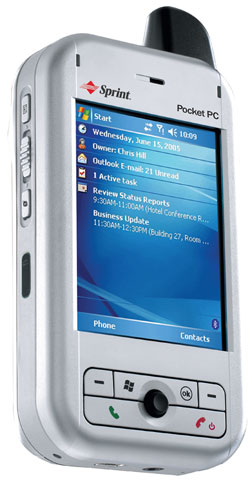
As the first truly formidable competitor to the Treo, the Sprint PCS Vision Smart Device PPC-6700 beats Palm’s device to the punch when it comes to speed, wireless connectivity, and keyboard input. This 416-MHz Pocket PC slider leverages the advantages of Microsoft’s new Windows 5.0 operating system, including soft keys for easier one-handed navigation and PowerPoint Mobile for viewing presentations. It grabs e-mail and downloads Web pages in a hurry thanks to the inclusion of both EV-DO and Wi-Fi connectivity. It’s not the lightest PDA/phone combo, but the PPC-6700 certainly makes the most of its size.
Unlike traditional smart phones, the 6.1-ounce, one-inch thick PPC-6700 takes a bold step forward by incorporating a keyboard that slides out from the left side of the device. This action automatically switches the orientation of the 240 x 320-pixel screen from portrait to landscape, but in most instances there was at least a one to two second delay. Because the keyboard layout is larger than what you’ll find on a Treo or BlackBerry, you’ll be entering everything from e-mail to changes to Word documents quickly and with few errors; no lengthy practice sessions required.
Up front, a useful joystick controls scrolling through documents and selecting items or links. The common dedicated Talk and End buttons make an appearance as well. The most welcome design touch is the pair of soft buttons that you’ll find both on the front of the device and to the left and right of the keyboard. These buttons’ functions change depending on the application and enable you to do more without having to take the stylus out of its holster within the antenna. For example, pressing the Menu button within Outlook Mobile pulls up several options, including Reply, Forward, and Save to Contacts.
The rest of the design is fairly straightforward, with a MiniSD memory card slot on top, a sliding volume control flanked by Launch keys for the voice recorder and Internet Explorer Mobile on the left, and a Launch key/Shutter button for the 1.3-megapixel camera on the right side. That camera isn’t just for show. You can easily attach pictures to outgoing e-mails or to contact entries so you can immediately identify incoming callers.
As a Web surfing and e-mail device, the PPC-6700 shines because of its compatibility with Sprint’s EV-DO network. With speeds in the 400 to 700 Kbps range, we loaded most Web pages within 10 to 15 seconds, and you’ll have no problems downloading attachments to your device using either Pocket Outlook or Sprint’s Business Connection service. Sprint has initiated its EV-DO rollout in more than 75 markets with about 30 business districts fully covered, which will increase to 56 by December. Meanwhile, Verizon Wireless has 171 markets fully covered.
Sprint beats Verizon with its monthly data plan: it’s only $15 per month for unlimited data on this device, compared to $49 per month for Verizon’s smart phones. Alas, you can’t use the PPC-6700 as a wireless modem for your notebook using its Bluetooth connection, but Sprint and Microsoft promise a software upgrade to enable dial-up networking capability in the coming weeks. If you decide to use this device as a modem, Sprint will recommend that you step up to a more expensive data plan.
If you find yourself in an area without EV-DO, you can either rely on Sprint’s slower, but tolerable 1xRTT network (50 to 70 Kbps) or turn on the PPC-6700’s Wi-Fi radio using the handy Wireless Manager utility. The connection proved even faster than EV-DO in our tests, loading most Web sites in about six seconds. However, at times we couldn’t connect at all over Wi-Fi, even though the device could see the network.
With 64MB of RAM and 128MB of what Microsoft calls persistent system memory at your disposal, PPC-6700 owners won’t have to worry about their data disappearing should their battery die. With about 4.7 hours of usage time, you can use this for a good chunk of your day before reaching for the USB charger. Adding a MiniSD card will give you more room for your MP3s, pictures, and other files, but keep in mind that at the moment you’re limited to 1GB of capacity, compared to 2GB for fuller size SD card slots.
As a phone, the PPC-6700 performed decently in our tests in Manhattan, San Francisco, and New Jersey, delivering mostly clear audio quality. If you’re in an office or conference room, we definitely recommend engaging the speakerphone, as it was at times difficult to hear the other caller unless we had the handset positioned the right way on our ear.
In addition to Microsoft’s own programs, the PPC-6700 comes with a free trial of Action Info, an application that gives you instant access to news, weather, and other info form such brands as AP News, AccuWeather, Restaurant Row, eBay, and Amazon. If you’re into listening to audio books, check out the pre-loaded AudiblePlayer. You can get $100 cash back when you sign up for a 12-month subscription (www.audible.com).
Our biggest gripe with this PDA/phone combo is its display. Yes, it looks great indoors, but we could barely make out the numbers on the Phone screen outside on a sunny day. You’ll either have to hold the PPC-6700 at the right angle to see the onscreen dialpad or slide open the keyboard and use the numeric keys.
The Treo 650 remains number one when it comes to ease of use and sheer value, but the PPC-6700 will reward you for the $50 premium with faster Web connections and the most comfortable smart phone keyboard yet. It’s easily the best Windows Mobile Pocket PC phone on the market.
View QuickSpecs for Sprint PCS Vision Smart Device PPC-6700 >>
Palm Treo 700w Gallery (MobileBurn)

Palm Treo 700w Gallery (MobileBurn)Quick Hands-On Impression of the Treo 700w
Earlier this evening I had the chance to play around with Palm's new Treo 700w, the company's first device to run the Windows Mobile OS. This new Microsoft OS running Treo had much the same physical characteristics of the Treo 650, and even the Windows Mobile OS itself had more than a few Palm-like customizations made to it. Enough so that existing Treo 650 users should feel reasonably at home with the new device.
There is no Windows "home" key on the 700w, as there is on all other Windows Mobile devices I have used. Instead, the green call button handles that function - except when a contact or phone number happens to be highlighted on the display. Another change from the standard WinMobile 5.0 is that when you hold down the OK button you are brought to the running programs list, which is a nice touch.
The keypad layout and such were good, as expected, but the material that the buttons were made out of felt quite hard. Even when compared to earlier Treo devices. None of this will be a real problem in using the device, though, and I expect that the Treo 700w is going to be one of the best selling Windows Mobile devices on the market when all is said and done.
Worlds first mobile Skype Solution - VoSKY™ Call Center @ Mobility Today
Worlds first mobile Skype Solution - VoSKY™ Call Center @ Mobility Today
Worlds first mobile Skype Solution - VoSKY™ Call Center
By agent680, posted 8 hours ago
Reader Comments: 0
Make or Receive Skype Calls from Any Phone, Wherever You Are
LAS VEGAS (2006 International CES, January 6, 2006)- Until now, making a Skype call required being near your computer. Now you can make or receive Skype calls from any mobile phone as well as any handset in the house or office with the VoSKY' Call Center from Actiontec. This small hardware accessory makes it possible to use the Skype service to call across the country or across the world for free or at online rates, wherever you are.
As the world’s first mobile Skype solution, the VoSKY Call Center enables Skype subscribers to use their cell phones to talk to their Skype buddies for free, or to non-Skype users anywhere in the world for the cost of a local call. By plugging the device into an Internet-connected PC and any stationary phone with which it is being used, users have the ability to:
• Place Skype and SkypeOut calls from any mobile or stationary phone, simply by calling the phone number to which the Call Center is connected and following the voice prompts to initiate the call.
• Receive incoming Skype or SkypeIn calls on any mobile or stationary phone, using an incoming call forwarding feature that allows the Call Center to direct Internet calls to any phone number of the user’s choice.
• Get notified on any phone when Skype contacts come online, using a call return feature that enables the Call Center to call any phone number when a previously unavailable buddy signs on. Users can then call that person by pressing the “1” button on their telephone keypad.
These features extend Skype’s reach not only to cell phones but also to consumers who have no broadband connection at home. In that case, the VoSKY Call Center can be installed at the office, and users can call their office number to make Skype or SkypeOut calls.
The product can also be used by Internet cafés in countries with limited home broadband connectivity to provide an inexpensive but revenue-generating long-distance service. Customers can place Skype or SkypeOut calls from home by making a local call to the café and then routing calls through the VoSKY Call Center for a fee.
Skype is now a central part of voice communications for millions worldwide, but until now consumers have been limited to using Skype while being near their computers,” said Gunjan Bhow, Actiontec’s Vice President of Marketing. “Our VoSKY Call Center frees Skype subscribers to use the service from any mobile, home or office phone in the world for the first time.
The VoSKY Call Center plugs into the USB port of the user’s PC as well as any stationary phone with which it is being used. It allows the same phone to be used for both regular and Internet calls, avoiding the complications of needing separate handsets for each. It supports call waiting as well as Skype speed dialing; incorporates state-of-the-art echo-cancellation technology for signal clarity; and requires no network configuration, change in firewall or router settings, or external power supply. Power is provided by the USB port of the PC.
The VoSKY Call Center is available immediately for $69.95 at www.vosky.com
Wednesday, January 04, 2006
Akihabara News - SCH-i830, the PocketPC phone for Verizon

Akihabara News - SCH-i830, the PocketPC phone for VerizonSCH-i830, the PocketPC phone for Verizon
Samsung presents their SCH-i830, a phone for the US market and more specifically for the Verizon operator. It's similar to the SCH-i730 but this SCH-i830 packs everything into a smaller package! Unfortunately the device runs on 2003SE Phone Edition (and not WM5). It has a QWERTY keyboard and is CDMA EV-DO compatible. The good news is that it's also GSM/GPRS compatible, so it can be used anywhere on this planet!
Tuesday, January 03, 2006
Provider of TV Movie Channels Looks to Expand to PC's and Video Players - New York Times
Provider of TV Movie Channels Looks to Expand to PC's and Video Players - New York TimesJanuary 3, 2006
Provider of TV Movie Channels Looks to Expand to PC's and Video Players
By SAUL HANSELL
Starz Entertainment Group is introducing a $9.99-a-month subscription service that will allow people to download movies from the Internet and watch them on their computers, portable video players and television sets.
The new offering, called Vongo, comes at a time when movie studios and television networks are rapidly expanding their efforts to distribute their content over the Internet, experimenting with both paid and advertiser-supported models.
"We see a market out there of people who are saying, 'I want to choose what I want to watch, control how I watch it and watch it wherever I am,' " said Robert Greene, a senior vice president at Starz, which operates pay movie channels under the Starz or Encore name and is owned by Liberty Media, the company controlled by John C. Malone, the cable entrepreneur.
Since 2004, Starz has offered a movie download subscription service, called Starz Ticket, using technology from RealNetworks. But the RealNetworks software does not allow movies to be downloaded to hand-held devices. With Vongo, Starz will shift to technology from Microsoft that will allow movies to be downloaded and watched on portable video players using Microsoft's software.
Until now, portable players have been costly and have found few buyers. But that is starting to change. Lower-priced players are expected to be introduced later this week at the International Consumer Electronics Show in Las Vegas. And of course, interest in portable video has soared with the Apple Computer video iPod, and the popularity of $1.99 episodes of TV shows sold at the iTunes online store.
Microsoft will promote the Vongo service in a coming release of its Media Player software. Separately, Starz will also offer Vongo through Sony's Connect download service. Until now, Connect has mainly sold music, but executives involved with Sony's plans say that this week the company will announce an expansion to video downloads as well.
Starz, which is offering a test version of the service at Vongo.com, has so far not been able to work out an arrangement for Vongo to run on iPods.
This is a significant problem, said Josh Bernoff, an analyst with Forrester Research.
The Microsoft Portable Media Center devices "have not done particularly well so far," he said. "They don't have the momentum that the iPod does."
He said there would be a modest market for Vongo, mainly among people who want to watch movies on their computers, or more likely on laptops while traveling.
Apple is expected to offer some sort of expanded video offering at the MacWorld conference in San Francisco next week. While Apple is closed-mouthed about its plans, there is considerable speculation among industry analysts that Apple will introduce a device that will let people watch video from the Internet on their TV sets.
So far, however, Apple has not offered any subscription services for digital content (subscription services use technology that disables the music or video files on users' PC's and devices if they stop paying their monthly subscription bill). Indeed, Apple's chief executive, Steven P. Jobs, has been outspoken in his belief that consumers want to own rather than rent what they listen to and watch.
As a subscription service, Vongo will allow users to download as many movies as they want for $9.99 a month. They will be able to choose from an ever-changing roster of about 800 movies, including about 300 films in rotation on the Starz cable channel (mainly movies released in theaters one to three years earlier) and 500 older titles.
Several years ago, when Starz renewed its long-term contracts with studios, including those owned by Sony and the Walt Disney Company, to put movies on its cable channels, it bought the rights to use them on the Internet as well. This means that other digital services cannot offer these movies in rental or subscription services during the period covered by the Starz contract.
Most of the other studios sell their subscription rights to HBO or Showtime, which have been less active in digital distribution than Starz.
How much interest consumers have in downloading movies remains to be seen. The legal online offerings so far - Starz's subscription service and pay-per-view downloads from MovieLink and CinemaNow - have attracted relatively few customers. (The pay services have to compete with illegal free trading in movie and television files over the Internet.)
Some argue that most Internet users are interested only in short video clips, like news reports and the humorous video oddities that ricochet across the Web.
Yet Apple's early success in selling downloads of hourlong television programs, a service that began by offering the hit series "Lost" and "Desperate Housewives" for the video iPod, is changing that perception.
Mr. Greene argued that Starz had learned from its earlier experience and thought that it now had the formula to attract more customers to download movies.
Vongo will be cheaper than Starz Ticket, which costs $12.95 a month and offers only about 300 movies. Vongo will also be adding some shorter original content, like music concerts and sports coverage.
Starz will continue to offer the Starz Ticket service through RealNetworks, but will put all its promotional effort into Vongo.
Mr. Greene said that the new Microsoft-based service was easier for consumers to use and that the company's deal with Microsoft was more economically advantageous than its deal with RealNetworks, although he declined to be specific about the terms.
Slingbox takes the shows on the road | CNET News.com
Slingbox takes the shows on the road | CNET News.comSlingbox takes the shows on the road
By The Hollywood Reporter
Story last modified Tue Jan 03 05:17:00 PST 2006
Sling Media plans to announce Thursday that consumers can use a wide range of mobile devices to watch their home television from anywhere in the world.
The company is set to unveil new software that adds this capability to its Slingbox hardware this week at the Consumer Electronics Show in Las Vegas.
Jason Krikorian, Sling Media's co-founder and head of business development, said support for mobile devices has been part of the company's vision but that the initial focus was on the PC because of the broadband connection.
"There are solutions for live and recorded TV on mobile phones, but now for the first time you can have full access to every single channel you've got at your house," he said. "It's not just a TV experience on your phone--it's your TV experience, like you have at home when you're on your couch."
The new mobile software works with any device that uses Microsoft's Windows Mobile Platform versions 4.0 or 5.0. A visual version of a remote control pops up on the screen, making it a fairly straightforward process to choose whether to watch television live from one's home cable set-top box or satellite receiver or something on a digital video recorder.
"You can watch your home TiVo from the backseat of a car driving on the 101," Krikorian said.
"You can watch 'Lost' the day after it airs without paying two bucks," added Sling Media's public relations director Brian Jaquet, in a reference to the television programs sold on Apple Computer's iTunes store for viewing on an iPod.
Sling Media does not collect any fees beyond the initial $250 purchase price of the Slingbox hardware. The only additional cost is for the mobile data service at whatever rate the person's carrier charges.
Krikorian said the new software also improves picture quality, besides including more customization options and other enhancements for accessing home entertainment from a remote computer.
Monday, January 02, 2006
Data, Music, Video: Raising a Curtain on Future Gadgetry - New York Times
Data, Music, Video: Raising a Curtain on Future Gadgetry - New York TimesJanuary 2, 2006
Data, Music, Video: Raising a Curtain on Future Gadgetry
By DAMON DARLIN
The flat-panel televisions will be getting bigger, the MP3 players and cellphones will be getting smaller. And almost everything will be getting cheaper.
But the biggest trend expected at the International Consumer Electronics Show, which begins this week in Las Vegas, is that these machines will be communicating with one another. The theme of this year's show might best be described as Convergence: This Time We Mean It.
For more than a decade, manufacturers of consumer electronics like televisions and audio gear have talked about blending their products with personal computers, so that consumers can enjoy a seamless stream of data, video and music anywhere. It has not happened, because the two industries do not have compatible technology standards and the requisite high-speed Internet connections have not been widespread enough.
This year all that changes, say executives who will be introducing new products at the show. They say that consumers will finally be able to sling images and sound wirelessly around a room or an entire house. The major electronics makers will be showing TV's with computer capabilities and phones that will play video and music, as well as the next generation of digital recording and storage devices.
While technological convergence may now be possible, some fear the industries have not yet made connecting all those devices simple enough for the average user.
"There is still a lot of confusion around the connected home," said Van L. Baker, a market analyst with Gartner, a technology research and consulting firm. "Reducing it will be the challenge to keeping the momentum going."
Getting consumers past the confusion of how to link, say, a PC to a TV will be the next big hurdle.
The show comes after a very good year for consumer electronics. Plasma and liquid-crystal display televisions, MP3 players and digital cameras with five or more megapixels of resolution have been big sellers.
"We don't see any reason that this will slow down anytime soon," Mr. Baker said. "The transition of entertainment from analog to digital, of time-shifting and place-shifting, is just getting under way."
Attendees of the electronics show, the biggest trade show in the country, will be scrambling to get a first glimpse at some of the products that will fuel the growth of the industry, which represents $126 billion in annual sales. The annual exhibition is off limits to the general public, but it is expected to attract 130,000 executives, dealers, journalists and investors.
More than 2,500 exhibitors, a record, spread across 1.6 million square feet, another record, will try to grab their attention. This year, 6 percent of the exhibitors will be from China, illustrating that nation's significance as a major player in the industry. Among foreign attendees, China will rank third, behind Canada and Taiwan.
The show is more than just a display of new technological toys. It is also a forum for industry executives to forge alliances and present new business strategies.
Bill Gates, the chairman of Microsoft, will give his vision of the future in a speech Wednesday evening. Sir Howard Stringer, the chairman and chief executive of Sony, will take his turn Thursday morning. On Friday morning Terry Semel, the chairman and chief executive of Yahoo, will speak, followed later that day by Larry Page, a co-founder of Google.
Intel plans a major announcement about its new Viiv (rhymes with drive) multimedia platform, which will power PC's built to deliver digital entertainment. Intel hopes that Viiv will transform the home computer in the same way that its Centrino platform transformed the laptop into a mobile communications device. Paul S. Otellini, the chief executive of Intel, will give a speech Thursday evening outlining Intel's road map.
Manufacturers are expecting another record year in 2006, but with continuing declines in prices. Across a broad swath of categories like cameras and audio and DVD players, consumers will pay less and get more features. Even in the flat-panel TV industry, prices dropped as much as 40 percent in 2005. This trend will translate into slower revenue growth in 2006.
As for new areas of growth, analysts are predicting big sales of game consoles in 2006 as Sony introduces its PlayStation 3 and Nintendo brings out its Revolution console. Both devices, like the new Microsoft Xbox 360, can be used as the central node for a wirelessly networked home.
Electronics companies will also be introducing new home media servers and TV's that can receive digital content wirelessly from a PC or via an HDMI cable (for high-definition multimedia interface). Another hot topic at the show will be IPTV, or Internet protocol television, which sends programming over the Internet through a broadband connection.
Then there are the companies, like Elan Home Systems, that want to get right in the middle and sell devices to control all the networked appliances. Elan will be at the show introducing a control pad for everything in your house, from electronic devices to the drapes.
While major players in the electronics industry continue to squabble over the format of the next generation of DVD's - Blu-ray vs. HD-DVD - both factions will be showing products that consumers can buy this year. The new players will be expensive, some costing more than $1,000. Still, the industry expects to sell about a half-million of the new players in 2006, mostly as components in PC's rather than as stand-alone devices.
In the audio sector, companies are seeking ways to take advantage of the popularity and dominance of the Apple iPod. Several manufacturers are planning to announce products that will work with the iPod to move music to devices around the house.
Another big trend, said Steve Tirado, chief executive of Silicon Image, a semiconductor maker, is bigger storage devices. "People want a place to consolidate their digital media."
Ross Rubin, the director for industry analysis at NPD, a market research firm, said that apart from home networking systems, some new technologies would make their way to consumer markets this year.
Canon and Toshiba will both present televisions with surface-conduction electron-emitter displays. The technology produces crisper pictures than can be offered by existing flat-panel televisions, the manufacturers say. The sets will go on sale later this year.
Other Asian TV manufacturers will also demonstrate sets built with new organic light-emitting diodes that use less energy and could one day be cheaper to produce than liquid-crystal display panels.
Another notable product development to be seen at the show is the miniaturization of cathode-ray tube technology to fit into flat-panel televisions, allowing what could be the best-quality picture yet. "They will be very high end, very expensive," said Mr. Rubin. But like that of so many products at the show, the price will eventually go down.
Subscribe to:
Posts (Atom)