Contact Me By Email

Friday, November 01, 2024

A vote for Donald Trump is a vote for school shootings and measles

A vote for Donald Trump is a vote for school shootings and measles

“An endorsement of democracy, solving problems, and Kamala Harris.

Graphic photo illustration of Donald Trump’s face among chaotic abstract shapes.

Image: Mr.Nelson design for The Verge / Getty Images

Donald Trump is a dangerous maniac who can barely complete a sentence, and it is lunacy to believe he can even recognize the existentially threatening collective action problems facing our nation, let alone actually solve them.

Collective action problem is the term political scientists use to describe any situation where a large group of people would do better for themselves if they worked together, but it’s easier for everyone to pursue their own interests. The essential work of every government is making laws that balance the tradeoffs between shared benefits and acceptable restrictions on individual or corporate freedoms to solve this dilemma, and the reason people hate the government is that not being able to do whatever you want all the time is a huge bummer. Speed limits help make our neighborhoods safer, but they also mean you aren’t supposed to put the hammer down and peel out at every stoplight, which isn’t any fun at all.

Every Verge reader is intimately familiar with collective action problems because they’re everywhere in tech. We cover them all the time: making everything charge via USB-C was a collective action problem that took European regulation to finally resolve, just as getting EV makers to adopt the NACS charging standard took regulatory effort from the Biden administration. Content moderation on social networks is a collective action problem; so are the regular fights over encryption. The single greatest webcomic in tech history describes a collective action problem.

The problem is that getting people to set aside their own selfishness and work together is generally impossible even if the benefits are obvious, a political reality so universal it’s a famous Tumblr meme

You can sum up the history of civilization as a long fight about where the government’s authority to tell everyone what to do comes from

This is such an intractable problem that you can sum up the history of civilization as a long fight about where the government’s authority to tell everyone what to do comes from. Ancient rulers just went ahead and considered themselves gods, which made things pretty easy — anyone who lives in a neighborhood with an overzealous HOA president can see this approach in action today. Quite a few European kings decided they’d operate one layer up the stack and announced that they were empowered by God with the divine right to absolute control, which also made things somewhat easy but caused several wars and assassinations by other kings who’d gotten drunk and high enough to see Jesus.

Every so often, the world gets some bozo who decides his desire for absolute control is justified because of an emergency, which inevitably leads them to spend a lot of time convincing people that the very existence of foreigners is an emergency so they can hold onto that power forever. This is basically a hack, but it’s an effective one — there are always foreigners, after all. You know why Trump has lately taken to standing in front of backdrops that read DEPORT ILLEGALS NOW? It’s because when you put this dude under any pressure at all, he reflexively creates a Brown People Emergency to justify his authoritarian instincts.

It is extremely frustrating that the Harris campaign keeps going on about Trump being a danger to democracy without explaining why his whole deal is so deeply incompatible with America, so here’s the short version: the radical founding principle of the United States of America is the idea that the government’s authority to make laws and solve collective action problems comes from the consent of the governed. A clean rewrite, replacing centuries of architectural debt with what was, at the time, a cutting-edge foundation mostly unproven at scale. We vote for our leaders, they are given the power to tell us all what to do so that we might help each other reach better outcomes and be happier, and if they are bad at their jobs, we can simply throw the bums out. We open-sourced the authority, in other words. It was a big bet, and so far, it’s paid off.

Like any large open-source project, American democracy is kind of messy, requires a lot of volunteer effort, and often uses way too much memory. But it enables everyone to submit requests for changes so that we might better direct the power of our communities at every level toward solving our problems, and the democratic process provides an essential stability which allows people to keep buying into our country as the platform on which to build their own big ideas.

Trump doesn’t give a shit about any of this because he only cares about himself. He generally does not care to solve problems unless it benefits him personally, and the intellectual foundation of the MAGA movement that’s built up around him is the complete denial that collective action problems exist at all. The MAGA worldview is now so batshit that it requires its proponents to look at obvious failures of collective action and declare them immutable features of modern life — or, in an even stupider twist — announce them to be good things.

For example, school shootings represent a complete failure to solve a collective action problem — a uniquely American failure because not only have we not solved the problem, we have actively made it worse. Just look at this chart:

Credit: American Enlightenment Project / K-12 Shooting Database

That’s the alarming increase in school shootings since the 2008 Supreme Court ruling in District of Columbia v. Heller, which basically made any meaningful gun regulation impossible. With a bare 5–4 majority behind him, Antonin Scalia decided to fully reinterpret the Second Amendment and reset the balance of liberties in America to favor the rights of gun owners in what is now a clear tradeoff against the safety of our communities.

You can argue about this chart, or this specific tradeoff, or even that Scalia failed to foresee the rise of a wildly irresponsible gun culture that should otherwise moderate these harms but which has instead produced tactical cosplay chuds and would-be lifestyle influencer Don Jr. That’s fine! All of that would be evidence of a rational political culture: one that makes policy choices, evaluates the outcomes, and accepts the reality of the results so as to make better tradeoffs in the future.

But Trump is not rational, and Trumpism cannot abide the idea of a collective action problem. You might think that Trump’s brain is mush, but JD Vance’s weasel-like mind is constantly, actively finding ways to sanitize the chaos, and the philosophical demands of MAGA required him to look America directly in the eye at a recent rally and say that school shootings are “a fact of life.”

It should be easy for Vance to imagine a world in which school shootings don’t happen — that is the pre-Heller world he grew up in! — but fixing the problem of school shootings requires admitting that a collective action problem exists. It requires admitting that the current policy solution — sending kids to school with fucking Kevlar in their backpacks — is less effective than restricting gun ownership in any meaningful way. He cannot do that. Trump cannot do that. Trumpism cannot allow that debate to happen.

Do you want to live in a country where the vice president refers to schools as “soft targets”? That’s a vote for JD Vance. That’s a vote for Donald Trump — a vote for the line on the school shootings chart to keep going up, forever.

That’s a vote for Donald Trump — a vote for the line on the school shootings chart to keep going up, forever

It’s the same with vaccines, which are a near-perfect collective action problem — they are generally only effective if almost everyone in a community gets them, which means either everyone has to agree to get them or the government has to mandate compliance. When everyone cooperates and gets vaccinated, our vaccines can be highly effective: the measles were effectively eradicated in this country nearly a quarter-century ago.

Then presumptive Trump health secretary RFK Jr. hit the scene to spew his dangerous anti-vax bullshit, convinced enough people to stop getting vaccinated, and the fucking measles came back. When this man visited Samoa in 2019, he contributed to a measles outbreak so bad that 83 people died, almost all of them children. But to see this failure of collective action would require a break with the MAGA worldview, so these dummies have fallen back to saying getting measles is actually good.

Do you trust Donald Trump to see this tradeoff and understand this outcome? To adjust to it and use the power of the Oval Office to convince Americans that the balance of harms favors vaccinations over a rise in measles cases? He couldn’t even do it for the covid vaccines his own Operation Warp Speed produced, and Vance is now blowing anti-vax dog whistles as loudly as he can in his public speeches. It is a near certainty that Trump will just blame the next measles outbreak on immigration because at least he can shoot at brown people.

Trump simply cannot use the tools of democracy to run the country on our behalf. His brain does not work that way, even when it appears to be working. He is too selfish, too stupid, too cognitively impaired, too fucked in the head by social media — too whatever. He just can’t do it. He will make our collective action problems worse because he doesn’t even know what kind of problems they are. There is a reason he loves dictators and that all his biggest ideas involve forcing people to do things at the barrel of a gun: mass deportationsarresting his criticssending the military into American cities to quell protests. He is unable to imagine a world where people cooperate for any reason other than the threat of violence, and so violence has become an inextricable part of his movement.


The list of massive collective action problems facing our nation is almost overwhelming to consider, and they threaten to tear us apart: our population is getting older, with a looming healthcare crisis to come. Education. Housing. Income inequality. There are so many more.

We are not doing well right now, and when I look at the problems The Vergespecifically covers and has covered for over a decade, the failures are blinding.

Solving climate change is the biggest collective action problem of our lifetimes — and nested within it, there are even more collective action problems like transitioning to EVs and rethinking our sources of power. Trump cannot concede that this problem requires collective action to solve, so the MAGA approach is to simply deny climate change exists while Trump blathers on about wanting to be a “whale psychiatrist.”

As a country, we have almost entirely failed to regulate the tech industry. There are almost no meaningful checks on its size or influence, or even requirements to be responsible with its power, even though American consumers express their clear preferences to rein in tech companies all the time. There is simply no other way to look at millions of Instagram users — including the company’s own celebrity influencers — enthusiastically posting legalistic incantations for over a decade commanding Meta to stop doing things with their content. Fundamentally, they are all trying to renegotiate the Instagram terms of service, which everyone signed without reading. But as individuals, they have no real leverage with which to drag Mark Zuckerberg to the bargaining table.

As a country, we have almost entirely failed to regulate the tech industry

This is a pure market failure. Despite this sustained, dramatic expression of consumer demand, there have been no policy changes, and there are no meaningful competitors differentiated by privacy. The industry has learned from this and imposed an ever more extractive set of platform policies with little meaningful consequence. Resetting all this is what the government is for — a functional federal privacy law would effectively provide a baseline terms of service agreement with every platform that would protect us all, and then we could see how well it’s working and adjust.

The tech industry is also racing ahead with AI, even though it’s shown no ability to restrain itself from causing the most obvious problems: our social networks choked to death with AI slop, the death of photographic truth, and sexualized deepfakes of teenagers. These problems were all predicted and warned against in the most dire ways, and yet they have all come to pass. Solving these problems will require creative and flexible lawmaking that considers a huge balance of interests, benefits, and harms, and a rigorous approach to thinking through the tradeoffs over time.

There is no shortage of proposed legislation to solve these problems floating around, and there are other countries making laws that we might look at to evaluate the tradeoffs. But the Republican Party is so resistant to solving collective action problems that Meta has spent years saying it welcomes regulation because it knows half of our government will never allow it to happen. Hell, one of the very first tech bills passed during the first Trump administration was a rollback of rules preventing ISPs from sharing your data, and Trump signed it immediately — pure ghoul shit.

In most normal circumstances, America would slowly, incrementally figure this stuff out. States would pass some laws, there’d be some litigation, maybe some Supreme Court decisions, maybe some federal legislation in the end. But the absolutely fucked thing about the United States in 2024 — the looming dread that keeps me up at night — is that a bunch of tech billionaires have decided it would be easier if they were simply in charge of remaking society and have fallen in line behind a man they clearly despise because it’s easier for them to get what they want by manipulating the addled mind of a narcissistic monster than by winning people’s dollars in the market or votes in the ballot box.

Let’s just name some important ones: Elon MuskMarc AndreessenBen HorowitzPeter ThielJeff Bezos — they have all decided to kiss the ring in various ways and sell out the very concept of America. They’d rather fly their helicopters over the burned-out husks of our cities to their private beaches and secure bunkers than participate in our democracy. They would prefer to remake our country into a broken oligarchy where they have finally ended the free market and privatized our lives into an overlapping series of enshittified subscription monopolies, and they have taken to openly wishcasting what they would do with unchecked power. “Competition is for losers” is not just a thing Peter Thiel says — it’s a worldview that’s produced the monarchy-curious JD Vance arguing that the purpose of antitrust is to regulate the speech Google distributes and Trump himself saying the company has to be careful or get shut down.

Our Silicon Valley billionaires don’t actually believe in this sloppy gloss on competition law. Rather, these men are all trying to protect or create their very own empires, and they are funding, supporting, or at least accepting of Trump’s strongman instincts because they each understand how it will benefit them individually, even though it will cost us all much more. These would-be oligarchs are a collective action problem, personified: they cannot curb their individual greed so we must all endure their furious attempts to prop up a madman who might end the American experiment.

Let’s not fool ourselves.


Kamala Harris is not a perfect candidate for president. It is possible to pick apart her policy ideas and extremely easy to criticize her unusually circular speaking patterns — she often sounds like she’s vamping until her internal search algorithm finds the right keyword and issues a preloaded response. Did you know she prosecuted transnational criminal organizations? You will.

But look beyond the locked-in message discipline to her approach to campaigning, and it is clear Harris is deeply, meaningfully committed to solving collective action problems. She has assembled a politically diverse group of people to support her that range from AOC to Liz Cheney to Mark Cuban, and most of her claims about how she’ll run the country differently than Biden come down to putting Republicans in her Cabinet and reaching across the aisle more. She has, for better or worse, made approaches to the crypto community while championing restrictions on price gouging and regulations on banks. She had antimonopoly Senator Elizabeth Warren onstage at the Democratic National Convention while having Google antitrust defense lawyer Karen Dunn serve as her debate advisor.

You might not agree with some of the depressingly averaged-out policy positions produced by this unnervingly big tent. You might have some serious problems with, say, her proximity to the current administration and its approach to the war in Gaza. But this is what happens when the other party in our two-party system can only generate policy ideas that amount to AI-generated blood libel and RETVRN memes on X. Trump and the MAGA movement have stripped the Republican Party of the ability to govern democratically, so that process has moved inside the Harris coalition.

In many ways, the ecstatic reaction to Harris is simply a reflection of the fact that she is so clearly trying. She is trying to govern America the way it’s designed to be governed, with consensus and conversation and effort. With data and accountability, ideas and persuasion. Legislatures and courts are not deterministic systems with predictable outputs based on a set of inputs — you have to guide the process of lawmaking all the way to the outcomes, over and over again, each time, and Harris seems not only aware of that reality but energized by it. More than anything, that is the change a Harris administration will bring to a country exhausted by decades of fights about whether government can or should do anything at all.

It is time to stop denying the essential nature of the problems America faces. It is time to insist that we use the power of our democracy the way it’s intended to be used. And it is far past time to move beyond Donald Trump. 

A vote for Harris is a vote for the future. It is a vote for solving collective action problems. It is a vote for working together, instead of tearing our world to shreds.“

Thursday, October 24, 2024

Apple releases AirPods firmware update for almost all models

Apple releases AirPods firmware update for almost all models

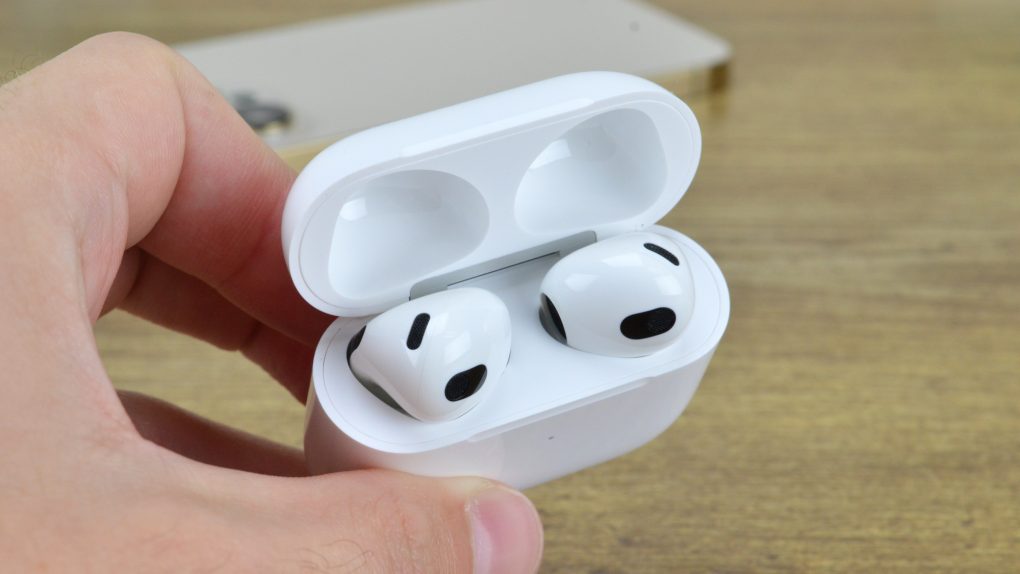
Apple AirPods Gen 3 Case

“Ahead of new hearing aid features being made available for AirPods Pro 2 on Monday, Apple has released a new firmware update for AirPods 2, 3, Pro 1, and Max with Lightning port. At this moment, it’s unclear what’s new with this build. However, it’s likely about stability improvements.

That said, all of these AirPods, except for the original model, AirPods 4, AirPods Pro 2, and AirPods Max with USB-C, are jumping from version 6A326 to 6F21.

These are the latest firmware available for each AirPods model:

  • AirPods Pro (2nd gen) with MagSafe charger (USB-C): 7A305
  • AirPods Pro (2nd gen) with MagSafe charger (Lightning): 7A305
  • AirPods Pro (1st gen): 6F21
  • AirPods (4th gen): 7A304
  • AirPods (3rd gen): 6F21
  • AirPods (2nd gen): 6F21
  • AirPods Max (Lightning): 6F21
  • AirPods Max (USB-C): 7A291
  • AirPods (1st gen): 6.8.8

How to update AirPods firmware

AirPods Pro 2 with USB-C
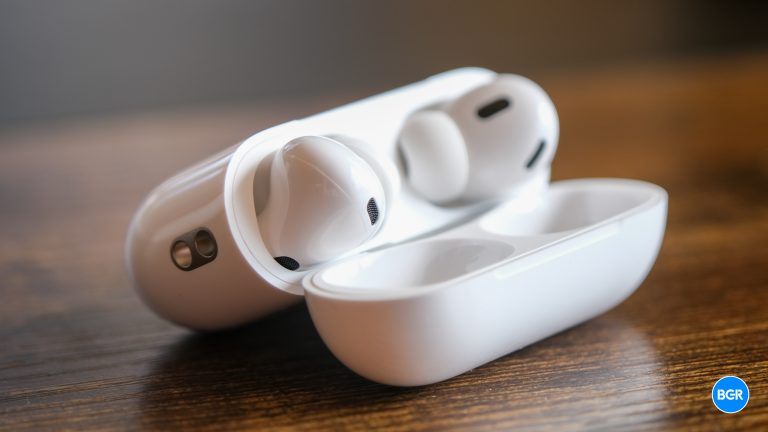
AirPods Pro 2 with USB-C port. Image source: Christian de Looper for BGR Image source: Christian de Looper for BGR

There isn’t an official method to update your AirPods firmware. Since Apple says the new versions install when AirPods are connected via Bluetooth to your iPhone, the best option is to let both devices charge together for at least 30 minutes.

Tech. Entertainment. Science. Your inbox.

Sign up for the most interesting tech & entertainment news out there.

By signing up, I agree to the Terms of Use and have reviewed the Privacy Notice.

To check your AirPods firmware version, you need to open the Settings app, open the Bluetooth menu, find your AirPods or Beats earbuds, and tap the “i” next to them to see the current version number.

If this process doesn’t work, you’ll have to wait until they update on their own, as Apple doesn’t let you manually install these firmware updates.

Interestingly, a few days ago, Apple accidentally released a beta firmware for AirPods Pro 2 to all users. Still, the hearing aid features are only available for users in the US and Canada using iOS 18.1.

If we discover anything new with this build, we’ll update this article.“

Elon Musk’s Starlink satellite business is set to boom if Trump wins

Elon Musk’s Starlink satellite business is set to boom if Trump wins

“The cutting-edge satellite system stands to gain billions of dollars more in contracts and subsidies as Trump favors space investment.

Elon Musk speaks during a campaign event with former president Donald Trump on Oct. 5 in Butler, Pennsylvania. (Jabin Botsford/The Washington Post)

Elon Musk’s fast-growing satellite business Starlink could be poised to gain billions of dollars more in federal contracts and subsidies under a Donald Trump presidency, industry experts say, in a reflection of the world’s richest individual’s deepening financial stake in Washington politics.

Trump has cast himself as a space patron, pledging to unleash funds for national-security installations in orbit and slash red tape for Musk. Other Republicans have also telegraphed business upsides for Starlink, including pushing for the company to get a slice of a $42 billion pot of federal internet subsidies.

A presidential vote of confidence could help the standing of Starlink and its parent company, SpaceX, as they vie for billions of dollars in national-security contracts against rivals like Amazon in the coming years. Musk has struggled to reassure parts of the defense community that he is a trustworthy partner, even as industry experts say Starlink is rapidly building out an advanced satellite surveillance system on track to be the most powerful one in history.

Starlink, which is managed day-to-day by SpaceX president Gwynne Shotwell, currently has some 6,400 working internet satellites in orbit, 10 times morethan its nearest rival, and separately a quiet but fast-growing surveillance satellite business.

One former SpaceX executive, speaking on the condition of anonymity to discuss matters involving a onetime employer, said a Trump administration would also be disposed to assist in green-lighting new launch sites for SpaceX, helping Starlink to continue rapidly expanding its satellite network to stay ahead of rivals.

“I think that’s one area where a Trump administration will be a little more sympathetic,” the executive said.

Musk’s shift to supporting Trump appears to be driven largely by conviction on social issues, according to people familiar with him who spoke on the condition of anonymity to discuss his thinking. But the tech executive’s business empire also stands to benefit if Trump wins the election — potentially by a far larger amount than the billionaire has splashed out to support Trump’s campaign.

Musk has donated $75 million to his own super PAC supporting Trump’s reelection efforts and about $1 million more to another pro-Trump PAC. He also announced over the weekend that he would give away $1 million a day to a registered swing-state voter who signed a petition. Federal satellite contracts often run in the hundreds of millions of dollars or higher.

There is further revenue potential in the broader space contracting boom that Trump has promised, which could bring billions of dollars to SpaceX’s rocket business. Musk’s other companies, Tesla and X, could also benefit if Trump follows through with appointing him to lead a new “government efficiency commission.”

The satellite sector is notorious for thin margins, so it is unclear how profitable any new contracts would be for SpaceX. And Democrats and Republicans tend to be more aligned on space policy behind closed doors than public bluster would suggest. Still, the difference in tone on space and Musk has been marked.

Trump vowed at a rally over the summer to “make life good” for Musk, while President Joe Biden and Vice President Kamala Harris have been cool toward the entrepreneur. And while the Republican candidate’s election platform includes a pledge to promote investments in “near earth orbit” — the satellite realm dominated by Starlink — Harris’s campaign and the Democratic Party have not highlighted space policy beyond a general commitment to NASA and the International Space Station.

Space defense booster

Musk’s Starlink bloomed under Trump’s presidency. Republican officials took a chance on the mercurial tycoon and his newfangled satellites, which promised not only a new internet option for consumers but also a military and intelligence-gathering edge for the government.

As president, Trump was a booster for the space defense industry, signing the Space Force — a new military branch specializing in space operations — into existence in 2019 and elevating security hawks who urged the United States to militarize space ahead of rival nations. He also expressed personal admiration of Musk, trekking out to Cape Canaveral to watch a SpaceX rocket launch, and praising Musk as “a brilliant guy.”

Musk, for his part, initially expressed mixed views of Trump’s presidency. The SpaceX founder, who had leaned Democratic, quit two of Trump’s advisory councils in 2017 to protest the president’s withdrawal from the Paris climate accord. But he praised Trump’s establishment of the Space Force as “sensible,” saying it would help civilization expand into space.

Trump’s Federal Communications Commission authorized a fledgling Starlink in 2018 to launch a first tranche of 4,425 internet satellites, despite protest from rivals that such an unprecedented number would clutter the skies. It was an audacious decision: Starlink, an untested vendor, got a green light to nearly double the total number of satellites orbiting Earth.

“We were pushing the envelope,” said Evan Swarztrauber, a policy adviser to then-FCC Chairman Ajit Pai and now a senior fellow at the Foundation for American Innovation. “We were just trying to create the conditions for various technologies to be able to be rolled out. We didn’t know exactly how things would go.”

A satellite system like Starlink was revolutionary. Satellites were traditionally large and expensive, with the world’s largest constellations consisting of only a few hundred satellites. SpaceX’s breakthrough in developing rockets that could be reused for multiple launches made it possible to create a much larger network.

While Starlink was marketed as an affordable internet option for rural residents, defense officials appreciated its military utility from the early days. A strong data connection in previous dead zones opened new capabilities like streaming battlefield drone video back to headquarters or course-correcting missiles midflight.

“It doesn’t take a wizard to understand the military implications,” remarked the former SpaceX executive, who said Musk sometimes invoked China’s competitive threat in meetings with Pentagon officials.

The Pentagon was soon a customer, and before long Starlink was given the opportunity to dip its toe into surveillance work.

The Space Development Agency, a newly formed defense office, awarded SpaceX a $149 million contract in 2020 to build a first generation of tracking satellites that could detect hypersonic missile launches. SpaceX also began working on prototype spy satellites for the National Reconnaissance Office, the Pentagon’s spy satellite division, during the Trump administration, Reuters reported this year. The Wall Street Journal reported the classified contract was valued at $1.8 billion.

The NRO declined to confirm the contract, citing national security considerations. Troy Meink, principal deputy director of the NRO, said in a public talk this month that the agency does not procure directly from Starlink, but did not say whether it works with the company indirectly.

Meink said rockets like SpaceX’s have made it feasible for the agency to build its largest spy satellite fleet ever, with more than a hundred payloads launched in the past 18 months.

“Why didn’t you do this earlier?” Meink said people sometimes asked him. “Well, launch costs were high, right? … Now it’s just come way down.”

Globe-girding surveillance

There’s been much hushed discussion in the space industry this year over Starlink’s plan to supplement its satellites for the internet with a second type in its secretive “Starshield” unit dedicated to surveillance.

Five industry experts told The Washington Post that Starlink appears to be the front-runner in building the first satellite system able to see all places on Earth continuously in high-definition, even as many details of the project remain unclear.

“You’re approaching a near real-time capability to see any spot on Earth,” said Michael Brown, former director of the Defense Innovation Unit, a Pentagon technology unit, of this next wave of satellites led by Starlink.

Alexandre Najjar, a consultant at Novaspace, forecasts that Starlink’s new earth-observation system will become the world’s largest next year.

Chris Quilty, founder of the research firm Quilty Space, estimates that state-of-the-art satellite systems today have a roughly 15-minute lag time — still long enough for a military target to relocate completely after being photographed.

If Starlink can build a system that provides closer-to-real-time global surveillance in the next few years, it could become an irreplaceable federal contractor. Its rivals fear SpaceX has the deep pockets to accept short-term losses until it runs them out of business.

“He could sustain a deficit for ages,” Najjar said. “They could do that long enough until the competition is gone.”

Such a reliance on Musk unnerves officials across party lines.

There’s been debate across the U.S. government over Musk’s reliability as a federal partner since 2022, when he declined a request from Ukraine to activate Starlink over Crimea to support an attack on a Russian fleet, saying it would make his company “explicitly complicit in a major act of war.” While Musk has since come around to more vigorous support of Ukraine’s military, U.S. defense officials ever since have foregrounded a goal of “diversifying” their satellite supply.

There’s a political dimension to the debate as well. After Musk endorsed Trump in July, the Harris campaign called Musk one of the “arrogant billionaires only out for themselves” and said such tycoons were “not what America wants or America needs.” One of the people familiar with Musk said he developed something of a “persecution complex” after repeated attacks and snubs from prominent Democrats.

Despite Starlink having no close rival right now in low-earth-orbit satellites in terms of technical capabilities, the Space Development Agency announced Wednesday that it has picked 18 other satellite makers along with SpaceX for its next military project. One of them is Kuiper, Amazon’s satellite division, which has not yet launched a functional network. (Amazon founder Jeff Bezos owns The Washington Post.)

Clare Hopper, head of the U.S. Space Force’s Commercial Satellite Communications Office, said the Pentagon is working to put another $12 billion in low-earth-orbit satellite contracts on the table, up from her office’s current authorization of $1 billion. She said these contracts would not only go to Starlink but to a range of companies.

“We anticipate there to be more diversity of business,” Hopper said.

As for consumer internet, Starlink’s bread and butter, the company is fighting to be considered for tens of billions of dollars in federal subsidies alongside established internet providers. The Biden administration has been wary, saying they must be judicious with taxpayer dollars and that Starlink has yet to reliably meet FCC-defined “broadband” speeds.

Republicans have accused the Biden administration of being biased against Musk. House oversight committee chairman Rep. James Comer (R-Kentucky) has launched a probe into whether the FCC withheld a grant from Starlink improperly. Republican FCC Commissioner Brendan Carr called his Democratic colleagues’ decision to keep Starlink from the grant “nothing more than regulatory lawfare against Elon Musk.”

Swarztrauber, the former FCC official, said Starlink is more likely to land federal internet subsidies under a Trump administration. Democrats traditionally view broadband more like a utility in which everyone deserves the same service, he said, while Republicans are more willing to let an eclectic patchwork of technologies shake out through market competition. The largest of these federal subsidy programs, the $42 billion Broadband Equity Access and Deployment Program, has only just begun, with the next administration getting a say in fund distribution.

“I think there would be more willingness to incorporate Starlink into broadband expansion initiatives” under Trump, Swarztrauber said.

In a move that would ready the company for such an opportunity, Starlink this month filed another request with the FCC to expand its fleet to 29,988 satellites. There are around 10,000 satellites orbiting the Earth right now. Most of them are Starlink’s.“

Monday, October 21, 2024

Donald Trump keeps calling Kamala Harris stupid - The Washington Post

Trump keeps calling Harris ‘stupid,’ offending many voters

Former president Donald Trump and Vice President Kamala Harris participated in their only debate on Sept. 10. Trump's digs at Harris's intelligence began to intensify as soon as President Joe Biden dropped out of the race. (Demetrius Freeman/The Washington Post)

Speaking to a crowd in Erie, Pa., on the last Saturday in September, former president Donald Trump lambasted his Democratic opponent.

“Crooked Joe Biden became mentally impaired — sad — but Lyin’ Kamala Harris, honestly, I believe she was born that way,” he said, mispronouncing the Democratic presidential nominee’s name as the crowd chuckled. “There’s something wrong with Kamala and I just don’t know what it is, but there is definitely something missing.”

Ten minutes later, he offered an even blunter assessment, warning that the nation’s immigration system was being mismanaged by “stupid people like Kamala.”

“She’s a stupid person,” he said, before adding again, as if for emphasis: “Stupid person.”

Since Harris emerged on the top of the Democratic ticket in July, Trump has repeatedly attacked her intelligence — deriding her as a “dumb,” “mentally unfit,” “slow,” “stupid” and an “extremely low IQ person,” among other similar pejoratives.

To some of the former president’s fiercest supporters, he is simply articulating aloud their view of her. But for many voters, as well as experts, Trump’s sneering dismissiveness of Harris’s intellect reeks of racism and sexism.

If elected, Harris — who is Black and Indian American — would make history as the first female president, as well as the first female president of color, and Trump’s repeated jabs at her intelligence go beyond mere insults.

The attacks are particularly striking given Harris’s deeply accomplished résumé: former San Francisco district attorney, former California attorney general, former U.S. senator and now vice president. She has a bachelor’s degree from Howard University and a law degree from the University of California, and she was widely seen through polling and focus groups to have soundly bested him at their Sept. 10 debate.

“This lands differently when you do this to women of color, because you’re saying, ‘How dare you get out of the box I put you in,’” said A’shanti Gholar, president of Emerge, an organization that recruits and trains Democratic women to run for office.

“There is a history in the United States about the perception of Black people, about the perception of Black women, that we’re not smart enough, that we’re not good enough, that you only get to where you are because of affirmative action,” she said. “So when you attack people of color, when you attack the vice president, you’re really showing that you have these biases.”

The Trump campaign rejected the notion that Trump’s questioning of Harris’s intelligence is in any way racist or sexist.

“Only dumb and low IQ individuals would be offended by that, expressing faux outrage because they need every excuse to explain away their insecure, miserable, and pathetic existence,” Trump spokesman Steven Cheung said in a statement. “Being unintelligent has nothing to do with race or gender. It has everything to do with Kamala Harris being wholly unqualified to be President because of all the hurt and misery she has brought to America.”

Harris has raised her own questions about Trump’s acuity and fitness for the job, though with less stark language and name-calling. In an interview with journalist Roland Martin last Monday, Harris accused Trump’s staff of deliberately keeping him from the public, noting he had recently pulled out of a CBS “60 Minutes” interview, has refused a second debate with her and won’t release his medical records.

“Why is his staff doing that?” she asked. “And it may be because they think he’s just not ready. And unfit and unstable.”

Trump’s digs at Harris’s intelligence began to intensify almost as soon as President Joe Biden bowed out of his reelection bid on July 21 and endorsed her. The very next day, Trump described Harris as “Dumb as a Rock” in a social media post.

He has since continued to press the theme. Appearing on “Fox & Friends” on Friday morning, Trump described her as “a low IQ person” who is “not smart.” The night before, at the Alfred E. Smith Memorial Foundation Dinner in Manhattan, Trump’s comedy roast included a gibe at Harris’s intellect.

“We have someone in the White House who can barely talk, barely put together two coherent sentences, who seems to have mental faculties of a child,” Trump told the white-tie crowd. “This is a person that has nothing going, no intelligence whatsoever. But enough about Kamala Harris.”

During an interview Tuesday at the Chicago Economic Club, Trump said Harris “is not as smart as Biden, if you can believe it.” And last Monday, he took to social media to call on her to “pass a test on Cognitive Stamina and Agility” and dismissed her recent appearance on CBS’s “60 Minutes” as “slow and lethargic.”

Trump’s attacks on her intelligence happen on an almost daily basis — and sometimes more than once a day. Trump described her as “dumber than hell” at the Detroit Economic Club on Oct. 10, and in Reading, Pa., on Oct. 9 warned, “People are realizing she’s a dumb person, and we can’t have another dumb president.”

He continued: “Somebody said to me — one of my people, a nice person, a staff person — said, ‘Sir, please don’t call her dumb. The women won’t like it.’”

Trump has struggled with both Black and female voters. An NBC News poll conducted earlier this month found women supported Harris by a 14-point margin, with 55 percent preferring her and 41 percent preferring Trump. The same poll found that Harris also overwhelmingly leads Trump among Black voters, with 84 percent preferring her to the 11 percent who prefer Trump — although Trump has improved his margins slightly among Black women, to the consternation of the Harris campaign and Democrats.

Trump has so far refused to heed advice to avoid bad-mouthing Harris’s intelligence — in part because, as one confidant put it, speaking on the condition of anonymity to share a candid insight, “he doesn’t respect her as a worthy opponent.”

The Harris campaign declined to respond to questions about Trump questioning her intelligence. Her team has largely followed the vice president’s posture: not leaning into the history-making nature of her bid as potentially the first woman of color to be president, while dismissing Trump’s broadsides as “the same old tired playbook” that has left Americans exhausted and ready for change.

Last week, Harris accused Trump’s staff of hiding him away, rhetorically asking a large crowd in Greenville, N.C.: “Are they afraid that people will see that he is too weak and unstable to lead America?”

Trump has long viewed himself as a counterpuncher — forcefully attacking anyone who goes after him, including his White male opponents. Trump, 78, repeatedly went after Biden, 81, over his alleged cognitive abilities, arguing that the president was not physically or mentally capable of serving a second term.

But Trump also has a rich history of sexist attacks, and he has reserved some of his most vituperative abuse for women of color. In 2018, Trump demeaned three Black female reporters in as many days, describing one as a “loser” and sneering at another, “You ask lots of stupid questions.” In 2019, amid a fight with House Democrats, Trump took to social media to encourage “The Squad” — a group of congresswomen of color — to “go back” to the “crime infested places from which they came.”

He has also attacked Rep. Maxine Waters (D-Calif.), who is Black, as “low IQ Maxine Waters” and as “an extraordinarily low IQ person.”

For supporters of Harris, 60, the insults are deeply offensive and, they say, geared toward firing up Trump’s base.

“There’s an air of misogyny about it. There’s an air of racism about it,” said Kim Barbaro, 49, a Democrat from Ottsville, Pa., in rural Bucks County. “There’s a lot of dog whistles going on when he speaks, so I’m hoping we’ve reached the tipping point with it, because it’s gotten so intense.”

“We need to return back to decency. He’s an unkind human, and I’m not here for it,” she added.

Alexandra Moncure — a 35-year-old former Republican turned independent after the deadly Jan. 6, 2021, attack on the U.S. Capitol — took full-time leave from her marketing job in Manhattan to volunteer at one of Harris’s Pennsylvania campaign offices and said she believes Trump’s attacks on the vice president’s intelligence come “from a place of insecurity.”

“I think it’s one of his approaches in terms of how he activates his base to attack people — on gender, on race, on anything that he views as something that could detract from her,” Moncure said.

Marjorie Margolies — a former Democratic congresswoman from Pennsylvania who teaches at the University of Pennsylvania’s Annenberg School for Communication — arrived in Congress during the first “Year of the Woman” in 1992, when four women won election to the Senate. She said she is astonished that a presidential candidate deliberately treats his female opponent this way.

“It boggles my mind that this is acceptable behavior,” she said. “I’m stunned, I’m appalled, and mostly I’m surprised that there are that many people out there who think that this is acceptable behavior. And I’m oh so sad.”

But, she added, she thinks Harris’s handling of this particular brand of insult has been masterful.

“She doesn’t want to give it too much air,” Margolies said. “She doesn’t want to give it a place to resonate. I think that is smart.”

Trump’s supporters, meanwhile, remain largely undaunted by this line of attack, with many agreeing with and encouraging it. Julie Apfelbaum, a Republican who attended Trump’s recent Coachella rally in Harris’s home state of California, said Trump’s criticisms of Harris are totally justified.

“She’s stupid,” said Apfelbaum, an insurance broker from the Thousand Oaks, Calif., area, before offering a mocking rendition of Harris speaking. “She gets done talking, and it’s like, ‘What did she say?’ She said a bunch of nothing. She does a word salad, like they say.”

Later in the Coachella rally, the audience punctuated Trump’s speech with shouted insults at Harris. One man stood up from his seat to yell that Harris was dumber than a rock. Someone responded that they shouldn’t insult rocks.

Hannah Knowles in Coachella, Calif.; Maeve Reston in Washington Crossing, Pa.; Marianne LeVine in Oaks, Pa.; and Jeremy Merrill and Clara Ence Morse in Washington contributed to this report."

Donald Trump keeps calling Kamala Harris stupid - The Washington Post

The Tri Folding Phone Impressions!

Sunday, October 20, 2024

Chinese drone maker DJI sues Pentagon over ‘military’ design

Chinese drone maker DJI sues Pentagon over ‘military’ designation

The lawsuit reflects how the company is going on the offensive as it faces a congressional push to ban DJI’s drones from use in U.S. airspace.

A DJI Mavic 2 Pro made by the Chinese drone-maker hovers in place.


“After attemptin to engage with the DoD for more than sixteen months, DJI determined it had no alternative other than to seek relief in federal court,” DJI said in a statement on Saturday.

The Pentagon did not immediately respond to a request for comment.

The new suit comes in response to the Pentagon’s move to place DJI — the world’s largest drone maker — on a list of “Military Companies Operating in the United States” in 2022. That followed the Pentagon’s declaration that DJI products “pose potential threats to national security” in 2021 and barred their use by U.S. government agencies. The lawsuit claims those actions have inflicted “ongoing financial and reputational harm” on the company.

The lawsuit reflects how the company is going on the offensive as it faces a congressional push to ban DJI’s drones from use in U.S. airspace. The company’s woes deepened in August when the House Select Committee on China urged the Commerce Department to probe allegations of DJI seeking to dodge trade restrictions through the use of front companies.

Suing the Pentagon is the latest effort by a Chinese firm “to weaponize U.S. legal frameworks to undermine national security,” said Craig Singleton, senior China fellow at the nonprofit thinktank the Foundation for Defense of Democracies. “Ultimately, this lawsuit is a dead-end for DJI.”

Josh Gerstein contributed to this story“