Thursday, May 18, 2017


Google Home throws down the gauntlet at I/O 2017 - CNET
The battle between the Google Home and the Amazon Echo keeps getting better and better. Yesterday, a year after Google first announced the Home and the Google Assistant, the search giant might have just shown the road map to put the Home ahead for good.
To this point, the Google Home smart speaker has lagged behind Amazon's competing Echo devices in terms of the things it can do. Amazon had a head start with Echo, bringing it to the market in 2014, and as a result, the Echo has more than 10,000 skills and works directly with dozens of internet connected hardware products. The Google Home only started with four device partners, but it has been catching up.
Since the Home speaker debuted last year, Google has quietly added and improved on a number of features -- flexible voice commands for controlling connected household devices, conversational recipe instructions in the kitchen, and personal assistance tied to your Google Calendar and Google Maps account. At its Google I/O developer's conference in Mountain View, California, Google added abilities that will be hard for Amazon to match, and announced better versions of a couple of Echo's recent upgrades.
The battle so far

The two-year-old Echo was clearly the superior device when the Home launched last November. Both devices are always-listening smart speakers that respond to your voice commands and act as a personal assistant, music streamer, and smart home controller, among other things.
Roughly a month ago, Google expanded its list of device partners for the Home and its built-in Google Assistant, which helped the Home compete more strongly against the Echo as a smart home control device. Then, the Google Home passed the Echo as a personal assistant with the ability to recognize multiple voices. This feature allows the Home to give more personalized assistance based on the account information, like Google Calendar entries, specific to each person that the Home has been trained to recognize.
Amazon struck back by rolling out voice calling to the Echo, adding notifications and announcing two new Echo devices; an Alexa-equipped camera called Echo Look and a device with a screen called Echo Show.
Amazon's head start and aggressive marketing have also given its Echo product line a powerful lead in market share. Research firm eMarketer estimates that 70 percent of people that own a smart speaker have either an Echo or one of the other products from the Echo line.
Google Home throws down the gauntlet at I/O 2017 - CNET
Tuesday, May 16, 2017
Monday, May 15, 2017
Sunday, May 14, 2017
Samsung Galaxy Note 8: Rumors, specs, release date, price - CNET
"The Galaxy Note 8 will be Samsung's large-screen phone aimed at power users, and it's going to be big.
By "big," I don't just mean its size, though I'm guessing it'll have about the same dimensions as the Galaxy S8 Plus with its 6.2-inch screen. I mean that it'll be more important than any other Note phone ever made, for three main reasons. (By the way, we know that the Note 8 is a sure thing because Samsung mobile chief DJ Koh told CNET so.) It will:
1.) Be the first Note model released after Samsung recalled 3 million Note 7 units due to battery fires. In that sense, it'll be the real test of the Note line's recovery even more so than the so far incident-free Galaxy S8.
2.) Give Samsung the chance to fix the S8's biggest problem, the awkward placement of the fingerprint reader to the right of the camera lens.
That could now go on the center back (like on the Google Pixel, LG G6 and Huawei P10) or -- if Samsung really gets its tech together -- under the glass. It could also jump on the dual-camera trend that the S8 passed up.
3.) Battle Apple's 10th anniversary iPhone, possibly called the iPhone 8, which we expect to arrive in September. Apple is expected to pull out all the stops for this one, so the competition could be fiercer than usual."
Samsung Galaxy Note 8: Rumors, specs, release date, price - CNET
Saturday, May 13, 2017
Global ransomware attack shows why Apple refused to hack terrorist's iPhone - LA Times
"Cybersecurity researchers said a malicious program that disabled computers at Britain's National Health Service, Russia's Interior Ministry and companies and homes across dozens of countries Friday originated with the National Security Agency.
Earlier this year, a hacking group calling itself Shadow Brokers published online what it described as stolen NSA documents. They were filled with information that hacking experts said could be used to secretly take over and pluck data from laptops, smartphones and even smart TVs.
Friday’s attack appeared to target computers running Microsoft Windows and took advantage of a flaw in the operating system. Microsoft released a patch for the bug in March, but users who didn’t update their systems remained susceptible to having their files locked up until they made a ransom payment to attackers.
To cybersecurity experts, Friday’s incident showed exactly why technology companies such as Microsoft, Google and Apple are so defensive about the idea of backdoors into their services and devices.
Law enforcement agencies may want a way into highly secure gadgets and apps to further their investigations — such as when the FBI pressed Apple last year to hack into the iPhone used by a gunman in the San Bernardino terror attack. But the companies have repeatedly pointed out that there’s no safe way to build an entry point just for trusted government organizations.
Though the NSA hasn’t confirmed it was hacked, the purported leak of its tools shows that even supposedly secret vulnerabilities can get into the wrong hands.
“It goes back to the mafia expression,” said John Bambenek, threat research manager at Fidelis Cybersecurity. “The only way to keep a secret is for three people to know it and two of them to be dead.”
Global ransomware attack shows why Apple refused to hack terrorist's iPhone - LA Times
Earlier this year, a hacking group calling itself Shadow Brokers published online what it described as stolen NSA documents. They were filled with information that hacking experts said could be used to secretly take over and pluck data from laptops, smartphones and even smart TVs.
Friday’s attack appeared to target computers running Microsoft Windows and took advantage of a flaw in the operating system. Microsoft released a patch for the bug in March, but users who didn’t update their systems remained susceptible to having their files locked up until they made a ransom payment to attackers.
To cybersecurity experts, Friday’s incident showed exactly why technology companies such as Microsoft, Google and Apple are so defensive about the idea of backdoors into their services and devices.
Law enforcement agencies may want a way into highly secure gadgets and apps to further their investigations — such as when the FBI pressed Apple last year to hack into the iPhone used by a gunman in the San Bernardino terror attack. But the companies have repeatedly pointed out that there’s no safe way to build an entry point just for trusted government organizations.
Though the NSA hasn’t confirmed it was hacked, the purported leak of its tools shows that even supposedly secret vulnerabilities can get into the wrong hands.
“It goes back to the mafia expression,” said John Bambenek, threat research manager at Fidelis Cybersecurity. “The only way to keep a secret is for three people to know it and two of them to be dead.”
Global ransomware attack shows why Apple refused to hack terrorist's iPhone - LA Times
Ransomware attack reveals breakdown in US intelligence protocols, expert says | Technology | The Guardian
Edward Helmore in New York
Saturday 13 May 2017 13.41 EDT Last modified on Saturday 13 May 2017 14.18 EDT
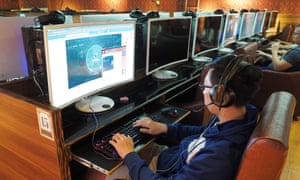
The attack that temporarily crippled the NHS in Britain and dozens of other institutions across Europe and Russia reveals the failure of the US government’s protocols for warning software developers and the private sector about system vulnerabilities, a cyber-security expert told the Guardian.
Under the vulnerability equities process (VEP) established by the US government, US intelligence agencies are supposed to collectively determine whether to disclose a vulnerability it has obtained or discovered – so the software developer has a chance to fix the problem – or withhold the information to use the flaw for offensive or defensive purposes.
“The NSA is supposed to lead the vulnerability equities process with all the other government agencies gathered round to discuss their interests in the vulnerability, and to weigh the offensive capabilities against defensive concerns for the private sector and US interests,” said Adam Segal, the director of the digital and cyberspace policy program at the Council on Foreign Relations. The EternalBlue-WanaCrypt0r attack showed that the NSA did not reveal the vulnerability it had discovered before it was stolen and apparently auctioned off, Segal said.
Ransomware attack reveals breakdown in US intelligence protocols, expert says | Technology | The Guardian
Amazon’s Echo calling doesn’t let you block people - The Verge
/cdn0.vox-cdn.com/uploads/chorus_image/image/54760939/amazon-echo-verge-9711.0.0.jpg)
"Amazon seems to have made a significant oversight in bringing voice calls and messaging to its Echo speakers: there’s no way to block communication that you might not want. So long as someone has your phone number and the Alexa mobile app (which requires an Amazon account), that person can place voice calls, record voice messages, and send text messages that will reach both your Echo device and Alexa app. They’ve got a direct line to a speaker in your home.
As of now, there is no way to block contact from specific people. Nor is there any way of whitelisting only certain individuals for calling and messaging privileges; it’s all or nothing. Elise Oras contacted The Verge regarding this privacy matter. She has also published a Medium post about the issue. An Amazon spokesperson confirmed via email that a block feature "will be available in the coming weeks. We know this is important to customers, and we’re working on it." But it's not available now, even though the calling and messaging features are.
Perhaps most alarming, even if you’ve blocked someone’s phone number from your smartphone, calls to the Echo speaker will still go through. It’s easy enough to stop voice calls from ringing your iPhone, but if you’ve enabled Alexa calling, it’s currently impossible to prevent them from reaching your Echo. This is because Alexa doesn’t use your phone for voice calls. It’s merely using your phone number to identify you.
When you enable the Echo’s calling and messaging features, Amazon accesses your contacts list to determine who else has an Echo device in their home. And it skims your entire contacts database to find this information; there’s no way to limit it to a certain favorites list, for example. Amazon wants Alexa calling and messaging to gain popularity, so it’s taking a broad approach to populate that list quickly."
Amazon’s Echo calling doesn’t let you block people - The Verge
Friday, May 12, 2017
Cyberattacks in 12 Nations Said to Use Leaked N.S.A. Hacking Tool - The New York Times

"LONDON — An extensive cyberattack struck computers across a wide swath of Europe and Asia on Friday, and strained the public health system in Britain, where doctors were blocked from patient files and emergency rooms were forced to divert patients.
The attack involved ransomware, a kind of malware that encrypts data and locks out the user. According to security experts, it exploited a vulnerability that was discovered and developed by the National Security Agency.
The hacking tool was leaked by a group calling itself the Shadow Brokers, which has been dumping stolen N.S.A. hacking tools online beginning last year. Microsoft rolled out a patch for the vulnerability last March, but hackers took advantage of the fact that vulnerable targets — particularly hospitals — had yet to update their systems.
The malware was circulated by email; targets were sent an encrypted, compressed file that, once loaded, allowed the ransomware to infiltrate its targets.
Reuters reported that employees of Britain’s National Health Service were warned about the ransomware threat earlier on Friday.
By then, it was already too late. As the disruptions rippled through hospitals, doctors’ offices and ambulance companies across Britain on Friday, the health service declared the attack as a “major incident,” a warning that local health services could be overwhelmed by patients.
Britain’s health’s secretary, Jeremy Hunt, was briefed by cybersecurity experts, while Prime Minister Theresa May’s office said she was monitoring the situation.
Among the many other institutions that were affected were hospitals and telecommunications companies across Europe, Russia, Asia and beyond, according to MalwareHunterTeam, a security firm that tracks ransomware attacks. Spain’s Telefónica and Russia’s MegaFon were among the targets.
Attacks were being reported in Britain and 11 other countries, including Turkey, Vietnam, the Philippines, Japan, with the majority of affected computers in Russia. The computers all appeared to be hit with the same ransomware, and similar ransom messages demanding about $300 to unlock their data.
The attack on the National Health Service seemed perhaps the most audacious of the attacks, because it had life-or-death implications for hospitals and ambulance services.
Tom Donnelly, a spokesman for N.H.S. Digital, the arm of the health service that handles cybersecurity, said in a phone interview that 16 organizations, including “hospitals and other kinds of clinician services,” had been hit by a cyberattack. Officials later updated that number to at least 25.
“It is still ongoing,” he said. “We were made aware of it this afternoon.”
The service’s digital arm said in a statement that the attack involved a variant of ransomware known as Wanna Decryptor.
The user is asked to pay a ransom to unlock the computer. It has become an increasingly prevalent problem. Last year, a Los Angeles hospital paid $17,000 after such an attack; earlier this year, hackers shut down the electronic key system at a hotel in Austria
Cyberattacks in 12 Nations Said to Use Leaked N.S.A. Hacking Tool - The New York Times
Thursday, May 11, 2017
Subscribe to:
Posts (Atom)