Netscape Browser 8.0 (beta) review by PC MagazineNetscape Browser 8.0 (beta)
REVIEW DATE: 05.16.05
Total posts: 1
The new Netscape 8.0 is more than just a browser; it's an information platform. Chief among this version's enhancements is the Multibar, a feature that lets you customize up to ten different browser toolbars that can be accessed within a click or two. Such toolbars can provide quick access to live news feeds, stock feeds, weather, shopping, or anything else that you add to them. You can also use them to view RSS feeds on the fly. Customization is easy and can be done mainly via Netscape's drag-and-drop interface.
Netscape's tabbed interface is plain-Jane in terms of organizing and working with tabs, but like Opera, it can be configured to open a group of tabbed pages at start-up. At installation, Netscape did a perfect job of importing bookmarks, history, and passwords from Firefox. The My Sidebar feature also returns, in much the same format as in earlier versions of Netscape. With tabs for News, Search, Bookmarks, History, and access to integrated AOL instant messenger, My Sidebar is another feature that puts a great deal of functionality right in the browser window.
From the "if you can't beat them, join them" department, Netscape offers a choice of the Gecko rendering engine (the same used by Firefox) or the IE rendering engine. You choose between them simply by checking a radio button. This feature is unique to Netscape and removes the problem of not being able to run ActiveX or VB script or to display pages with proprietary HTML tags.
One interesting feature is Netscape's Trust Ratings (displayed on a page's tab), a service that catalogs Web sites on a regular basis. Sites fall into the categories of "I trust this site," "I'm not sure," and "I don't trust this site"; security levels are adjusted accordingly. For example, some sites are verified for browsing and exchanging sensitive information, while others are placed on warning lists due to their malicious intent. This information is updated dynamically and can be manually overridden. Security settings, such as whether to allow ActiveX or JavaScript, can be set on a site-by-site basis.
Like Opera, Netscape offers password and form-data management. Where Opera uses its Wand feature, Netscape offers datacards and passcards. Datacards contain site-specific form information, and passcards contain username and password information. And of course, Netscape (as does Opera) lets you control which information is submitted and when.
With its multibar setup, Netscape becomes more of an information platform rather than a simple browser. This can be a drawback, as its interface can become cluttered and confusing—the exact opposite of Firefox. But if you want this kind of all-encompassing platform, it's a solid choice.
Saturday, May 14, 2005


Thursday, May 12, 2005
BBC NEWS | Technology | BBC eases rules on news feed use
BBC NEWS | Technology | BBC eases rules on news feed use BBC eases rules on news feed use
The BBC has opened up its content more so that people can use news stories and headlines on their own sites via RSS.
Revised licence terms mean other sites can integrate RSS feeds from the BBC without offline contract negotiations, as was previously the case.
RSS stands for Really Simple Syndication. It is a way of keeping automatically aware of website updates.
BBC News and Sport have made their content available for online news reader programs via RSS since 2003.
But this relaxing of the licence means a much more open approach, according to the BBC News website editor, Pete Clifton.
"We've raised the profile of how we are promoting them and are much more relaxed about other sites making use of feeds, which is an important step," he said.
"We want to share as much of our information as we can and reduce the restrictions we put on sites that can access them. We are making it much clearer and more simple for people to understand how they do this."
It is only right we build in some safeguards so that if they appear on sites we feel are completely beyond the pale, we can act
Pete Clifton, editor BBC News website
He explained that previously the approach was to encourage people to use the feeds for personal use, using news reader programs.
Now, the approach is more open so that people can put BBC content on their own websites. It also allows people to interact much more with the content that the BBC produces.
Mr Clifton added that the BBC had been "cautious" since introducing RSS to the site, but that there was now a real demand for news delivered to people in this way.
Like sushi restaurant conveyor belts, RSS delivers content to people so they can easily pick what they want to read.
"If we are to build public value it's important that we respond to this demand," he said.
Mr Clifton said that RSS had already proved to be a big driver of traffic to the website.
Figures for April 2005 showed that 18 million click-throughs - the number of hits generated by links to the site - were driven by the feeds to the news and sport websites.
Safeguards in place
Initially, the RSS feeds will be available from the BBC's news and sport websites.
The revised licensing agreement lays out certain terms and restrictions to use, including the appropriateness of the sites carrying BBC content, which Mr Clifton said was a necessary safeguard.
Sites that incite racial hatred or promote, facilitate or encourage illegal activity, for instance, are not permitted to display BBC content.
But in reality, said Mr Clifton, policing all sites in any substantial way would be restricted.
"It is only right we build in some safeguards so that if they appear on sites we feel are completely beyond the pale, we can act; although we can't ever claim we are going to be watching every use of it," he said.
"We will keep an eye on where they are going though."
Other BBC websites are to join the initiative in the next few months.
This means content such as film reviews and chart news could be available as RSS feeds to external sites.
Weblogs and global news sites are making much more use of RSS, and net users are becoming increasingly aware of the technology as small orange icons carrying RSS/XML text appear on sites.
There is also a plethora of news reader programs available for free through which the feeds can be collected and read at leisure.
Some news organisations, such as the UK's Guardian Online, have created bespoke news reader and aggregator programs for subscribers to use.
Mr Clifton said the BBC had considered producing its own news reader program, but felt that there was no need because there were so many other good aggregators already freely available.
Other news providers, such as the New York Times, Yahoo and Reuters offer similar services.
Story from BBC NEWS:
The BBC has opened up its content more so that people can use news stories and headlines on their own sites via RSS.
Revised licence terms mean other sites can integrate RSS feeds from the BBC without offline contract negotiations, as was previously the case.
RSS stands for Really Simple Syndication. It is a way of keeping automatically aware of website updates.
BBC News and Sport have made their content available for online news reader programs via RSS since 2003.
But this relaxing of the licence means a much more open approach, according to the BBC News website editor, Pete Clifton.
"We've raised the profile of how we are promoting them and are much more relaxed about other sites making use of feeds, which is an important step," he said.
"We want to share as much of our information as we can and reduce the restrictions we put on sites that can access them. We are making it much clearer and more simple for people to understand how they do this."
It is only right we build in some safeguards so that if they appear on sites we feel are completely beyond the pale, we can act
Pete Clifton, editor BBC News website
He explained that previously the approach was to encourage people to use the feeds for personal use, using news reader programs.
Now, the approach is more open so that people can put BBC content on their own websites. It also allows people to interact much more with the content that the BBC produces.
Mr Clifton added that the BBC had been "cautious" since introducing RSS to the site, but that there was now a real demand for news delivered to people in this way.
Like sushi restaurant conveyor belts, RSS delivers content to people so they can easily pick what they want to read.
"If we are to build public value it's important that we respond to this demand," he said.
Mr Clifton said that RSS had already proved to be a big driver of traffic to the website.
Figures for April 2005 showed that 18 million click-throughs - the number of hits generated by links to the site - were driven by the feeds to the news and sport websites.
Safeguards in place
Initially, the RSS feeds will be available from the BBC's news and sport websites.
The revised licensing agreement lays out certain terms and restrictions to use, including the appropriateness of the sites carrying BBC content, which Mr Clifton said was a necessary safeguard.
Sites that incite racial hatred or promote, facilitate or encourage illegal activity, for instance, are not permitted to display BBC content.
But in reality, said Mr Clifton, policing all sites in any substantial way would be restricted.
"It is only right we build in some safeguards so that if they appear on sites we feel are completely beyond the pale, we can act; although we can't ever claim we are going to be watching every use of it," he said.
"We will keep an eye on where they are going though."
Other BBC websites are to join the initiative in the next few months.
This means content such as film reviews and chart news could be available as RSS feeds to external sites.
Weblogs and global news sites are making much more use of RSS, and net users are becoming increasingly aware of the technology as small orange icons carrying RSS/XML text appear on sites.
There is also a plethora of news reader programs available for free through which the feeds can be collected and read at leisure.
Some news organisations, such as the UK's Guardian Online, have created bespoke news reader and aggregator programs for subscribers to use.
Mr Clifton said the BBC had considered producing its own news reader program, but felt that there was no need because there were so many other good aggregators already freely available.
Other news providers, such as the New York Times, Yahoo and Reuters offer similar services.
Story from BBC NEWS:
The New York Times > Technology > Circuits > Basics: Now, Audio Blogs for Those Who Aspire to Be D.J.'s
The New York Times > Technology > Circuits > Basics: Now, Audio Blogs for Those Who Aspire to Be D.J.'sBASICS
Now, Audio Blogs for Those Who Aspire to Be D.J.'s
By JOHN R. QUAIN
What do the pope and Paris Hilton have in common? They're both podcasters - and you can be one too.
Ranging from the sublime to the ridiculous, podcasts are essentially do-it-yourself recorded radio programs posted online. Anyone can download them free, and, using special software, listeners can subscribe to favorite shows and even have them automatically downloaded to a portable digital music player.
Despite what the name suggests, podcasts can be played not just on iPods but on any device that has an MP3 player program, including PC's and laptops.
Podcasts are the natural technological offspring of Web logs or blogs, those endlessly meandering personal Web musings that now seem to be everywhere online. Similarly, many podcasters have a diaristic bent, ranging from Mr. X, in upstate New York (ifthensoftware.blogspot.com), who has recorded his ruminations while driving to work, to Dan Klass, an underemployed actor in California whose podcast, "The Bitterest Pill" (www.thebitterestpill.com), has been known to feature invectives against Elmo.
There are celebrity podcasts like Paris Hilton's (houseofwaxmovie .warnerbros.com), intended to promote movies. Another, more high-minded site, Catholic Insider (www.catholicinsider.com), links to podcasts of Pope Benedict XVI from Vatican Radio.
Many radio stations are embracing the technology. WGBH in Boston, Q107 in Toronto and BBC Radio are already offering regular podcasts. Tomorrow, Sirius Satellite Radio will begin broadcasting a best-of-podcasting program with the podfather of podcasting, Adam Curry, formerly of MTV, as host.
Taking the experiment a step further, Infinity Broadcasting plans to restart its San Francisco talk station KYCY-AM (1550) with an all-podcasting format beginning Monday. KYCY's broadcasts will feature amateur programs from around the Web, but because of Federal Communications Commission regulations, each will be screened in advance.
Record companies are also beginning to use podcasts to fish for fans. "We think podcasts are a great way to form a relationship with our fans," said Damian Kulash, the lead singer of the rock band OK Go, which has an album coming out this summer on Capitol Records. When the band is on tour, OK Go phones in its podcasts (www.okgo.net).
Finding and Listening
For those wanting to find a podcast, there are online directories that list thousands of them, including Podcast.net (www.podcast.net), Podcasting News (podcastingnews.com), Podcast Alley (www.podcastalley.com) and iPodder.org (www.ipodder.org).
Several free software programs - like Doppler (www.dopplerradio.net) and iPodder (www.ipodder.org) - help users subscribe to and download podcasts. IPodder comes in Windows and Mac versions. The program includes a directory of podcasts available for subscribing on a scheduled basis or for downloading at will. The Web address of a podcast that is not listed can be cut and pasted into iPodder to add it to a user's roster of subscriptions.
Podcasts are usually indicated by an orange logo with the initials RSS (for really simple syndication) or XML (for extensible markup language), standing for the technologies that make such subscriptions possible.
IPod enthusiasts and Mac owners might also consider iPodderX (www.ipodderx.com), a $19.95 program that not only downloads programs but also puts them directly into the iTunes manager so that they can be automatically copied to a connected iPod player.
Unencumbered by professional standards or government broadcast rules, podcasts can devolve into fits of uncontrollable giggling and include more than their share of expletives. (Family Friendly Podcasts, at www.familyfriendlypodcasts.com, has some suggestions for those who prefer tamer shows.) Still, it is the freedom that has inspired many homegrown podcast producers.
"The whole beauty of it is that I don't have to censor myself," says Jason Evangelho, host of "Insomnia Radio," which showcases independent radio (hardcoreinsomniaradio.blogspot.com). "And I can say 'um.' "
Programs dedicated to music still dominate the podcast universe. Many offer an eclectic mix of underground music, but there are also classical music shows like "Your Daily Opera." While most get only a handful of listeners, some programs have developed a devoted fan base.
"I'm averaging about 10,000 to 11,000 listeners per show," says Brian Ibbott, whose "Coverville" (www.coverville.com) originates from his basement outside Denver. Mr. Ibbott's podcasts feature rare and unusual cover songs. He has a sponsor to offset the $30 to $40 a month he says he pays his hosting service for the extra traffic that his listeners create downloading his shows.
Making and Distributing
In addition to the chance to be heard by millions of Internet users, the relative ease of producing a show has driven the popularity of podcasting. A group of college friends unable to get their film careers off the ground, for example, decided to tell their stories, which are a cross between Firesign Theater and Hunter S. Thompson, in a podcast at the Peanut Gallery (www.thepeanutgallery.info). Those looking for a similar creative outlet need only a computer with a connected microphone and Web access.
Stay-at-home disc jockeys can record tracks using the basic recording software included with the Mac and Windows operating systems. Free software like EasyPodcast (www.easypodcast.com) can help upload efforts to a Web site. Services like Liberated Syndication (www.libsyn.com) will provide Web hosting for as little as $5 a month.
Many podcasters end up creating digital studios, using more expensive microphones, mixers and audio editing software, like Adobe Audition ($299, www.adobe.com). Audition lets a podcaster carefully edit voiceovers, mix up to 128 stereo sound tracks and even correct the pitch of a recording. Unfortunately, Audition does not include the tools for uploading to the Web.
Consequently, a new class of software designed for podcasters is beginning to emerge. Two noteworthy examples are Propaganda ($49.95, www.makepropaganda.com) and iPodcast Producer ($149.95, www.industrialaudiosoftware.com). Both Windows applications enable producers to record, mix multiple tracks and automatically post shows to the Web.
Of course, unlike a live radio broadcast or streaming music online, podcasts are downloaded and stored in their entirety. So the programs have the potential to generate thousands of copies of songs, raising legal issues. "Podcasters, like the users of any other sound recordings, must obtain the appropriate licenses from the copyright owners, or their designees," the Recording Industry Association of America said.
At "Insomnia Radio," Mr. Evangelho plays only independent bands that own the rights to their own songs, and gets permission directly from the artists to play their music. At "Coverville," to satisfy the royalties owed to songwriters and composers, Mr. Ibbott pays annual licensing fees totaling about $500 to Ascap and B.M.I. The R.I.A.A. has not specified if or how podcasters should pay the labels.
The programs are stored in the MP3 file format, and companies that use MP3 compression must pay a licensing fee to Thomson, a co-creator of the technology. But according to Rocky Caldwell at Thomson's licensing unit, fees are not applicable unless users make at least $100,000 a year from their podcasts. Now that's the kind of problem many podcasters wish they had.
Now, Audio Blogs for Those Who Aspire to Be D.J.'s
By JOHN R. QUAIN
What do the pope and Paris Hilton have in common? They're both podcasters - and you can be one too.
Ranging from the sublime to the ridiculous, podcasts are essentially do-it-yourself recorded radio programs posted online. Anyone can download them free, and, using special software, listeners can subscribe to favorite shows and even have them automatically downloaded to a portable digital music player.
Despite what the name suggests, podcasts can be played not just on iPods but on any device that has an MP3 player program, including PC's and laptops.
Podcasts are the natural technological offspring of Web logs or blogs, those endlessly meandering personal Web musings that now seem to be everywhere online. Similarly, many podcasters have a diaristic bent, ranging from Mr. X, in upstate New York (ifthensoftware.blogspot.com), who has recorded his ruminations while driving to work, to Dan Klass, an underemployed actor in California whose podcast, "The Bitterest Pill" (www.thebitterestpill.com), has been known to feature invectives against Elmo.
There are celebrity podcasts like Paris Hilton's (houseofwaxmovie .warnerbros.com), intended to promote movies. Another, more high-minded site, Catholic Insider (www.catholicinsider.com), links to podcasts of Pope Benedict XVI from Vatican Radio.
Many radio stations are embracing the technology. WGBH in Boston, Q107 in Toronto and BBC Radio are already offering regular podcasts. Tomorrow, Sirius Satellite Radio will begin broadcasting a best-of-podcasting program with the podfather of podcasting, Adam Curry, formerly of MTV, as host.
Taking the experiment a step further, Infinity Broadcasting plans to restart its San Francisco talk station KYCY-AM (1550) with an all-podcasting format beginning Monday. KYCY's broadcasts will feature amateur programs from around the Web, but because of Federal Communications Commission regulations, each will be screened in advance.
Record companies are also beginning to use podcasts to fish for fans. "We think podcasts are a great way to form a relationship with our fans," said Damian Kulash, the lead singer of the rock band OK Go, which has an album coming out this summer on Capitol Records. When the band is on tour, OK Go phones in its podcasts (www.okgo.net).
Finding and Listening
For those wanting to find a podcast, there are online directories that list thousands of them, including Podcast.net (www.podcast.net), Podcasting News (podcastingnews.com), Podcast Alley (www.podcastalley.com) and iPodder.org (www.ipodder.org).
Several free software programs - like Doppler (www.dopplerradio.net) and iPodder (www.ipodder.org) - help users subscribe to and download podcasts. IPodder comes in Windows and Mac versions. The program includes a directory of podcasts available for subscribing on a scheduled basis or for downloading at will. The Web address of a podcast that is not listed can be cut and pasted into iPodder to add it to a user's roster of subscriptions.
Podcasts are usually indicated by an orange logo with the initials RSS (for really simple syndication) or XML (for extensible markup language), standing for the technologies that make such subscriptions possible.
IPod enthusiasts and Mac owners might also consider iPodderX (www.ipodderx.com), a $19.95 program that not only downloads programs but also puts them directly into the iTunes manager so that they can be automatically copied to a connected iPod player.
Unencumbered by professional standards or government broadcast rules, podcasts can devolve into fits of uncontrollable giggling and include more than their share of expletives. (Family Friendly Podcasts, at www.familyfriendlypodcasts.com, has some suggestions for those who prefer tamer shows.) Still, it is the freedom that has inspired many homegrown podcast producers.
"The whole beauty of it is that I don't have to censor myself," says Jason Evangelho, host of "Insomnia Radio," which showcases independent radio (hardcoreinsomniaradio.blogspot.com). "And I can say 'um.' "
Programs dedicated to music still dominate the podcast universe. Many offer an eclectic mix of underground music, but there are also classical music shows like "Your Daily Opera." While most get only a handful of listeners, some programs have developed a devoted fan base.
"I'm averaging about 10,000 to 11,000 listeners per show," says Brian Ibbott, whose "Coverville" (www.coverville.com) originates from his basement outside Denver. Mr. Ibbott's podcasts feature rare and unusual cover songs. He has a sponsor to offset the $30 to $40 a month he says he pays his hosting service for the extra traffic that his listeners create downloading his shows.
Making and Distributing
In addition to the chance to be heard by millions of Internet users, the relative ease of producing a show has driven the popularity of podcasting. A group of college friends unable to get their film careers off the ground, for example, decided to tell their stories, which are a cross between Firesign Theater and Hunter S. Thompson, in a podcast at the Peanut Gallery (www.thepeanutgallery.info). Those looking for a similar creative outlet need only a computer with a connected microphone and Web access.
Stay-at-home disc jockeys can record tracks using the basic recording software included with the Mac and Windows operating systems. Free software like EasyPodcast (www.easypodcast.com) can help upload efforts to a Web site. Services like Liberated Syndication (www.libsyn.com) will provide Web hosting for as little as $5 a month.
Many podcasters end up creating digital studios, using more expensive microphones, mixers and audio editing software, like Adobe Audition ($299, www.adobe.com). Audition lets a podcaster carefully edit voiceovers, mix up to 128 stereo sound tracks and even correct the pitch of a recording. Unfortunately, Audition does not include the tools for uploading to the Web.
Consequently, a new class of software designed for podcasters is beginning to emerge. Two noteworthy examples are Propaganda ($49.95, www.makepropaganda.com) and iPodcast Producer ($149.95, www.industrialaudiosoftware.com). Both Windows applications enable producers to record, mix multiple tracks and automatically post shows to the Web.
Of course, unlike a live radio broadcast or streaming music online, podcasts are downloaded and stored in their entirety. So the programs have the potential to generate thousands of copies of songs, raising legal issues. "Podcasters, like the users of any other sound recordings, must obtain the appropriate licenses from the copyright owners, or their designees," the Recording Industry Association of America said.
At "Insomnia Radio," Mr. Evangelho plays only independent bands that own the rights to their own songs, and gets permission directly from the artists to play their music. At "Coverville," to satisfy the royalties owed to songwriters and composers, Mr. Ibbott pays annual licensing fees totaling about $500 to Ascap and B.M.I. The R.I.A.A. has not specified if or how podcasters should pay the labels.
The programs are stored in the MP3 file format, and companies that use MP3 compression must pay a licensing fee to Thomson, a co-creator of the technology. But according to Rocky Caldwell at Thomson's licensing unit, fees are not applicable unless users make at least $100,000 a year from their podcasts. Now that's the kind of problem many podcasters wish they had.
Wednesday, May 11, 2005


MS MOBILES > HTC breaks tradition
HTC breaks tradition
May 11, 2005 [Pocket PC phone]
HTC never ever did it before. Yesterday was the first time. HTC is the bigest manafucturer of Windows Mobile powered cell phones and it produces devices that are later on branded by operators (like T-Mobile, Vodafone, Orange, etc) and by distributors (like i-mate, Qtek, etc).
(click here to read mobile version of this page - if you have problems reading this news item due to ultra-high resolution photo included)
By now website of HTC was very poor and never included information about individual products. Yesterday, for the first time ever, HTC has broken the tradition of presenting products on their website and published in a press release information about one individual product: HTC Universal (also known as MDA IV, VPA IV, 3G SPV, etc):
HTC Announces The World's First Windows Mobile 5.0 Based 3G Device Global distribution expected in the second half of 2005
Taoyuan, Taiwan and Las Vegas, United States -High Tech Computer Corp. announced its plans to release the world's first 3G Windows Mobile 5.0-based device, the HTC Universal. The Universal will enable customers to be more productive while having powerful multimedia and internet browsing capabilities. Global distribution plans for the device are expected in the second half of 2005 with mobile operators in Europe, North America, and Asia.
Microsoft Corp. chairman and chief software architect, Bill Gates, unveiled Windows Mobile 5.0 during his keynote at Microsoft Mobile & Embedded DevCon 2005 in Las Vegas and displayed its versatility on the HTC Universal.
"This is the first time we are seeing the same internet experience, which you can only have in your office, with universal 3G high speed wireless data capability and large VGA display legibility. The new features from Windows Mobile 5.0 will greatly improve the keyboard experience and persistent storage feature will keep user data forever." said Peter Chou, president of HTC.
Certain technological breakthroughs are seen in the HTC Universal featuring improved support of more multimedia and productivity applications, broad integration of digital multimedia features, and faster connections to the Internet and email servers. With seamless synchronization to Office applications, faster connection speeds and versatile multimedia features customers can be more productive and have fun anywhere, anytime.
"The familiarity and flexibility of Windows Mobile 5.0 enables industry partners like HTC to differentiate itself themselves and provide extremely compelling mobile solutions for its customers," said Pieter Knook, senior vice president for the Mobile and Embedded Devices Division at Microsoft. "We look forward to our continued work with HTC to deliver forward-thinking and advanced mobile device solutions."
The HTC Universal is a 3G-enabled device that takes advantage of the advanced Windows Mobile 5.0 features, The built-in keyboard enables users to create and edit files with Microsoft Office applications. For phone and communications, the latest video telephony and dual-camera functionality facilitate high-speed connections and videoconferencing. The clamshell design of the device features a 180 degree pivot screen. With its new user interface boasting portrait and landscape modes, the new 3G phone will automatically change to the best interface. Users can also switch between the two display modes at their own discretion. In addition, users can send and receive pictures and video files at more rapid connection speeds. With its dual speaker stereophonic sound system, users can enjoy smooth and high-resolution videos at anytime.
Note : The names of actual companies and products mentioned herein may be the trademarks of their respective owners.
May 11, 2005 [Pocket PC phone]
HTC never ever did it before. Yesterday was the first time. HTC is the bigest manafucturer of Windows Mobile powered cell phones and it produces devices that are later on branded by operators (like T-Mobile, Vodafone, Orange, etc) and by distributors (like i-mate, Qtek, etc).
(click here to read mobile version of this page - if you have problems reading this news item due to ultra-high resolution photo included)
By now website of HTC was very poor and never included information about individual products. Yesterday, for the first time ever, HTC has broken the tradition of presenting products on their website and published in a press release information about one individual product: HTC Universal (also known as MDA IV, VPA IV, 3G SPV, etc):
HTC Announces The World's First Windows Mobile 5.0 Based 3G Device Global distribution expected in the second half of 2005
Taoyuan, Taiwan and Las Vegas, United States -High Tech Computer Corp. announced its plans to release the world's first 3G Windows Mobile 5.0-based device, the HTC Universal. The Universal will enable customers to be more productive while having powerful multimedia and internet browsing capabilities. Global distribution plans for the device are expected in the second half of 2005 with mobile operators in Europe, North America, and Asia.
Microsoft Corp. chairman and chief software architect, Bill Gates, unveiled Windows Mobile 5.0 during his keynote at Microsoft Mobile & Embedded DevCon 2005 in Las Vegas and displayed its versatility on the HTC Universal.
"This is the first time we are seeing the same internet experience, which you can only have in your office, with universal 3G high speed wireless data capability and large VGA display legibility. The new features from Windows Mobile 5.0 will greatly improve the keyboard experience and persistent storage feature will keep user data forever." said Peter Chou, president of HTC.
Certain technological breakthroughs are seen in the HTC Universal featuring improved support of more multimedia and productivity applications, broad integration of digital multimedia features, and faster connections to the Internet and email servers. With seamless synchronization to Office applications, faster connection speeds and versatile multimedia features customers can be more productive and have fun anywhere, anytime.
"The familiarity and flexibility of Windows Mobile 5.0 enables industry partners like HTC to differentiate itself themselves and provide extremely compelling mobile solutions for its customers," said Pieter Knook, senior vice president for the Mobile and Embedded Devices Division at Microsoft. "We look forward to our continued work with HTC to deliver forward-thinking and advanced mobile device solutions."
The HTC Universal is a 3G-enabled device that takes advantage of the advanced Windows Mobile 5.0 features, The built-in keyboard enables users to create and edit files with Microsoft Office applications. For phone and communications, the latest video telephony and dual-camera functionality facilitate high-speed connections and videoconferencing. The clamshell design of the device features a 180 degree pivot screen. With its new user interface boasting portrait and landscape modes, the new 3G phone will automatically change to the best interface. Users can also switch between the two display modes at their own discretion. In addition, users can send and receive pictures and video files at more rapid connection speeds. With its dual speaker stereophonic sound system, users can enjoy smooth and high-resolution videos at anytime.
Note : The names of actual companies and products mentioned herein may be the trademarks of their respective owners.
Tuesday, May 10, 2005
BBC NEWS | Technology | Critical flaws found in Firefox
BBC NEWS | Technology | Critical flaws found in Firefox Critical flaws found in Firefox
The Mozilla Foundation has said it is "working aggressively" to fix two flaws in its open source Firefox browser.
The vulnerabilities, reported on Saturday, were identified as "very critical", but no cases had been reported of them being exploited.
Several security firms identified the flaws which could let websites run malicious code on a person's computer.
Mozilla has responded by changing its update service and says people should temporarily turn off JavaScript code.
Manual downloads
The first flaw reported fools the browser into thinking software is being installed by a legitimate, or safe, website.
The second flaw happens when the software installation trigger does not properly check icon web addresses which contain JavaScript code.
A hacker could potentially take advantage of the security flaws to secretly launch malicious code or programs.
Mozilla advised people to download add-ons to its software manually from the Foundation's site.
Danish security firm Secunia said called the flaws "extremely critical" because cookie and history information could be used to get access to personal information or gain access to sites previously visited.
The Mozilla Foundation, which developed the browser, said it was working hard to provide a comprehensive and more permanent fix for the problems.
Main competition
Last week, Firefox celebrated its 50 millionth download since its official launch in November.
Firefox is Microsoft Internet Explorer's (IE) main rival in the browser market. Many like it because it is easily customised, and others say it has fewer security flaws than IE.
Being open source means people can adapt the software's core code to create innovative features, such as add-ons, RSS news feed readers, or extensions to the program.
The Mozilla Foundation was set up by former browser maker Netscape in 1998. Netscape dominated the browser market in the early 1990s.
Microsoft releases its next-generation IE7 later this year which promises to be more secure.
The Mozilla Foundation has said it is "working aggressively" to fix two flaws in its open source Firefox browser.
The vulnerabilities, reported on Saturday, were identified as "very critical", but no cases had been reported of them being exploited.
Several security firms identified the flaws which could let websites run malicious code on a person's computer.
Mozilla has responded by changing its update service and says people should temporarily turn off JavaScript code.
Manual downloads
The first flaw reported fools the browser into thinking software is being installed by a legitimate, or safe, website.
The second flaw happens when the software installation trigger does not properly check icon web addresses which contain JavaScript code.
A hacker could potentially take advantage of the security flaws to secretly launch malicious code or programs.
Mozilla advised people to download add-ons to its software manually from the Foundation's site.
Danish security firm Secunia said called the flaws "extremely critical" because cookie and history information could be used to get access to personal information or gain access to sites previously visited.
The Mozilla Foundation, which developed the browser, said it was working hard to provide a comprehensive and more permanent fix for the problems.
Main competition
Last week, Firefox celebrated its 50 millionth download since its official launch in November.
Firefox is Microsoft Internet Explorer's (IE) main rival in the browser market. Many like it because it is easily customised, and others say it has fewer security flaws than IE.
Being open source means people can adapt the software's core code to create innovative features, such as add-ons, RSS news feed readers, or extensions to the program.
The Mozilla Foundation was set up by former browser maker Netscape in 1998. Netscape dominated the browser market in the early 1990s.
Microsoft releases its next-generation IE7 later this year which promises to be more secure.
Top Tech News - Tech Trends - Bloodbath at IBM - 13,000 Fired
Top Tech News - Tech Trends - Bloodbath at IBM - 13,000 Fired: "Bloodbath at IBM - 13,000 Fired
Bloodbath at IBM - 13,000 Fired By Jay Wrolstad
May 5, 2005 11:23AM
This reorganization effort is a clear indication that the I.T. industry is in transition, said Yankee Group analyst Dana Gardner. 'The competition worldwide is moving quickly up the food chain. Open source technology, outsourcing and enterprise buying decisions are putting the pressure on IBM, Sun, HP, Seibel, among others,' he said. "
Bloodbath at IBM - 13,000 Fired By Jay Wrolstad
May 5, 2005 11:23AM
This reorganization effort is a clear indication that the I.T. industry is in transition, said Yankee Group analyst Dana Gardner. 'The competition worldwide is moving quickly up the food chain. Open source technology, outsourcing and enterprise buying decisions are putting the pressure on IBM, Sun, HP, Seibel, among others,' he said. "
Tuesday, May 03, 2005
PCWorld.com - We Take Longhorn for a Test Drive
PCWorld.com - We Take Longhorn for a Test Drive:We Take Longhorn for a Test Drive
After examining the alpha version of Microsoft's new OS, we like what we see.
Lincoln Spector, special to PC World
Friday, April 29, 2005
This week, Microsoft released a developers' alpha version of Longhorn at Windows Hardware Engineering Conference (WinHEC). After playing with it for a few hours, I can tell you that Longhorn is far from complete, but what I saw looked great.
Longhorn is the working title for the long-awaited next version of Windows, XP's replacement. Microsoft hasn't announced a final name or firm ship date, but the company now says that Longhorn won't be out before late next year. And even then, it will lack some previously-announced features; most notably the improved WinFS file system.
Pretty Pictures
The first thing you notice after booting this Longhorn alpha is the beautiful icons. Many, including the main ones, like folders, drives, and Computer (the "My" has been dropped), are richer, more detailed, and more three-dimensional.
But that's just the beginning. Open the Start menu and Click "All Programs". Instead of the familiar cascading menu, the left panel changes into a list of all your programs, expandable by clicking the folder icons of what used to be submenus.
Want to go to a program that's not visible? The list is scrollable, but you can also move quickly by simply typing appropriate letters. This typing won't bring you to programs listed in submenus unless those submenus are expanded. Of course, you can expand a submenu by typing the first few letters of its name, then pressing "Enter" once it's highlighted.
If you keep your Start Menu well-organized, with lots of submenus inside submenus, this setup will be more of a hassle than a convenience. But most people will probably find it an improvement.
Another nice improvement: A Run text box is located right there on the Start menu.
Exploring Longhorn's Explorer
You'll also find major improvements in Windows Explorer.
First, all the displayed drives have bar charts showing their used and empty space. Look closer, and you may notice the lack of drive letters. Longhorn isn't about to show you any DOS-like paths unless you ask for them. (But yes, they're there if you need them.)
Go into a drive, and then into some folders, and you'll discover that the Address Bar also avoids anything DOS-like. Instead, it displays the path as a series of pull-down menus, one for each folder above the current one. You can pull down any of these for quick navigation around your PC.
Here's something very cool: Click the View icon on the Standard Button bar and you'll get a slider that lets you zoom in and out for a closer or wider view of your icons (which are often views of your files rather than symbols of their file types). It also lets you switch between the various familiar views.
A new bar, on the bottom of the Explorer window, displays the properties of the file you've selected, including metadata (information about the file, such as its author, keywords, comments, and so forth). You can edit this metadata from Explorer, which will hopefully encourage more people to use it, making searches easier and all the more powerful.
Searching for Possibilities
Easier and more powerful searches are a large part of what Longhorn is about, even without the WinFS file system.
In Longhorn, Explorer displays column heads for easy sorting, even when it's not in Details view. And these column heads do a lot more than sort. Click, say, the date header, and you'll get a drop-down menu that clearly spells out the "Oldest on top" and "Newest on top" options, and also lets you choose to only view files altered today, last week, or last July.
Need a better search than that? Explorer also has a quick search bar and a Windows 2000-like searching panel (in other words, no disgustingly cute dog). Or try the new, full search tool. It helps you set up filters, one after another, until you've refined your search to exactly what you need. You could, for instance, look for files containing the text "warthogs are difficult to train," with file names ending in "bob," modified on or before April 29, 2005, that are larger than 15,000 bytes. And you can just keep adding criteria.
Of course, it will take a lot more than better searches and an improved user interface to get people to upgrade their operating system. Perhaps, when Longhorn finally arrives, we'll actually get an easy, stable, fast, and secure version of Windows.
Then again, maybe not.
After examining the alpha version of Microsoft's new OS, we like what we see.
Lincoln Spector, special to PC World
Friday, April 29, 2005
This week, Microsoft released a developers' alpha version of Longhorn at Windows Hardware Engineering Conference (WinHEC). After playing with it for a few hours, I can tell you that Longhorn is far from complete, but what I saw looked great.
Longhorn is the working title for the long-awaited next version of Windows, XP's replacement. Microsoft hasn't announced a final name or firm ship date, but the company now says that Longhorn won't be out before late next year. And even then, it will lack some previously-announced features; most notably the improved WinFS file system.
Pretty Pictures
The first thing you notice after booting this Longhorn alpha is the beautiful icons. Many, including the main ones, like folders, drives, and Computer (the "My" has been dropped), are richer, more detailed, and more three-dimensional.
But that's just the beginning. Open the Start menu and Click "All Programs". Instead of the familiar cascading menu, the left panel changes into a list of all your programs, expandable by clicking the folder icons of what used to be submenus.
Want to go to a program that's not visible? The list is scrollable, but you can also move quickly by simply typing appropriate letters. This typing won't bring you to programs listed in submenus unless those submenus are expanded. Of course, you can expand a submenu by typing the first few letters of its name, then pressing "Enter" once it's highlighted.
If you keep your Start Menu well-organized, with lots of submenus inside submenus, this setup will be more of a hassle than a convenience. But most people will probably find it an improvement.
Another nice improvement: A Run text box is located right there on the Start menu.
Exploring Longhorn's Explorer
You'll also find major improvements in Windows Explorer.
First, all the displayed drives have bar charts showing their used and empty space. Look closer, and you may notice the lack of drive letters. Longhorn isn't about to show you any DOS-like paths unless you ask for them. (But yes, they're there if you need them.)
Go into a drive, and then into some folders, and you'll discover that the Address Bar also avoids anything DOS-like. Instead, it displays the path as a series of pull-down menus, one for each folder above the current one. You can pull down any of these for quick navigation around your PC.
Here's something very cool: Click the View icon on the Standard Button bar and you'll get a slider that lets you zoom in and out for a closer or wider view of your icons (which are often views of your files rather than symbols of their file types). It also lets you switch between the various familiar views.
A new bar, on the bottom of the Explorer window, displays the properties of the file you've selected, including metadata (information about the file, such as its author, keywords, comments, and so forth). You can edit this metadata from Explorer, which will hopefully encourage more people to use it, making searches easier and all the more powerful.
Searching for Possibilities
Easier and more powerful searches are a large part of what Longhorn is about, even without the WinFS file system.
In Longhorn, Explorer displays column heads for easy sorting, even when it's not in Details view. And these column heads do a lot more than sort. Click, say, the date header, and you'll get a drop-down menu that clearly spells out the "Oldest on top" and "Newest on top" options, and also lets you choose to only view files altered today, last week, or last July.
Need a better search than that? Explorer also has a quick search bar and a Windows 2000-like searching panel (in other words, no disgustingly cute dog). Or try the new, full search tool. It helps you set up filters, one after another, until you've refined your search to exactly what you need. You could, for instance, look for files containing the text "warthogs are difficult to train," with file names ending in "bob," modified on or before April 29, 2005, that are larger than 15,000 bytes. And you can just keep adding criteria.
Of course, it will take a lot more than better searches and an improved user interface to get people to upgrade their operating system. Perhaps, when Longhorn finally arrives, we'll actually get an easy, stable, fast, and secure version of Windows.
Then again, maybe not.
Apple puts the squeeze on new iMac | CNET News.com
Apple puts the squeeze on new iMac | CNET News.com: Apple puts the squeeze on new iMac
Published: August 31, 2004, 7:21 AM PDT
By John G. Spooner
Staff Writer, CNET News.com
update Apple Computer's fall fashion statement, direct from the runways of Paris, is a svelte design for the new iMac.
The new all-in-one iMac G5 desktop tucks all of its components, including its hard drive, processor and DVD drive, behind a wide-screen liquid crystal display. The machine, which is about 2 inches thick and is mounted on a curved metal stand, has proportions similar to those of the company's Cinema Display flat panels.
The computer maker unveiled the design--its third all-in-one iMac--on Tuesday at the Apple Expo in Paris and, in doing so, ended considerable speculation. Apple had kept the specs of the iMac G5 a secret, but that didn't stop a number of Web sites from having a say about the possibilities.
Many Mac users had predicted Apple would go with a design that placed the computer's innards directly behind the display.
The unveiling also marks somewhat of a change in emphasis for the company, whose designs for desktop computers in recent months have been overshadowed by the look and feel of its iPod digital music player. On its Web site, Apple asserts that the iMac G5 is "as fun and useful" as the iPod. In fact, the iPod design team came up with the new iMac, which Apple describes as "enchanting."
News.context
What's new:
Apple unveiled a new iMac that has all of its components tucked into a 2-inch-thick flat-screen display.
Bottom line:
The original flat-panel iMac scored high for its quotient of "cool," but sales cooled off quickly. Can the new design do better?
"What would the creators of the iPod do for their next computer?" Phil Schiller, Apple's senior VP of worldwide product marketing, said at the Paris unveiling to describe the rationale behind the latest addition to the Mac family.
The iMac line could probably use some of the iPod's cachet. While sales of the music player have been scorching, sales of the previous version of the desktop lost steam over time.
The company would have liked to unveil the new machine earlier. Apple first confirmed that a new iMac was on the way in July. At that time, it said that it had stopped taking orders for iMac G4 models and that it had hoped to have an all-new model available before G4 stocks ran out. Instead, Apple was hampered by a shortage of G5 processors.
Although Apple began taking orders for the iMac G5 on its Web site Tuesday and plans to ship the systems in mid-September, the gap in timing has left the company without a consumer-oriented desktop to sell for a good portion of the 2004 back-to-school season.
Still, the new desktop's iPod-like profile and finish could serve to bring in some new blood from among the millions of iPod owners, one analyst said.
"I think what Apple is recognizing is that at least right now, the iPod is going to drive its brand, and they want to take advantage of that," said Steve Baker, an analyst at The NPD Group. "Why does this look like the iPod? Because it's clearly positioned as the consumer PC for people who own iPods but don't own an Apple desktop."
The iMac G5 still faces some obstacles, including its starting price, which, at $1,299, is higher than the typical $500 to $700 consumer-oriented desktop PCs and $400 17-inch LCD displays. But Apple and others, such as Gateway, have shown that there is a market for all-in-ones despite their price and the fact that a display can outlive a desktop PC by years.
"To Apple, price isn't the most important thing," Baker said. "A car is a car, but a BMW is a BMW. The value in an iMac is not in the hard drive, it's in the design and the ease of use--at least that's what they'll tell you--so why would you sacrifice design to cram another 256MB of RAM in there?"
Timeline of the iMac
July 8, 1998
Steve Jobs touts the new iMac as a catalyst for Apple's comeback
July 16, 2001
Is the iMac over the hill at age 3?
January 7, 2002
Apple introduces first flat-panel iMac
January 28, 2002
Apple announces it has 150,000 preorders for new iMac
March 21, 2002
Blaming flat-panel and memory prices, Apple hikes price of all iMac models by $100
April 29, 2002
Apple introduces eMac, cheaper CRT-based alternative to the flat-panel iMac
July 17, 2002
Apple introduces 17-inch flat-panel iMac
February 4, 2003
Apple refreshes iMac line with new 15-inch and 17-inch models
March 18, 2003
Apple discontinues original gumdrop-style iMac, ending its five-year run
September 8, 2003
Apple speeds up 15-inch, 17-inch iMacs
Nov. 18, 2003
Apple introduces 20-inch iMac
July 1, 2004
Apple announces new iMac on the way, though delayed; stops taking orders for current models
Previous models included the iMac G4, introduced in 2002, whose swing-arm-mounted flat screen drew comparisons to a desk lamp, and the first-generation CRT-based machine from 1998, whose form is still emulated by the eMac.
Aimed primarily at the education market, the eMac offers a 17-inch CRT, 1.25GHz PowerPC G4 processor and combination CD-burner/DVD-ROM for a starting price of $799.
What it packs
In spite of the new iMac's slim profile, Apple squeezed a fair amount of power into the machines. All three models include a G5 processor, otherwise known as IBM's PowerPC 970, and two come with Apple's SuperDrive DVD burner.
The most basic $1,299 model will include a 1.6GHz processor and a 17-inch screen, with a resolution of 1,440 by 900 pixels. It also comes with 256MB of RAM; an 80GB, 7,200-rpm hard drive; a combination CD-burner/DVD-ROM drive; Nvidia's GeForce FX 5200 Ultra graphics chip; and 64MB of dedicated graphics memory. Apple's Mac OS X version 10.3 operating system is also included.
The intermediate model, priced at $1,499, has the same screen but offers a faster 1.8GHz processor, whose data pipeline to and from memory also accelerates to 600MHz from 533MHz. It comes with the Apple SuperDrive, a combination DVD-burner/CD-burner.
The $1,899 model's 20-inch screen offers a resolution of 1,680 by 1,050 pixels. This iMac also includes the 1.8GHz chip, a 160GB, 7,200-rpm hard drive, and the SuperDrive.
Customers who purchase any of the machines directly from Apple can add more memory and a larger hard drive and can opt for add-ons such as an Apple AirPort Extreme wireless card. When fitted with 1GB of RAM, a 250GB hard drive and an Airport card, the 20-inch model costs about $2,300, Apple's site shows.
As part of its efforts to keep the iMac G5 trim, Apple used design tricks such as incorporating the machine's power supply, making for a less bulky power cord arrangement; many other thin desktops use a brick-like external power supply. Apple also included a complement of audio- and video-out, USB, FireWire and Ethernet ports, and gives customers the option of adding Bluetooth, the short-range wireless networking technology for connecting peripherals.
The Bluetooth module alone adds $50, while the module plus a keyboard and mouse adds $99 to the price of an iMac purchased directly from Apple.
Specifications aside, it's the design that Apple hopes will sell the system.
"Everyone is going to be asking, 'Where did the computer go?' The entire computer (now) floats in the air," said Schiller. Apple, he said, is aiming for a machine that people will be "proud to have in their den, their living room or in the front of a small business."
Jo Best of Silicon.com in London contributed to this report.
Published: August 31, 2004, 7:21 AM PDT
By John G. Spooner
Staff Writer, CNET News.com
update Apple Computer's fall fashion statement, direct from the runways of Paris, is a svelte design for the new iMac.
The new all-in-one iMac G5 desktop tucks all of its components, including its hard drive, processor and DVD drive, behind a wide-screen liquid crystal display. The machine, which is about 2 inches thick and is mounted on a curved metal stand, has proportions similar to those of the company's Cinema Display flat panels.
The computer maker unveiled the design--its third all-in-one iMac--on Tuesday at the Apple Expo in Paris and, in doing so, ended considerable speculation. Apple had kept the specs of the iMac G5 a secret, but that didn't stop a number of Web sites from having a say about the possibilities.
Many Mac users had predicted Apple would go with a design that placed the computer's innards directly behind the display.
The unveiling also marks somewhat of a change in emphasis for the company, whose designs for desktop computers in recent months have been overshadowed by the look and feel of its iPod digital music player. On its Web site, Apple asserts that the iMac G5 is "as fun and useful" as the iPod. In fact, the iPod design team came up with the new iMac, which Apple describes as "enchanting."
News.context
What's new:
Apple unveiled a new iMac that has all of its components tucked into a 2-inch-thick flat-screen display.
Bottom line:
The original flat-panel iMac scored high for its quotient of "cool," but sales cooled off quickly. Can the new design do better?
"What would the creators of the iPod do for their next computer?" Phil Schiller, Apple's senior VP of worldwide product marketing, said at the Paris unveiling to describe the rationale behind the latest addition to the Mac family.
The iMac line could probably use some of the iPod's cachet. While sales of the music player have been scorching, sales of the previous version of the desktop lost steam over time.
The company would have liked to unveil the new machine earlier. Apple first confirmed that a new iMac was on the way in July. At that time, it said that it had stopped taking orders for iMac G4 models and that it had hoped to have an all-new model available before G4 stocks ran out. Instead, Apple was hampered by a shortage of G5 processors.
Although Apple began taking orders for the iMac G5 on its Web site Tuesday and plans to ship the systems in mid-September, the gap in timing has left the company without a consumer-oriented desktop to sell for a good portion of the 2004 back-to-school season.
Still, the new desktop's iPod-like profile and finish could serve to bring in some new blood from among the millions of iPod owners, one analyst said.
"I think what Apple is recognizing is that at least right now, the iPod is going to drive its brand, and they want to take advantage of that," said Steve Baker, an analyst at The NPD Group. "Why does this look like the iPod? Because it's clearly positioned as the consumer PC for people who own iPods but don't own an Apple desktop."
The iMac G5 still faces some obstacles, including its starting price, which, at $1,299, is higher than the typical $500 to $700 consumer-oriented desktop PCs and $400 17-inch LCD displays. But Apple and others, such as Gateway, have shown that there is a market for all-in-ones despite their price and the fact that a display can outlive a desktop PC by years.
"To Apple, price isn't the most important thing," Baker said. "A car is a car, but a BMW is a BMW. The value in an iMac is not in the hard drive, it's in the design and the ease of use--at least that's what they'll tell you--so why would you sacrifice design to cram another 256MB of RAM in there?"
Timeline of the iMac
July 8, 1998
Steve Jobs touts the new iMac as a catalyst for Apple's comeback
July 16, 2001
Is the iMac over the hill at age 3?
January 7, 2002
Apple introduces first flat-panel iMac
January 28, 2002
Apple announces it has 150,000 preorders for new iMac
March 21, 2002
Blaming flat-panel and memory prices, Apple hikes price of all iMac models by $100
April 29, 2002
Apple introduces eMac, cheaper CRT-based alternative to the flat-panel iMac
July 17, 2002
Apple introduces 17-inch flat-panel iMac
February 4, 2003
Apple refreshes iMac line with new 15-inch and 17-inch models
March 18, 2003
Apple discontinues original gumdrop-style iMac, ending its five-year run
September 8, 2003
Apple speeds up 15-inch, 17-inch iMacs
Nov. 18, 2003
Apple introduces 20-inch iMac
July 1, 2004
Apple announces new iMac on the way, though delayed; stops taking orders for current models
Previous models included the iMac G4, introduced in 2002, whose swing-arm-mounted flat screen drew comparisons to a desk lamp, and the first-generation CRT-based machine from 1998, whose form is still emulated by the eMac.
Aimed primarily at the education market, the eMac offers a 17-inch CRT, 1.25GHz PowerPC G4 processor and combination CD-burner/DVD-ROM for a starting price of $799.
What it packs
In spite of the new iMac's slim profile, Apple squeezed a fair amount of power into the machines. All three models include a G5 processor, otherwise known as IBM's PowerPC 970, and two come with Apple's SuperDrive DVD burner.
The most basic $1,299 model will include a 1.6GHz processor and a 17-inch screen, with a resolution of 1,440 by 900 pixels. It also comes with 256MB of RAM; an 80GB, 7,200-rpm hard drive; a combination CD-burner/DVD-ROM drive; Nvidia's GeForce FX 5200 Ultra graphics chip; and 64MB of dedicated graphics memory. Apple's Mac OS X version 10.3 operating system is also included.
The intermediate model, priced at $1,499, has the same screen but offers a faster 1.8GHz processor, whose data pipeline to and from memory also accelerates to 600MHz from 533MHz. It comes with the Apple SuperDrive, a combination DVD-burner/CD-burner.
The $1,899 model's 20-inch screen offers a resolution of 1,680 by 1,050 pixels. This iMac also includes the 1.8GHz chip, a 160GB, 7,200-rpm hard drive, and the SuperDrive.
Customers who purchase any of the machines directly from Apple can add more memory and a larger hard drive and can opt for add-ons such as an Apple AirPort Extreme wireless card. When fitted with 1GB of RAM, a 250GB hard drive and an Airport card, the 20-inch model costs about $2,300, Apple's site shows.
As part of its efforts to keep the iMac G5 trim, Apple used design tricks such as incorporating the machine's power supply, making for a less bulky power cord arrangement; many other thin desktops use a brick-like external power supply. Apple also included a complement of audio- and video-out, USB, FireWire and Ethernet ports, and gives customers the option of adding Bluetooth, the short-range wireless networking technology for connecting peripherals.
The Bluetooth module alone adds $50, while the module plus a keyboard and mouse adds $99 to the price of an iMac purchased directly from Apple.
Specifications aside, it's the design that Apple hopes will sell the system.
"Everyone is going to be asking, 'Where did the computer go?' The entire computer (now) floats in the air," said Schiller. Apple, he said, is aiming for a machine that people will be "proud to have in their den, their living room or in the front of a small business."
Jo Best of Silicon.com in London contributed to this report.
Apple feeds Tiger to iMac line | CNET News.com
Apple feeds Tiger to iMac line | CNET News.com:Apple feeds Tiger to iMac line
Published: May 3, 2005, 8:01 AM PDT
By Ina Fried
Staff Writer, CNET News.com
TrackBack Print E-mail TalkBack
Apple Computer sped up its iMac line on Tuesday, adding faster processors and graphics chips along with its just-released Mac OS X Tiger operating system.
The new models, which have the same design as previous G5 iMacs, also feature gigabit Ethernet, Bluetooth and 802.11g wireless networking. The all-in-one desktops also offer improved graphics power with the addition of the ATI Radeon 9600 graphics processor and 128MB of video memory.
"Reviewers have called the iMac G5 'the most elegant desktop computer in the world' and now it's getting even better," Apple Senior Vice President Phil Schiller said in a statement. "With a faster processor, built-in wireless networking, Tiger and iLife '05, the new iMac G5 offers the best consumer desktop computing experience in the world."
The iMac continues to come in three models. The $1,299 entry-level version features a 1.8GHz chip, a 17-inch wide-screen display, 512MB of memory, a 160GB hard drive and a combo drive that can burn CDs and play DVDs.
The $1,499 midrange model also has a 17-inch screen and similar size hard drive and memory, but adds a 2GHz processor and a SuperDrive that can burn both CDs and DVDs. The SuperDrive boasts an improved 8x speed over prior Apple models and also has support for double-layer discs.
The high-end model sells for $1,799 and offers a 20-inch screen and a 250GB hard drive.
All of the new models come with Apple's iLife '05 multimedia software suite, as well as with the Tiger OS, which went on sale Friday.
Apple introduced the first G5 iMacs in August, following a delay as the company switched from the prior desk-lamp style G4 iMac.
Apple also updated its eMac all-in-one Tuesday to include a faster 1.42GHz chip along with Tiger. A model with 256MB of memory, an 80GB hard disk and combo drive sells for $799. The $999 version comes with 512MB of memory, a 160GB hard disk and an 8X SuperDrive.
Published: May 3, 2005, 8:01 AM PDT
By Ina Fried
Staff Writer, CNET News.com
TrackBack Print E-mail TalkBack
Apple Computer sped up its iMac line on Tuesday, adding faster processors and graphics chips along with its just-released Mac OS X Tiger operating system.
The new models, which have the same design as previous G5 iMacs, also feature gigabit Ethernet, Bluetooth and 802.11g wireless networking. The all-in-one desktops also offer improved graphics power with the addition of the ATI Radeon 9600 graphics processor and 128MB of video memory.
"Reviewers have called the iMac G5 'the most elegant desktop computer in the world' and now it's getting even better," Apple Senior Vice President Phil Schiller said in a statement. "With a faster processor, built-in wireless networking, Tiger and iLife '05, the new iMac G5 offers the best consumer desktop computing experience in the world."
The iMac continues to come in three models. The $1,299 entry-level version features a 1.8GHz chip, a 17-inch wide-screen display, 512MB of memory, a 160GB hard drive and a combo drive that can burn CDs and play DVDs.
The $1,499 midrange model also has a 17-inch screen and similar size hard drive and memory, but adds a 2GHz processor and a SuperDrive that can burn both CDs and DVDs. The SuperDrive boasts an improved 8x speed over prior Apple models and also has support for double-layer discs.
The high-end model sells for $1,799 and offers a 20-inch screen and a 250GB hard drive.
All of the new models come with Apple's iLife '05 multimedia software suite, as well as with the Tiger OS, which went on sale Friday.
Apple introduced the first G5 iMacs in August, following a delay as the company switched from the prior desk-lamp style G4 iMac.
Apple also updated its eMac all-in-one Tuesday to include a faster 1.42GHz chip along with Tiger. A model with 256MB of memory, an 80GB hard disk and combo drive sells for $799. The $999 version comes with 512MB of memory, a 160GB hard disk and an 8X SuperDrive.
Sunday, May 01, 2005
The New York Times > Arts > Television > Its Long Trek Over, the Enterprise Pulls Into Dry Dock
The New York Times > Arts > Television > Its Long Trek Over, the Enterprise Pulls Into Dry Dock: May 1, 2005
Its Long Trek Over, the Enterprise Pulls Into Dry Dock
By DAVE ITZKOFF
IN the sector of planet Earth known as Hollywood, it was business as usual on the Paramount back lot. On a sunny day in early March, green-skinned aliens with zippers embedded in their faces were eating catered lunches, stagehands were disassembling lighting rigs labeled "Thorium Isotope Hazard," and all were doing their best to ignore the fact that the warp engines on the starship Enterprise would soon be shut down, perhaps never to start up again. "Welcome," a security guard said with heavy irony, "to the last days of Pompeii."
On May 13, UPN will broadcast the final two episodes of "Star Trek: Enterprise," the most recent spinoff of the genre-defining science-fiction series created by Gene Roddenberry nearly 40 years ago. The scenes filmed in March will bring closure to the story of a futuristic space vessel and its intrepid crew, but the end of "Enterprise" also casts into doubt the future of a venerable entertainment property that is entering a realm where no franchise has gone before.
Almost from the moment it was canceled by NBC in 1969, the original "Star Trek" set about defying television conventions: a three-season dud in prime time, it became a success in syndication, spawning a series of motion pictures, a merchandising empire, and three television sequels (the syndicated hits "Star Trek: The Next Generation," "Star Trek: Deep Space Nine" and "Star Trek: Voyager," which helped start the UPN network in 1995).
"Enterprise," a prequel devised by the veteran "Trek" producers Rick Berman and Brannon Braga, was supposed to be the series that would take the franchise into the future by venturing into its past. "We knew that in the 23rd century, Captain Kirk and Mr. Spock were out exploring the universe, and they were comfortable in space," said Mr. Berman, who was put in charge of the film and television properties after Mr. Roddenberry's death in 1991. "But who were the first people to have to try a transporter? The first people to come into contact with hostile alien species; who were hesitant about taking these first steps into the galaxy?"
Set 100 years before the first "Star Trek" series, aboard an embryonic version of the ship that would later carry Kirk, Spock and company across the cosmos, "Enterprise" made its debut on UPN on Sept. 26, 2001, to over 12.5 million viewers. By the end of its first season, its audience was just half as big, and by the end of its second season, barely a third of those original viewers were still watching. "People never really warmed up to 'Enterprise,' " said Ronald D. Moore, a former staff writer of the syndicated "Trek" television sequels who is now executive producer of the Sci Fi Channel's new "Battlestar Galactica" series. "It never quite grabbed people viscerally and hung on, like the other shows did."
As Jolene Blalock, who played the Vulcan officer T'Pol on "Enterprise," explained: "The stories lacked intriguing content. They were boring." A lifelong "Star Trek" fan, Ms. Blalock said she was dismayed by early "Enterprise" scripts that seemed to ignore basic tenets of the franchise's chronology, and that offered revealing costumes instead of character development. "The audience isn't stupid," she said.
Aware of viewers' disappointment, the producers made significant changes for its third season: a single, yearlong storyline was established, pitting the ship's crew against a malevolent alien race called the Xindi, and Manny Coto, creator of the Showtime series "Odyssey 5," was brought in as a co-executive producer. But while Mr. Coto was widely hailed by colleagues and fans alike for delivering episodes that equaled the quality of previous "Star Trek" series, the show's ratings continued to erode.
When it was time to commit to a new season of "Enterprise," UPN ordered fewer episodes than in the past and shuffled them to yet another time slot. Still, some people clung to hope. "Being the optimists that actors are," said Scott Bakula, who played "Enterprise's" heroic Captain Archer, "you think, 'Maybe if we do a really good job. ...' But basically we were kidding ourselves."
The network says the problem was that most of "Enterprise's" viewers were male, unlike those of its bigger shows, like "America's Next Top Model" and "Veronica Mars." "It didn't really fit into the overall brand, and it was harder to attract the audience for that show, because they weren't sitting here all week," said the UPN president, Dawn Ostroff.
As "Enterprise" prepares for its final voyage, its producers admit that the found it hard to write for both dedicated "Trek" fans and uninitiated viewers. "When it was time to start the writing for Season 4," Mr. Coto said, "we were mostly gearing episodes towards people who knew the 'Star Trek' universe. We were not worried so much about people who didn't. They were gone anyway."
Yet "Enterprise" was also hobbled by competition from the four previous "Star Trek" TV series, which continue on cable and in syndication. "If anything, Paramount has gone to the well too often, because the franchise has been such a huge cash cow for the studio, for decades," said the longtime "Trek" actor and director Jonathan Frakes, who reprises his "Next Generation" character, Commander Riker, in the "Enterprise" finale. "You can go right through the dial and there's always 'Star Trek' on somewhere."
At the same time that "Enterprise" began to sputter, the "Star Trek" film franchise went into a tailspin: the 2002 theatrical release "Star Trek: Nemesis" was the series' first bona fide bomb, grossing just over $40 million. "There became a certain perception that the franchise wasn't something people had to rush out and see in any way, shape or form," said Mr. Moore, who wrote the screenplays for the "Star Trek" films "Generations" and "First Contact." "That perception becomes self-sustaining, and then people drift away from it."
They may have drifted toward Sci Fi's "Battlestar Galactica" (which brought in about 2 million viewers in its first season this winter) and USA's "Dead Zone" (which averaged almost 3.5 million viewers last summer). "It's like there's a certain number of science-fiction fans, and that's it," Mr. Coto said. "It's a genre that appeals to a certain type of individual, and there's not a lot of them."
THIS fall, for the first time in 18 years, there will be no original "Star Trek" series on television; a new film installment is unlikely to materialize before 2007 or 2008. Paramount Network Television confirmed that there was no timetable for the development of a new show, and no creative team in place to develop it. And despite the near-universal praise he earned for keeping "Enterprise" aloft, Mr. Coto said no one had approached him about further involvement with the "Star Trek" franchise. "It is kind of disappointing, frankly," he said. "I don't think a lot of people who are in charge right now are that interested in talking about the next thing."
From his office in the Gary Cooper Building at Paramount Pictures, behind a door with a plaque that reads "Please speak softly, massage in progress," Mr. Berman remained remarkably sanguine for a man so frequently threatened with bodily harm on Internet message boards. He had begun preliminary work on a potential new "Star Trek" film, but, he said, "I'm not certain that I will be involved in creating the next 'Star Trek' series. I have no idea when that's going to happen, and it very well may be someone new who's going to be doing it."
And as he spoke of the optimistic vision that Mr. Roddenberry presented in the original "Star Trek," one in which the most demanding of humanity's earthbound problems have been solved and the infinite wonder of the universe awaits mankind, Mr. Berman expressed a similar hopefulness for the future of "Star Trek" itself. "You can go anywhere in the world and people know what 'Beam me up, Scotty' means or what a Klingon is," Mr Berman said. "They're not going to go away."
But some who are departing the Star Trek universe, like Ms. Blalock, seemed relieved to be free of early-morning makeup calls and prosthetic pointy ears: "The girls on set, we would always joke: 'We're gonna be cute after this all over. After we shake off the haggard.' "
Its Long Trek Over, the Enterprise Pulls Into Dry Dock
By DAVE ITZKOFF
IN the sector of planet Earth known as Hollywood, it was business as usual on the Paramount back lot. On a sunny day in early March, green-skinned aliens with zippers embedded in their faces were eating catered lunches, stagehands were disassembling lighting rigs labeled "Thorium Isotope Hazard," and all were doing their best to ignore the fact that the warp engines on the starship Enterprise would soon be shut down, perhaps never to start up again. "Welcome," a security guard said with heavy irony, "to the last days of Pompeii."
On May 13, UPN will broadcast the final two episodes of "Star Trek: Enterprise," the most recent spinoff of the genre-defining science-fiction series created by Gene Roddenberry nearly 40 years ago. The scenes filmed in March will bring closure to the story of a futuristic space vessel and its intrepid crew, but the end of "Enterprise" also casts into doubt the future of a venerable entertainment property that is entering a realm where no franchise has gone before.
Almost from the moment it was canceled by NBC in 1969, the original "Star Trek" set about defying television conventions: a three-season dud in prime time, it became a success in syndication, spawning a series of motion pictures, a merchandising empire, and three television sequels (the syndicated hits "Star Trek: The Next Generation," "Star Trek: Deep Space Nine" and "Star Trek: Voyager," which helped start the UPN network in 1995).
"Enterprise," a prequel devised by the veteran "Trek" producers Rick Berman and Brannon Braga, was supposed to be the series that would take the franchise into the future by venturing into its past. "We knew that in the 23rd century, Captain Kirk and Mr. Spock were out exploring the universe, and they were comfortable in space," said Mr. Berman, who was put in charge of the film and television properties after Mr. Roddenberry's death in 1991. "But who were the first people to have to try a transporter? The first people to come into contact with hostile alien species; who were hesitant about taking these first steps into the galaxy?"
Set 100 years before the first "Star Trek" series, aboard an embryonic version of the ship that would later carry Kirk, Spock and company across the cosmos, "Enterprise" made its debut on UPN on Sept. 26, 2001, to over 12.5 million viewers. By the end of its first season, its audience was just half as big, and by the end of its second season, barely a third of those original viewers were still watching. "People never really warmed up to 'Enterprise,' " said Ronald D. Moore, a former staff writer of the syndicated "Trek" television sequels who is now executive producer of the Sci Fi Channel's new "Battlestar Galactica" series. "It never quite grabbed people viscerally and hung on, like the other shows did."
As Jolene Blalock, who played the Vulcan officer T'Pol on "Enterprise," explained: "The stories lacked intriguing content. They were boring." A lifelong "Star Trek" fan, Ms. Blalock said she was dismayed by early "Enterprise" scripts that seemed to ignore basic tenets of the franchise's chronology, and that offered revealing costumes instead of character development. "The audience isn't stupid," she said.
Aware of viewers' disappointment, the producers made significant changes for its third season: a single, yearlong storyline was established, pitting the ship's crew against a malevolent alien race called the Xindi, and Manny Coto, creator of the Showtime series "Odyssey 5," was brought in as a co-executive producer. But while Mr. Coto was widely hailed by colleagues and fans alike for delivering episodes that equaled the quality of previous "Star Trek" series, the show's ratings continued to erode.
When it was time to commit to a new season of "Enterprise," UPN ordered fewer episodes than in the past and shuffled them to yet another time slot. Still, some people clung to hope. "Being the optimists that actors are," said Scott Bakula, who played "Enterprise's" heroic Captain Archer, "you think, 'Maybe if we do a really good job. ...' But basically we were kidding ourselves."
The network says the problem was that most of "Enterprise's" viewers were male, unlike those of its bigger shows, like "America's Next Top Model" and "Veronica Mars." "It didn't really fit into the overall brand, and it was harder to attract the audience for that show, because they weren't sitting here all week," said the UPN president, Dawn Ostroff.
As "Enterprise" prepares for its final voyage, its producers admit that the found it hard to write for both dedicated "Trek" fans and uninitiated viewers. "When it was time to start the writing for Season 4," Mr. Coto said, "we were mostly gearing episodes towards people who knew the 'Star Trek' universe. We were not worried so much about people who didn't. They were gone anyway."
Yet "Enterprise" was also hobbled by competition from the four previous "Star Trek" TV series, which continue on cable and in syndication. "If anything, Paramount has gone to the well too often, because the franchise has been such a huge cash cow for the studio, for decades," said the longtime "Trek" actor and director Jonathan Frakes, who reprises his "Next Generation" character, Commander Riker, in the "Enterprise" finale. "You can go right through the dial and there's always 'Star Trek' on somewhere."
At the same time that "Enterprise" began to sputter, the "Star Trek" film franchise went into a tailspin: the 2002 theatrical release "Star Trek: Nemesis" was the series' first bona fide bomb, grossing just over $40 million. "There became a certain perception that the franchise wasn't something people had to rush out and see in any way, shape or form," said Mr. Moore, who wrote the screenplays for the "Star Trek" films "Generations" and "First Contact." "That perception becomes self-sustaining, and then people drift away from it."
They may have drifted toward Sci Fi's "Battlestar Galactica" (which brought in about 2 million viewers in its first season this winter) and USA's "Dead Zone" (which averaged almost 3.5 million viewers last summer). "It's like there's a certain number of science-fiction fans, and that's it," Mr. Coto said. "It's a genre that appeals to a certain type of individual, and there's not a lot of them."
THIS fall, for the first time in 18 years, there will be no original "Star Trek" series on television; a new film installment is unlikely to materialize before 2007 or 2008. Paramount Network Television confirmed that there was no timetable for the development of a new show, and no creative team in place to develop it. And despite the near-universal praise he earned for keeping "Enterprise" aloft, Mr. Coto said no one had approached him about further involvement with the "Star Trek" franchise. "It is kind of disappointing, frankly," he said. "I don't think a lot of people who are in charge right now are that interested in talking about the next thing."
From his office in the Gary Cooper Building at Paramount Pictures, behind a door with a plaque that reads "Please speak softly, massage in progress," Mr. Berman remained remarkably sanguine for a man so frequently threatened with bodily harm on Internet message boards. He had begun preliminary work on a potential new "Star Trek" film, but, he said, "I'm not certain that I will be involved in creating the next 'Star Trek' series. I have no idea when that's going to happen, and it very well may be someone new who's going to be doing it."
And as he spoke of the optimistic vision that Mr. Roddenberry presented in the original "Star Trek," one in which the most demanding of humanity's earthbound problems have been solved and the infinite wonder of the universe awaits mankind, Mr. Berman expressed a similar hopefulness for the future of "Star Trek" itself. "You can go anywhere in the world and people know what 'Beam me up, Scotty' means or what a Klingon is," Mr Berman said. "They're not going to go away."
But some who are departing the Star Trek universe, like Ms. Blalock, seemed relieved to be free of early-morning makeup calls and prosthetic pointy ears: "The girls on set, we would always joke: 'We're gonna be cute after this all over. After we shake off the haggard.' "
Lenovo completes IBM acquisition | CNET News.com > Lenovo completes IBM acquisition
Lenovo completes IBM acquisition | CNET News.com: Lenovo completes IBM acquisition
Published: May 1, 2005, 11:15 AM PDT
By Steven Musil
Staff Writer, CNET News.com
TrackBack Print E-mail TalkBack
China's Lenovo Group has completed its $1.75 billion purchase of IBM PC division, creating the world's third-largest PC maker, the companies said Sunday.
"Within weeks, we will be introducing new products as the new Lenovo," Stephen Ward, Lenovo's chief executive officer, said in a statement.
Lenovo Chairman Yang Yuanqing called the purchase an "historic event" for the company.
The joint venture trails only Dell and Hewlett-Packard in sales, but still gives IBM a hand in the PC business. Under the deal, IBM takes an 18.9 percent stake in Lenovo. Lenovo paid $1.25 billion for the IBM PC unit and assumed debt, which brought the total cost to $1.75 billion.
What's ahead for Windows
Based on both companies' 2003 sales figures, the joint venture will have an annual sales volume of 11.9 million units and revenue of $12 billion, increasing Lenovo's current PC business fourfold.
Lenovo will be the preferred supplier of PCs to IBM and will be allowed to use the IBM brand for five years under an agreement that includes the "Think" brand. Big Blue has promised to support the PC maker with marketing via its IBM corporate sales force.
The deal, which was announced in December 2004, has come under regulatory scrutiny over national security concerns. The Committee on Foreign Investments in the United States, which reviews acquisitions of U.S. businesses by companies based outside the country, has reportedly showed concern that Chinese operatives might use an IBM facility for industrial espionage.
However, the Federal Trade Commission indicated in January that it would not raise any objections to the Lenovo deal on the basis of how the sale might effect competition in the market.
The combined venture will have roughly 10,000 IBM employees and 9,200 Lenovo employees. It will be headquartered in New York, with operations in Beijing and in Raleigh, N.C.
Published: May 1, 2005, 11:15 AM PDT
By Steven Musil
Staff Writer, CNET News.com
TrackBack Print E-mail TalkBack
China's Lenovo Group has completed its $1.75 billion purchase of IBM PC division, creating the world's third-largest PC maker, the companies said Sunday.
"Within weeks, we will be introducing new products as the new Lenovo," Stephen Ward, Lenovo's chief executive officer, said in a statement.
Lenovo Chairman Yang Yuanqing called the purchase an "historic event" for the company.
The joint venture trails only Dell and Hewlett-Packard in sales, but still gives IBM a hand in the PC business. Under the deal, IBM takes an 18.9 percent stake in Lenovo. Lenovo paid $1.25 billion for the IBM PC unit and assumed debt, which brought the total cost to $1.75 billion.
What's ahead for Windows
Based on both companies' 2003 sales figures, the joint venture will have an annual sales volume of 11.9 million units and revenue of $12 billion, increasing Lenovo's current PC business fourfold.
Lenovo will be the preferred supplier of PCs to IBM and will be allowed to use the IBM brand for five years under an agreement that includes the "Think" brand. Big Blue has promised to support the PC maker with marketing via its IBM corporate sales force.
The deal, which was announced in December 2004, has come under regulatory scrutiny over national security concerns. The Committee on Foreign Investments in the United States, which reviews acquisitions of U.S. businesses by companies based outside the country, has reportedly showed concern that Chinese operatives might use an IBM facility for industrial espionage.
However, the Federal Trade Commission indicated in January that it would not raise any objections to the Lenovo deal on the basis of how the sale might effect competition in the market.
The combined venture will have roughly 10,000 IBM employees and 9,200 Lenovo employees. It will be headquartered in New York, with operations in Beijing and in Raleigh, N.C.
Lenovo completes IBM acquisition | CNET News.com > Lenovo completes IBM acquisition
Lenovo completes IBM acquisition | CNET News.com: Lenovo completes IBM acquisition
Published: May 1, 2005, 11:15 AM PDT
By Steven Musil
Staff Writer, CNET News.com
TrackBack Print E-mail TalkBack
China's Lenovo Group has completed its $1.75 billion purchase of IBM PC division, creating the world's third-largest PC maker, the companies said Sunday.
"Within weeks, we will be introducing new products as the new Lenovo," Stephen Ward, Lenovo's chief executive officer, said in a statement.
Lenovo Chairman Yang Yuanqing called the purchase an "historic event" for the company.
The joint venture trails only Dell and Hewlett-Packard in sales, but still gives IBM a hand in the PC business. Under the deal, IBM takes an 18.9 percent stake in Lenovo. Lenovo paid $1.25 billion for the IBM PC unit and assumed debt, which brought the total cost to $1.75 billion.
What's ahead for Windows
Based on both companies' 2003 sales figures, the joint venture will have an annual sales volume of 11.9 million units and revenue of $12 billion, increasing Lenovo's current PC business fourfold.
Lenovo will be the preferred supplier of PCs to IBM and will be allowed to use the IBM brand for five years under an agreement that includes the "Think" brand. Big Blue has promised to support the PC maker with marketing via its IBM corporate sales force.
The deal, which was announced in December 2004, has come under regulatory scrutiny over national security concerns. The Committee on Foreign Investments in the United States, which reviews acquisitions of U.S. businesses by companies based outside the country, has reportedly showed concern that Chinese operatives might use an IBM facility for industrial espionage.
However, the Federal Trade Commission indicated in January that it would not raise any objections to the Lenovo deal on the basis of how the sale might effect competition in the market.
The combined venture will have roughly 10,000 IBM employees and 9,200 Lenovo employees. It will be headquartered in New York, with operations in Beijing and in Raleigh, N.C.
Published: May 1, 2005, 11:15 AM PDT
By Steven Musil
Staff Writer, CNET News.com
TrackBack Print E-mail TalkBack
China's Lenovo Group has completed its $1.75 billion purchase of IBM PC division, creating the world's third-largest PC maker, the companies said Sunday.
"Within weeks, we will be introducing new products as the new Lenovo," Stephen Ward, Lenovo's chief executive officer, said in a statement.
Lenovo Chairman Yang Yuanqing called the purchase an "historic event" for the company.
The joint venture trails only Dell and Hewlett-Packard in sales, but still gives IBM a hand in the PC business. Under the deal, IBM takes an 18.9 percent stake in Lenovo. Lenovo paid $1.25 billion for the IBM PC unit and assumed debt, which brought the total cost to $1.75 billion.
What's ahead for Windows
Based on both companies' 2003 sales figures, the joint venture will have an annual sales volume of 11.9 million units and revenue of $12 billion, increasing Lenovo's current PC business fourfold.
Lenovo will be the preferred supplier of PCs to IBM and will be allowed to use the IBM brand for five years under an agreement that includes the "Think" brand. Big Blue has promised to support the PC maker with marketing via its IBM corporate sales force.
The deal, which was announced in December 2004, has come under regulatory scrutiny over national security concerns. The Committee on Foreign Investments in the United States, which reviews acquisitions of U.S. businesses by companies based outside the country, has reportedly showed concern that Chinese operatives might use an IBM facility for industrial espionage.
However, the Federal Trade Commission indicated in January that it would not raise any objections to the Lenovo deal on the basis of how the sale might effect competition in the market.
The combined venture will have roughly 10,000 IBM employees and 9,200 Lenovo employees. It will be headquartered in New York, with operations in Beijing and in Raleigh, N.C.
Friday, April 29, 2005
Brighthand — More Evidence iPAQ hw6500 Coming to Cingular (Updated)
Brighthand — More Evidence iPAQ hw6500 Coming to Cingular (Updated):More Evidence iPAQ hw6500 Coming to Cingular (Updated)
By Ed Hardy | Editor-in-Chief
Apr 26, 2005
Although it has been widely assumed that HP's upcoming cellular-wireless Pocket PC will be offered by Cingular, there's been no evidence of that.
However, while it's hardly conclusive, a Microsoft MVP has essentially promised that the iPAQ hw6500 will be offered by Cingular.
A Little Background Info
HP iPAQ hw6500Everyone has been assuming that this model will be offered by Cingular because HP is heavily touting its support for EDGE high-speed wireless networks.
Cingular is the only U.S. company with a significant EDGE wireless network.
New Info
Recently, Joe Schurman, a Microsoft MVP, posted on his web site a PowerPoint presentation discussing the iPAQ hw6500.
In this, he specifically says that this handheld will be offered by Cingular.
As a Microsoft MVP specializing in the Windows Mobile operating system, Schurman is in the position to have inside information on this device.
This doesn't mean that Cingular will be the only carrier to offer this handheld. It uses GSM/GPRS wireless networks, so it can function as a voice and data device on most of the wireless service providers' networks worldwide. However, the data transfer speed won't be as high as it is with Cingular.
Update: Joe Schurman has released the following statement:
"I received information on HP partnering with Cingular for the hw6500 from another website before I put this presentation together and spoke in conversation to a fellow HP rep. At this time, HP has not made an announcement as to who the carrier is and therefore, I have removed the last bullet under the Cingular slide due to a request that I received today. I am among those who are anxious to see when this device will be released and who will provide service for it."
Overview of the iPAQ hw6500
The iPAQ hw6500 will run the Phone Edition of Windows Mobile 2003 SE on a 312 MHz Intel XScale processor.
It will have 64 MB of RAM, of which 46 MB is user accessible. This handheld will include an 8 MB File Store.
This will be the first Pocket PC from any company with a square (240 by 240 pixel) screen. This will be 2.2 inches on each side.
Below the screen will be a backlit QWERTY keyboard.
The hw6500 will have a pair of memory card slots, one for SD/SDIO cards and a second for miniSD cards.
It will include a built-in GPS receiver and TomTom Navigator software. Users will be able to download one city map for free. Additional maps will cost extra.
The hw6500 will run on GSM/GPRS wireless networks, and support EDGE, a wireless networking standard that can provide average speeds of 100 kbps to 130 kbps.
It will have Bluetooth short-range wireless networking, but not Wi-Fi.
Some, but not all, versions of the hw6500 will have a 1.2 megapixel camera capable of taking 1280-by-1024-pixel still pictures or 640-by-480-pixel MPEG4 video. This will be accompanied by an LED flash.
This device will be 4.7 inches tall, 2.8 inches wide, and 0.8 inches thick (118 mm by 71 mm by 21 mm). It will weigh 5.8 ounces (165 g).
HP says this device will be available in the second half of April. The exact price is still not known, but it is expected to cost about the same as HP's other cellular-wireless Pocket PC, the iPAQ h6315.
Thanks to Dave's iPAQ for the tip.
By Ed Hardy | Editor-in-Chief
Apr 26, 2005
Although it has been widely assumed that HP's upcoming cellular-wireless Pocket PC will be offered by Cingular, there's been no evidence of that.
However, while it's hardly conclusive, a Microsoft MVP has essentially promised that the iPAQ hw6500 will be offered by Cingular.
A Little Background Info
HP iPAQ hw6500Everyone has been assuming that this model will be offered by Cingular because HP is heavily touting its support for EDGE high-speed wireless networks.
Cingular is the only U.S. company with a significant EDGE wireless network.
New Info
Recently, Joe Schurman, a Microsoft MVP, posted on his web site a PowerPoint presentation discussing the iPAQ hw6500.
In this, he specifically says that this handheld will be offered by Cingular.
As a Microsoft MVP specializing in the Windows Mobile operating system, Schurman is in the position to have inside information on this device.
This doesn't mean that Cingular will be the only carrier to offer this handheld. It uses GSM/GPRS wireless networks, so it can function as a voice and data device on most of the wireless service providers' networks worldwide. However, the data transfer speed won't be as high as it is with Cingular.
Update: Joe Schurman has released the following statement:
"I received information on HP partnering with Cingular for the hw6500 from another website before I put this presentation together and spoke in conversation to a fellow HP rep. At this time, HP has not made an announcement as to who the carrier is and therefore, I have removed the last bullet under the Cingular slide due to a request that I received today. I am among those who are anxious to see when this device will be released and who will provide service for it."
Overview of the iPAQ hw6500
The iPAQ hw6500 will run the Phone Edition of Windows Mobile 2003 SE on a 312 MHz Intel XScale processor.
It will have 64 MB of RAM, of which 46 MB is user accessible. This handheld will include an 8 MB File Store.
This will be the first Pocket PC from any company with a square (240 by 240 pixel) screen. This will be 2.2 inches on each side.
Below the screen will be a backlit QWERTY keyboard.
The hw6500 will have a pair of memory card slots, one for SD/SDIO cards and a second for miniSD cards.
It will include a built-in GPS receiver and TomTom Navigator software. Users will be able to download one city map for free. Additional maps will cost extra.
The hw6500 will run on GSM/GPRS wireless networks, and support EDGE, a wireless networking standard that can provide average speeds of 100 kbps to 130 kbps.
It will have Bluetooth short-range wireless networking, but not Wi-Fi.
Some, but not all, versions of the hw6500 will have a 1.2 megapixel camera capable of taking 1280-by-1024-pixel still pictures or 640-by-480-pixel MPEG4 video. This will be accompanied by an LED flash.
This device will be 4.7 inches tall, 2.8 inches wide, and 0.8 inches thick (118 mm by 71 mm by 21 mm). It will weigh 5.8 ounces (165 g).
HP says this device will be available in the second half of April. The exact price is still not known, but it is expected to cost about the same as HP's other cellular-wireless Pocket PC, the iPAQ h6315.
Thanks to Dave's iPAQ for the tip.
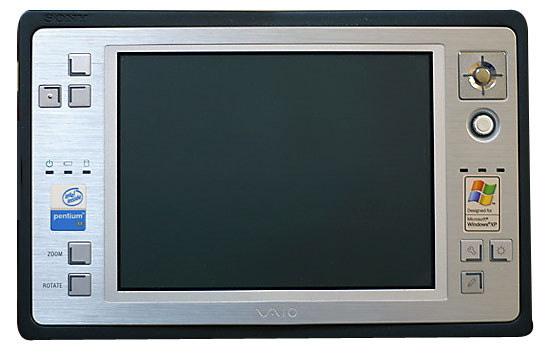
Subscribe to:
Posts (Atom)