Saturday, February 22, 2025


Thursday, February 20, 2025
Microsoft Says It Has Created a New State of Matter to Power Quantum Computers - The New York Times
Microsoft Says It Has Created a New State of Matter to Power Quantum Computers
"Microsoft’s new “topological qubit” is not based on a solid, liquid or gas. It is another phase of matter that many experts did not think was possible.

Microsoft now says it has created a new state of matter in its quest to make a powerful machine, called a quantum computer, that could accelerate the development of everything from batteries to medicines to artificial intelligence.
On Wednesday, Microsoft’s scientists said they had built what is known as a “topological qubit” based on this new phase of physical existence, which could be harnessed to solve mathematical, scientific and technological problems.
With the development, Microsoft is raising the stakes in what is set to be the next big technological contest, beyond today’s race over artificial intelligence. Scientists have chased the dream of a quantum computer — a machine that could exploit the strange and exceedingly powerful behavior of subatomic particles or very cold objects — since the 1980s.
The push heated up in December when Google unveiled an experimental quantum computer that needed just five minutes to complete a calculation that most supercomputers could not finish in 10 septillion years — longer than the age of the known universe.
Microsoft’s quantum technology could leapfrog the methods under development at Google. As part of its research, the company built multiple topological qubits inside a new kind of computer chip that combines the strengths of the semiconductors that power classical computers with the superconductors that are typically used to build a quantum computer.
When such a chip is cooled to extremely low temperatures, it behaves in unusual and powerful ways that Microsoft believes will allow it to solve technological, mathematical and scientific problems that classical machines never could. The technology is not as volatile as other quantum technologies, the company said, making it easier to exploit its power.
Some question whether Microsoft has achieved this milestone, and many leading academics said quantum computers would not be fully realized for decades. But Microsoft’s scientists said their methods would help them reach the finish line sooner.
“We view this as something that is years away, not decades away,” said Chetan Nayak, a Microsoft technical fellow who led the team that built the technology.

Microsoft’s technology, which was detailed in a research paper published in the science journal Nature on Wednesday, adds new impetus to a race that could reshape the technological landscape. In addition to accelerating progress across many technological and scientific fields, a quantum computer could be powerful enough to break the encryption that protects national secrets.
Any advances are set to have geopolitical implications. Even as the United States explores quantum computing primarily through corporations like Microsoft and a wave of start-ups, the Chinese government has said it is investing $15.2 billion in the technology. The European Union has committed $7.2 billion.
Quantum computing, which builds on decades of research into a type of physics called quantum mechanics, is still an experimental technology. But after recent strides by Microsoft, Google and others, scientists are confident that the technology will eventually live up to its promise.
“Quantum computing is a thrilling prospect for physics, and for the world,” said Frank Wilczek, a theoretical physicist at the Massachusetts Institute of Technology.
To understand quantum computing, it helps to know how a traditional computer works. A smartphone, laptop or desktop PC relies on tiny chips made from semiconductors, which are materials that conduct electricity in some but not all situations. These chips store and process numbers, adding them, multiplying them and so on. They perform these calculations by manipulating “bits” of information. Each bit holds either a 1 or a 0.
A quantum computer operates differently. A quantum bit, or qubit, relies on the curious behavior of subatomic particles or exotic materials cooled to extremely low temperatures.
When it is either extremely small or extremely cold, a single object can behave like two separate objects at the same time. By harnessing that behavior, scientists can build a qubit that holds a combination of 1 and 0. This means that two qubits can hold four values at once. And as the number of qubits grows, a quantum computer becomes exponentially more powerful.
Companies use a variety of techniques to build these machines. In the United States, most, including Google, build qubits using superconductors, which are materials that conduct electricity without losing the energy they are transmitting. They create these superconductors by cooling metals to extremely low temperatures.
Microsoft has bet on an approach that few others are taking: combining semiconductors with superconductors. The basic principle — along with the name topological qubit — was first proposed in 1997 by Alexei Kitaev, a Russian American physicist.
The company began working on this unusual project in the early 2000s, when many researchers did not think such technology was possible. It is Microsoft’s longest-running research project.
“This is something that all three C.E.O.s of this company have bet on,” Satya Nadella, Microsoft’s chief executive, said in an interview. (The company’s previous C.E.O.s were Bill Gates, a founder, and Steve Ballmer, who ran Microsoft in the early 2000s.)
The company has now created a single device that is part indium arsenide (a type of semiconductor) and part aluminum (a superconductor at low temperatures). When it is cooled to about 400 degrees below zero, it exhibits a kind of otherworldly behavior that might make quantum computers possible.
Philip Kim, a physics professor at Harvard, said Microsoft’s new creation was significant because topological qubits could accelerate the development of quantum computers. “If everything works out, Microsoft’s research could be revolutionary,” he said.
But Jason Alicea, a professor of theoretical physics at the California Institute of Technology, questioned whether the company had actually built a topological qubit, saying the behavior of quantum systems is often hard to prove.
“A topological qubit is possible in principle, and people agree it is a worthwhile goal,” Dr. Alicea said. “You have to verify, though, that a device behaves in all the magical ways that theory predicts it should; otherwise, the reality may turn out to be less rosy for quantum computing. Fortunately, Microsoft is now set up to try.”
Microsoft said that it had built only eight topological qubits, and that they were not yet able to perform calculations that would change the nature of computing. But the company’s researchers see this as a step toward building something far more powerful.
For now, the technology still makes too many errors to be truly useful, though scientists are developing ways to reduce mistakes.
Last year, Google showed that as it increased the number of qubits, it could exponentially reduce the number of errors through complex mathematical techniques.
Error correction will be less complex and more efficient if Microsoft can perfect its topological qubits, many scientists said.
While a qubit can hold multiple values at the same time, it is burdened by an inherent problem. When researchers try to read the information stored in a qubit, it “decoheres” and collapses into a classical bit that holds only one value: a 1 or a 0.
This means that if someone tries reading a qubit, it loses its basic power. So scientists need to overcome an essential problem: How do you build a computer if it breaks whenever you use it?
Google’s error correction methods are a way of dealing with this issue. Microsoft believes it can solve the problem faster because topological qubits behave differently and are theoretically less likely to collapse when someone reads the information they store.
“It makes for a really good qubit,” Dr. Nayak said.
Cade Metz writes about artificial intelligence, driverless cars, robotics, virtual reality and other emerging areas of technology. More about Cade Metz"
Saturday, February 15, 2025
HOW THE CANON R7 II HAS THE POTENTIAL TO BE THE BEST APS-C CAMERA
The Canon R7 II Has The Potential To Be The Best APS-C Camera
The Canon R7 II has the potential to be a significant upgrade over its predecessor, featuring a stacked sensor for improved readout speed and low-light performance. Refinements in autofocus, build quality, and connectivity are also expected, including better weather resistance, customizable button functions, and content authenticity features. Overall, the Canon R7 II aims to be an affordable APS-C camera that meets the evolving needs of photographers.
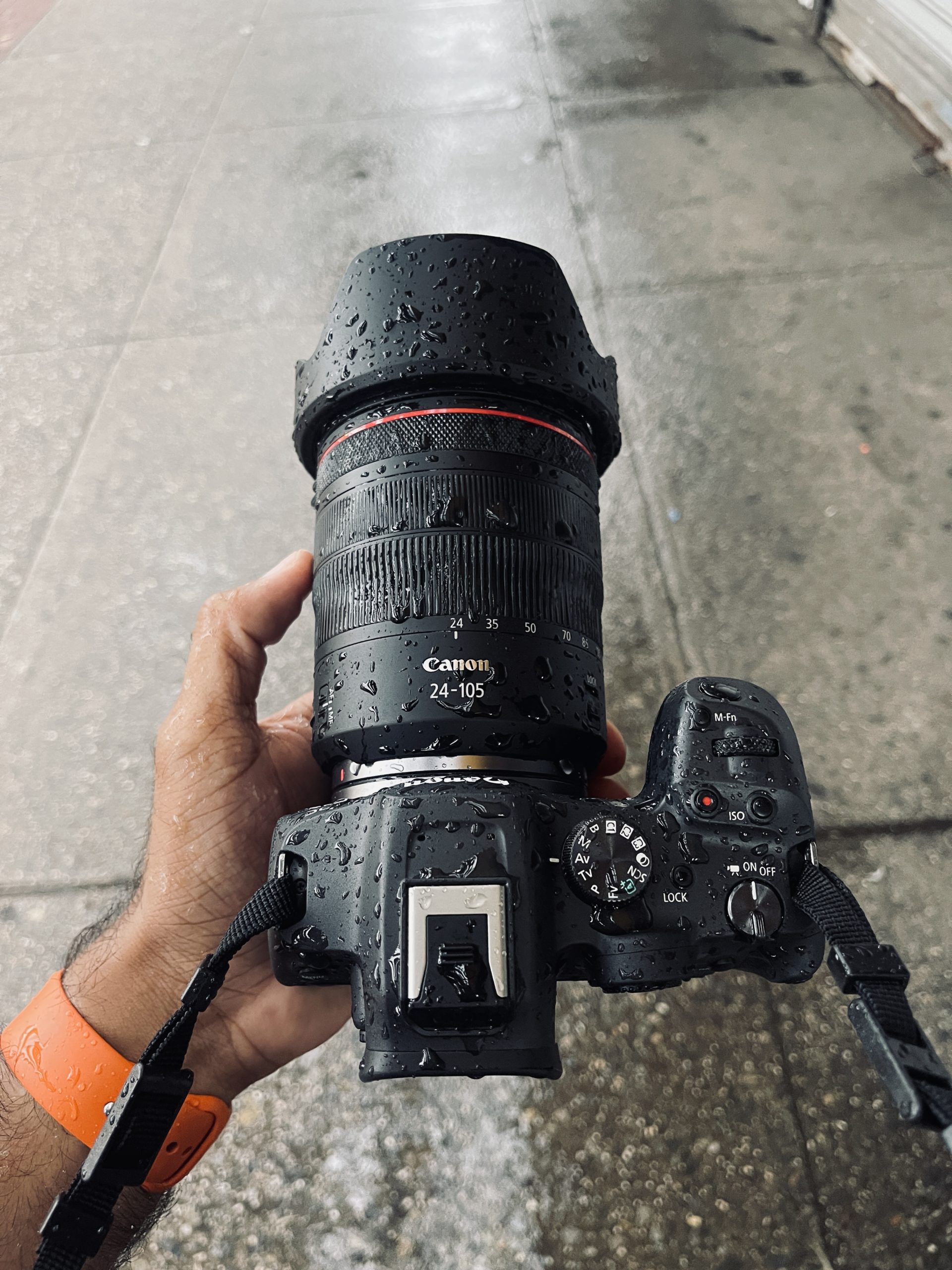
Since the beginning of the megapixel war, an APS-C has been an afterthought to manufacturers. The sensor has never truly been respected, and often, it serves as a replica of an already existing high-end camera. It may feel like the device, after all, is kept this way so that people are forced to buy professional cameras. However, there are a few exceptions that restore our faith in manufacturers when it comes to this genre. An example is the amazing Canon R7, which was launched in 2022. Three years after various successors of the R6, its sibling, we believe that the Canon R7 II will be a long time coming.
Since there are high expectations from the Canon R7 II, here is a look at what the camera can do to match the standards set by its predecessor.
Sensor and Image Quality
We have received the Canon R7, and we absolutely adored it. For its time, the device had everything that one could need for bird, wildlife, and sports genres. It has a 32.5 MP APS-C CMOS sensor, which works perfectly in many scenarios. However, we do believe that it’s high time that the Canon R7 II launches with a stacked sensor, as it would help in improving the camera’s readout speed while also reducing the rolling shutter effect, the latter of which was not pronounced in our test but was visible. This would further help achieve higher frame rates while also allowing better low-light performance.
In addition, a higher resolution sensor would also be a great idea, with improved dynamic range and noise reduction at higher ISO settings, which would make it more promising.
Autofocus and Lenses
The Canon R7 features an impressive autofocus system similar to the EOS R3, and in many ways, it is at par with the EOS R6 and the R8. However, what we did notice was that the lenses were holding the camera back. So, we do hope that the company continues to create lenses that do justice to the camera, especially in challenging lighting conditions. At the same time, we would appreciate refinements when it comes to subject tracking and eye-detection AF. Since Sigma is now producing APS-C lenses and Tamron will follow suit, perhaps the wider range can help photographers gain better results.
Build and Ergonomics
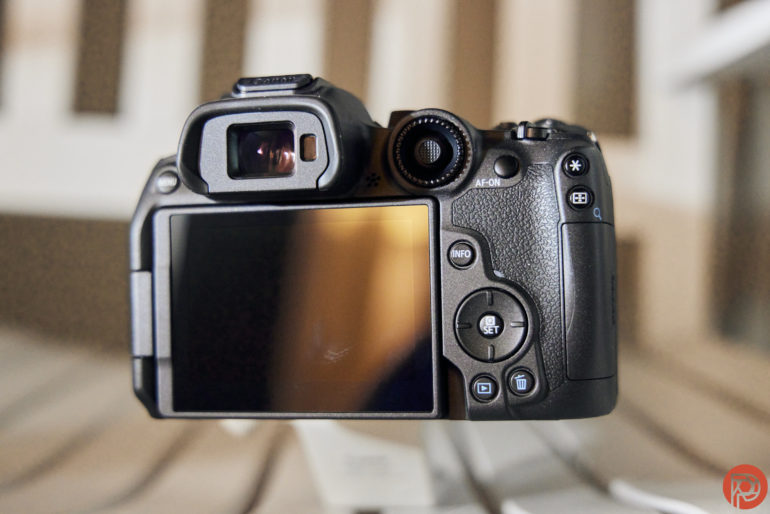
The R7 has great weather-sealing and a strong body to withstand challenging environments. However, refinement, such as more weather resistance, can help it become more reliable. At the same time, the previous camera had challenges with the IBIS, which didn’t detect the tripod automatically, and ISO buttons, the latter of which was placed in an awkward place. Even minor issues such as this can hamper a photographer’s workflow. So, a slightly better design and placement of buttons could do wonders.
Connectivity And Functions
When Canon launched its 1.3.0 firmware, it left the R7 behind. As we reported in our review: “At this point, I think that Canon should let us wire whatever setting we want to whatever button we wish. Sony, Leica, Fujifilm, and other brands all do this. Many times, it might make me not want to pick up a Canon camera instead of another brand’s.”
This is why the Canon R7 II must work on this and ensure that more updates allow people to rewire their cameras according to their demands. Furthermore, they should also have content authenticity for APS-C cameras, as it is absolutely needed in today’s AI-driven age. At the same time, the company needs to work on ways to
Overall, the Canon R7 II has the potential to be a significant upgrade over its predecessor, allowing users to have an APS-C camera that is not just affordable but is also learning no stone unturned to meet the evolving needs of photographers.
At the same time, we should remember that it’s an APS-C camera. And often, brands don’t really give those cameras any unique features.
Wednesday, February 12, 2025
Monday, February 10, 2025
Tuesday, February 04, 2025
Monday, February 03, 2025
Saturday, February 01, 2025
Thursday, January 30, 2025
With Sweeping Executive Orders, Trump Tests Local Control of Schools
With Sweeping Executive Orders, Trump Tests Local Control of Schools
“President Trump issued executive orders aimed at reshaping public education, promoting “patriotic” education and restricting discussions about race and gender. While the orders echo conservative state laws, their impact is uncertain due to the decentralized nature of K-12 education funding and curriculum control. While some self-censorship may occur, historical precedents suggest that attempts to ban ideas from the classroom are rarely successful.
The orders seek to encourage “patriotic education” and restrict discussions about racism and gender by threatening to withdraw federal funding. But schools are often resistant to change.

With a series of executive orders, President Trump has demonstrated that he has the appetite for an audacious fight to remake public education in the image of his “anti-woke,” populist political movement.
But in a country unique among nations for its hyperlocal control of schools, the effort is likely to run into legal, logistical and funding trouble as it tests the limits of federal power over K-12 education.
On Wednesday evening, Mr. Trump signed two executive orders. One was a 2,400-word behemoth focused mainly on race, gender and American history. It seeks to prevent schools from recognizing transgender identities or teaching about concepts such as structural racism, “white privilege” and “unconscious bias,” by threatening their federal funding.
The order also promotes “patriotic” education that depicts the American founding as “unifying, inspiring and ennobling” while explaining how the United States “has admirably grown closer to its noble principles throughout its history.”
The second order directs a swath of federal agencies to look for ways to expand access to private school vouchers.
Both orders echo energetic conservative lawmaking in the states. Over the past five years, the number of children using taxpayer dollars for private education or home-schooling costs has doubled, to one million. More than 20 states have restricted how race, gender and American history can be discussed in schools. States and school boards have banned thousands of books.
It is not clear what real-world effect the new federal orders might have in places where shifts are not already underway. States and localities provide 90 percent of the funding for public education — and have the sole power to set curriculums, tests, teaching methods and school-choice policies.
The orders are likely to strain against the limits of the federal government’s role in K-12 education, a role that Mr. Trump has said should be reduced.
That paradox is a “confounding” one, said Derrell Bradford, president of 50CAN, a nonpartisan group that supports private school choice. He applauded the executive order on vouchers and said that taken together, the two orders mark a major moment in the centuries-old debate over what values the nation’s schools should impart.
“You can like it or not, but we’re not going to have values-neutral schools,” he said.
Still, there are many legal questions about the administration’s ability to restrict federal funding in order to pressure schools.
The major funding stream that supports public schools, known as Title I, goes out to states in a formula set by Congress, and the president has little power to restrict its flow.
“It seems like a significant part of the strategy is to set priorities through executive order and make the Congress or the Supreme Court respond — as they are supposed to in a system of checks and balances,” Mr. Bradford said.
The executive branch does control smaller tranches of discretionary funding, but they may not be enough to persuade school districts to change their practices.
In Los Angeles, Alberto Carvalho, superintendent of the nation’s second-largest school district, said last fall that regardless of who won the presidential election, his system would not change the way it handles gender identity.
Transgender students are allowed to play on sports teams and use bathrooms that align with their gender identities, policies the Trump order is trying to end.
On Wednesday, after it became clear that Mr. Trump would attempt to cut funding, a spokeswoman for the Los Angeles public school district released a more guarded statement, saying, “Our academic standards are aligned with all state and federal mandates and we remain committed to creating and maintaining a safe and inclusive learning environment for all students.”
One big limit to Mr. Trump’s agenda is that despite official federal, state and district policies, individual teachers have significant say over what gets taught and how.
Even in conservative regions of Republican-run states, efforts to control the curriculum have sometimes sputtered.
In Oklahoma, for example, where the state superintendent, Ryan Walters, is a Trump ally, some conservative educators have pushed back against efforts to insert the Bible into the curriculum.
Nationally, surveys of teachers show that the majority did not change their classroom materials or methods in response to conservative laws. Some educators have reported that they are able to subtly resist attempts to control how subjects like racism are talked about, for example, by teaching students about the debate for and against restrictive curriculum policies.
Florida has been, in many ways, an outlying case — and one that has served as a model for the Trump administration.
There, Gov. Ron DeSantis created powerful incentives for teachers to embrace priorities such as emphasizing the Christian beliefs of the founding fathers and restricting discussions of gender and racism.
Teachers could earn a $3,000 bonus for taking a training course on new civics learning standards. If their students performed poorly on a standardized test of the subject, their own evaluation ratings suffered.
On race and gender, the DeSantis restrictions were broad and vaguely written. Schools accused of breaking the laws could be sued for financial damages, and teachers were threatened with losing their professional licenses.
This led many schools and educators to interpret the laws broadly. Sometimes they interpreted them more broadly than intended, the DeSantis administration claimed. A ban on books with sexual content led one district to announce that “Romeo and Juliet” would be pulled from the curriculum.
A ban on recognizing transgender identities led to schools sending home nickname permission slips to parents, which were required even if a student named William wanted to be called Will.
Public school educators are often fearful of running into trouble with higher-level authorities. It is possible, and even likely, that Mr. Trump’s executive orders will lead to some measure of self-censorship.
Adam Laats, an education historian at Binghamton University, said one potential historical antecedent for Mr. Trump’s executive order was the Red Scare in the mid-20th century, during which many teachers accused of Communist sympathies lost their jobs or were taken to court.
“To my mind, this executive order is a blast of steam,” he said, “dangerous especially because it can encourage local aggressive activism.”
But, he noted, political attempts to ban ideas from the classroom have rarely been successful.“
Wednesday, January 29, 2025
iPad Pro 2024 Review: Why Not Make This a Mac?
iPad Pro 2024 Review: Why Not Make This a Mac?
Apple's highest-end iPad still feels ahead of where the Mac is in some ways and behind it in others. It makes me wonder, more than ever, why there's a line between iPads and Macs at all.
Monday, January 27, 2025
Sunday, January 26, 2025
Saturday, January 25, 2025
When A.I. Passes This Test, Look Out
When A.I. Passes This Test, Look Out
‘’A new test called “Humanity’s Last Exam” is being released, designed to measure the capabilities of AI systems across a wide range of academic subjects. The test, created by AI safety researcher Dan Hendrycks, aims to determine if AI systems can surpass human experts in answering complex questions. While current AI models performed poorly on the exam, Hendrycks predicts their scores will rise rapidly, potentially surpassing 50% by the end of the year.
The creators of a new test called “Humanity’s Last Exam” argue we may soon lose the ability to create tests hard enough for A.I. models.

If you’re looking for a new reason to be nervous about artificial intelligence, try this: Some of the smartest humans in the world are struggling to create tests that A.I. systems can’t pass.
For years, A.I. systems were measured by giving new models a variety of standardized benchmark tests. Many of these tests consisted of challenging, S.A.T.-caliber problems in areas like math, science and logic. Comparing the models’ scores over time served as a rough measure of A.I. progress.
But A.I. systems eventually got too good at those tests, so new, harder tests were created — often with the types of questions graduate students might encounter on their exams.
Those tests aren’t in good shape, either. New models from companies like OpenAI, Google and Anthropic have been getting high scores on many Ph.D.-level challenges, limiting those tests’ usefulness and leading to a chilling question: Are A.I. systems getting too smart for us to measure?
This week, researchers at the Center for AI Safety and Scale AI are releasing a possible answer to that question: A new evaluation, called “Humanity’s Last Exam,” that they claim is the hardest test ever administered to A.I. systems.
Humanity’s Last Exam is the brainchild of Dan Hendrycks, a well-known A.I. safety researcher and director of the Center for AI Safety. (The test’s original name, “Humanity’s Last Stand,” was discarded for being overly dramatic.)
Mr. Hendrycks worked with Scale AI, an A.I. company where he is an advisor, to compile the test, which consists of roughly 3,000 multiple-choice and short answer questions designed to test A.I. systems’ abilities in areas ranging from analytic philosophy to rocket engineering.
Questions were submitted by experts in these fields, including college professors and prizewinning mathematicians, who were asked to come up with extremely difficult questions they knew the answers to.
Here, try your hand at a question about hummingbird anatomy from the test:
Hummingbirds within Apodiformes uniquely have a bilaterally paired oval bone, a sesamoid embedded in the caudolateral portion of the expanded, cruciate aponeurosis of insertion of m. depressor caudae. How many paired tendons are supported by this sesamoid bone? Answer with a number.
Or, if physics is more your speed, try this one:
A block is placed on a horizontal rail, along which it can slide frictionlessly. It is attached to the end of a rigid, massless rod of length R. A mass is attached at the other end. Both objects have weight W. The system is initially stationary, with the mass directly above the block. The mass is given an infinitesimal push, parallel to the rail. Assume the system is designed so that the rod can rotate through a full 360 degrees without interruption. When the rod is horizontal, it carries tension T1. When the rod is vertical again, with the mass directly below the block, it carries tension T2. (Both these quantities could be negative, which would indicate that the rod is in compression.) What is the value of (T1−T2)/W?
(I would print the answers here, but that would spoil the test for any A.I. systems being trained on this column. Also, I’m far too dumb to verify the answers myself.)

The questions on Humanity’s Last Exam went through a two-step filtering process. First, submitted questions were given to leading A.I. models to solve.
If the models couldn’t answer them (or if, in the case of multiple-choice questions, the models did worse than by random guessing), the questions were given to a set of human reviewers, who refined them and verified the correct answers. Experts who wrote top-rated questions were paid between $500 and $5,000 per question, as well as receiving credit for contributing to the exam.
Kevin Zhou, a postdoctoral researcher in theoretical particle physics at the University of California, Berkeley, submitted a handful of questions to the test. Three of his questions were chosen, all of which he told me were “along the upper range of what one might see in a graduate exam.”
Mr. Hendrycks, who helped create a widely used A.I. test known as Massive Multitask Language Understanding, or M.M.L.U., said he was inspired to create harder A.I. tests by a conversation with Elon Musk. (Mr. Hendrycks is also a safety advisor to Mr. Musk’s A.I. company, xAI.) Mr. Musk, he said, raised concerns about the existing tests given to A.I. models, which he thought were too easy.
“Elon looked at the M.M.L.U. questions and said, ‘These are undergrad level. I want things that a world-class expert could do,’” Mr. Hendrycks said.
There are other tests trying to measure advanced A.I. capabilities in certain domains, such as FrontierMath, a test developed by Epoch AI, and ARC-AGI, a test developed by the A.I. researcher François Chollet.
But Humanity’s Last Exam is aimed at determining how good A.I. systems are at answering complex questions across a wide variety of academic subjects, giving us what might be thought of as a general intelligence score.
“We are trying to estimate the extent to which A.I. can automate a lot of really difficult intellectual labor,” Mr. Hendrycks said.
Once the list of questions had been compiled, the researchers gave Humanity’s Last Exam to six leading A.I. models, including Google’s Gemini 1.5 Pro and Anthropic’s Claude 3.5 Sonnet. All of them failed miserably. OpenAI’s o1 system scored the highest of the bunch, with a score of 8.3 percent.
(The New York Times has sued OpenAI and its partner, Microsoft, accusing them of copyright infringement of news content related to A.I. systems. OpenAI and Microsoft have denied those claims.)
Mr. Hendrycks said he expected those scores to rise quickly, and potentially to surpass 50 percent by the end of the year. At that point, he said, A.I. systems might be considered “world-class oracles,” capable of answering questions on any topic more accurately than human experts. And we might have to look for other ways to measure A.I.’s impacts, like looking at economic data or judging whether it can make novel discoveries in areas like math and science.
“You can imagine a better version of this where we can give questions that we don’t know the answers to yet, and we’re able to verify if the model is able to help solve it for us,” said Summer Yue, Scale AI’s director of research and an organizer of the exam.
Part of what’s so confusing about A.I. progress these days is how jagged it is. We have A.I. models capable of diagnosing diseases more effectively than human doctors, winning silver medals at the International Math Olympiad and beating top human programmers on competitive coding challenges.
But these same models sometimes struggle with basic tasks, like arithmetic or writing metered poetry. That has given them a reputation as astoundingly brilliant at some things and totally useless at others, and it has created vastly different impressions of how fast A.I. is improving, depending on whether you’re looking at the best or the worst outputs.
That jaggedness has also made measuring these models hard. I wrote last year that we need better evaluations for A.I. systems. I still believe that. But I also believe that we need more creative methods of tracking A.I. progress that don’t rely on standardized tests, because most of what humans do — and what we fear A.I. will do better than us — can’t be captured on a written exam.
Mr. Zhou, the theoretical particle physics researcher who submitted questions to Humanity’s Last Exam, told me that while A.I. models were often impressive at answering complex questions, he didn’t consider them a threat to him and his colleagues, because their jobs involve much more than spitting out correct answers.
“There’s a big gulf between what it means to take an exam and what it means to be a practicing physicist and researcher,” he said. “Even an A.I. that can answer these questions might not be ready to help in research, which is inherently less structured.”