Saturday, September 21, 2024


Tuesday, September 17, 2024
11 WTF Moments From ‘Character Limit,’ the Book About How Elon Musk Destroyed Twitter
11 WTF Moments From ‘Character Limit,’ the Book About How Elon Musk Destroyed Twitter

“Elon Musk‘s tumultuous takeover and rebranding of Twitter — now X — played out in very public fashion: the $44 billion offer, an attempt to walk it back, and a lawsuit that forced Musk to complete the deal were followed by massive layoffs, a spike in misinformation and extremism on the platform, botched updates, and the return of notorious bad actors whose accounts had been permanently suspended — as well as an exodus of the advertisers that account for the site’s revenue.
Through it all, Musk himself kept up the commentary on his profile, promising a new and improved app, posting cringeworthy memes, sniping at his critics, and mixing it up with his new MAGA-world friends while amplifying their false claims and conspiracy theories. But this ugly spectacle doesn’t tell the whole story. Character Limit: How Elon Musk Destroyed Twitter, a new book out today from New York Times tech reporters Kate Conger and Ryan Mac, takes readers behind the scenes of the unusual acquisition and its messy consequences.
Here we list some of the most baffling, disturbing, laughable and just plain ridiculous moments in Conger and Mac’s chronicle of Musk’s Twitter mess.
Blowing a Fortune on a Fake Private Eye
When Musk got in trouble for smearing a British diver involved in the 2018 rescue of a Thai youth soccer team in a flooded cave as a “pedo,” he made efforts to prove the unfounded accusation true. To that end, his wealth manager and CEO of his brain implant company Neuralink, Jared Birchall, paid $52,000 to someone he thought was a private investigator to dig up dirt on the man. In fact, their sleuth was a former convict without credentials who “fed Birchall and Musk false information” about the diver. Musk managed to beat a defamation suit anyway.
Musk’s Drug Habits Almost Led to an Intervention
Musk has been open about his use of drugs like ketamine, to the alarm of leadership at Tesla and SpaceX. As Conger and Mac report, he has also been known to take LSD or ecstasy at parties, and to stay up late tweeting on Ambien, a drug that is meant to be a sleep aid. This chemical cocktail led to such erratic behavior that in early 2022, shortly before Musk would launch his bid for Twitter, close family “began discussing a possible intervention that could make him aware of his issues.” Musk was “unreceptive” to their concerns.
Editor’s picks
Potential Partnership With an Infamous Fraudster
Musk had harsh remarks for crypto kingpin Sam Bankman-Fried once his exchange, FTX, collapsed in November 2022, with $8 billion in customer funds left missing. But in March of that year, as Musk acquired a significant stake in Twitter and mulled buying it outright, Bankman-Fried was among those acquaintances encouraging the takeover so he could come on as an investor. After the merger deal was signed, Musk’s finance team pushed him to accept funding from SBF, claiming he could invest as much as $3 billion. Musk didn’t go for it and apparently pretended not to know who SBF was when he continued to text. “Sorry, who is sending this message?” he wrote to the supposed wunderkind, “despite having been connected to the FTX leader twice via message.”
Grimes Finds Out Her Next Baby’s Name Is Already Taken
We learned last year from Walter Isaacson’s biography Elon Musk about a curious familial coincidence. The billionaire’s on-and-off-again girlfriend, the musician Grimes, stayed in an Austin hospital in 2021 when a surrogate was preparing to give birth to their second child together. Unbeknownst to Grimes, Shivon Zilis, a Neuralink employee, was in the same maternity ward, pregnant with twins by in vitro fertilization — with Musk as the father. Grimes was “furious,” Character Limit notes, not just to learn that he was having children with another woman at the same time, but because Zilis named her daughter Valkyrie, a name “that she had been saving” for her own daughter, born months later. Musk and Grimes would go on to welcome a third child the following year but have since waged a custody battle over all three.
Related
Demanding That Twitter Help Pay for Musk’s Acquisition
Twitter executives were dumbfounded at how quickly Musk wanted to complete his purchase of the company, without any of the usual due diligence. The speed at which the deal went through caused lots of mistakes — for instance, Musk’s lawyers accidentally emailed Twitter’s finance team a spreadsheet of everyone they’d solicited for investment in the deal, then threatened them if they didn’t delete it. Later, at the eleventh hour, Antonio Gracias, a private equity investor and close Musk associate leading the deal, told Twitter they were $400 million short of the agreed price. “You need to wire us the money,” he told executives in a phone call, an extraordinary demand that they could not approve. “You’re not going to wire me the fucking money?” Gracias replied. “Are you saying no to Elon Musk?” In the end, Musk’s team found another source for the missing millions, and the deal went through.
Musk’s Bizarre Victory Cheer
Character Limit traces Musk’s years-long grudge against another Silicon Valley billionaire, Meta CEO Mark Zuckerberg, which dates at least as far back as a statement he made in 2016 about a SpaceX rocket that exploded on the launch pad with one of Facebook’s satellites aboard. (More recently, Meta unveiled the Twitter competitor Threads, and Musk has made empty boasts about his willingness to fight Zuckerberg in a “cage match.”) The vendetta partially explains Musk’s first comment upon hearing his costly Twitter deal had officially closed: “[H]e slammed his fist on the table and let out what could only be described as a battle cry. ‘Fuck Zuck!’ Musk shouted.” Jon Chen, the Twitter VP on hand to witness this outburst, “couldn’t fathom” what the moment had to do with Musk’s enemy. At any rate, the response sharply contrasted with what Musk had said when Twitter initially accepted his offer: “I’m going to regret this for the rest of my life.”
Paranoia About Employees That Didn’t Exist
Organizationally, Musk’s Twitter was chaotic from day one. He had demanded the firing of a certain executive before he was even CEO; then the company laid off thousands of employees almost at random, had to hire some back, and in one case couldn’t even explain why an essential worker had been terminated. It also fired a lead engineer on bereavement leave for supposedly approving the budget for a party that had taken place six months before he was hired. Musk was paranoid about the employees who stayed, fearing they would sabotage the site, but strangest of all, Conger and Mac report, he “had convinced himself that not all of Twitter’s employees were real.” He wanted an audit of the staff to identify what he called “ghost employees” who might be collecting paychecks without doing work. When the request came up in a meeting, “several executives burst out laughing at the absurdity of the idea.” Ultimately, Twitter’s accounting chief and his team had two days to confirm the identities of 7,000 remaining employees — no “ghosts” were found.
Concept for What Would Have Been a Disastrous New Feature
Musk had basically one idea for how to increase Twitter’s revenue while making it less dependent on the advertisers that were already leaving the site: get rid of the old verification system that assigned blue checkmarks to notable figures, institutions, and media, and make people pay $8 a month for the badge as well as premium features. (He based the price on his estimate of how much an order costs at Starbucks.) Product teams, meanwhile, were scrambling to put together more features that could potentially shore up the company’s finances. One poorly conceived proposal was for “paid direct messaging,” which would allow users to DM celebrities for a fee: “Mock-ups presented to Musk’s entourage showed a user paying a few dollars to message the musician Post Malone, with Twitter taking a cut of the proceeds.” Perhaps someone pointed out that this was a good way to drive celebrities off the site, because the project didn’t move forward from there.
Jack Dorsey’s Dabbling in Conspiracist Culture
Much has been made of the misinformation Musk disseminates on social media, but Character Limit also touches upon some curious content excused or amplified by Twitter co-founder and former CEO Jack Dorsey, who encouraged Musk to acquire the platform. In late 2020, he often objected to the labeling or removal of vaccine misinformation by anti-vaxxers on the site, arguing that they didn’t actually violate community guidelines. (Last year, he endorsed anti-vax third-party candidate Robert F. Kennedy Jr. for president.) Following Musk’s takeover, Dorsey’s public communications most often came via the decentralized social media protocol Nostr, where he shared content from a dietician known to use a slogan associated with the far-right conspiracist movement QAnon, as well as “conspiratorial videos that referred to victims of the September 11 terrorist attack as ‘crisis actors.'” Obviously, Musk isn’t the only tech mogul susceptible to outlandish claims.
Trending
An Outgoing Employee Gives Musk His Honest Opinion
Musk isn’t too forgiving of employees who criticize him — or give him answers he doesn’t like — as many episodes in the book illustrate. In one case, he was enraged about a decline in engagement on his tweets, and abruptly fired an engineer who suggested that the public’s interest in him had fallen off since the Twitter acquisition closed several months prior. But another employee, a data scientist who had already made up his mind to resign after turning over memos on how to run Twitter more effectively, was even more blunt with Musk. He explained that he had been excited about the takeover but was disheartened when, just weeks later, Musk shared blatant partisan misinformation about an assault by a home intruder on then House Speaker Nancy Pelosi’s husband Paul Pelosi. “It’s only really like the tenth percentile of the adult population who’d be gullible enough to fall for this,” the employee told Musk, who shot back, “Fuck you!” The departing data scientist left him with a piece of advice: “I hope you’ll declare bankruptcy and let someone else run the company.”
When Musk Learned What Twitter Users Thought of Him
Following a series of disastrous policy changes, Musk decided to hold an informal performance review for himself using one of his favorite Twitter tools: the polling feature. “Should I step down as head of Twitter? I will abide by the results of this poll,” he tweeted in December 2022 before embarking on a flight from Qatar to London. When he landed, he found that “57.5 percent of the more than 17.5 million accounts that had voted were calling for him to resign.” Between this rejection and the plummeting value of Tesla stock, Musk became withdrawn and unresponsive, with those who did manage to talk to him worrying that he was “in the throes of a manic event.” Speaking with on confidante, “Musk choked up and began to doubt his ability to run the company” in light of the poll results, saying, “I’m never going to recover from this.” He would, of course, go on to hire Linda Yaccarino as a replacement CEO in the new year — though as anyone still active on the site that soon became X will tell you, it continues to reflect his worst impulses and warped worldview.“
Monday, September 16, 2024
Saturday, September 14, 2024
Friday, September 13, 2024
iPhone 16 vs. iPhone 16 Pro: All the Key Specs Compared - CNET
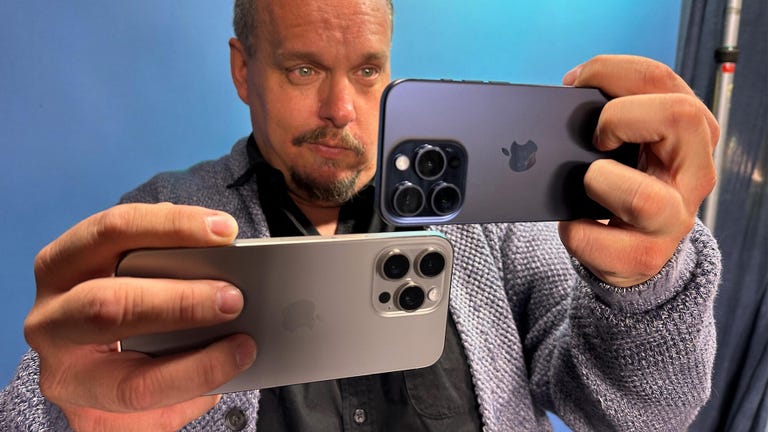
iPhone 16 Pro vs. 15 Pro
vs. 14 Pro vs. 13 Pro:
Should You Upgrade
This Year?
How the iPhone 16 Pro
compares with its predecessors
in terms of design, cameras
and features.


A new iPhone Pro series often includes
a number of additional perks to justify
a premium price over the entry-level
iPhone. These perks usually include
a third telephoto camera -- which has
remained exclusive to the Pro series --
and other newer features that debut on
a Pro model and roll out to the standard
iPhone a year later. For instance, the
Action button debuted on last year's
iPhone 15 Pro and iPhone 15 Pro Max,
but now it's also available on the
iPhone 16.
But while Apple keeps its base level
iPhone on sale typically for two years
after its initial launch, the Pro model
usually gets discontinued after one
year. That doesn't mean you can't
find last year's iPhone 15 Pro --
it's likely still in stock at physical
stories while supplies last or available
as a refurbished model -- but the
iPhone 16 Pro and Pro Max will
otherwise displace last year's 15 Pro
and Pro Max.
iPhone 16 preroders are live:
See today's iPhone 16 deals and trade-in
The iPhone 16 Pro and 16 Pro Max
each offer a slightly new design over
last year's Pro phones that could make
a noticeable difference in how you use
the phone. Both of this year's Pro devices
are shipping with larger screens, with
the smaller Pro getting a larger 6.3-inch
display (up from 6.1 inches on the 15 Pro)
and the Pro Max getting even bigger with
a 6.9-inch display (up from last year's
6.7-inch display).
The 16 Pro now has an identical
camera to its corresponding Pro Max
model, whereas typically the Pro Max
would get a smaller enhancement.
This includes a 5x optical zoom, which
wasn't available on last year's 15 Pro
but was on the Pro Max. All of the
iPhone 16 devices, including the
base and Plus models, get a new
Camera Control button that provides
quick access to photo and video modes.
The iPhone 16 Pro will gain access to
various AI features from Apple
Intelligence, including a Visual
Intelligence feature, which uses
the camera and AI to identify
objects and places around you.
While the iPhone 15 Pro will
also gain access to these features,
the iPhone 14 Pro and earlier
Pro models will not. These features
will also include note summarization,
an enhanced Siri assistant and Genmoji --
a method of generating new emoji
using a prompt.
Apart from AI-enabled hardware,
iPhone 16 Pro also shares features
with the iPhone 15 Pro that aren't
available on theiPhone 14 Pro and
iPhone 13 Pro. Those premium
iPhones have a titanium finish
introduced last year, which helps
make the phones lighter than most
earlier models despite their larger
screen size. Both the 15 Pro and 16 Pro
have USB-C ports instead of Lightning
connectors, and both can record spatial
video, which is a type of 3D video that
you can watch on the Apple Vision Pro
headset. An always-on display, Dynamic Island camera cutout and satellite
connectivity for Emergency SOS are
features available across all of these
Pro models apart from the iPhone 13 Pro.
We've outlined in the below specs chart
all of the other differences between
each of these iPhone Pro models, so
you can see how the phone has evolved
over the years. In recent years, upgrading
year over year typically offers small
differences, but jumping from an
iPhone 13 Pro or earlier to the
iPhone 16 Pro would be an impactful
change.
iPhone 13 Pro vs. 14 Pro vs. 15 Pro vs. 16 Pro
| iPhone 13 Pro | iPhone 14 Pro | iPhone 15 Pro | iPhone 16 Pro | |
|---|---|---|---|---|
| Display size, tech, resolution, refresh rate | 6.1-inch OLED; 2,532x1,170 pixels | 6.1-inch OLED; 120Hz ; 2,556x1,179 pixels | 6.1-inch OLED; 2,556x1,179 pixels; 120Hz adaptive | 6.3-inch OLED Super Retina XDR display; 2,622 x 1,206 pixel resolution |
| Pixel density | 460 ppi | 460 ppi | 460 ppi | 460 ppi |
| Dimensions (inches) | 5.78 x 2.82 x 0.3 in | 5.81 x 2.81 x 0.31 in. | 2.78 x 5.77 x 0.32 in | 5.89 x 2.81 x 0.32 inches |
| Dimensions (millimeters) | 147 x 72 x 7.65 mm | 147.5 x 71.5 x 7.85mm | 70.6 x 146.6 x 8.25 mm | 149.6 x 71.5 x 8.25mm |
| Weight (grams, ounces) | 7.19 oz; 204g | 206g (7.27 oz) | 187g (6.6 oz) | 199 g, 7.03oz |
| Mobile software | iOS 15 | iOS 16 | iOS 17 | iOS 18 |
| Camera | 12-megapixel (wide), 12-megapixel (ultrawide), 12-megapixel (telephoto) | 48-megapixel (wide), 12-megapixel (ultrawide), 12-megapixel (telephoto) | 48-megapixel (wide), 12-megapixel (ultrawide), 12-megapixel (3x telephoto) | 48-megapixel (fusion), 48-megapixel (ultrawide) 5x telephoto |
| Front-facing camera | 12-megapixel | 12-megapixel | 12-megapixel | 12-megapixel |
| Video capture | ProRes video recording up to 4K at 30 fps (1080p at 30 fps for 128GB storage)* | 4K at 60 fps | 4K | 4K up to 120fps; spatial video at 1080p at 30fps |
| Processor | Apple A15 Bionic | Apple A16 Bionic | A17 Pro | A18 Pro |
| RAM/storage | 128GB, 256GB, 512GB, 1TB | RAM NA; 128GB, 256GB, 512GB, 1TB | 128GB, 256GB, 512GB, 1TB | 128GB, 256GB, 512GB, 1TB |
| Expandable storage | Undisclosed | None | None | No |
| Battery | No | Undisclosed; Apple claims 23 hours of video playback | Undisclosed; Apple claims up to 23 hours of video playback (20 hours streamed) | Up to 27 hours video playback; up to 22 hours video playback (streamed). 20W wired charging. MagSafe wireless charging up to 25W with 30W adapter or higher; Qi2 up to 15W |
| Fingerprint sensor | Undisclosed; Apple lists 22 hours of video playback | None (Face ID) | None (Face ID) | None (Face ID) |
| Connector | Lightning | Lightning | USB-C (USB 3.0) | USB-C |
| Headphone jack | None | None | None | None |
| Special features | ProMotion technology with adaptive refresh rates up to 120Hz; lidar scanner; 5G enabled; MagSafe; water resistant (IP68); wireless charging; dual-SIM capabilities (nano-SIM and e-SIM) | Dynamic Island; Always-On display; 5G enabled; MagSafe; water resistant (IP68); wireless charging; dual-SIM capabilities (e-SIM) | 5G (mmw/Sub6), Action Button, Always-On display, IP68 rating, MagSafe, Dynamic Island, 5x optical zoom (120mm equivalent), satellite connectivity, eSIM, Thread networking technology | Apple Intelligence, Action button, Camera Control button, 4x audio mics, Dynamic Island, 1 to 2,000 nits display brightness range, IP68 resistance. Colors: black titanium, white titantium, natural titanium, desert titanium. |
| US price starts at | $999 (128GB), $1,099 (256GB), $1,299 (512GB), $1,499 (1TB) | $999 (128GB), $1,099 (256GB), $1,299 (512GB), $1,499 (1TB) | $999 (128GB, $1,099 (256GB), $1,299 (512GB), $1,499 (1TB) | $999 (128GB), $1,099 (256GB), $1,299 (512GB), $1,499 (1TB) |

 Why You Can Trust CNET
Inside the iPhone 15 and iPhone 15 Pro: Here's How They Compare and Which to Buy
Apple gives us a lot to consider when
buying an iPhone 15 or iPhone 15 Pro beyond just the cameras. And don't
think you need to pay $1,000 or more
to get a great iPhone.


On the surface, the iPhone 15 and iPhone
15 Pro have a lot of similarities, but there
are several significant differences that
make choosing between the two a bit
of a challenge. Both phones were
released last September at Apple's
"Wonderlust" event alongside updates
to the Apple Watch. And we are now
at a time where it might be best to
hold off on buying a new iPhone.
That's because the rumored
iPhone 16 and 16 Pro will likely
to be released on Monday Sept. 9
Of course, you might just need
a new phone now and the
iPhone 15 and 15 Pro are still
outstanding options even 11 months
after their release. The iPhone 15
is basically a repackaged iPhone 14 Pro
without the telephoto camera or
one-grand price tag. The iPhone 15 Pro
comes with Apple's latest processor,
cameras and a new titanium design
but it also costs $200 more than the
regular iPhone 15.
Ultimately you should focus on
which iPhone suits your needs
better. Not everyone needs an
iPhone 15 Pro, in fact most
people will be more than
happy with an iPhone 15.
Save that extra money
for a case and a nice steak
dinner.


iPhone 15 vs. 15 Pro: Display and enclosure

The iPhone 15 Pro's display has a variable refresh rate that tops out at 120Hz and helps makes system animations, scrolling and video games look smooth.
Both the iPhone 15 and iPhone
15 Pro feature the same size
screen -- a 6.1-inch Super Retina XDR
display with a 2,556x1,179-pixel
resolution. The Pro's display,
however, features ProMotion
technology, which is Apple's
way of saying it has a variable
refresh rate between 10Hz and
120Hz. It results in smoother
motion in videos, games and
just scrolling through web
pages compared with the the
iPhone 15's fixed 60Hz refresh
rate. When you aren't watching
YouTube or gaming on your phone,
the Pro will lower the refresh rate
to conserve battery life.
The iPhone 15 Pro also has an
always-on display that keeps it
on and dimmed when charging so you can use StandBy mode. Unfortunately
the iPhone 15 lacks an always-on display.

The iPhone 15 Pro in Standby mode on a MagSafe charging stand.
The 15 and 15 Pro are made from
different materials. The iPhone 15
has an aluminum enclosure with a
color-infused glass back, and the
iPhone 15 Pro is made from
titanium with a textured matte
glass back.
The iPhone 15 comes in more
colorful options. You can get
it in pink, soft yellow, light
green, pale blue or black.
The iPhone 15 Pro is available
in more staid hues: black, white,
dark blue and natural titanium
that looks beige.

The new iPhone 15 Pro titanium colors, from left to right: black, white, blue and natural.
In terms of overall size, the
iPhone 15 is ever-so-slightly larger
but lighter than the iPhone 15 Pro.
Titanium is lighter than aluminum,
but the iPhone 15 Pro weighs more
than the iPhone 15, in large part
because it has a third camera.
The iPhone 15 weighs 6.02 ounces
(171 grams), and the iPhone 15 Pro
weighs 6.6 ounces (187 grams).
The iPhone 15 Pro has ultrathin
bezels and shaves a millimeter
off the width and height of the
iPhone 15's dimensions while
also being a fraction of a
millimeter thinner.

The Action button (small one on the far right) on the iPhone 15 Pro.
One last difference between the two
enclosures is the introduction of the
Action button on the iPhone 15 Pro.
It replaces the mute switch that's still
on the side of the iPhone 15.
By default, a long press on the Action
button will mute and unmute the phone.
But you can customize it to trigger a
number of shortcuts like turning on
the flashlight, recording a voice
memo or opening the camera app
and snapping a photo.
iPhone 15 vs. 15 Pro: Cameras

The iPhone 15 Pro nets you a third camera.
As with previous iPhone lines, the
iPhone 15 features two cameras
on the back, and the iPhone 15 Pro
has three. You get a 48-megapixel
wide lens and a 12-megapixel
ultrawide lens with either model,
and the iPhone 15 Pro adds a
12-megapixel telephoto lens
that has a 3x optical zoom that
lets you get closer to your subject.
We should note that the Pro phone's
main camera has a larger 48-megapixel
sensor, which helps improve performance
in low light.
Both models support night mode,
but only the iPhone 15 Pro lets
you take night mode shots in portrait mode.
iPhone 15 vs. 15 Pro: Components
Inside, the iPhone 15 has an A16
Bionic chip, while the iPhone 15 Pro
has an A17 Pro chip. Both models
ought to be plenty fast; each processor
is a six-core CPU with two performance
and four efficiency cores. The iPhone
15 Pro is better suited for graphics and
gaming; the A17 Pro Bionic processor
has a six-core GPU to the A16 Bionic's
five-core GPU.
Both models are available in 128GB,
256GB and 512GB capacities, and
the iPhone 15 Pro offers a 1TB option.
iPhone 15 vs. 15 Pro: USB-C speeds
All iPhone 15 series models have
USB-C charging, but only the iPhone
15 Pro supports the faster 10Gbps
speeds of USB 3. You'll need to
supply your own USB-C 3 cable
for a 15 Pro since Apple ships a
USB 2 cable with both phones,
but the iPhone 15 supports only
USB 2 speeds of 480Mbps.

Here's the iPhone 15 Pro's USB-C port.
iPhone 15 vs. 15 Pro: Price
Finally, we arrive at the difference in price.
No surprises here: As in past years, Apple
charges an extra $200 for the iPhone 15 Pro
compared with the iPhone 15. The iPhone 15
starts at $799 (£799, AU$1,499), while the
iPhone 15 Pro starts at $999 (£999,
AU$1,849).



Apple iPhone 15 vs. Apple iPhone 15 Pro
| iPhone 15 | iPhone 15 Pro | |
|---|---|---|
| Display size, tech, resolution, refresh rate, brightness | 6.1-inch OLED; 2,556x1,179 pixels; 60Hz refresh rate; 1,000 nits | 6.1-inch OLED; 2,556x1,179 pixels; 120Hz adaptive refresh rate; 1,000 nits |
| Pixel density | 460 ppi | 460 ppi |
| Enclosure material | Aluminum with color-infused glass back | Titanium with textured matte glass back |
| Dimensions (inches) | 2.82 x 5.81 x 0.31 in. | 2.78 x 5.77 x 0.32 in. |
| Dimensions (millimeters) | 71.6 x 147.6 x 7.8 mm | 70.6 x 146.6 x 8.25 mm |
| Weight (grams, ounces) | 171 g (6.02 oz) | 187 g (6.6 oz) |
| Mobile software | iOS 17 | iOS 17 |
| Camera | 48-megapixel (wide), 12-megapixel (ultrawide) | 48-megapixel (wide), 12-megapixel (ultrawide), 12-megapixel telephoto (3x optical) |
| Front-facing camera | 12-megapixel | 12-megapixel |
| Video capture | 4K | 4K |
| Processor | A16 Bionic | A17 Pro |
| RAM/storage | 128GB, 256GB, 512GB | 128GB, 256GB, 512GB, 1TB |
| Expandable storage | None | None |
| Battery/charging speeds | Undisclosed; Apple claims up to 20 hours of video playback (16 hours streamed) | Undisclosed; Apple claims up to 23 hours of video playback (20 hours streamed) |
| Fingerprint sensor | None (Face ID) | None (Face ID) |
| Connector | USB-C (USB 2.0) | USB-C (USB 3.0) |
| Side button/switch | Mute switch | Action button |
| Headphone jack | None | None |
| Special features | 5G (mmw/Sub6), IP68 rating, MagSafe (up to 15W), Qi wireless charging to 7.5W, Dynamic Island | 5G (mmw/Sub6), IP68 rating, MagSafe (up to 15W), Qi wireless charging to 7.5W, Dynamic Island, 3x optical zoom |
| US price off-contract | $799 (128GB), $899 (256GB), $1,099 (512GB) | $999 (128GB, $1,099 (256GB), $1,299 (512GB), $1,499 (1TB) |
| UK price | £799 (128GB), £899 (256GB), £1,099 (512GB) | £999 (128GB), £1,099 (256GB), £1,299 (512GB), £1,499 (1TB) |
| Australia price | AU$1,499 (128GB), AU$1,699 (256GB), AU$2,049 (512GB) | AU$1,849 (128GB), AU$2,049 (256GB), AU$2,399 (512GB), AU$2,749 (1TB) |
iPhone 16 Plus vs. iPhone 16 Pro Max: Battle of the Big iPhones
Apple has released the largest iPhone yet, but the distance between the larger phones has shrunk in the iPhone 16 era.


The iPhone 16 Plus (left) vs. the iPhone 16 Pro Max (right).
At Apple's Glowtime event, the company unveiled its latest lineup of iPhone 16 handsets. While the new phones share a lot of new features, there's an even bigger difference between the two big phones -- regular and premium -- this year. Here's the iPhone 16 Plus versus the iPhone 16 Pro Max.
The most prominent distinction between the two bigger phones is size, as they're no longer tied for largest iPhone on record. The iPhone 16 Plus still has a 6.7-inch display, but the iPhone 16 Pro Max has a 6.9-inch display, giving it the crown for the biggest iPhone ever made.
More from the Apple event
There are knock-on effects of that decision: Everything the iPhone 16 Plus is, the iPhone 16 Pro Max is a little bit more. That comes at a literal price, with the iPhone 16 Plus with 128GB of storage starting at $899 (£899, AU$1,599) and the iPhone 16 Pro Max with 256GB of storage starting at $1,199 (£1,199, AU$2,149).

A highlight of the 5x optical telephoto in the iPhone 16 Pro Max during the Apple Glowtime event.
That's a sizable price gulf between the two, but there are a handful of things the even bigger phone packs that its now-smaller sibling doesn't. The iPhone 16 Plus has a 48-megapixel fusion camera (with a neat new 12-megapixel 2x digital zoom feature) and 48-megapixel ultrawide camera; the iPhone 16 Pro Max has that and a 12-megapixel telephoto camera with 5x optical zoom. Both phones have a 12-megapixel TrueDepth front-facing camera for selfies and FaceID.
The Pro Max also has a higher video ceiling, recording 4K video at 120 frames per second, which is good for converting to slow motion; the Plus tops out at 4K video with 60 frames per second. Both phones can shoot Spatial Video, the depth-focused format of videos watchable only in Apple Vision Pro, at 1080p at 30 frames per second.

A moment showing the three Audio Mix options available for recording video.
What the Pro Max does have over its cheaper sibling is more sensitive audio recording thanks to its four microphones over the Plus's 3. Both phones get Audio Mix, a trio of professional toggles to direct the phone to record certain sound sources over others when recording a video: in-frame captures who's speaking in front of the camera (even if people nearby are speaking off-camera), studio is built for podcasters and vloggers to make them sound like they're nestled in the sound-damped walls of a studio and cinematic combines sounds toward the front of the screen (much like a standard movie mix).
Unsurprisingly, the iPhone 16 Pro Max has a more advanced A18 Pro chipset than the iPhone 16 Plus's A18 silicon, though both support Apple Intelligence. The bigger phone has more maximum storage with 256GB, 512GB and 1TB options, while the Plus has 128GB, 256GB and 512GB configurations. Apple has not released the RAM on each model.

Colors of the iPhone 16 Pro Max.
Where the Plus is 6.33x3.06x0.31 inches (160.9x77.8x7.8mm), the Pro Max is 6.42x3.06x0.32 inches (163x77.6x8.25mm). That also means the smaller phone is lighter at 199 grams (7.03 ounces), while the bigger handset is 227 grams (7.99 ounces). The Pro Max comes in a titanium frame with four colors: black, white, a silver-ish natural and a tan desert hue. The Plus has a more vibrant range of colors: black, white, pink, teal and ultramarine. Both phones are IP68 rated for dust and water resistance, and both pack USB-C ports.

Colors of the iPhone 16 Plus.
Both phones' displays have OLED Super Retina XDR and 460 pixels-per-inch resolution, so they're equally as sharp, though the larger Pro Max logically has more pixels in its screen (2,868x1,320-pixel resolution) than the relatively smaller Plus (2,796x1,290-pixel resolution). The big difference is in display refresh rate, with the Pro Max topping out at 120 Hz with its ProMotion tech while the Plus retains the 60 Hz refresh rate that base iPhones have had for years. Both phones max out at 2,000 nits of brightness in direct sunlight, but they can dip down to a single nit in darkness, which helps preserve battery.
That extra space means more battery life (though in typical Apple fashion, we don't have rough hourly usage rather than exact capacity figures). The iPhone 16 Pro Max tops out at up to 33 hours of video playback (or up to 29 hours if streaming the video), while the iPhone 16 Plus has up to 27 hours of video playback (or up to 24 hours if streaming it). Both phones have the same wired charging (up to 20 watt) as the previous generation, though MagSafe wireless charging has been bumped up to 25 watts if using a 30-watt or faster charger.
Both phones run iOS 18 out of the box, and both will get Apple Intelligence when it drops later in September. Apple didn't reveal much more about its AI capabilities than was shown off at WWDC back in June. The generative AI will supercharge Siri, offer suggestions for spiffing up the tone of a message, automatically arrange your photos and offer more accurate contextual searches among them.
Apple's also added AI-generated emoji, which you can whip up by submitting prompts -- say, a cowboy frog on a diving board.

The iPhone 16's Camera Control "button" lets you launch the camera without touching the screen.
The big reveal is Visual Intelligence, which sees Apple's AI applied to the camera. Visual Intelligence is able to search for whatever is in your viewfinder. This is summoned with a new hardware feature: the Camera Control button, which is found on both phones on the right side below the lock button. It's capacitive and physically clicky, so you'll be able to push in for Visual Intelligence or tap it to bring up its second functionality: acting as an extra camera setting toggle.
For example, when your camera app is open, you can run your finger along it to zoom in and out or change the aperture -- and it'll work as an extra menu within third-party apps, too. The Apple presentation showed it functioning in Snap.
Similarly, the Action Button is now on both the premium and standard phones, taking the place of the ringer-silent switch to act as a customizable app shortcut. It's no longer exclusive to the premium handsets.
That shrinks the number of exclusives that the Pro Max holds over the Plus, making its $300 price differential harder to justify. True, it's larger, with a third rear camera (telephoto), titanium frame and bigger battery. But with Apple Intelligence coming to both phones (it's only drifting back to the iPhone 15 Pro and Pro Max models), the premium phones are harder to justify over their cheaper siblings.
For a more detailed comparison, check our specs sheet below:
iPhone 16 Plus vs. iPhone 16 Pro Max
| Apple iPhone 16 Plus | Apple iPhone 16 Pro Max | |
| Display size, tech, resolution, refresh rate, brightness | 6.7-inch OLED Super Retina XDR display; 2,796 x 1,290 pixel resolution | 6.9-inch OLED Super Retina XDR display; 2,868 x 1,320 pixel resolution |
| Pixel density | 460 ppi | 460 ppi |
| Dimensions (inches) | 6.33 x 3.06 x 0.31 inches | 6.42 x 3.06 x 0.32 inches |
| Dimensions (millimeters) | 160.9 x 77.8 x 7.8mm | 163 x 77.6 x 8.25mm |
| Weight (grams, ounces) | 199 g, 7.03 oz | 227 g, 7.99oz |
| Mobile software | iOS 18 | iOS 18 |
| Camera | 48-megapixel (fusion), 12-megapixel (ultrawide) | 48-megapixel (fusion), 48-megapixel (ultrawide), 5x telephoto |
| Front-facing camera | 12-megapixel | 12-megapixel |
| Video capture | 4K at 60fps; spatial video at 1080p at 30fps | 4K up to 120fps; spatial video at 1080p at 30fps |
| Processor | A18 | A18 Pro |
| RAM/storage | 128GB, 256GB, 512GB | 256GB, 512GB, 1TB |
| Expandable storage | No | No |
| Battery | Up to 27 hours video playback; up to 24 hours video playback (streamed). 20W wired charging. MagSafe wireless charging up to 25W with 30W adapter or higher; Qi2 up to 15W | Up to 33 hours video playback; up to 29 hours video playback (streamed). 20W wired charging. MagSafe wireless charging up to 25W with 30W adapter or higher; Qi2 up to 15W |
| Fingerprint sensor | None (Face ID) | None (Face ID) |
| Connector | USB-C | USB-C |
| Headphone jack | No | No |
| Special features | Apple Intelligence, Action button, Camera Control button, Dynamic Island, 1 to 2,000 nits display brightness range, IP68 resistance. Colors: black, white, pink, teal, ultramarine. | Apple Intelligence, Action button, Camera Control button, 4x audio mics, Dynamic Island, 1 to 2,000 nits display brightness range, IP68 resistance. Colors: black titanium, white titantium, natural titanium, desert titanium. |
| US price off-contract | $899 (128GB), $899 (256GB), $1,199 (512GB) | $1,199 (256GB), $1,399 (512GB), $1,599 (1TB) |
| UK price | £899 (128GB), £999 (256GB), £1,199 (512GB) | £1,199 (256GB), £1,399 (512GB), £1,599 (1TB) |
| Australia price | AU$1,599 (128GB), AU$1,799 (256GB), AU$2,149 (512GB) | AU$2,149 (256GB), AU$2,499 (512GB), AU$2,849 (1TB) |
iPhone 16 vs. iPhone 14: How These Phones Stack Up
Thinking of upgrading from that iPhone 14? Here's what is new and different on Apple's latest.


The iPhone 16 has arrived.
When the iPhone first came out, upgrading every two years was commonplace in the US. Now? Holding onto your phones for three-plus years is increasingly more standard. That said, there still could be plenty of temptation to see what is new with this year's devices and if an upgrade might make sense for you.
With the iPhone 16 now official, we finally know what's new when it comes to the company's latest iPhones. Along the sides the Action button (introduced last year on the 15 Pro and Pro Max) is now present as is a new Camera Control button, while under the hood there is a faster A18 processor and around the back are improved cameras (once again vertically aligned, similar to older iPhones like the iPhone X, XS. XR, 11 and 12). Apple touts that the newer phones are also ready to take full advantage of its forthcoming Apple Intelligence features.
More from the Apple event
Plus, compared with the iPhone 14, there should be better battery life and you can use USB-C for wired charging instead of Lightning. Pricing starts at $799 for the 128GB iPhone 16.
Those looking for a bigger screen will need to check out the iPhone 16 Pro or Pro Max. The iPhone 16, and its larger 16 Plus sibling, have the same size displays as their 14 and 14 Plus counterparts.
Is all this enough to warrant switching devices? We'll let you be the judge. Here's how the new iPhone 16 stacks up against the iPhone 14 on specs, and stay tuned to CNET for more including our first impressions, deals guides and reviews of the iPhones as well as the new Apple Watch Series 10 and AirPods 4.

iPhone 16 vs. iPhone 14
| iPhone 16 | iPhone 14 | |
| Display size, tech, resolution, refresh rate, brightness | 6.1-inch OLED; 2,556x1,179 pixels, 60Hz refresh rate, 2,000 nits | 6.1-inch OLED; 2,532x1,170 pixels |
| Pixel density | 460 ppi | 460 ppi |
| Dimensions (inches) | 2.82 x 5.81 x 0.31 in | 5.78 x 2.82 x 0.31 in |
| Dimensions (millimeters) | 71.6 x 147.6 x 7.8 mm | 147 x 72 x 7.8 mm |
| Weight (grams, ounces) | 170 g (6 oz) | 172 g (6.07 oz) |
| Mobile software | iOS 18 | iOS 18 |
| Camera | 48-megapixel Fusion, 12-megapixel Ultra Wide | 12-megapixel (wide), 12-megapixel (ultrawide) |
| Front-facing camera | 12-megapixel | 12-megapixel |
| Video capture | Up to 4K at 60 fps | 4K at 60 fps |
| Processor | A18 | Apple A15 Bionic |
| RAM/storage | RAM NA; 128GB, 256GB, 512GB | RAM NA; 128GB, 256GB, 512GB |
| Expandable storage | None | None |
| Battery/charging speeds | Undisclosed; Apple claims up to 22 hours of video playback (18 hours streamed) and 80 hours of audio playback | Undisclosed; Apple claims 20 hours of video playback |
| Fingerprint sensor | None (Face ID) | None (Face ID) |
| Connector | USB-C (USB 2.0) | Lightning |
| Headphone jack | Action button, Camera Control, Side button, Volume up/down | None |
| Special features | Apple Intelligence, 5G (mmWave/Sub-6); MagSafe; water resistant (IP68); wireless charging; eSIM; satellite connectivity | 5G (mmWave/Sub-6); MagSafe; water resistant (IP68); wireless charging; eSIM; satellite connectivity |
| US price off-contract | $799 (128GB), $899 (256GB), $1,099 (512GB) | $799 (128GB), $899 (256GB), $1,099 (512GB) |
| UK price | £799 (128GB), £899 (256GB), £1,099 (512GB) | £849 (128GB) |
| Australia price | AU$1,399 (128GB), AU$1,599 (256GB), AU$1,949 (512GB) | AU$1,399 (128GB) |
iPhone 16 vs. iPhone 16 Pro: All the Key Specs Compared
Here's how everything from cameras to battery life to displays compare.


Now that Apple's iPhone 16 lineup is here, you may be wondering whether to go with the $800 baseline model or pay more for the Pro model, which starts at $1,000. Here's a breakdown of the key specs for each device to help with that decision.
Preorders for the iPhone 16 series starts Friday, with availability beginning Sept. 20.
Looking to preorder the latest Apple devices? We're rounding up the best iPhone 16, Apple Watch Series 10 and AirPods 4deals at launch.
Cameras: The Pro's big selling point
A key draw for Apple's iPhone Pro models is the higher-grade camera, for both photos and videos.
When it comes to rear cameras, the baseline iPhone 16 sports a 48MP fusion camera and a 12MP ultrawide camera, while the 16 Pro has a 48MP fusion camera, 48MP ultrawide camera and a 12-megapixel telephoto camera with 5x optical zoom. Both phones feature a 12MP TrueDepth front-facing camera.
For video, the iPhone 16 can shoot in 4K at 60 frames per second, in addition to 1080p spatial video at 30 frames per second. The 16 Pro has the same spatial video capacity but can also shoot in 4K up to 120 frames per second -- bringing slow-motion effects to the iPhone.
So if you want to do a bit more with your camera (or just zoom in at a concert without compromising quality), the Pro's premium features may be tempting.
Displays, size and weight
The iPhone 16 has a 6.1-inch OLED Super Retina XDR display, while the 16 Pro's is 6.3 inches. The 16 has a 60Hz refresh rate, while the Pro has a 120Hz refresh rate. Both have a 460 ppi pixel density and a peak brightness of 2,000 nits.
The iPhone 16 is 5.81 inches tall, 2.82 inches wide and 0.31 inches thick. The 16 Pro's dimensions aren't too far off: 5.89 inches tall, 2.81 wide and 0.32 inches thick. The baseline 16 weighs 170g (6 ounces), while the Pro is 199g (7.03 ounces). The materials vary, too, with the iPhone 16 featuring an aluminum enclosure, while the 16 Pro is made with titanium.
Both feature Dynamic Island, as well as an Action Button and Camera Control button.
The iPhone 16 comes in Black, White, Pink, Teal and Ultramarine, while the iPhone 16 Pro comes in Black Titanium, White Titanium, Natural Titanium and Desert Titanium. Each are water resistant, with an IP68 rating.
Both support USB-C charging. There's no fingerprint sensor on either, so you'll need to use Face ID or a passcode.
Batteries, processors and software
Apple doesn't disclose its battery capacity but says the iPhone 16 has up to 22 hours of video playback (18 hours streamed), while the 16 Pro has up to 27 hours of video playback (22 hours streamed). Both feature 20W wired charging, and MagSafe wireless charging up to 25 watts with a 30-watt adapter or higher. They also support Qi2 charging, up to 15 watts.
The 16 is powered by an A18 chip, while the 16 Pro packs the more powerful (and aptly named) A18 Pro chip. They each come with iOS 18 and will support Apple Intelligence when it arrives later this year.
Pricing and storage
The iPhone 16 starts at $800 for 128GB of storage, $900 for 256GB and $1,100 for 512GB. The iPhone 16 Pro starts at $1,000 for 128GB, $1,100 for 256GB, $1,300 for 512GB and $1,500 for 1TB.
Check out the spec chart below for a closer breakdown.
iPhone 16 vs iPhone 16 Pro
| Apple iPhone 16 | Apple iPhone 16 Pro | |
| Display size, tech, resolution, refresh rate | 6.1-inch OLED Super Retina XDR display; 2,556 x 1,179 pixel resolution; 60Hz refresh rate; 2,000 nits | 6.3-inch OLED Super Retina XDR display; 2,622 x 1,206 pixel resolution; 120Hz adaptive refresh rate; 2,000 nits |
| Pixel density | 460 ppi | 460 ppi |
| Dimensions (inches) | 5.81 x 2.82 x 0.31 inches | 5.89 x 2.81 x 0.32 inches |
| Dimensions (millimeters) | 147.6 x 71.6 x 7.8mm | 149.6 x 71.5 x 8.25mm |
| Weight (grams, ounces) | 170 g, 6 oz | 199 g, 7.03oz |
| Mobile software | iOS 18 | iOS 18 |
| Camera | 48MP fusion camera, 12MP ultra-wide camera | 48-megapixel fusion camera, 48-megapixel ultra-wide camera, 12-megapixel telephoto camera (w/ 5x optical zoom) |
| Front-facing camera | 12MP TrueDepth camera | 12MP TrueDepth camera |
| Video capture | 4K at 60fps; spatial video at 1080p at 30fps | 4K up to 120fps; spatial video at 1080p at 30fps |
| Processor | A18 | A18 Pro |
| RAM/storage | 128GB, 256GB, 512GB | 128GB, 256GB, 512GB, 1TB |
| Expandable storage | No | No |
| Battery | Up to 22 hours video playback; up to 18 hours video playback (streamed). 20W wired charging. MagSafe wireless charging up to 25W with 30W adapter or higher; Qi2 up to 15W | Up to 27 hours video playback; up to 22 hours video playback (streamed). 20W wired charging. MagSafe wireless charging up to 25W with 30W adapter or higher; Qi2 up to 15W |
| Fingerprint sensor | None (Face ID) | None (Face ID) |
| Connector | USB-C | USB-C |
| Headphone jack | No | No |
| Special features | Apple Intelligence, Action Button, Camera Control button, Dynamic Island, 1 to 2000 nits display brightness range, IP 68 resistance colors: Black, White, Pink, Teal, Ultramarine | Apple Intelligence, Action Button, Camera Control button, 4x audio mics, Dynamic Island, 1 to 2000 nits display brightness range, IP 68 resistance colors: Black Titanium, White Titanium, Natural Titanium, Desert Titanium |
| US price starts at | $799 (128GB), $899 (256GB), $1,099 (512GB) | $999 (128GB), $1,099 (256GB), $1,299 (512GB), $1,499 (1TB) |
| UK price starts at | £799 (128GB), £899 (256GB), £1,099 (512GB) | £999 (128GB), £1,099 (256GB), £1,299 (512GB), £1,499 (1TB) |
| Australia price starts at | AU$1,399 (128GB), AU$1,599 (256GB), AU$1,949 (512GB) | AU$1,799 (128GB), AU$1,999 (256GB), AU$2,349 (512GB), AU$2,699 (1TB) |