Contact Me By Email

Wednesday, January 01, 2020

March Against Anti-Semitism

March Against Anti-Semitism

“A show of support for the true spirit of New York.

Stephanie Keith/Getty Images

New York is home to the first Jewish congregation in the United States, Shearith Israel, founded in 1654 by Jews who had been expelled from Brazil by the Portuguese.

In the three and a half centuries since, the Jewish population grew. Some Jews arrived in the late 1800s and the early 20th century, entering New York through Ellis Island alongside other immigrants.

Others came around the time of the Second World War, seeking refuge from the horrors of the Holocaust.

New York has been indelibly shaped by their presence.

And yet now, some would claim that Jews are no longer welcome, that they do not belong.

The Hanukkah stabbing in Monsey was only the latest in a string of anti-Semitic attacks.

Of 421 hate crimes reported in New York City in 2019, more than half were directed at Jews, according to police crime data.

In Crown Heights in August, a Jewish man in his 60s was hit in the face with a brick, breaking his nose and knocking out his teeth.

In November, an Orthodox woman and her child were walking in the Borough Park neighborhood of Brooklyn when three young boys threw eggs at them.

Just weeks later, two Orthodox teenagers were assaulted in Brooklyn, one of them hit in the head, his yarmulke removed.

Jews are being attacked on the streets of New York. New Yorkers can’t stand for that. What is called for now is a mass show of solidarity and rejection of anti-Semitism, which is among the oldest, most insidious hatreds on the planet.

In France last year, thousands took to the streets to protest a sharp rise in anti-Semitic incidents.

How beautiful would it be to see thousands of people, Jews and non-Jews alike, walking through the streets of Brooklyn in yarmulkes?

Such an effort is underway, planned for Sunday in Lower Manhattan. Marchers will gather at Foley Square, just north of Chambers Street near City Hall, then walk across the Brooklyn Bridge.

The event was planned by the Jewish Community Relations Council of New York and the UJA-Federation of New York, along with other groups. This is a chance for people of all faiths and backgrounds to show critical support for New York’s Jewish communities. Gov. Andrew Cuomo and Mayor Bill de Blasio can help by joining in, coming together in unity to march against anti-Semitism alongside New Yorkers.

Both men, along with many other New York public officials, have already responded with moral seriousness to the rise in anti-Semitic attacks. Mr. Cuomo rightly described the Monsey attack as “domestic terrorism,” and said he would propose a state law to help address the scourge when the Legislature returns to work in Albany next month. Jersey City, where two gunmen killed three people in an anti-Semitic attack at a kosher supermarket last month, is also grappling with how to respond.

In New York, Mayor Bill de Blasio over the weekend said the city would increase police presence in heavily Jewish areas. That’s a sensible step in the short term, given the palpable fear in New York’s Orthodox communities especially. But longer-term, flooding Brooklyn communities with police officers is not the solution, particularly given the history of overly aggressive policing tactics in minority neighborhoods.

The mayor announced a broader initiative in which community groups will meet regularly to help prevent hate crimes. A similar model has shown promise in fighting gun violence in New York. Improving New York’s mental health system should also help. The vast majority of those struggling with mental illness will never become dangerous to others, let alone carry out hate crimes. But some close to Thomas Grafton, the alleged assailant in the Monsey attacks, have said he has long struggled to find treatment for serious mental illness, statements that shouldn’t be ignored.

Other incidents appear to have been carried out by young people, sometimes in neighborhoods with long histories of tensions between Jewish and black and Hispanic New Yorkers. Mr. de Blasio has also committed to implementing anti-hate crime curriculums in the city’s schools, with a strong focus on middle and high schools in communities adjoining Orthodox neighborhoods. 

What could be going so wrong in lives of these young people that their minds are twisted toward such ugliness? To fight hate in the longer term, it’s in the interest of all of us to find out.

These are good steps. But they aren’t enough.

Some, as always, are seeking to exploit this moment of deep pain. If we allow them to, they will divide us, pushing New Yorkers further behind the tribal lines that have always run through the city.

That would be a terrible outcome.

Every day, New Yorkers of all faiths and races depend on a deep spirit of pluralism and tolerance as they make their way through the city’s subways, parks and sidewalks.

These crimes are a direct attack on that spirit.

In New York, a city of immigrants and refugees, anti-Semitism is a threat to everyone. Just like white supremacy, it flourishes like a plague when cynics and bigots inflame painful divisions and spew hate for political gain.

It should come as no surprise, then, that violent hate crimes against other Americans — black, Hispanic, Muslim, transgender — have also been on the rise in recent years.

To protect all of us, New York needs to show up against anti-Semitism. We need to march in the streets, together.“

Trump Bet He Could Isolate Iran and Charm North Korea. It’s Not That Easy.

Trump Bet He Could Isolate Iran and Charm North Korea. It’s Not That Easy.


“The president assumed economic levers would guide the countries’ national interests. Now, he confronts twin challenges in an election year.

Khalid Mohammed/Associated Press

President Trump entered the new year facing flare-ups of long-burning crises with two old adversaries — Iran and North Korea — which are directly challenging his claim to have reasserted American power around the world.

While the Iranian-backed attack on the United States Embassy in Baghdad seemed to be under control, it played to Mr. Trump’s longtime worry that American diplomats and troops in the Middle East are easy targets and his longtime stance that the United States must pull back from the region. 

In North Korea, Kim Jong-un’s declaration on Wednesday that the world would “witness a new strategic weapon” seemed to be the end of an 18-month experiment in which Mr. Trump believed his force of personality — and vague promises of economic development — would wipe away a problem that plagued the last 12 of his predecessors.

The timing of these new challenges is critical: Both the Iranians and the North Koreans seem to sense the vulnerability of a president under impeachment and facing re-election, even if they are often clumsy as they try to play those events to their advantage. 

The protests in Iraq calmed on Wednesday, at least for now, and Mr. Kim has not yet lit off his latest “strategic weapon.” But the events of recent days have underscored how much bluster was behind Mr. Trump’s boast a year ago that Iran was “a very different nation” since he had broken its economy. They also belied his famous tweet: “There is no longer a Nuclear Threat from North Korea.” 

Today the most generous thing one could say about those statements is that they were wildly premature. Many foreign policy experts say he fundamentally misjudged the reactions of two major American adversaries. And neither seems to fear him, precisely the critique he leveled at Barack Obama back in the days when Mr. Trump declared America’s toughest national security challenges could be solved as soon as a president the world respected was in office.

The core problem may have been Mr. Trump’s conviction that economic incentives alone — choking off oil revenues in Tehran and the prospect of investment and glorious beach-front hotels in North Korea — would overcome all other national interests. 

He dismissed the depth of Iran’s determination to re-establish itself as the most powerful force in the region, and Mr. Kim’s conviction that his nuclear arsenal is his only insurance policy to buoy one of the last family-controlled Stalinist regimes. 

“After three years of no international crises,” Richard Haass, the president of the Council on Foreign Relations, wrote on Tuesday, Mr. Trump is “facing one with Iran because he has rejected diplomacy and another with North Korea because he has asked too much of diplomacy.” 

“In neither case has Trump embraced traditional diplomacy, putting forward a partial or interim pact in which a degree of restraint would be met with a degree of sanctions relief.”

Mr. Trump does not engage with such arguments. He simply repeats his mantra that Iran will never be allowed to obtain nuclear weapons and that North Korea — which already has fuel for upward of 40, much of it produced on Mr. Trump’s watch — has committed to full denuclearization, even though that overstates Mr. Kim’s position. 

His top national security officials, starting with Secretary of State Mike Pompeo, offer a somewhat more nuanced view, saying that over time Iran will realize it has no choice but to change its ways and expressing optimism that “Chairman Kim will make the right decision and he’ll choose peace and prosperity over conflict and war.”

Increasingly, though, such lines sound like a hope, not a strategy. And that is Mr. Trump’s fundamental problem as he enters 2020: His diplomacy has not produced a comprehensive plan to gather the nation’s estranged allies into a concerted course of action.

The absence of a common approach is hurting the most in Iran. When Mr. Trump abandoned the 2015 nuclear deal — declaring it a “terrible” piece of Obama-era diplomacy because it did not create permanent restraints on Iran’s ability to produce nuclear fuel — his aides sounded confident that Europe, China and Russia would follow suit. They did not. 

Jeon Heon-Kyun/EPA, via Shutterstock

Europe has flailed in its efforts to counteract American sanctions against Iran, but has insisted that the deal remains in place, even though both Washington and Tehran are violating key aspects of it. 

Russia and China have taken the next step: Last week they opened joint naval exercises with Iran in the Gulf of Oman. The exercises were not militarily significant, and the three nations have plenty of differences. But to the Iranians, they symbolized having two nuclear-armed superpowers on their side.

Vice Admiral Gholamreza Tahani, a deputy commander for the Iranian Navy, was quoted in the Financial Times declaring that “the most important achievement of these drills” was the message “that the Islamic Republic of Iran cannot be isolated.” 

It is possible that the Trump administration’s strategy will still bear fruit: Mr. Pompeo was doing everything he could in recent weeks to express support for Iranians who were mounting protests inside their own country. But the history of past protests — most notably in 2009 — offers little hope that they can threaten the government. Hundreds of protesters appear to have been killed by internal security forces this time.

Meanwhile, the Iranians have a fine sense that “maximum pressure” campaigns work in both directions. They are vulnerable to cutoffs in oil flows. 

But the United States is vulnerable to highly public attacks on troops and tankers. And the attack on the outer walls of the American Embassy in Baghdad, even if short-lived, was clearly intended to send a shiver down the spine of Mr. Trump’s political aides, who remember well that a hostage crisis led to President Jimmy Carter’s re-election defeat 40 years ago. 

Mounting a strike and pulling back is a familiar technique from Iran in recent months, including its attacks on oil tankers, an American drone and Saudi oil facilities.

The Iranians have made clear what Mr. Trump needs to do to reopen negotiations: Essentially, return to the deal struck with Mr. Obama, largely by lifting sanctions Mr. Trump imposed starting in May 2018. There are signs Mr. Trump is eager to resume talks, including his effort to lure President Hassan Rouhani to the phone when the Iranian leader was in New York in September for United Nations meetings.

That diplomatic initiative will doubtless continue in secret. But the Iranians have found new leverage: the ability to turn anti-Iran protests in Iraq into protests against American troops there, complete with Iran’s signature “death to America” street chants.

Mr. Trump returned to a well-known stance on Tuesday, emphasizing that he did not want a war but also warning Iran that if it started one, any conflict “wouldn’t last very long.”

North Korea is a harder problem because there Mr. Trump had a diplomatic process underway, one that was both bold and imaginative. By breaking the mold and agreeing to meet the North Korean leader face to face, the first for an American president since the end of the Korean War, he had the makings of a breakthrough.

But he made key mistakes. He failed to get a nuclear freeze agreement from the North in return for the meeting, meaning that the country’s nuclear and missile production churned along while the two old adversaries returned to their old stances. 

And Mr. Trump’s team, internally divided, could not back itself out of the corner the president initially put it in with his vow for no serious sanctions relief until the arsenal was disbanded. Mr. Trump did cancel joint military exercises with South Korea — over Pentagon objections — but that was not enough for Mr. Kim. 

But perhaps Mr. Trump’s biggest miscalculation was over-relying on the personal rapport he built with Mr. Kim, and overinterpreting the commitments he received from the young, wily North Korean leader. 

That continues. On his way to a New Year’s party at his Mar-a-Lago club on Tuesday night, the president focused on their relationship, as if Mr. Kim’s declaration that he was no longer bound by any commitment to cease missile and nuclear testing did not exist. “He likes me, I like him, we get along,” Mr. Trump said. “He’s representing his country, I’m representing my country. We have to do what we have to do.” 

Then he misrepresented the agreement in Singapore, describing it as if it were a real estate deal. “But he did sign a contract,” Mr. Trump said of the vague declaration of principles reached in Singapore in June 2018. 

In fact, it was not a contract, it had no binding force and it referred to the “denuclearization of the Korean Peninsula.” That phrase means something very different in Pyongyang than it does in Washington: It means the North expects the United States to pull back its own nuclear-backed forces, including submarines and ships that can deliver such weapons to the peninsula. 

So now Mr. Trump finds himself in roughly the same place his predecessors did: awaiting a new missile test. 

It may be a solid-fuel, intercontinental missile, according to some experts like Vipin Narang of the Massachusetts Institute of Technology, to show that the North has finally mastered a weapon that can be rolled out and launched with little warning. And it may carry some kind of payload to demonstrate that the country now knows how to make a warhead that can withstand re-entry into the atmosphere, a difficult technology.

But buried in Mr. Kim’s New Year’s statement was a suggestion of what he really had in mind: talks with the United States about the “scope and depth” of the North’s nuclear force. That means he really is not interested in denuclearization at all. He is interested in arms-control talks, like the United States conducted for decades with the Soviet Union, and then Russia. 

And arms control, of course, would achieve what Mr. Kim, his father and his grandfather all sought: that insurance policy for the family.“

Monday, December 30, 2019

Be wary of Elon Musk despoiling the ‘vault of heaven’


It’s feasible to flood space with flotillas of small satellites – but do we really want to?

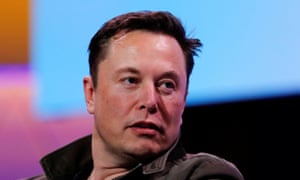
Elon Musk
SElon Musk wants to create a space network that will enhance global broadband communication. Photograph: Mike Blake/Reuters

Changing economics and advancing miniaturisation now enable flotillas of small satellites to be launched into space – up to a hundred on a single rocket. These microsatellites are already being deployed, by companies such as Planet Lab in California, to survey every point on the Earth every day, with sharp enough images to study building sites, road traffic, land use and so forth.

But a bigger leap is now in the offing. Elon Musk’s company SpaceX envisages the “Starlink” project. This entails launching up to 40,000 spacecraft into orbit in order to create a network that will enhance global broadband communication. Other companies, such as Amazon, say they have similar plans.

In principle, these are exciting and welcome developments, especially if they bring broadband internet to the whole of Africa and other parts of the developing world. But there is a downside. Starlink would involve launching more objects into space, in this single constellation, than all the satellites launched in the 60 years since the birth of the space age. There would be roughly one in every square degree over the sky (the area on the sky covered by a small coin held at arm’s length).

Skywatchers could find that their familiar starry sky was augmented by huge numbers of bright spots moving across it, especially soon after sunset and just before sunrise (the periods in the day when the sun is below our horizon but shining on to satellites hundreds of kilometres above us.) For professional astronomers looking steadily at a single celestial body, these rogue lights would only be a minor irritant. However, they would cause more confusion to projects that monitor or search large areas of sky to seek transient objects – exploding stars or even more exotic cosmic explosions. Especially confusing will be the cases when part of the satellite acts like a mirror, creating a specially bright and brief flash when it’s oriented so that it reflects the sun.

SpaceX capsule docks at International Space Station – video

One particularly important project that could be impeded by these swarms of satellites is the search for asteroids. There are 2m asteroids, which are more than 50 metres across, whose orbits cross that of the Earth. Any of these could potentially hit Earth and would be big enough for its impact to destroy a large city. Even though most of the giant (dinosaur-killing) asteroids more than 1km across have been discovered, only 2% of these still dangerous smaller ones are known and there’s a strong motive to search for all the others, so that those with trajectories that could bring them dangerously close to our world can be deflected well in advance. In such searches, the “foreground” of unpredictably moving satellites would be a complication.

There are also concerns among astronomers making measurements in the microwave bands – trying to discover and understand young stars, protoplanets and such like, as well as their constituent gases and molecules. Such observations will be impeded if Starlink satellites’ uplinks or downlinks “pollute” observationally interesting wavebands.

Radio telescopes are constructed in “radio quiet” places to minimise artificial background, but there would be no hiding from the beams sent from these satellites.

In mitigation, this particular enterprise is motivated by a goal that we should acclaim: spreading the genuine benefit of broadband worldwide, especially to the developing world. And it’s a plus that the mega companies involved are genuinely aware of the downsides and will be doing all they can to minimise it by blackening the surfaces and choosing wavelengths carefully. These ventures are not as irresponsible as earlier (and fortunately quashed) proposals to build large advertising hoardings in space.

But we shouldn’t forget that it’s not just astronomers – a minority – who care about this issue. The night sky, the “vault of heaven”, is the one feature of our environment that has been shared, and wondered at, by all humanity through the ages. We should deplore anything that needlessly degrades its beauty and serenity, just as, more parochially, we don’t want tinsel or phone masts in our national parks.

 Martin Rees is the astronomer royalHis latest book is On the Future: Prospects for Humanity.”

Tuesday, December 24, 2019

Canon EOS Ra (Astrophotography Road Trip)

In the 5G race of 2019, consumers were the real losers - CNET

In the 5G race of 2019, consumers were the real losers

"Commentary: The carriers were largely in testing mode, and consumers were the guinea pigs.

5g-space
5G wasn't a complete bust, but it didn't live up to the hype either. 
Robert Rodriguez/CNET
It's the beginning of 2019, and the hype for 5G is immense. Verizon talks about all of the different applications at a keynote at CES. A few next-generation networks had already turned on in December 2018, and after years of big promises and anticipation, it looks like the game-changing technology is finally going to show up in a big way. 
Then 2019 happened. 
Those networks that turned on a few weeks prior? Consumers still don't have access to some of them. One initially touted a single robot customer. 
The handful of networks in the US that went live in the middle of the year suffered from extremely limited range. Overseas, coverage was promising, but likewise spotty. The broader range flavor of 5G, which promises to cover more people, launched this month with an incremental increase in speed over 4G. 5G smartphones have been pricey, suffered from weak battery life and been limited in the types of 5G bands they could access. 
Watch this: 5G kind of sucked this year. Here's how it may get better....
6:44
Game-changing this is not. 
The shaky launch of 5G this year underscores the fact that the wireless industry is still in testing mode when it comes to the technology, and you're the guinea pig. But the need to be first, which has driven many of these carriers, ultimately hurt consumers by over-promising and under-delivering. Yes, speeds can be 100 times what you could get on 4G, but it's not worth much if it's limited to an intersection. 
"Carriers made it sound like 5G would dominate the world in 2019/2020," said Lopez Research analyst Maribel Lopez. "The reality is that we've seen a few phones and a few cities deployed."
Going into 2020, I hope there's less of a focus on who's first, and more on simply offering a service that gets close to fulfilling the many promises made over the last few years. That also includes devices that are more affordable and can offer more flexibly to hop between carriers and different flavors of 5G. 
There's reason to be hopeful, as the technology matures and further deployments and upgrades continue. 
But after a rough 2019, you'll excuse me if I remain skeptical. 

5GE is a thing. Really

Getting 5G to consumers first meant so much to AT&T that it changed the definition of its 4G network. At the beginning of the year, the company rebranded its LTE Advanced network, which other carriers had built out as well, as 5GE, claiming it was on an evolutionary path to 5G. The 5GE symbol showed up on phones where the 4G symbol used to be. 
AT&T emphasized the 5G bit, causing a lot of confusion and leading many consumers to believe they had 5G. It sparked a lawsuit from Sprint, which was settled
AT&T later toned down the marketing of 5GE, including making the Evolution bit more pronounced, but the confusion had already set in. The company wasn't available to comment on its latest use of the term. 
AT&T declined to comment directly on the market confusion caused by 5GE, instead referencing the work its done to invest in its network. 
"We continue to push the boundaries of what's possible with existing network technologies, and results throughout 2019 in studies like Ookla and GWS show that AT&T's best nationwide network, accessible on over 20 devices, outperforms our competitors," said an AT&T spokesman. 
tmobile-5g-speed-test
T-Mobile's low-band 5G network arrived. And while the speeds were sometimes impressive, often times they were just slightly better than its 4G network. 
Eli Blumenthal, CNET
In 2018, Verizon also played fast and loose with the definition of 5G in its claim to launch the first home broadband service. In truth, the company used a proprietary technology that was very 5G-like, causing rivals to dispute its achievement. It's since vowed to switch over to the industry standard for its home service, but hasn't expanded it. 
In 2019, Verizon talked up 5G UWB, or ultra wideband, its term for really, really fast 5G. (Here's a full list of 5G marketing terms.) But when the service launched in Chicago, testers needed a map to hunt down coverage. It was a mess, although it eventually got better. It plans to hit 30 markets by the end of the year, even if the coverage within those cities is spotty. 
"There were always going to be serious logistical challenges to 5G's deployment here," said IDC analyst Jason Leigh, noting that South Korea was successful. "There was going to be an inevitable letdown." 
Verizon, for its part, acknowledges that it's still early days for the deployment, but that consumers, businesses and governments are excited by the prospect of 5G. Applications like the Disney Star Wars experience, powered by 5G, give you an idea of what's possible. 
"They recognize the impact this network will have," said a Verizon spokesman on the reaction the company's received from its customers and other partners, noting that it's still early days in the 5G roll out. 
This month, T-Mobile and AT&T both launched 5G networks using low-band spectrum, which means way better range. The downside, however, are the lackluster speed boosts. T-Mobile says it gives you only a 20 percent boost in speed over 4G, but covers a wide area. AT&T launched a millimeter wave network a year ago, but still limits it to a closed group of business customers. It says its low-band 5G network offers similar speeds to 5GE. 
Ironically, Sprint, which is saddled with the reputation for poor service, has the most robust network in the few cities it operates in. It's using mid-band spectrum, a sweet spot that gives you a mix of better speed and wider coverage. It's also the type of spectrum that most of the world outside of the US is using. But given its financially strapped situation and the fact that it's waiting for T-Mobile to snap it up, it's hard to seriously consider. 
Globally, we saw similar results our expansive tests. In the UK and Australia, coverage offered big jumps in speeds, but big coverage gaps too. South Korea, however, performed the most consistently. Our overall conclusion: 5G had a long way to go. 

Don't buy a 5G phone

If you were looking at a 5G smartphone this year thinking you were future-proofing yourself, turn around and walk away. 
As mentioned before in numerous CNET stories, buying a 5G phone this year is a bad idea
They're expensive, tend to overheat and suffer from weak battery life. But more importantly, they don't future-proof you for upcoming 5G deployments. 
That's because 5G is a bit more complicated off the bat, utilizing different bands of spectrum. Verizon's 5G UWV uses championed so-called millimeter wave spectrum, which offers tremendous speed and equally tremendously short range. Think a glorified Wi-Fi hotspot with speeds that let you download whole seasons of Game of Thrones in minutes. 
samsung-galaxy-s10-5g-5530
A more expensive 5G variant of the Galaxy S10? Nah, pass. 
Angela Lang/CNET
As previously mentioned, AT&T and T-Mobile are starting their consumer push with low-band 5G, even if they too have small deployments of millimeter wave networks. Eventually, all of the carriers will start to incorporate low, mid and millimeter wave spectrum when the spectrum becomes available. 
But here's the rub about this year's 5G phones: They're limited in the bands you can tap. So Verizon's Samsung Galaxy S10 5G will get millimeter wave spectrum, but not low band. Or a T-Mobile low-band phone is stuck on that band. 
It's like being stuck in the middle lane of a freeway as faster, freer lanes all around you open up. 

A smoother 2020

As all technologies do, 5G will mature in 2020. Qualcomm has already discussed an integrated processor that includes a 5G modem that will run in more affordable phones. Companies like AT&T and T-Mobile will start building out the different bands of their 5G network. 
Now that 5G networks are live, and the idea of "first" is meaningless, my hope is carriers will just focus on making this work -- for as many people as possible. 
Because despite all my criticism, I do genuinely believe 5G will change the world. I look at how things have changed in the last 10 years since 4G launched, and things are wildly different. The combination of speed and latency from 5G can really enable a lot of new technologies, from remote medicine to self-driving cars
I'm ready for that revolution, even if I have to sit through an early stretch of marketing jargon and unwarranted hype. "


In the 5G race of 2019, consumers were the real losers - CNET

Sunday, December 22, 2019

How Your Phone Betrays Democracy

“In footage from drones hovering above, the nighttime streets of Hong Kong look almost incandescent, a constellation of tens of thousands of cellphone flashlights, swaying in unison. Each twinkle is a marker of attendance and a plea for freedom. The demonstrators, some clad in masks to thwart the government’s network of facial recognition cameras, find safety in numbers.

But in addition to the bright lights, each phone is also emitting another beacon in the darkness — one that’s invisible to the human eye. This signal is captured and collected, sometimes many times per minute, not by a drone but by smartphone apps. The signal keeps broadcasting, long after the protesters turn off their camera lights, head to their homes and take off their masks.

In the United States, and across the world, any protester who brings a phone to a public demonstration is tracked and that person’s presence at the event is duly recorded in commercial datasets. At the same time, political parties are beginning to collect and purchase phone location for voter persuasion.

“Without question it’s sinister,” said Todd Gitlin, professor of journalism at Columbia University and former president of Students for a Democratic Society, a prominent activist group in the 1960s. “It will chill certain constitutionally permitted expressions. If people know they’ll be tracked, it will certainly make them think twice before linking themselves to a movement.”

A trove of location data with more than 50 billion location pings from the phones of more than 12 million Americans obtained by Times Opinion helps to illustrate the risks that such comprehensive monitoring poses to the right of Americans to assemble and participate in a healthy democracy.

Within minutes, with no special training and a little bit of Google searching, Times Opinion was able to single out and identify individuals at public demonstrations large and small from coast to coast.

By tracking specific devices, we followed demonstrators from the 2017 Women’s March back to their homes. We were able to identify individuals at the 2017 Inauguration Day Black Bloc protests. It was easy to follow them to their workplaces. In some instances — for example, a February clash between antifascists and far-right supporters of Milo Yiannopolous in Berkeley, Calif. — it took little effort to identify the homes of protesters and then their family members.

Satellite imagery: Microsoft and DigitalGlobe

The anonymity of demonstrators has long been a contentious issue. Governments generally don’t like the idea for fear that masked protesters might be more likely to incite riots. Several states, including New York and Georgia, have laws that prohibit wearing masks at public demonstrations. Countries including Canada and Spain have rules to limit or prohibit masks at riots or unlawful gatherings. But in the smartphone era — masked or not — no one can get lost in a sea of faces anymore.

Imagine the following nightmare scenarios: Governments using location data to identify political enemies at major protests. Prosecutors or the police using location information to intimidate criminal defendants into taking plea deals. A rogue employee at an ad-tech location company sharing raw data with a politically motivated group. A megadonor purchasing a location company to help bolster political targeting abilities for his party and using the information to doxprotesters. A white supremacist group breaching the insecure servers of a small location startup and learning the home addresses of potential targets.”

Saturday, December 21, 2019

Is Using a Smartphone While It's Charging Dangerous?


"Stay safe with manufacturer-approved battery and charger


"Where Did the Rumor Begin? 
Is Charging While Using a Cellphone Dangerous? 
How Can I Avoid Charging Problems? 
  • Use compatible batteries and power supplies with your cell phone model.
  • Use a surge protector when you charge the phone, especially when you are traveling.
  • Don't leave your phone in a hot car. Heat can damage the battery. There's no evidence that this can cause any danger, but it doesn't hurt to be careful. 
Two smart phones charging with a wall socket in the background.


Updated November 13, 2019
There are plenty of rules floating around about the best ways to charge your cell phone. You may have heard the rumor that cellphones can explode if you use them while they are charging, but this isn't accurate. Several instances of cellphones that caught fire were covered in the news, but none of them were traced to simultaneously using and charging the phone.

The original news story that likely started the rumor that it was dangerous to charge and talk at the same time didn't report the complete details. The story, which appeared all over the internet in 2013, said a Chinese flight attendant's iPhone 4 exploded when she used it while it was charging. 
As it turns out, the attendant was using a third-party charger, not the Apple charger that ships with the phone. It was almost certainly the cause of the incident.
That doesn't mean that problems can't happen with phones, but they are likely the result of poor wiring or incompatible or faulty phone parts. 

No explosion is likely to occur in the normal course of events if you use the phone while it is charging using a manufacturer-approved battery and charger. This doesn't mean you must buy a replacement from the manufacturer. There are acceptable off-brand chargers, but there are also cheap knockoffs that you should avoid at all costs. Buy from a reputable manufacturer. If you aren't sure, contact the phone's manufacturer for acceptable alternatives.

If you are worried about the possibility of danger from your phone, these commonsense steps may ease your mind:
Billions of cell phones have been sold, and only a handful of exploding cellphone stories have appeared. You are unlikely to encounter any danger from an exploding phone." 


Is Using a Smartphone While It's Charging Dangerous?