Contact Me By Email

Friday, June 22, 2018

Apple acknowledges faulty MacBook and MacBook Pro keyboards with new repair program - The Verge


"Apple has officially acknowledged that there are problems with its “butterfly” mechanism built into the keyboards of the recent MacBook and MacBook Pro laptops. The company is now offering an extended keyboard service program for computers affected by the issue, via iMore.


The extended warranty covers replacement of one or more keys or the whole keyboard, depending on the extent of users’ problems, and it covers eligible laptops up to four years after the computer was bought at retail. (Every MacBook and MacBook Pro model with the butterfly switches seems to be included.) That’s dramatically longer than the limited warranty the computers ship with or even Apple’s extended AppleCare Plus.


According to Apple’s service page, the program covers the following issues:


Letters or characters repeat unexpectedly

Letters or characters do not appear

Key(s) feel “sticky” or do not respond in a consistent manner

Complaints from users about Apple’s recent laptop keyboards have grown in the past weeks and months, with people saying that the keyboards tend to fail entirely when encountering dust and the fragile design makes them difficult to repair. And while it’s certainly taken longer than most users would probably have liked, it’s good to see Apple is finally taking steps to solve the problem."


Apple acknowledges faulty MacBook and MacBook Pro keyboards with new repair program - The Verge

Huawei MediaPad M5 Review - Premium Android Tablet for a Nice Price

Oppo Find X: Motorized Madness!

HP Envy x2 comparison: Qualcomm Snapdragon 835 vs. Intel Core i5

Friday, June 15, 2018

Professor who summarized the impact of technology on society 30 years ago seems prescient now, in the age of smartphones and social media

Three decades ago, a historian wrote six laws to explain society’s unease with the power and pervasiveness of technology. Though based on historical examples taken from the Cold War, the laws read as a cheat sheet for explaining our era of Facebook, Google, the iPhone and FOMO.

You’ve probably never heard of these principles or their author, Melvin Kranzberg, a professor of the history of technology at Georgia Institute of Technology who died in 1995. 
You’ve probably never heard of these principles or their author, Melvin Kranzberg, a professor of the history of technology at Georgia Institute of Technology who died in 1995
What’s a bigger shame is that most of the innovators today, who are building the services and tools that have upended society, don’t know them, either.
Fortunately, the laws have been passed down by a small group of technologists who say they have profoundly impacted their thinking. The text should serve as a foundation—something like a Hippocratic oath—for all people who build things.
1. ‘Technology is neither good nor bad; nor is it neutral’
Prof. Kranzberg’s first law, a seemingly mundane observation, is also his most important. He realized that the impact of a technology depends on its geographic and cultural context, which means it is often good and bad—at the same time.
His example was DDT, a pesticide and probable carcinogen that nonetheless saved the lives of hundreds of thousands of people in India as a cheap and effective malaria prevention. Today, we can see how one technology, Facebook groups, can serve as a lifeline for parents of children with rare diseases while also radicalizing political extremists.
There is no absolute good or bad here, just how good or bad a technology is in a given context. This points to a problem tech companies are too often reluctant to face: Their enormous power means they have an obligation to try to anticipate the potential impact of anything they produce.
“The dirty little secret of highly accomplished people is what we’ve had to neglect to achieve that,” says Bill Buxton, a principal researcher at Microsoft Research and one of the creators of the multitouch interface. “To become spectacular at any discipline in technology means you’re not well-equipped to address these questions.”
There are countless examples of this failure from the past year alone, from successful Russian influence campaigns across social media to Tesla’s too-aggressive rollout of autopilot technology.
2. ‘Invention is the mother of necessity.’
Yes, that’s backward from the way you remember it. It means “every technical innovation seems to require additional technical advances in order to make it fully effective,” Prof. Kranzberg wrote.
In our modern world, the invention of the smartphone has led to the necessity for countless other technologies, from phone cases to 5G wireless. Apple’s cure for staring at your phone too much? A smartwatch to glance at 100 times a day. 
3. ‘Technology comes in packages, big and small.
To understand any part of a technological package requires looking at its interaction with and dependency on the rest of it, Prof. Kranzberg wrote—including the human beings essential to how it functions. While innovation destroys jobs, it also creates countless new ones.
Steel, oil and rail were the package of technologies that dominated the 19th and early 20th centuries, especially in America, just as the internet, mobile phones and wireless connectivity are transforming the 21st century.
4. ‘Although technology might be a prime element in many public issues, nontechnical factors take precedence in technology-policy decisions.’
“People think technology as an abstraction has some sort of intrinsic power, and it doesn’t,” says historian Robert C. Post, who was Prof. Kranzberg’s friend and colleague. “It has to be motivated by political power or cultural power or something else.”
Recently, representatives in Congress declared their intention to force Alphabet Inc.’s Google, Facebook Inc. and others to disclose who pays for political ads on their services, bringing them in line with TV, radio and print. These disclosures were absent from internet ad regulation not for any technical reason, but because, in 2006, the Federal Election Commission took a light touch when regulating the new medium.
5. ‘All history is relevant, but the history of technology is the most relevant.’


The Cold War led to the buildup of nuclear weapons and the missiles to deliver them anywhere on Earth. That led to the development of a war-proof communication system: the internet. Many related innovations subsequently seeped into every aspect of our lives.
But does that mean we owe the modern world to the existential contest between the U.S. and the former U.S.S.R.? Or was that conflict itself driven by previous technological developments that allowed Hitler to threaten both nations?
6. ‘Technology is a very human activity.’
“Technology is capable of doing great things,” Apple Inc. Chief Executive Tim Cook said in his 2017 commencement speech at MIT. “But it doesn’t want to do great things—it doesn’t want anything.” The point, Mr. Cook continued, is that despite its power, how we use technology is up to us.
The trick is, because technology generally reaches mass adoption via corporations, those businesses must think of the consequences of their actions as well as how they profit from them. When corporations don’t, regulators, journalists and the public sometimes do it for them.
Mr. Cook sets the tone at Apple, with his penchant for public pronouncements about how the company protects users’ data. Google has recently adopted initiatives such as “inclusive design” checklists to assure that the widest possible audience has tested new services, and antidiscrimination measures to make AI less racist. Facebook now has teams dedicated to privacy, security and safety that review new features and services before they are rolled out.
As Prof. Kranzberg presciently noted at the dawn of the internet age, “Many of our technology-related problems arise because of the unforeseen consequences when apparently benign technologies are employed on a massive scale.”
Write to Christopher Mims at christopher.mims@wsj.com


Melvin Kranzberg in the 1960s. He became a technology historian.

Thursday, June 14, 2018

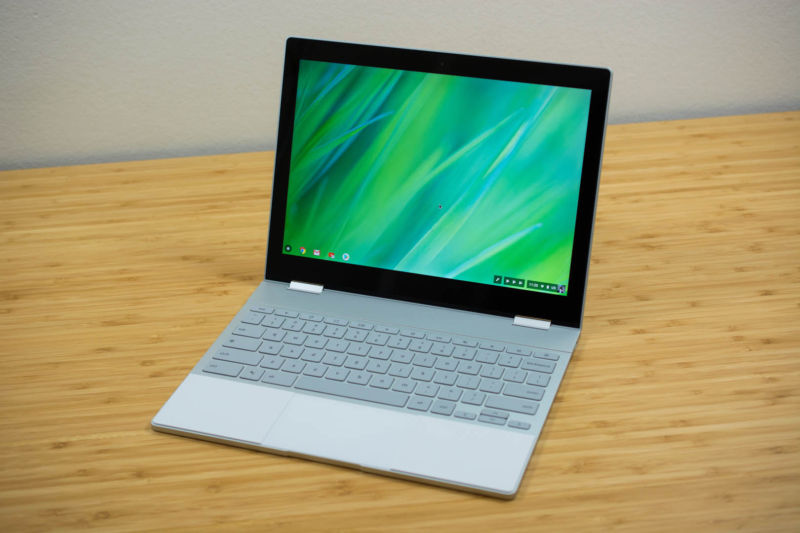
It looks like Google is readying the Pixelbook to run Windows 10 | Ars Technica


"Google's Pixelbook is some beautiful, well-built hardware, but its use of Chrome OS means that for many people, it will be too limited to be useful. Although Chrome OS is no longer entirely dependent on Web applications—it can also be used to run Android applications, and Linux application support is also in development—the lack of Windows support means that most traditional desktop applications are unusable.


But that may be changing due to indications that Google is adding Windows support to its hardware. Earlier this year, changes made to the Pixelbook's firmware indicated that Google is working on a mode called AltOS that would allow switching between Chrome OS and an "alternative OS," in some kind of dual-boot configuration. A couple candidates for that alternative OS are Google's own Fuchsia and, of course, Windows.


Recent changes suggest that it is indeed Windows that Google is aiming for. The Pixelbook's firmware is being updated to address issues picked up in Microsoft's hardware compatibility tests. The modifications make reference to the Windows Hardware Certification Kit (WHCK) and the Windows Hardware Lab Kit (HLK). The HLK is Microsoft's test framework that validates all manner of driver and firmware behavior to ensure that hardware is compatible with Windows 10. The WHCK is the corresponding set of tests for Windows 8.1.


Fixing issues picked up by the HLK not only means that the Pixelbook's Windows compatibility is improving, it also opens the door to Google getting the hardware certified by Microsoft as being suitable for Redmond's operating systems. Of course, the firmware is not the only part of this equation; Google would also have to ensure there's a suitable set of drivers to go with it. And there are no guarantees that Google will actually ship this firmware: presently, most of the AltOS work is being done in its own separate branch, and it's possible that it will never be merged into the main firmware branch."


It looks like Google is readying the Pixelbook to run Windows 10 | Ars Technica

How to make a smart home for $200