Contact Me By Email

Thursday, December 26, 2024

How to buy used tech to save money and help the planet - The Washington Post

Why your new phone should be a used one

An employee works on smartphones reconditioning at a refurbishing company subcontractor. (Loic Venance/AFP/Getty Images)

"If you’re thinking of buying a new phone, laptop or smartwatch, getting refurbished technology could save you money and help the planet.

“The biggest thing that people will see right away is just that things are cheaper and yet they have all the same functionality as something that’s new,” said Lucas Gutterman, director of the Designed to Last Campaign at U.S. PIRG Education Fund, a nonpartisan consumer advocacy group.

And, he added, “Keeping something working for much longer is going to have huge environmental savings over manufacturing something new.”

Here’s what you need to know about buying refurbished devices.

Why should you buy refurbished?

Refurbished technology usually refers to used devices that go through a professional inspection process to ensure they function like new, though the exact definition varies by retailers (more on this below). If you’re buying devices described only as “used” or “secondhand,” that often means you’re getting the technology in “as-is” condition.

These electronics can generally cost about 15 to 20 percent less than buying new, with an additional 10 percent off each year since the item was originally sold, according to PIRG. That means a three-year-old tablet could be roughly half the price of the newest model of the same technology.

Not buying new technology also comes with climate and environmental benefits. Getting a refurbished smartphone, for instance, could have roughly between 80 to 90 percent less of an impact on the environment than purchasing a new device, according to a 2022 reportpublished by Équiterre, a Canadian environmental nonprofit. Opting for a refurbished smartphone could avoid the extraction of about 180 pounds of resources and roughly 50 pounds of planet-warming emissions, the report found.

Using electronics for longer also keeps devices from joining the growing stream of e-wastethat winds up in landfills.

Should you be concerned about quality?

While buying secondhand electronics has become more popular, there can still be a “trust gap” among potential customers, said Lauren Benton, U.S. general manager of Back Market, a global refurbished marketplace based in Paris.

Benton likened the growing refurbished technology market to used cars, noting that devices sold by verified retailers are typically subjected to rigorous multistep quality testing and grading.

“This is not a device missing a button or that’s going to have a known defect,” she said.

But before you buy, here are some tips for how you can assess your options.

Find trusted retailers. “As long as you’re buying from a certified refurbished program, folks should expect to get something that is perfectly functional and save a lot of money and protect the environment,” Gutterman said.

PIRG recommends retailers specializing in refurbished products such as Back Market, Gazelle, VIP Outlet and Decluttr. Original manufacturers can be another source, though PIRG notes that this option is often the most expensive. Other major retailers, such as Amazon, Best Buy and Walmart, also sell refurbished technology.

Know what you want and look for devices that are made to last and can be repaired. “Buying stuff that is already repairable, that is already designed to last, that is going to be the best choice,” Gutterman said.

Research the make and model of what you’re interested in buying. There are online resources tracking and scoring durability and how repairable the technology is. Be wary of buying items using software that is no longer supported or more fragile technology, such as flat-screen TVs or large desktop monitors, which could have a higher chance of damage, Gutterman said. Printers can also be tricky because ink and toner can build up inside and can be difficult to fully clean out. You should also avoid items with batteries that can’t be replaced.

Read the fine print. There are many terms used to describe the condition of these products, such as “open box,” “like new” or “refurbished.”

“Unfortunately those can just mean very different things,” Gutterman said. Carefully read through retailer websites to know what their inspection process is and what they mean when they use these different terms.

Be realistic about the price. Know when the model came out because prices for refurbished items are often set by the year the product was released, according to PIRG. Make sure you take the time to compare products and prices.

“If it’s too good to be true, and it’s not a marketplace that’s dedicated to this space, be careful,” Benton said. “There are absolutely fraudulent devices that are out there.”

Assess return and warranty policies. Many legitimate refurbishers should offer a minimum 30-day return window and a warranty of at least 90 days, Gutterman said.

What should you do after you buy?

Check your item immediately, Gutterman said. Make sure it turns on, all the features are working and it’s in the proper condition.

If you’re replacing one of your old items, don’t throw it out right away or abandon it in a drawer, Benton said. Oftentimes, the device you’re upgrading from still works.

“Trade it in as soon as you’re not using it anymore,” she said, noting that these programs typically offer cash in return. “You need to get that device back out there to optimize its value, to optimize the life that it has.”

How to buy used tech to save money and help the planet - The Washington Post

How A.I. Could Reshape the Economic Geography of America - The New York Times

How A.I. Could Reshape the Economic Geography of America

"As the technology is widely adopted, some once-struggling midsize cities in the Midwest, Mid-Atlantic and South may benefit, new research predicts.

The Tennessee River passing through Chattanooga.Whitten Sabbatini for The New York Times

By Steve Lohr

Steve Lohr has covered the way tech is reshaping the work force for more than a decade.

Chattanooga, Tenn., a midsize Southern city, is on no one’s list of artificial intelligence hot spots.

But as the technology’s use moves beyond a few big city hubs and is more widely adopted across the economy, Chattanooga and other once-struggling cities in the Midwest, Mid-Atlantic and South are poised to be among the unlikely winners, a recent study found.

The shared attributes of these metropolitan areas include an educated work force, affordable housing and workers who are mostly in occupations and industries less likely to be replaced or disrupted by A.I., according to the study by two labor economists, Scott Abrahams, an assistant professor at Louisiana State University, and Frank Levy, a professor emeritus at the Massachusetts Institute of Technology. These cities are well positioned to use A.I. to become more productive, helping to draw more people to those areas.

The study is part of a growing body of research pointing to the potential for chatbot-style artificial intelligence to fuel a reshaping of the population and labor market map of America. A.I.’s transformative force could change the nation’s economy and politics, much like other technological revolutions.

“This is a powerful technology that will sweep through American offices with potentially very significant geographic implications,” said Mark Muro, a senior fellow at the Brookings Institution, where he studies the regional effects of technology and government policy. “We need to think about what’s coming down the pike.”

At issue is a new and rapidly growing breed of the technology known as generative A.I., which can quickly draft business reports, write software and answer questions, often with human-level skill. Already, predictions abound that generative A.I. will displace workers in call centers, software developers and business analysts.

That pattern of technology disruption has happened before. The industrial revolution mechanized agriculture, pushing workers off farms and into cities. Modern cars and roads brought the rise of the suburbs in the 1950s and 1960s. Factory automation and globalization, accelerated by the internet, destroyed jobs in traditional manufacturing centers, depopulating parts of the Midwest and South.

While uncertainty remains about how fast and how far into workplaces generative A.I. will reach, a series of studies have concluded that the impact is likely to be substantial, perhaps automating the equivalent of millions of jobs.

To date, the regions benefiting the most from the rapidly progressing technology have been a handful of metro areas where scientists are building A.I., including Silicon Valley.

But those places are also some of the ones most apt to face issues as A.I. gets better and can automate jobs, according to the labor economists’ study. Centers of technology and office work including San Jose, San Francisco, Washington, New York and Boston are home to large numbers of high-paid workers, from business analysts to computer programmers, whose tasks involve generating words or code, which is what A.I. does well.

But exposure to A.I. does not necessarily translate to sweeping job losses. These cities, the economists note, have proved to be among the most resilient, dynamic places in the country, able to withstand setbacks and recover.

In their paper, the two labor economists identified nearly two dozen metropolitan areas expected to benefit from the broader adoption of A.I. technology, including Dayton, Ohio; Scranton, Pa.; Savannah, Ga.; and Greenville, S.C.

Chattanooga is already attracting technology-enabled businesses and workers.

Evan Shelley, wearing a blue jacket, a black T-shirt and beige pants, stands with one hand leaning on the trunk of a yellow car.
Evan Shelley describes his start-up, Truck Parking Club, as “Airbnb for truck parking.”Whitten Sabbatini for The New York Times

Evan Shelley moved to Chattanooga from Miami last year, bringing his start-up with him. He describes Truck Parking Club, his two-year-old business, as “Airbnb for truck parking.” It links tens of thousands of long-haul truckers to more than 1,100 parking locations around the country — sites ranging in size from a few parking spaces to hundreds.

Mr. Shelley, 30, said Chattanooga’s cluster of trucking companies, freight brokers, shippers and transportation tech companies “just makes a ton of sense for us.” He has fostered relationships with expert advisers in town, and Chattanooga’s amenities for start-ups include modern co-working spaces, very fast internet service and access to investors, he said.

Most customer service is now handled by phone and staffed by former truck drivers. Their expertise, Mr. Shelley said, is a crucial asset and a selling point. But the start-up is developing generative A.I. for its mobile app to answer basic questions and to assist its customer service workers.

Chattanooga’s city-owned utility, EPB, has been a tech pioneer, offering some of the world’s fastest internet service for more than a decade, and it remains an innovative leader. Last year, EPB began offering a commercially available quantum network to let businesses and scientists experiment with the emerging technology of quantum computing.

The city government is experimenting with chatbot technology, training the A.I. on the text of its local laws, regulations and ordinances. The software will answer questions or operate as a conversational assistant to walk citizens through tasks like getting a business license.

“We’re trying to prepare our people for working with A.I., focus on the benefits and make the most of it,” said Tim Kelly, the mayor of Chattanooga.

Chattanooga has nurtured other start-ups in logistics, shipping and trucking, taking advantage of its location in “Freight Alley,” connected by interstate highways to Atlanta; Nashville; Knoxville, Tenn.; and Birmingham, Ala.

Truck Parking Club links tens of thousands of long-haul truckers to more than 1,100 parking locations around the country.Whitten Sabbatini for The New York Times

Shappi, a start-up shipping consumer goods to South America, moved to Chattanooga from San Diego two years ago, in part thanks to investors in the area. Shappi operates an online marketplace connecting shipments with travelers who carry the goods in their luggage, for a fee.

The company employs 26 people to create the custom-designed image recognition and data-collection technology for classifying goods and arranging deliveries.

Karla Valdivieso, right, and her Shappi co-founder, C.J. Valdivieso. Shappi, an online marketplace that connects shipments with travelers who carry the goods in their luggage, moved from San Diego to Chattanooga two years ago.Whitten Sabbatini for The New York Times

Karla Valdivieso, co-founder and chief executive, said it was easier to recruit people to a start-up in Chattanooga. She cited an ample pool of educated workers and affordable housing — two of the key characteristics identified in the study for cities picked as potential winners in the rollout of A.I.

Shappi's AI Stage. The company employs 26 people to create the custom-designed image recognition and data-collection technology for classifying goods and arranging deliveries.Whitten Sabbatini for The New York Times
A FedEx driver delivering packages to Shappi’s headquarters in Chattanooga.Whitten Sabbatini for The New York Times

Shappi has adopted some generative A.I. technology in its customer service operations to help its staff answer questions faster and more accurately.

“We’ve used it to make our people more effective,” Ms. Valdivieso said. “I’m always open to more technology, but it’s not there yet. It’s going to be A.I. plus humans for the foreseeable future.”

Steve Lohr writes about technology and its impact on the economy, jobs and the workplace.More about Steve Lohr"

How A.I. Could Reshape the Economic Geography of America - The New York Times

Saturday, December 14, 2024

Apple Cancels Its Plans To Launch The Most Powerful M4 ‘Extreme’ Chip, Which Would Have Featured Up To A 64-Core CPU And A 160-Core GPU

Apple Cancels Its Plans To Launch The Most Powerful M4 ‘Extreme’ Chip, Which Would Have Featured Up To A 64-Core CPU And A 160-Core GPU

Apple cancels M4 Extreme Chip for Mac Pro

“Apple has plans to introduce an 'Extreme' M series chip, which was expected to be announced next year, but based on recent reports, the company has canceled its M4 Extreme chip. Apple was allegedly working on a high-performance chip for the Mac, which would have consisted of four chips attached together for enhanced performance and reallocating engineering resources for an AI server chip.

Apple cancels its M4 Extreme chip, but it could revisit the idea once again

The Information reports that Apple has canceled its plans to launch its own AI server chip, reportedly called the M4 'Extreme' chip. While there is no certainty if it is indeed the 'Extreme' chip, the specifications described suggest otherwise. This is not the first time that we have heard details on the M4 Extreme chip, as the company was previously reported to be working on an even more powerful iteration of its M series of chips. However, soon after, the company scrapped the idea of an 'Extreme' chip, and based on the current report, it appears that Apple revisited the plans again.

With the latest information at hand, we can presume that the company has canceled its plans to ditch the M4 Extreme chip altogether. It was previously reported that the 'Extreme' lineup of chips would be oriented towards the Mac Pro tower, which would have been the company's fastest and most capable chip ever made. If the news has any heft to it, Apple still needs a solution for its Mac Pro tower, as the device has been running the 'Ultra' series of chips for now, which is the same chip that you can find in the Mac Studio.

The M4 Ultra chip, on the flip side, is reported to be introduced in the second half of next year for the Mac Studio as well as the Mac Pro. If the company launched the M4 Extreme chip, it would have featured enormous performance gains over the current iterations of the chip. Based on the specifications, the M4 Extreme chip would have quadrupled M4 Max chips stitched together with up to 64 CPU cores and up to 160 cores of GPU, making it a behemoth of a chip compared to Apple's existing chips as well as the competition.

Apple appears to have shown interest in the 'Extreme' chip for a while, and there is a possibility that the company will revisit the idea once again, but since the final word rests with Apple, we would have to admit that the M4 Extreme chip has been canceled, at least for now. We will share additional details on Apple's plans for its custom chips as soon as further information is available.“

"Sony is ripping people off again"

Friday, December 13, 2024

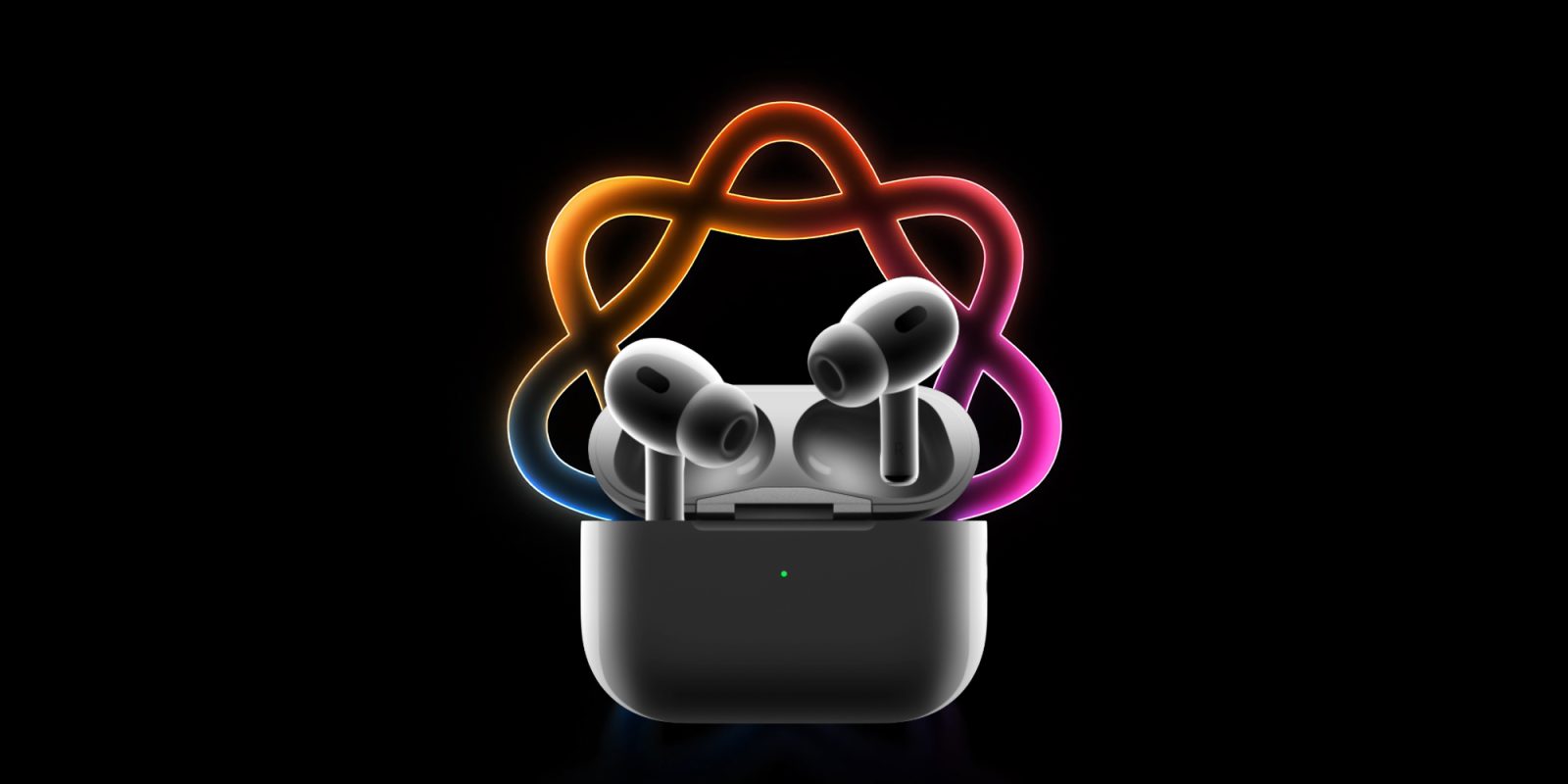
iOS 18.2 makes AirPods more powerful than ever, here’s why

iOS 18.2 makes AirPods more powerful than ever, here’s why

iOS 18.2 AirPods

AirPods Pro 2 recently received huge new features in Hearing Aid, Hearing Test, and Hearing Protection. But for many users, Apple’s latest iOS update may be even more transformative thanks to a key Apple Intelligence upgrade. Here’s how iOS 18.2 makes AirPods more powerful than ever.

ChatGPT via Siri is a game changer

Siri ChatGPT

Apple Intelligence launched in iOS 18.1, but some of its most highly anticipated new features just arrived in iOS 18.2.

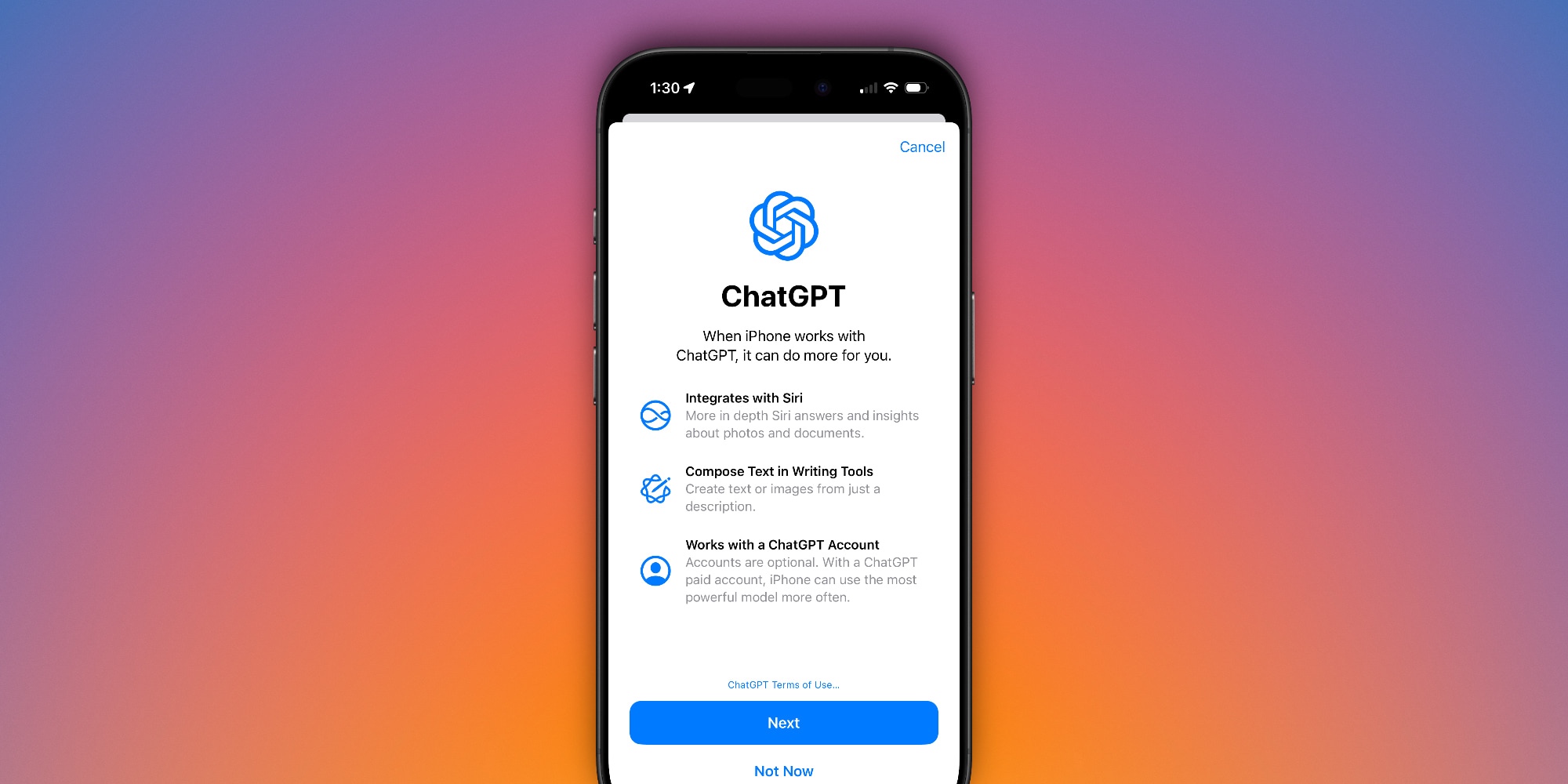
One such feature is ChatGPT integration with Siri.

I’ve been using the new AI feature in beta for months, and I think it has major potential for users—especially when using AirPods.

When Apple first demoed ChatGPT integration, it seemed like you could only tap into OpenAI’s smarts for certain requests. As Apple put it, Siri would be better at personal knowledge that relates to you, while ChatGPT could help out with ‘world knowledge’ questions.

But one of the many tidbits we learned when the first iOS 18.2 beta shipped is that ChatGPT can be your go-to assistant for any Siri request.

iOS 18.2 lets you say ‘Ask ChatGPT’ at the start of your Siri request to have it immediately sent to ChatGPT.

Which can make your AirPods experience a whole lot like the movie Her, starring Joaquin Phoenix and Scarlett Johansson.

How iOS 18.2’s AirPods experience works with ChatGPT

iOS 18.2 ChatGPT

When your AirPods are connected to a compatible iPhone or iPad running iOS 18.2 or iPadOS 18.2, you can invoke Siri the same way as always.

On modern iPhones, this means just saying the single word, ‘Siri.’

Then, you can say, ‘ask ChatGPT…’

That flow is streamlined enough. But where it gets really nice is with follow-up requests.

After ChatGPT responds to your query, Siri keeps listening a little while for any follow-up requests. There’s no need to say, ‘Siri, ask ChatGPT’ again.

Instead, you can just offer a follow-up question, or a second unrelated request, and Siri will know that you want to continue engaging with ChatGPT.

If you have a ChatGPT Plus account, you can even interact with ChatGPT’s advanced voice mode for a more true-to-life conversation.

Again, all of this works seamlessly, and it very much feels like you’re entering the Her era for AirPods.

AirPods with ChatGPT feels like the future

None of the ChatGPT interactions through Siri and Apple Intelligence require AirPods. You can do it all on your iPhone, iPad, or Mac—in many cases even with another pair of headphones.

But doing all of this with AirPods feels like the future. And provides yet another reason to keep AirPods in your ears as often as possible.”

Wednesday, December 11, 2024

You Can Download iOS 18.2 Today, With ChatGPT, Genmoji, Visual Intelligence for iPhone - CNET

You Can Download iOS 18.2 Today, With ChatGPT, Genmoji, Visual Intelligence for iPhone

Apple Intelligence has been a work in progress so far. It just got a whole lot better.

Apple Intelligence logo on top of CNET background

Apple Intelligence on iOS 18.2 is a big step forward for Apple.

Nelson Aguilar/CNET

Apple has heavily promoted Apple Intelligence since the company announced its in-house artificial intelligence system back in June, but it's hardly been a useful feature on the iPhone... until now.

On Wednesday, Apple began rolling out iOS 18.2, which brings some of the most anticipated AI features to iOS 18, including ChatGPT integration for Siri and Writing Tools, the ability to create your own emoji with Genmoji, and the Image Playground app to create images from text prompts.

If you're an iPhone 16 owner, you get Visual Intelligence, the visual search tool that allows you to pull up information on anything you point your camera at, like text, food, locations and more. Think Google Lens, but for Apple.

As long as you own a compatible Apple Intelligence device, you can download iOS 18.2 today and get all the latest AI features. Here's everything you need to know.

To learn more, check out what's new in iOS 18.2 and how to get your iPhone ready before downloading iOS 18.2.

Which iPhone models support Apple Intelligence?

Every iPhone model after the iPhone XS and iPhone 11 can run iOS 18, only some of the most recent models support Apple Intelligence. This is every iPhone that supports Apple Intelligence

As mentioned above, only iPhone 16 users will get Visual Intelligence, the AI-powered visual search feature.

Apple Intelligence also works on iPad and Mac models with the M1 chip and later.

Apple's Visual Intelligence feature on an iPhone 16 outside.

Only the iPhone 16 running iOS 18.2 has Visual Intelligence.

Numi Prasarn/CNET

Now, do these six things before installing iOS 18.2

You don't necessarily need to do all of these things to download iOS 18.2 on your iPhone, but it will definitely make the download experience go so much easier:

  • Backup your iPhone. You never know what can go wrong when updating, so it's good to have a backup. On your iPhone, go to Settings [your name] > iCloud > iCloud Backup and tap on Back Up Now.
  • Update to iOS 18.1.1. This will make the updating run smoother than going from iOS 18 to iOS 18.2.
  • Charge your iPhone or connect it to power. You don't want your battery dying when you download a new software update, so make sure to keep it charged to at least over 20% or just plug it into power while you update.
  • Connect your iPhone to a decent Wi-Fi network. You can download iOS 18.2 using mobile data, but it will be slow and could fail if your service is bad.
  • Check to see if your iPhone has enough storage. Every iOS software update needs enough storage to successfully download and install. If you're running out of storage, go to Settings > General > iPhone Storage and delete large files and apps. You can also download iOS 18.2 using your computer, which doesn't require you to free up storage on your phone.
  • If you haven't already, join the Apple Intelligence waitlist. Go to Settings > Apple Intelligence & Siri and tap Join the Apple Intelligence Waitlist. It should take a few hours for you to get approved. You also have to waitlist to use ‌Genmoji‌ and ‌Image Playground‌.

To check out Apple's new AI, you must have an eligible device and run the current iOS 18.1, iPadOS 18.1 or MacOS 15.1. (On the iPhone side, that's basically the current iPhone 16 models plus last year's iPhone 15 Pro and Pro Max.) You'll also need to join the waitlist in the Settings app, but Apple Support says it usually only takes a few hours to gain access. Once approved, you'll receive a notification saying it's ready to activate on your device.

You should also check out these easy tricks for optimizing your iPhone storage.

iPhone connected to a MacBook Pro laptop via a sync cable.

Make sure your iPhone is charged before updating to iOS 18.2.

Jeff Carlson/CNET

How to download iOS 18.2 on your iPhone

Now that you're all set, it's time to download iOS 18.2 If you're coming from iOS 18 or iOS 18.1, updating should be incredibly easy. All you need to do is go to Settings > General > Software Update and hit Update Now. Enter your passcode, agree to terms and conditions to request the update, and wait for iOS 18 to download and install. Once your phone restarts and boots back up, you should be running iOS 18.2.

software update for iOS 18.2

The download for iOS 18.2 is a little over 7GB.

Screenshots by Nelson Aguilar/CNET

When does iOS 18.2 come out?

It's out! Apple started rolling out the iOS 18.2 update today, Dec. 11. More Apple Intelligence features will be available in the months ahead, the company said.

While you're here, check out what you should expect from the iPhone in 2025.


You Can Download iOS 18.2 Today, With ChatGPT, Genmoji, Visual Intelligence for iPhone - CNET