Contact Me By Email

Monday, September 18, 2023

Opinion | I Was Attacked by Donald Trump and Elon Musk. I Believe It Was a Strategy To Change What You See Online. - The New York Times

Trump Attacked Me. Then Musk Did. It Wasn’t an Accident.

Timo Lenzen

By Yoel Roth

Dr. Roth is the former head of trust and safety at Twitter.

"When I worked at Twitter, I led the team that placed a fact-checking label on one of Donald Trump’s tweets for the first time. Following the violence of Jan. 6, I helped make the call to ban his account from Twitter altogether. Nothing prepared me for what would happen next.

Backed by fans on social media, Mr. Trump publicly attacked me. Two years later, following his acquisition of Twitter and after I resigned my role as the company’s head of trust and safety, Elon Musk added fuel to the fire. I’ve lived with armed guards outside my home and have had to upend my family, go into hiding for months and repeatedly move.

This isn’t a story I relish revisiting. But I’ve learned that what happened to me wasn’t an accident. It wasn’t just personal vindictiveness or “cancel culture.” It was a strategy — one that affects not just targeted individuals like me, but all of us, as it is rapidly changing what we see online.

Private individuals — from academic researchers to employees of tech companies — are increasingly the targets of lawsuits, congressional hearings and vicious online attacks. These efforts, staged largely by the right, are having their desired effect: Universities are cutting back on efforts to quantify abusive and misleading information spreading online. Social media companies are shying away from making the kind of difficult decisions my team did when we intervened against Mr. Trump’s lies about the 2020 election. Platforms had finally begun taking these risks seriously only after the 2016 election. Now, faced with the prospect of disproportionate attacks on their employees, companies seem increasingly reluctant to make controversial decisions, letting misinformation and abuse fester in order to avoid provoking public retaliation.

These attacks on internet safety and security come at a moment when the stakes for democracy could not be higher. More than 40 major elections are scheduled to take place in 2024, including in the United States, the European Union, India, Ghana and Mexico. These democracies will most likely face the same risks of government-backed disinformation campaigns and online incitement of violence that have plagued social media for years. We should be worried about what happens next.

My story starts with that fact check. In the spring of 2020, after years of internal debate, my team decided that Twitter should apply a label to a tweet of then-President Trump’s that asserted that voting by mail is fraud-prone, and that the coming election would be “rigged.” “Get the facts about mail-in ballots,” the label read.

On May 27, the morning after the label went up, the White House senior adviser Kellyanne Conway publicly identified me as the head of Twitter’s site integrity team. The next day, The New York Post put several of my tweets making fun of Mr. Trump and other Republicans on its cover. I had posted them years earlier, when I was a student and had a tiny social media following of mostly my friends and family. Now, they were front-page news. Later that day, Mr. Trump tweeted that I was a “hater.”

Legions of Twitter users, most of whom days prior had no idea who I was or what my job entailed, began a campaign of online harassment that lasted months, calling for me to be fired, jailed or killed. The volume of Twitter notifications crashed my phone. Friends I hadn’t heard from in years expressed their concern. On Instagram, old vacation photos and pictures of my dog were flooded with threatening comments and insults. (A few commenters, wildly misreading the moment, used the opportunity to try to flirt with me.)

I was embarrassed and scared. Up to that moment, no one outside of a few fairly niche circles had any idea who I was. Academics studying social media call this “context collapse”: things we post on social media with one audience in mind might end up circulating to a very different audience, with unexpected and destructive results. In practice, it feels like your entire world has collapsed.

The timing of the campaign targeting me and my alleged bias suggested the attacks were part of a well-planned strategy. Academic studies have repeatedlypushed back on claims that Silicon Valley platforms are biased against conservatives. But the success of a strategy aimed at forcing social media companies to reconsider their choices may not require demonstrating actual wrongdoing. As the former Republican Party chair Rich Bond once described, maybe you just need to “work the refs”: repeatedly pressure companies into thinking twice before taking actions that could provoke a negative reaction. What happened to me was part of a calculated effort to make Twitter reluctant to moderate Mr. Trump in the future and to dissuade other companies from taking similar steps.

It worked. As violence unfolded at the Capitol on Jan. 6, Jack Dorsey, then the C.E.O. of Twitter, overruled Trust and Safety’s recommendation that Mr. Trump’s account should be banned because of several tweets, including one that attacked Vice President Mike Pence. He was given a 12-hour timeout instead (before being banned on Jan. 8). Within the boundaries of the rules, staff members were encouraged to find solutions to help the company avoid the type of blowback that results in angry press cycles, hearings and employee harassment. The practical result was that Twitter gave offenders greater latitude: Representative Marjorie Taylor Greene was permitted to violate Twitter’s rules at least five times before one of her accounts was banned in 2022. Other prominent right-leaning figures, such as the culture war account Libs of TikTok, enjoyed similar deference.

Similar tactics are being deployed around the world to influence platforms’ trust and safety efforts. In India, the police visited two of our offices in 2021 when we fact-checked posts from a politician from the ruling party, and the police showed up at an employee’s home after the government asked us to block accounts involved in a series of protests. The harassment again paid off: Twitter executives decided any potentially sensitive actions in India would require top-level approval, a unique level of escalation of otherwise routine decisions.

And when we wanted to disclose a propaganda campaign operated by a branch of the Indian military, our legal team warned us that our India-based employees could be charged with sedition — and face the death penalty if convicted. So Twitter only disclosed the campaign over a year later, without fingering the Indian government as the perpetrator.

In 2021, ahead of Russian legislative elections, officials of a state security service went to the home of a top Google executive in Moscow to demand the removal of an app that was used to protest Vladimir Putin. Officers threatened her with imprisonment if the company failed to comply within 24 hours. Both Apple and Google removed the app from their respective stores, restoring it after elections had concluded.

In each of these cases, the targeted staffers lacked the ability to do what was being asked of them by the government officials in charge, as the underlying decisions were made thousands of miles away in California. But because local employees had the misfortune of residing within the jurisdiction of the authorities, they were nevertheless the targets of coercive campaigns, pitting companies’ sense of duty to their employees against whatever values, principles or policies might cause them to resist local demands. Inspired, India and a number of other countries started passing “hostage-taking” laws to ensure social-media companies employ locally based staff.

In the United States, we’ve seen these forms of coercion carried out not by judges and police officers, but by grass-roots organizations, mobs on social media, cable news talking heads and — in Twitter’s case — by the company’s new owner.

One of the most recent forces in this campaign is the “Twitter Files,” a large assortment of company documents — many of them sent or received by me during my nearly eight years at Twitter — turned over at Mr. Musk’s direction to a handful of selected writers. The files were hyped by Mr. Musk as a groundbreaking form of transparency, purportedly exposing for the first time the way Twitter’s coastal liberal bias stifles conservative content.

What they delivered was something else entirely. As tech journalist Mike Masnick put it, after all the fanfare surrounding the initial release of the Twitter Files, in the end “there was absolutely nothing of interest” in the documents, and what little there was had significant factual errors. Even Mr. Musk eventually lost patience with the effort. But, in the process, the effort marked a disturbing new escalation in the harassment of employees of tech firms.

Unlike the documents that would normally emanate from large companies, the earliest releases of the Twitter Files failed to redact the names of even rank-and-file employees. One Twitter employee based in the Philippines was doxxed and severely harassed. Others have become the subjects of conspiracies. Decisions made by teams of dozens in accordance with Twitter’s written policies were presented as having been made by the capricious whims of individuals, each pictured and called out by name. I was, by far, the most frequent target.

The first installment of the Twitter Files came a month after I left the company, and just days after I published a guest essay in The Times and spoke about my experience working for Mr. Musk. I couldn’t help but feel that the company’s actions were, on some level, retaliatory. The next week, Mr. Musk went further by taking a paragraph of my Ph.D. dissertation out of context to baselessly claim that I condoned pedophilia — a conspiracy trope commonly used by far-right extremists and QAnon adherents to smear L.G.B.T.Q. people.

The response was even more extreme than I experienced after Mr. Trump’s tweet about me. “You need to swing from an old oak tree for the treason you have committed. Live in fear every day,” said one of thousands of threatening tweets and emails. That post, and hundreds of others like it, were violations of the very policies I’d worked to develop and enforce. Under new management, Twitter turned a blind eye, and the posts remain on the site today.

On Dec. 6, four days after the first Twitter Files release, I was asked to appear at a congressional hearing focused on the files and Twitter’s alleged censorship. In that hearing, members of Congress held up oversize posters of my years-old tweets and asked me under oath whether I still held those opinions. (To the extent the carelessly tweeted jokes could be taken as my actual opinions, I don’t.) Ms. Greene said on Fox News that I had “some very disturbing views about minors and child porn” and that I “allowed child porn to proliferate on Twitter,” warping Mr. Musk’s lies even further (and also extending their reach). Inundated with threats, and with no real options to push back or protect ourselves, my husband and I had to sell our home and move.

Academia has become the latest target of these campaigns to undermine online safety efforts. Researchers working to understand and address the spread of online misinformation have increasingly become subjects of partisan attacks; the universities they’re affiliated with have become embroiled in lawsuits, burdensome public record requests and congressional proceedings. Facing seven-figure legal bills, even some of the largest and best-funded university labs have said they may have to abandon ship. Others targeted have elected to change their research focus based on the volume of harassment.

Bit by bit, hearing by hearing, these campaigns are systematically eroding hard-won improvements in the safety and integrity of online platforms — with the individuals doing this work bearing the most direct costs.

Tech platforms are retreating from their efforts to protect election security and slow the spread of online disinformation. Amid a broader climate of belt-tightening, companies have pulled back especially hard on their trust and safety efforts. As they face mounting pressure from a hostile Congress, these choices are as rational as they are dangerous.

We can look abroad to see how this story might end. Where once companies would at least make an effort to resist outside pressure, they now largely capitulate by default. In early 2023, the Indian government asked Twitter to restrict posts critical of Prime Minister Narendra Modi. In years past, the company had pushed back on such requests; this time, Twitter acquiesced. When a journalist noted that such cooperation only incentivizes further proliferation of draconian measures, Mr. Musk shrugged: “If we have a choice of either our people go to prison or we comply with the laws, we will comply with the laws.”

It’s hard to fault Mr. Musk for his decision not to put Twitter’s employees in India in harm’s way. But we shouldn’t forget where these tactics came from or how they became so widespread. From pushing the Twitter Files to tweeting baseless conspiracies about former employees, Mr. Musk’s actions have normalized and popularized vigilante accountability, and made ordinary employees of his company into even greater targets. His recent targeting of the Anti-Defamation League has shown that he views personal retaliation as an appropriate consequence for any criticism of him or his business interests. And, as a practical matter, with hate speech on the rise and advertiser revenue in retreat, Mr. Musk’s efforts seem to have done little to improve Twitter’s bottom line.

What can be done to turn back this tide?

Making the coercive influences on platform decision making clearer is a critical first step. And regulation that requires companies to be transparent about the choices they make in these cases, and why they make them, could help.

In its absence, companies must push back against attempts to control their work. Some of these decisions are fundamental matters of long-term business strategy, like where to open (or not open) corporate offices. But companies have a duty to their staff, too: Employees shouldn’t be left to figure out how to protect themselves after their lives have already been upended by these campaigns. Offering access to privacy-promoting services can help. Many institutions would do well to learn the lesson that few spheres of public life are immune to influence through intimidation.

If social media companies cannot safely operate in a country without exposing their staff to personal risk and company decisions to undue influence, perhaps they should not operate there at all. Like others, I worry that such pullouts would worsen the options left to people who have the greatest need for free and open online expression. But remaining in a compromised way could forestall necessary reckoning with censorial government policies. Refusing to comply with morally unjustifiable demands, and facing blockages as a result, may in the long run provoke the necessary public outrage that can help drive reform.

The broader challenge here — and perhaps, the inescapable one — is the essential humanness of online trust and safety efforts. It isn’t machine learning models and faceless algorithms behind key content moderation decisions: it’s people. And people can be pressured, intimidated, threatened and extorted. Standing up to injustice, authoritarianism and online harms requires employees who are willing to do that work.

Few people could be expected to take a job doing so if the cost is their life or liberty. We all need to recognize this new reality, and to plan accordingly.

Yoel Roth is a visiting scholar at the University of Pennsylvania and the Carnegie Endowment for International Peace, and the former head of trust and safety at Twitter."

Opinion | I Was Attacked by Donald Trump and Elon Musk. I Believe It Was a Strategy To Change What You See Online. - The New York Times

Saturday, September 16, 2023

James Webb Space Telescope could detect life on Earth from across the galaxy, new study suggests

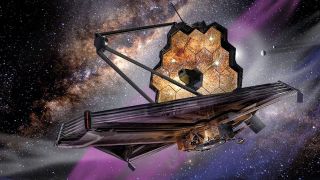
James Vaughan's rendering of the James Webb Space Telescope focuses on the observatory's giant mirror.
“A new study suggests that the James Webb Space Telescope could detect Earth's human civilization from across the galaxy (Image credit: James Vaughan)

The James Webb Space Telescope (JWST) would be able to spot the signs of our civilization on Earth if it was spying on us from another star system in the Milky Way, a new study shows. 

The finding raises hopes that the state-of-the-art spacecraft could detect alien civilizations as it stares out toward distant worlds in our galaxy.

Since launching in late 2021, has been predominantly peering out into the in search of clues about how the early universe formed. But one of the telescope's secondary objectives is to analyze the atmospheres of nearby exoplanets, or planets beyond the solar system, to look for gases produced by biological life, known as biosignatures, and chemicals produced by advanced alien civilizations, known as technosignatures.

Related: 

Measuring the expansion rate of the Universe - Hubble constant tension explained

But despite being the most advanced telescope currently in operation, it is still unclear how well JWST will be able to spot the tell-tale signs of intelligent life. To answer this question, researchers decided to test whether the space telescope could successfully detect intelligent life from the only planet in the universe that is known to be both habitable and currently inhabited — Earth.

In the new study, uploaded to the pre-print server on Aug. 28, researchers took a spectrum of Earth's atmosphere and deliberately decreased the quality of the data to mimic how it would look to an observer dozens of light-years away. The team then used a computer model, which replicated JWST's sensor capabilities, to see if the spacecraft could detect the key biosignatures and technosignatures from the dataset, such as methane and oxygen, produced by biological life, and nitrogen dioxide and chlorofluorocarbons (CFCs), which are produced by humans.

The results, which have not yet been peer-reviewed, show that JWST could likely detect all the key markers of non-intelligent and intelligent life in our planet's atmosphere.

A graph showing the spectrum of Earth's atmosphere

This graph shows the raw atmospheric data used in the new study. Specific biosignatures and technosignatures are highlighted in different colors. (Image credit: Lustig-Yaeger, et al)

The researchers noted that the quality of the altered dataset is roughly equivalent to JWST observations of planets from — a star system containing seven exoplanets that orbit a red dwarf star around 40 light-years from Earth. This suggests the telescope should be able to detect life or alien civilizations on exoplanets within 40 light-years of Earth. But the team believes JWST could possibly detect signs of extraterrestrial life up to 50 light-years from Earth.

Only around 20 have been officially discovered within a 50-light-year radius of Earth, but based on the number of suspected stars in this region of space, experts predict that there may actually be as many as 4,000 exoplanets within JWST's reach, according to , an international astronomical collaboration dedicated to finding potentially habitable planets close to Earth.

However, this doesn't guarantee that JWST would be able to detect life on other planets.

seven planets surrounding a star

An artist's interpretation of what the TRAPPIST-1 system might look like. (Image credit: Getty Images)

Detecting biosignatures and technosignatures on other worlds "may prove challenging to interpret without contextual knowledge about the habitable environment," the researchers wrote. In this study, the team already knew which markers to look for, but on an exoplanet with different conditions and alternate potential life forms or technologies those life-signatures may not be as obvious, they added.

JWST has already made some interesting discoveries about exoplanets near Earth. The telescope , which is around 40 light-years from Earth, and found that TRAPPIST-1b, the second-closest exoplanet to the star in the TRAPPIST-1 system, due to its extreme heat. The spacecraft also glimpsed a , a "super-Jupiter" exoplanet 40 light-years from Earth.

Closer to home, JWST has also detected , which could contain the chemical ingredients needed for life. And further out into the cosmos, the spacecraft has also more than 1,000 light-years from Earth.

to keep talking space on the latest missions, night sky and more! And if you have a news tip, correction or comment, let us know at: 

Get the Space.com Newsletter

Breaking space news, the latest updates on rocket launches, skywatching events and more!

Harry is a U.K.-based staff writer at Live Science. He studied Marine Biology at the University of Exeter (Penryn campus) and after graduating started his own blog site "Marine Madness," which he continues to run with other ocean enthusiasts. He is also interested in evolution, climate change, robots, space exploration, environmental conservation and anything that's been fossilized. When not at work he can be found watching sci-fi films, playing old Pokemon games or running (probably slower than he'd like). 

Latest

Most Popular

By 

By 

By 

Sunday, September 10, 2023

The Technology Facebook and Google Didn’t Dare Release - The New York Times

The Technology Facebook and Google Didn’t Dare Release

"Engineers at the tech giants built tools years ago that could put a name to any face but, for once, Silicon Valley did not want to move fast and break things.

By Shira Inbar

By Kashmir Hill

Kashmir Hill covers technology for The New York Times. She is the author of “Your Face Belongs to Us: A Secretive Startup’s Quest to End Privacy as We Know It,” from which this article is adapted.

One afternoon in early 2017, at Facebook’s headquarters in Menlo Park, Calif., an engineer named Tommer Leyvand sat in a conference room with a smartphone standing on the brim of his baseball cap. Rubber bands helped anchor it in place with the camera facing out. The absurd hat-phone, a particularly uncool version of the future, contained a secret tool known only to a small group of employees. What it could do was remarkable.

The handful of men in the room were laughing and speaking over one another in excitement, as captured in a video taken that day, until one of them asked for quiet. The room went silent; the demo was underway.

Mr. Leyvand turned toward a man across the table from him. The smartphone’s camera lens — round, black, unblinking — hovered above Mr. Leyvand’s forehead like a Cyclops eye as it took in the face before it. Two seconds later, a robotic female voice declared, “Zach Howard.”

“That’s me,” confirmed Mr. Howard, a mechanical engineer.

An employee who saw the tech demonstration thought it was supposed to be a joke. But when the phone started correctly calling out names, he found it creepy, like something out of a dystopian movie.

The person-identifying hat-phone would be a godsend for someone with vision problems or face blindness, but it was risky. Facebook’s previous deployment of facial recognition technology, to help people tag friends in photos, had caused an outcry from privacy advocates and led to a class-action lawsuit in Illinois in 2015 that ultimately cost the company $650 million.

With technology like that on Mr. Leyvand’s head, Facebook could prevent users from ever forgetting a colleague’s name, give a reminder at a cocktail party that an acquaintance had kids to ask about or help find someone at a crowded conference. However, six years later, the company now known as Meta has not released a version of that product and Mr. Leyvand has departed for Apple to work on its Vision Pro augmented reality glasses.

In recent years, the start-ups Clearview AI and PimEyes have pushed the boundaries of what the public thought was possible by releasing face search engines paired with millions of photos from the public web (PimEyes) or even billions (Clearview). With these tools, available to the police in the case of Clearview AI and the public at large in the case of PimEyes, a snapshot of someone can be used to find other online photos where that face appears, potentially revealing a name, social media profiles or information a person would never want to be linked to publicly, such as risqué photos.

What these start-ups had done wasn’t a technological breakthrough; it was an ethical one. Tech giants had developed the ability to recognize unknown people’s faces years earlier, but had chosen to hold the technology back, deciding that the most extreme version — putting a name to a stranger’s face — was too dangerous to make widely available.

Now that the taboo has been broken, facial recognition technology could become ubiquitous. Currently used by the police to solve crimes, authoritarian governments to monitor their citizens and businesses to keep out their enemies, it may soon be a tool in all our hands, an app on our phone — or in augmented reality glasses — that would usher in a world with no strangers.

Hoan Ton-That seated at a table in a house and wearing A.R. glasses
The Clearview AI co-founder Hoan Ton-That wearing the A.R. glasses version of Clearview AI.Kashmir Hill/The New York Times

‘We decided to stop’

As early as 2011, a Google engineer revealed he had been working on a tool to Google someone’s face and bring up other online photos of them. Months later, Google’s chairman, Eric Schmidt, said in an onstage interview that Google “built that technology, and we withheld it.”

“As far as I know, it’s the only technology that Google built and, after looking at it, we decided to stop,” Mr. Schmidt said.

Advertently or not, the tech giants also helped hold the technology back from general circulation by snapping up the most advanced start-ups that offered it. In 2010, Apple bought a promising Swedish facial recognition company called Polar Rose. In 2011, Google acquired a U.S. face recognition company popular with federal agencies called PittPatt. And in 2012, Facebook purchased the Israeli company Face.com. In each case, the new owners shut down the acquired companies’ services to outsiders. The Silicon Valley heavyweights were the de facto gatekeepers for how and whether the tech would be used.

Facebook, Google and Apple deployed facial recognition technology in what they considered to be relatively benign ways: as a security tool to unlock a smartphone, a more efficient way to tag known friends in photos and an organizational tool to categorize smartphone photos by the faces of the people in them.

In the last few years, though, the gates have been trampled by smaller, more aggressive companies, such as Clearview AI and PimEyes. What allowed the shift was the open-source nature of neural network technology, which now underpins most artificial intelligence software.

Understanding the path of facial recognition technology will help us navigate what is to come with other advancements in A.I., such as image- and text-generation tools. The power to decide what they can and can’t do will increasingly be determined by anyone with a bit of tech savvy, who may not pay heed to what the general public considers acceptable.

‘Standing on the shoulders of giants’

How did we get to this point where someone can spot a “hot dad” on a Manhattan sidewalk and then use PimEyes to try to find out who he is and where he works? The short answer is a combination of free code shared online, a vast array of public photos, academic papers explaining how to put it all together and a cavalier attitude toward laws governing privacy.

The Clearview AI co-founder Hoan Ton-That, who led his company’s technological development, had no special background in biometrics. Before Clearview AI, he made Facebook quizzes, iPhone games and silly apps, such as “Trump Hair” to make a person in a photo appear to be coifed like the former president.

In his quest to create a groundbreaking and more lucrative app, Mr. Ton-That turned to free online resources, such as OpenFace — a “face recognition library” created by a group at Carnegie Mellon University. The code library was available on GitHub, with a warning: “Please use responsibly!”

“We do not support the use of this project in applications that violate privacy and security,” read the statement. “We are using this to help cognitively impaired users sense and understand the world around them.”

It was a noble request but completely unenforceable.

Mr. Ton-That got the OpenFace code up and running, but it wasn’t perfect, so he kept searching, wandering through the academic literature and code repositories, trying out this and that to see what worked. He was like a person walking through an orchard, sampling the fruit of decades of research, ripe for the picking and gloriously free.

“I couldn’t have done it if I had to build it from scratch,” he said, name-dropping some of the researchers who had advanced computer vision and artificial intelligence, including Geoffrey Hinton, “the godfather of A.I.” “I was standing on the shoulders of giants.”

Mr. Ton-That is still building. Clearview has developed a version of its app that works with augmented reality glasses, a more fully formed realization of the face-calling hat that the Facebook engineering team had rigged up years earlier.

The end of anonymity

Mr. Ton-That demonstrates the company’s facial recognition software using a photo of himself.
Seth Wenig/Associated Press

The $999 pair of augmented reality glasses, made by a company called Vuzix, connects the wearer to Clearview’s database of 30 billion faces. Clearview’s A.R. app, which can identity someone up to 10 feet away, is not yet publicly available, but the Air Force has provided funding for its possible use at military bases.

On a fall afternoon, Mr. Ton-That demonstrated the glasses for me at his spokeswoman’s apartment on the Upper West Side of Manhattan, putting them on and looking toward me.

“Ooooh, 176 photos,” he said. “Aspen Ideas Festival. Kashmir Hill,” he read from the image caption on one of the photos that came up.

Then he handed the glasses to me. I put them on. Though they looked clunky, they were lightweight and fit naturally. Mr. Ton-That said he had tried out other augmented reality glasses, but these had performed best. “They’ve got a new version coming,” he said. “And they’ll look cooler, more hipster.”

When I looked at Mr. Ton-That through the glasses, a green circle appeared around his face. I tapped a touch pad at my right temple. A message came up on a square display that only I could see on the right lens of the glasses: “Searching …”

And then the square filled with photos of him, a caption beneath each one. I scrolled through them using the touch pad. I tapped to select one that read “Clearview CEO, Hoan Ton-That;” it included a link that showed me that it had come from Clearview’s website.

I looked at his spokeswoman, searched her face, and 49 photos came up, including one with a client that she asked me not to mention. This casually revealed just how intrusive a search of someone’s face can be, even for a person whose job is to get the world to embrace this technology.

I wanted to take the glasses outside to see how they worked on people I didn’t actually know, but Mr. Ton-That said we couldn’t, both because the glasses required a Wi-Fi connection and because someone might recognize him and realize immediately what the glasses were and what they could do.

It didn’t frighten me, though I knew it should. It was clear that people who own a tool like this will inevitably have power over those who don’t. But there was a certain thrill in seeing it work, like a magic trick successfully performed.

A lost opportunity?

Andrew Bosworth, chief technology officer of Meta, said that face recognition was “hugely controversial” and that granting broad access to it was “a debate we need to have with the public.”
David Paul Morris/Bloomberg

Meta has been working for years on its own augmented reality glasses. In an internal meeting in early 2021, the company’s chief technology officer, Andrew Bosworth, said he would love to equip them with facial recognition capabilities.

In a recording of the internal meeting, Mr. Bosworth said that leaving facial recognition out of augmented reality glasses was a lost opportunity for enhancing human memory. He talked about the universal experience of going to a dinner party and seeing someone you know but failing to recall their name.

“We could put a little name tag on them,” he said in the recording, with a short chuckle. “We could. We have that ability.”

But he expressed concern about the legality of offering such a tool. Buzzfeed reported on his remarks at the time. In response, Mr. Bosworth said that face recognition was “hugely controversial” and that granting broad access to it was “a debate we need to have with the public.”

While Meta’s augmented reality glasses are still in development, the company shut down the facial recognition system deployed on Facebook to tag friends in photos and deleted the more than one billion face prints it had created of its users.

It would be easy enough to turn such a system back on. When I asked a Meta spokesman about Mr. Bosworth’s comments and whether the company might put facial recognition into its augmented reality glasses one day, he would not rule out the possibility."

The Technology Facebook and Google Didn’t Dare Release - The New York Times

DJI OSMO ACTION 4 vs GOPRO HERO 12 | Which Action Camera to buy in 2023?...