BBC NEWS | Business | IPod helps Apple quadruple profit IPod helps Apple quadruple profit
Apple has quadrupled its quarterly profits, thanks to global sales of more than 6.5 million of its iPod music players over the past three months.
Its net profits for its fiscal fourth quarter rose to $430m (£246m), or 50 cents per share, up from $106m for the same period last year.
This beat market expectations of 36 cents a share, but quarterly turnover disappointed investors.
Although revenues rose 56% to $3.68bn, analysts had expected $3.74bn.
As a result, Apple's shares fell in after-hours trading in New York.
More iPods
Apple, which recently launched its new super-small iPod Nano, has three quarters of the entire global digital music player market.
During the fourth quarter Apple also sold 1.2 million of its Macintosh computers, a year-on-year rise of 48%.
Sales of iPods were up 220%, also compared to the same period a year earlier.
"We're thrilled to have concluded the best year in Apple's history," said Steve Jobs, Apple's chief executive.
"This is the direct result of our focus on innovation and the immense talent and creativity at Apple. We could not be more excited about the new products we're working on for 2006."
According to media speculation, Mr Jobs may on Wednesday launch yet another new version of the iPod, this time a model that can play videos.
Story from BBC NEWS:
Tuesday, October 11, 2005


NPR : Microsoft, Real Networks Settle Antitrust Case
NPR : Microsoft, Real Networks Settle Antitrust CaseMicrosoft, Real Networks Settle Antitrust Case
Listen to this story...
by Wendy Kaufman
All Things Considered, October 11, 2005 · Microsoft agrees to pay Real Networks $760 million in cash and other benefits to settle a long-running antitrust suit. The two companies also plan a partnership in digital music and games. Real is the maker of the Rhapsody music service.
Listen to this story...
by Wendy Kaufman
All Things Considered, October 11, 2005 · Microsoft agrees to pay Real Networks $760 million in cash and other benefits to settle a long-running antitrust suit. The two companies also plan a partnership in digital music and games. Real is the maker of the Rhapsody music service.
Sunday, October 09, 2005
DirecTV introducing new DVR tomorrow - Engadget - www.engadget.com
DirecTV introducing new DVR tomorrow - Engadget - www.engadget.comDirecTV introducing new DVR tomorrow
Posted Oct 9, 2005, 2:42 PM ET by Peter Rojas
Related entries: Home Entertainment
It’s the day TiVo hoped would never come: tomorrow DirecTV is launching a $30 million advertising campaign to introduce its new in-house digital video recorder, the R15 DirecTV Plus DVR. The DVR, which should be available before the end of the month, will be able to record up to 100 hours of programming and will cost $5.99 a month (which is the same as what they’re charging for DirecTV with TiVo); a version capable of recording HDTV should be available sometime in the middle of next year.
You’ll still be able to get DirecTV with TiVo until an agreement between the two companies runs out in early 2007, but DirecTV has already stopped all marketing TiVo to its subscribers (if you want it, you have to ask) and will almost certainly do their damnedest to convince as many people as possible to sign up for their DVR rather than for TiVo’s (dropping the monthly price a bit would probably help). This doesn’t by any means spell the end of TiVo. DirecTV users account for only a small percentage of the company’s overall revenue — they’re only making about a buck a month off of every DirecTV with TiVo subscribe, which is way less than they’re making from standalone subscribers — but this arrangement did help them pump up their subcriber base in a pretty significant way. They better hope their deal with Comcast gets rolling right quick.
Posted Oct 9, 2005, 2:42 PM ET by Peter Rojas
Related entries: Home Entertainment
It’s the day TiVo hoped would never come: tomorrow DirecTV is launching a $30 million advertising campaign to introduce its new in-house digital video recorder, the R15 DirecTV Plus DVR. The DVR, which should be available before the end of the month, will be able to record up to 100 hours of programming and will cost $5.99 a month (which is the same as what they’re charging for DirecTV with TiVo); a version capable of recording HDTV should be available sometime in the middle of next year.
You’ll still be able to get DirecTV with TiVo until an agreement between the two companies runs out in early 2007, but DirecTV has already stopped all marketing TiVo to its subscribers (if you want it, you have to ask) and will almost certainly do their damnedest to convince as many people as possible to sign up for their DVR rather than for TiVo’s (dropping the monthly price a bit would probably help). This doesn’t by any means spell the end of TiVo. DirecTV users account for only a small percentage of the company’s overall revenue — they’re only making about a buck a month off of every DirecTV with TiVo subscribe, which is way less than they’re making from standalone subscribers — but this arrangement did help them pump up their subcriber base in a pretty significant way. They better hope their deal with Comcast gets rolling right quick.
msmobiles.com - Good news for USA: MS Smartphone with built-in Wi-Fi coming to T-Mobile USA

msmobiles.com - Good news for USA: MS Smartphone with built-in Wi-Fi coming to T-Mobile USAGood news for USA: MS Smartphone with built-in Wi-Fi coming to T-Mobile USA
October 09, 2005 [MS Smartphone]
While previously some websites were claiming that certain Windows Mobile phones are coming to T-Mobile USA already in October, lately they changed the song and claim that these devices will come early next year (2006) - due to problems with Windows Mobile 5.0. These claims however were/are based on undisclosed sources from T-Mobile USA and cannot be considered anything more than rumors or can be viewed as a "sensationalism directed at attracting more visitors to the website".
Now however some real proof is available: at the website of American type approval organization - FCC - this smartphone with "T-Zones" (typical for T-Mobile) button appeared:
... and yes, it has Wi-Fi as you can see at the following screen shot:
Some highlights about this phone:
* display of high resolution: 320x240 pixels
* powered by Windows Mobile 5.0 for smartphone
* cellular: quad-band GSM - both American and both European bands supported
* Bluetooth 1.2
* Wi-Fi 802.11b
* EDGE (apart from GPRS)
* mini-USB connector (industry standard!)
* mini-SD memory card slot
The FCC testing documentation and user manuals are available here. Since FCC servers are slow, we have place a copy of this user manual on our server here (size: 3.52 MB, format: PDF).
Conclusions: while T-Mobile was releasing in Europe Windows Mobile phones under its own brand, in USA T-Mobile was rather selling other brands (like HP). It looks however that it will change and excellent Windows Mobile phones, also such as the one mentioned in this story, will be coming soon to USA too! Built-in Wi-Fi means that this phone will not only be able to use Skype but also other cellular-Wi-Fi voice solutions.
Please note: assuming enough processing power in a given device, Skype voice calls are working fine both with EDGE and UMTS - we have tested it already. They work also with CDMA-EVDO but not with GPRS. However still Skype works the best with Wi-Fi ... so having a smartphone with built-in Wi-Fi really is essential - not just for free and fast Internet browsing and file exchange...
Friday, October 07, 2005
China to Develop Its Own DVD Format - New York Times
China to Develop Its Own DVD Format - New York TimesOctober 7, 2005
China to Develop Its Own DVD Format
By THE ASSOCIATED PRESS
Filed at 5:49 a.m. ET
SHANGHAI, China (AP) -- For the second time in two years, China has announced plans to develop its own next-generation DVD standard to break the monopoly of foreign companies and avoid paying heavy licensing fees.
If successful, the move could add a new wrinkle to the battle between HD DVD and the competing Blu-ray Disc formats over which will become the dominant new DVD standard.
The official Xinhua News Agency said the new standard will be based on but incompatible with HD DVD, which is being promoted by Toshiba Corp. and Universal Studios, as well as Intel Corp. and Microsoft Corp., the leading suppliers of chips and software for most of the world's personal computers.
The Chinese standard, not expected to reach markets until at least 2008, would provide higher definition, better sound and better anti-piracy measures, Xinhua quoted Lu Da, deputy director of the government-affiliated National Disc Engineering Center, as saying earlier this week.
''With such format and related standards,'' Lu said, ''We could have our own voice in the DVD industry.''
The announcement marks China's latest attempt to leverage its manufacturing muscle to play by its own terms in the home video market. Up to 80 percent of DVD players are made in China, but makers have to cough up around 40 percent of the cost of each player to license holders, according to Chinese reports.
China began developing its own DVD standard in 1999, rolling out EVD, or enhanced versatile disc, in November 2003 with a vow to shake off dependence on foreign standards. Despite strong government backing, the initiative fizzled amid a legal battle between the technology's developer and a consortium of Chinese player manufacturers. Protoype EVD players were introduced in 2004 but never established a presence in the market.
Xinhua didn't give a name for the new HD DVD-based standard, and it wasn't clear whether it had borrowed technology from the EVD standard. No directory listing could be obtained for the National Disc Engineering Center on Friday, which was a holiday in China.
HD DVD's backers say they have made inroads with Chinese manufacturers, whose support is vital to quickly deploying the technology at a low price.
Blu-ray is backed by Sony Corp., Apple Computer Inc., Hewlett-Packard Co. and Dell Inc., along with a variety of other tech companies and studios.
China to Develop Its Own DVD Format
By THE ASSOCIATED PRESS
Filed at 5:49 a.m. ET
SHANGHAI, China (AP) -- For the second time in two years, China has announced plans to develop its own next-generation DVD standard to break the monopoly of foreign companies and avoid paying heavy licensing fees.
If successful, the move could add a new wrinkle to the battle between HD DVD and the competing Blu-ray Disc formats over which will become the dominant new DVD standard.
The official Xinhua News Agency said the new standard will be based on but incompatible with HD DVD, which is being promoted by Toshiba Corp. and Universal Studios, as well as Intel Corp. and Microsoft Corp., the leading suppliers of chips and software for most of the world's personal computers.
The Chinese standard, not expected to reach markets until at least 2008, would provide higher definition, better sound and better anti-piracy measures, Xinhua quoted Lu Da, deputy director of the government-affiliated National Disc Engineering Center, as saying earlier this week.
''With such format and related standards,'' Lu said, ''We could have our own voice in the DVD industry.''
The announcement marks China's latest attempt to leverage its manufacturing muscle to play by its own terms in the home video market. Up to 80 percent of DVD players are made in China, but makers have to cough up around 40 percent of the cost of each player to license holders, according to Chinese reports.
China began developing its own DVD standard in 1999, rolling out EVD, or enhanced versatile disc, in November 2003 with a vow to shake off dependence on foreign standards. Despite strong government backing, the initiative fizzled amid a legal battle between the technology's developer and a consortium of Chinese player manufacturers. Protoype EVD players were introduced in 2004 but never established a presence in the market.
Xinhua didn't give a name for the new HD DVD-based standard, and it wasn't clear whether it had borrowed technology from the EVD standard. No directory listing could be obtained for the National Disc Engineering Center on Friday, which was a holiday in China.
HD DVD's backers say they have made inroads with Chinese manufacturers, whose support is vital to quickly deploying the technology at a low price.
Blu-ray is backed by Sony Corp., Apple Computer Inc., Hewlett-Packard Co. and Dell Inc., along with a variety of other tech companies and studios.
Taiwan wants Google to apologize
Taiwan wants Google to apologizeTaiwan wants Google to apologize
MAP CALLS ISLAND CHINESE PROVINCE, RAISING PROTESTS
By April Lynch
Mercury News
Google's ambitious global mapping effort may push the edges of geography, but the Internet giant is learning that new maps can't escape old politics.
Taiwan is demanding that the search engine change its recently launched Google Maps, which currently displays the name ``Taiwan, Province of China'' next to a map of the island. An apology wouldn't hurt either, Taiwan's vice president told reporters Thursday. The map name is quickly raising anger throughout Taiwan, a technology powerhouse with close ties to Silicon Valley.
A Google spokeswoman says the company is reviewing the issue. The controversial name appears only on Google Maps, not other Google features, and appears because of outside data chosen to help build the map service, said company spokeswoman Debbie Frost.
By listing Taiwan as it did on Google Maps, the company has found itself in the middle of one of Asia's trickiest political problems.
Taiwan, also known as the Republic of China, separated from China in 1949 after a long civil war. The island has since been self-governed, and in the last two decades has evolved into a stable democracy with one of Asia's strongest economies.
China, however, regards Taiwan as a renegade province and says the island is part of China. It has threatened to reclaim the island by military force if it officially declares its independence. China has also pushed the international community to recognize its claims.
That stance has largely worked -- but also has its limits. Twenty-six countries still have formal diplomatic relations with Taiwan, but the island has no seat at the United Nations. Most countries, including the United States, do not have formal relations with Taiwan but maintain close ties and urge both sides to find a peaceful solution to the stalemate.
The result is a sort of uneasy limbo for Taiwan, a balance delicate enough to be threatened by the name on an Internet map.
Google's ``information about Taiwan is totally wrong,'' said David Lu, spokesman for the Taipei Economic and Cultural Office in San Francisco. ``We have our sovereignty, our own territory, and 23 million people.''
The dispute goes beyond names, potentially confusing Web users who need practical information, Lu said. Someone planning to travel to Taiwan, for example, might see the map and then head to the wrong diplomatic office to apply for a visa.
``Where will they think they should go?'' Lu said. ``They come to our offices in the United States, not any consul general office of China. This is all incorrect.''
Many other maps and Web sites reflect Taiwan's delicate balancing act. The U.S. State Department's online information on Taiwan gives the island its own separate country page, while stating the U.S. position vis-a-vis both Taiwan and China. Some other online maps simply list the island as ``Taiwan'' without wading into issues of political domain.
In building Google Maps, Google relied on data from ``internationally authoritative sources,'' Frost said. While it reviews Taiwan's complaints, the company will also take a closer look at its overall map naming.
``We will be taking this opportunity to more broadly review our user interfaces and policies when it comes to labeling maps,'' Frost said.
China often pressures companies doing business there to follow its political directives, and Google plans to open a research center in China. While some groups in Taiwan have accused Google of trying to curry favor with officials in Beijing, Lu said he considered the map naming to be an error, not a deliberate decision to take sides.
``I tend to believe this is an oversight by Google,'' he said, adding that Taiwan officials based in the Bay Area have asked Google for a meeting.
Frost said the company is working to address the issue quickly. ``We have just received their letter which we are reviewing, and look forward to understanding their concerns,'' she said.
Contact April Lynch at alynch@mercurynews.com or (408) 920-5539.
MAP CALLS ISLAND CHINESE PROVINCE, RAISING PROTESTS
By April Lynch
Mercury News
Google's ambitious global mapping effort may push the edges of geography, but the Internet giant is learning that new maps can't escape old politics.
Taiwan is demanding that the search engine change its recently launched Google Maps, which currently displays the name ``Taiwan, Province of China'' next to a map of the island. An apology wouldn't hurt either, Taiwan's vice president told reporters Thursday. The map name is quickly raising anger throughout Taiwan, a technology powerhouse with close ties to Silicon Valley.
A Google spokeswoman says the company is reviewing the issue. The controversial name appears only on Google Maps, not other Google features, and appears because of outside data chosen to help build the map service, said company spokeswoman Debbie Frost.
By listing Taiwan as it did on Google Maps, the company has found itself in the middle of one of Asia's trickiest political problems.
Taiwan, also known as the Republic of China, separated from China in 1949 after a long civil war. The island has since been self-governed, and in the last two decades has evolved into a stable democracy with one of Asia's strongest economies.
China, however, regards Taiwan as a renegade province and says the island is part of China. It has threatened to reclaim the island by military force if it officially declares its independence. China has also pushed the international community to recognize its claims.
That stance has largely worked -- but also has its limits. Twenty-six countries still have formal diplomatic relations with Taiwan, but the island has no seat at the United Nations. Most countries, including the United States, do not have formal relations with Taiwan but maintain close ties and urge both sides to find a peaceful solution to the stalemate.
The result is a sort of uneasy limbo for Taiwan, a balance delicate enough to be threatened by the name on an Internet map.
Google's ``information about Taiwan is totally wrong,'' said David Lu, spokesman for the Taipei Economic and Cultural Office in San Francisco. ``We have our sovereignty, our own territory, and 23 million people.''
The dispute goes beyond names, potentially confusing Web users who need practical information, Lu said. Someone planning to travel to Taiwan, for example, might see the map and then head to the wrong diplomatic office to apply for a visa.
``Where will they think they should go?'' Lu said. ``They come to our offices in the United States, not any consul general office of China. This is all incorrect.''
Many other maps and Web sites reflect Taiwan's delicate balancing act. The U.S. State Department's online information on Taiwan gives the island its own separate country page, while stating the U.S. position vis-a-vis both Taiwan and China. Some other online maps simply list the island as ``Taiwan'' without wading into issues of political domain.
In building Google Maps, Google relied on data from ``internationally authoritative sources,'' Frost said. While it reviews Taiwan's complaints, the company will also take a closer look at its overall map naming.
``We will be taking this opportunity to more broadly review our user interfaces and policies when it comes to labeling maps,'' Frost said.
China often pressures companies doing business there to follow its political directives, and Google plans to open a research center in China. While some groups in Taiwan have accused Google of trying to curry favor with officials in Beijing, Lu said he considered the map naming to be an error, not a deliberate decision to take sides.
``I tend to believe this is an oversight by Google,'' he said, adding that Taiwan officials based in the Bay Area have asked Google for a meeting.
Frost said the company is working to address the issue quickly. ``We have just received their letter which we are reviewing, and look forward to understanding their concerns,'' she said.
Contact April Lynch at alynch@mercurynews.com or (408) 920-5539.
Thursday, October 06, 2005
Brighthand — Palm Fixes Memory Problem on Verizon Treo 650
Brighthand — Palm Fixes Memory Problem on Verizon Treo 650Palm Fixes Memory Problem on Verizon Treo 650
By Ed Hardy | Editor-in-Chief
Oct 5, 2005
Palm has released a ROM update for the Verizon Wireless version of the Treo 650.
The most significant improvement included in this update is software to make this smartphone use memory much more efficiently.
The Memory Problem
Last year, when the Treo 650 first began arriving in users' hands, they noticed a problem: it couldn't hold as many applications and files as they expected.
By Ed Hardy | Editor-in-Chief
Oct 5, 2005
Palm has released a ROM update for the Verizon Wireless version of the Treo 650.
The most significant improvement included in this update is software to make this smartphone use memory much more efficiently.
The Memory Problem
Last year, when the Treo 650 first began arriving in users' hands, they noticed a problem: it couldn't hold as many applications and files as they expected.
Pocket PC Thoughts :
Pocket PC Thoughts :: Print VersionThursday, October 6, 2005
NEWSHTC Rides High on PDA Phone Sales
Posted by Darius Wey @ 01:25 AM
"Handheld device giant High Tech Computer (HTC) is expected to see its gross margins rise from 21.7% in 2004 to 24.2% this year, buoyed by rising sale contributions of its 3G PDA phone segment, according to a recent report by Merrill Lynch. In addition, the investment bank upgraded HTC's earnings per share (EPS) projection to NT$30.38 (US$0.91) for this year, up 6% from its original estimate. Sales of the HTC Universal, the company's first 3G mobile phone based on the Windows Mobile 5.0 operating system, will account for 8% of HTC's revenues this year and 21% in 2006, Merrill Lynch anticipates."
2004 saw HTC ship 2,160,000 PDAs, 791,000 PDA Phones and 974 Smartphones. It is anticipated that by the end of 2005, there will be a 3% slide in PDA shipments, but a 340% boom in PDA Phone shipments (with Smartphones also experiencing growth at 67%). While there are other manufacturers in the industry, HTC tends to be a major player, so these statistics may help portray the current state of the Windows Mobile market. It seems this idea of convergence is sitting well with the common folk and that the death of the standalone PDA may come sooner than expected. Your thoughts?
NEWSHTC Rides High on PDA Phone Sales
Posted by Darius Wey @ 01:25 AM
"Handheld device giant High Tech Computer (HTC) is expected to see its gross margins rise from 21.7% in 2004 to 24.2% this year, buoyed by rising sale contributions of its 3G PDA phone segment, according to a recent report by Merrill Lynch. In addition, the investment bank upgraded HTC's earnings per share (EPS) projection to NT$30.38 (US$0.91) for this year, up 6% from its original estimate. Sales of the HTC Universal, the company's first 3G mobile phone based on the Windows Mobile 5.0 operating system, will account for 8% of HTC's revenues this year and 21% in 2006, Merrill Lynch anticipates."
2004 saw HTC ship 2,160,000 PDAs, 791,000 PDA Phones and 974 Smartphones. It is anticipated that by the end of 2005, there will be a 3% slide in PDA shipments, but a 340% boom in PDA Phone shipments (with Smartphones also experiencing growth at 67%). While there are other manufacturers in the industry, HTC tends to be a major player, so these statistics may help portray the current state of the Windows Mobile market. It seems this idea of convergence is sitting well with the common folk and that the death of the standalone PDA may come sooner than expected. Your thoughts?
Knee jerk impressions of Sprint's PPC-6700 Pocket PC Phone
 By Vincent Nguyen
Published on Today
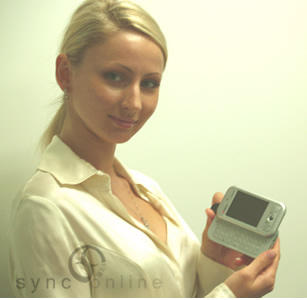
The PPC-6700 is here and the sync factor is off the chart! I can’t remember the last time I was this excited about something that didn’t have a pulse. Before me is the PPC-6700 Pocket PC Phone sporting the new Windows Mobile 5.0 operating system and with Sprint’s high-speed EV-DO network capable of data-download rates up to 700 Kbps makes this device the hottest new communication device available on the planet. Other feature highlights includes speakerphone, built-in camera that takes good still photos and also captures videos. The 1350 mAh lithium battery suppose to keep you in business for up to 3.7 hours of continuous use.
Read more...
The PPC-6700 is here and the sync factor is off the chart! I can’t remember the last time I was this excited about something that didn’t have a pulse. Before me is the PPC-6700 Pocket PC Phone sporting the new Windows Mobile 5.0 operating system and with Sprint’s high-speed EV-DO network capable of data-download rates up to 700 Kbps makes this device the hottest new communication device available on the planet. Other feature highlights includes speakerphone, built-in camera that takes good still photos and also captures videos. The 1350 mAh lithium battery suppose to keep you in business for up to 3.7 hours of continuous use.
The PPC-6700 is powered by a 416-MHz Intel Xscale processor providing enough juice to run numerous applications such as the mobile editions of Internet Explorer, Word, Excel, Outlook, and PowerPoint with out a hiccup. The spacious QWERTY keyboard provides an excellent means of typing up important emails and the landscape view allows much more viewing area. The keyboard lives underneath the screen and easily slides out as needed. The screen automatically rotates from portrait to landscape every time the keyboard is in use. Sliding the keyboard in and out is very addictive; similar to flipping open and shutting the lid of a Zippo. I found myself sliding the keyboard in and out without even noticing it until my wife screamed at me to stop.
One last thing worth mentioning is the price. At $629.99, the PPC-6700 is on par with the Treo 650 yet more expensive than the Blackberry. I’ll go into more details on the comparisons between the PPC-6700 versus the Treo 650 and Blackberry later.
Alright, I had a chance to vent my excitement. I plan to thoroughly put the PPC-6700 through real life situational tests with emphasis on stability, performance as well as its ergonomic design. There will also be a section on Windows Mobile 5.0 as well as other pre-packaged software, connectivity, and battery life. Please check back in a few days for a full review.
Screen shots and walkthrough video PPC-6700
Samsung jumps to fourth place in 2004 consumer chip ranking, says iSuppli
Samsung jumps to fourth place in 2004 consumer chip ranking, says iSuppliSamsung jumps to fourth place in 2004 consumer chip ranking, says iSuppli
Press release; Esther Lam, DigiTimes.com [Thursday 6 October 2005]
Samsung Electronics nearly doubled its sales of consumer-electronics-oriented semiconductors in 2004, using its broad chip portfolio to vault into the market’s s top ranks, according to iSuppli.
The South Korean electronics giant in 2004 saw its consumer chip revenue expand to US$2.1 billion, up 84.2 % from US$1.1 billion in 2003. Samsung advanced to the number four rank among global sellers of consumer-electronics chips in 2004, up from 10th place in 2003. This put Samsung in the same league as the vertically-integrated, Japanese consumer-electronics powerhouses that traditionally have dominated the market, i.e. Toshiba, Sony and Matsushita Electric, which maintained their top-three positions in 2004.
Samsung is best known as a supplier of memory chips, and leads the world in sales of such devices. Indeed, much of the company’s consumer-electronics-chip revenue growth in 2004 was due to a 109.4 % rise in sales of memories to the segment, with its revenue in this area rising to US$932 million, up from US$445 million in 2003. However, Samsung also achieved robust sales growth in other semiconductor product lines, illustrating the company’s drive to become a leader in the consumer-electronics market.
Samsung’ s revenue from sales of general-purpose logic ICs for consumer-electronics products rose by 116.1 % in 2004.
Looking at the markets for chips for specific consumer-electronics products, Samsung in 2004 made strong gains in sales of semiconductors for digital television sets, digital set top boxes and digital still cameras. Samsung also held a commanding lead in sales of semiconductors for MP3 players, controlling 42.2 % of revenue due to shipments of chips for its own MP3 player line and those of other manufacturers.
Press release; Esther Lam, DigiTimes.com [Thursday 6 October 2005]
Samsung Electronics nearly doubled its sales of consumer-electronics-oriented semiconductors in 2004, using its broad chip portfolio to vault into the market’s s top ranks, according to iSuppli.
The South Korean electronics giant in 2004 saw its consumer chip revenue expand to US$2.1 billion, up 84.2 % from US$1.1 billion in 2003. Samsung advanced to the number four rank among global sellers of consumer-electronics chips in 2004, up from 10th place in 2003. This put Samsung in the same league as the vertically-integrated, Japanese consumer-electronics powerhouses that traditionally have dominated the market, i.e. Toshiba, Sony and Matsushita Electric, which maintained their top-three positions in 2004.
Samsung is best known as a supplier of memory chips, and leads the world in sales of such devices. Indeed, much of the company’s consumer-electronics-chip revenue growth in 2004 was due to a 109.4 % rise in sales of memories to the segment, with its revenue in this area rising to US$932 million, up from US$445 million in 2003. However, Samsung also achieved robust sales growth in other semiconductor product lines, illustrating the company’s drive to become a leader in the consumer-electronics market.
Samsung’ s revenue from sales of general-purpose logic ICs for consumer-electronics products rose by 116.1 % in 2004.
Looking at the markets for chips for specific consumer-electronics products, Samsung in 2004 made strong gains in sales of semiconductors for digital television sets, digital set top boxes and digital still cameras. Samsung also held a commanding lead in sales of semiconductors for MP3 players, controlling 42.2 % of revenue due to shipments of chips for its own MP3 player line and those of other manufacturers.
The China Post
The China PostMatsushita, Sharp battling in TV display technologies at electronics show(Updated 03:09 p.m.)
2005/10/6
CHIBA, Japan (AP)
The intensifying battle between the two main technologies in the burgeoning flat-panel TV market _ and their main proponents _ is crystal clear at Japan's annual electronics show this week.
In one corner of the sprawling hall, Matsushita shows off its prototype 50-inch plasma display panel that has the same brightness and clarity achieved so far only in larger models.
Sharp Corp., meanwhile, is pushing its upgraded liquid crystal display televisions that it says aren't fuzzy when viewed from an angle _ a complaint in the past.
Like the competition between the next-generation DVD formats, HD DVD and Blu-ray Disc, also being highlighted at the CEATEC exhibit here in Chiba, just east of Tokyo, the competition between display technologies is heating up with the arrival of high-definition video and broadcast.
Industry experts say people are gradually expected to start switching from conventional cathode ray tube sets, which require far more space, to flat-panel TVs.
That could be the moneymaking opportunity that Japanese electronics makers have been yearning for after seeing their profits battered in recent years from plunging prices and fresh competition from cheaper Taiwanese and South Korean makers.
Matsushita Electric Industrial Co., maker of Panasonic products, has long been considered a leader in the TV industry, but Sharp is emerging as its main rival in the business _ not one-time leader Sony, which is undergoing a huge job cut program to turn around its money-losing business.
"The focus of CEATEC is the flat television," Fumio Ohtsubo, a senior managing director who oversees Matsushita's TV business, said recently. "We're always watching to monitor Sharp's operations."
The annual show, called Combined Exhibition of Advanced Technologies, runs through Saturday.
The two technologies _ LCD and PDP _ each have their strengths and weaknesses.
LCDs have been criticized as less accurate than PDPs in depicting fast-moving images like a soccer ball in flight.
With the latest upgrade, Sharp LCDs respond as quickly as four milliseconds, down from six milliseconds, said Sharp official Satoshi Fujioka, who was demonstrating that the LCD image of chestnuts didn't blur even when scrolled fast across the screen.
Sharp is also showing a new LCD that delivers excellent contrast even in dark places _ a feature that for now gives plasma-display panels a leg up over LCDs. Sharp plans to start offering the technology some time after April 1, targeting professional use in TV studios, where cathode ray tubes still dominate.
Its "megacontrast" technology offers contrast at 1 million to one _ meaning that the brightest spot on the screen is a million times brighter than the darkest spot, according to the Osaka-based manufacturer. LCDs more commonly offer contrast of up to about 1,500 to one, compared with 3,000 or 5,000 to one for plasma displays.
PDPs tend to use more electricity than LCDs, but Matsushita, also based in Osaka, had a display at the show at the Makuhari Messe center, with research showing that power consumption has been cut by half for next-generation PDPs.
John Yang, analyst at Standard & Poor's in Tokyo, believes it's too early to tell which companies will emerge the big winners in the display wars. So far, PDPs are likely to be more popular for larger screens and LCDs for smaller ones.
Due to their technology, LCDs are cheaper to per inch for smaller TVs _ say, smaller than 32 inches _ while PDPs are cheaper per inch for larger sets.
A 32-inch LCD typically sells for around 200,000 yen (US$1,750; €1,500), while a 42-inch PDP sells for around 350,000 yen (US$3,100; €2,600), although prices are affected by other factors such as features and when the product went on sale.
Key to winning would be cost cuts, and how companies can successfully "add value" to a product, be it wood paneling or tie-ups with content, to attract buyers who are willing to pay more, he said.
"With a supply glut next year, the market will wield out the weaker players," Yang said. "It's going to become more and more difficult to add value."
This week's exhibition is also featuring an even newer kind of flat-TV technology called SED, or surface-conduction electron-emitter display, that Japanese electronics maker Toshiba Corp. is developing with Canon Inc., a Japanese camera-maker.
Although no products are yet on the market, a long line formed at the booth, and gasps went up among the crowd at the display, which uses beam-emitting technology similar to current CRT TVs. Toshiba has said it plans to market SED TVs compatible with HD DVD next year.
2005/10/6
CHIBA, Japan (AP)
The intensifying battle between the two main technologies in the burgeoning flat-panel TV market _ and their main proponents _ is crystal clear at Japan's annual electronics show this week.
In one corner of the sprawling hall, Matsushita shows off its prototype 50-inch plasma display panel that has the same brightness and clarity achieved so far only in larger models.
Sharp Corp., meanwhile, is pushing its upgraded liquid crystal display televisions that it says aren't fuzzy when viewed from an angle _ a complaint in the past.
Like the competition between the next-generation DVD formats, HD DVD and Blu-ray Disc, also being highlighted at the CEATEC exhibit here in Chiba, just east of Tokyo, the competition between display technologies is heating up with the arrival of high-definition video and broadcast.
Industry experts say people are gradually expected to start switching from conventional cathode ray tube sets, which require far more space, to flat-panel TVs.
That could be the moneymaking opportunity that Japanese electronics makers have been yearning for after seeing their profits battered in recent years from plunging prices and fresh competition from cheaper Taiwanese and South Korean makers.
Matsushita Electric Industrial Co., maker of Panasonic products, has long been considered a leader in the TV industry, but Sharp is emerging as its main rival in the business _ not one-time leader Sony, which is undergoing a huge job cut program to turn around its money-losing business.
"The focus of CEATEC is the flat television," Fumio Ohtsubo, a senior managing director who oversees Matsushita's TV business, said recently. "We're always watching to monitor Sharp's operations."
The annual show, called Combined Exhibition of Advanced Technologies, runs through Saturday.
The two technologies _ LCD and PDP _ each have their strengths and weaknesses.
LCDs have been criticized as less accurate than PDPs in depicting fast-moving images like a soccer ball in flight.
With the latest upgrade, Sharp LCDs respond as quickly as four milliseconds, down from six milliseconds, said Sharp official Satoshi Fujioka, who was demonstrating that the LCD image of chestnuts didn't blur even when scrolled fast across the screen.
Sharp is also showing a new LCD that delivers excellent contrast even in dark places _ a feature that for now gives plasma-display panels a leg up over LCDs. Sharp plans to start offering the technology some time after April 1, targeting professional use in TV studios, where cathode ray tubes still dominate.
Its "megacontrast" technology offers contrast at 1 million to one _ meaning that the brightest spot on the screen is a million times brighter than the darkest spot, according to the Osaka-based manufacturer. LCDs more commonly offer contrast of up to about 1,500 to one, compared with 3,000 or 5,000 to one for plasma displays.
PDPs tend to use more electricity than LCDs, but Matsushita, also based in Osaka, had a display at the show at the Makuhari Messe center, with research showing that power consumption has been cut by half for next-generation PDPs.
John Yang, analyst at Standard & Poor's in Tokyo, believes it's too early to tell which companies will emerge the big winners in the display wars. So far, PDPs are likely to be more popular for larger screens and LCDs for smaller ones.
Due to their technology, LCDs are cheaper to per inch for smaller TVs _ say, smaller than 32 inches _ while PDPs are cheaper per inch for larger sets.
A 32-inch LCD typically sells for around 200,000 yen (US$1,750; €1,500), while a 42-inch PDP sells for around 350,000 yen (US$3,100; €2,600), although prices are affected by other factors such as features and when the product went on sale.
Key to winning would be cost cuts, and how companies can successfully "add value" to a product, be it wood paneling or tie-ups with content, to attract buyers who are willing to pay more, he said.
"With a supply glut next year, the market will wield out the weaker players," Yang said. "It's going to become more and more difficult to add value."
This week's exhibition is also featuring an even newer kind of flat-TV technology called SED, or surface-conduction electron-emitter display, that Japanese electronics maker Toshiba Corp. is developing with Canon Inc., a Japanese camera-maker.
Although no products are yet on the market, a long line formed at the booth, and gasps went up among the crowd at the display, which uses beam-emitting technology similar to current CRT TVs. Toshiba has said it plans to market SED TVs compatible with HD DVD next year.
Forbes.com - Magazine Article
Forbes.com - Magazine ArticleApple To Unveil Video IPod
Annalisa Burgos, 10.05.05, 5:35 PM ET
In the headlines this afternoon, Apple Computer is expected to unveil a new Video iPod next week. Analysts say Apple will show off the new version of its popular digital-music player and performance upgrades to its Macintosh computers.
U.S. stocks ended lower as investors worried about inflation. The Dow plunged more than 123 points, while the Nasdaq fell 36 and the S&P 500 dropped 18.
The Institute of Supply Management said the U.S. services sector slowed, with its index at 53.3 in September, down from 65 in August. Meanwhile, the index of prices paid rose 14.3 points to 81.4, the highest level and the biggest jump for the index.
Oil prices fell to their lowest level in two months--below $63 per barrel--amid fears that the high cost of gasoline and other fuels is sapping demand.
In company news, Motorola (nyse: MOT - news - people ) is cutting 1,900 jobs. The cell phone maker said the layoffs will come from facilities in more than 20 countries.
Elsewhere, Pfizer (nyse: PFE - news - people ) got a boost after winning approval for its breast cancer drug Aromasin. U.S. regulators OK'd it for treating postmenopausal women already using the drug tamoxifen.
And on the Forbes.com Video Network, Frank Fahrenkopf, CEO of the American Gaming Association, says the gaming industry is doing all it can to help rebuild in the Gulf after Katrina.
That's it for today. Be sure to check out our special reports, and stay logged on to Forbes.com.
Annalisa Burgos, 10.05.05, 5:35 PM ET
In the headlines this afternoon, Apple Computer is expected to unveil a new Video iPod next week. Analysts say Apple will show off the new version of its popular digital-music player and performance upgrades to its Macintosh computers.
U.S. stocks ended lower as investors worried about inflation. The Dow plunged more than 123 points, while the Nasdaq fell 36 and the S&P 500 dropped 18.
The Institute of Supply Management said the U.S. services sector slowed, with its index at 53.3 in September, down from 65 in August. Meanwhile, the index of prices paid rose 14.3 points to 81.4, the highest level and the biggest jump for the index.
Oil prices fell to their lowest level in two months--below $63 per barrel--amid fears that the high cost of gasoline and other fuels is sapping demand.
In company news, Motorola (nyse: MOT - news - people ) is cutting 1,900 jobs. The cell phone maker said the layoffs will come from facilities in more than 20 countries.
Elsewhere, Pfizer (nyse: PFE - news - people ) got a boost after winning approval for its breast cancer drug Aromasin. U.S. regulators OK'd it for treating postmenopausal women already using the drug tamoxifen.
And on the Forbes.com Video Network, Frank Fahrenkopf, CEO of the American Gaming Association, says the gaming industry is doing all it can to help rebuild in the Gulf after Katrina.
That's it for today. Be sure to check out our special reports, and stay logged on to Forbes.com.
Wednesday, October 05, 2005
Google, Sun in Challenge to Microsoft - New York Times
Google, Sun in Challenge to Microsoft - New York TimesOctober 5, 2005
Google, Sun in Challenge to Microsoft
By THE ASSOCIATED PRESS
Filed at 8:27 a.m. ET
MOUNTAIN VIEW, Calif. (AP) -- Google Inc. took a step toward challenging Microsoft Corp.'s dominance of computer software with the announcement Tuesday of a collaboration agreement with Sun Microsystems Inc.
The move could lead to Google offering next-generation word processing, spreadsheet and collaboration tools that would take on Microsoft's industry-leading Office suite of software.
But for now its significance may be mostly as a symbolic shot across Microsoft's bow, signaling Google's intention of attacking the world's biggest software company head on.
Aside from a plan to offer Google's toolbar program with downloads of Java software, details of the agreement were scant. Though it could lead to a new pipeline for Sun software to millions of computers, there was no firm commitment.
Some downplayed the announcement as a publicity stunt that probably would not have occurred had Google CEO Eric Schmidt not spent 14 years of his career working at Sun under CEO Scott McNealy.
The alliance would be a boon for Sun if Google had promised to buy some of the company's sophisticated computers, but no ironclad commitments were announced.
''There really isn't much depth to this partnership,'' said industry analyst Rob Enderle.
''I think Eric is doing this as personal favor for Scott,'' he said. ''It provides a certain amount of press and visibility to Sun when there hasn't been very many positive things going on at the company.''
Sun's shares edged up a penny Tuesday to close at $4.20 on the Nasdaq Stock Market, where Google's shares fell $7.68 to finish at $311. Microsoft's shares lost 52 cents, or 2.04 percent, to close at $24.98.
As part of the agreement, Sun will offer Google's search toolbar with downloads of its free Java software, which is required to run a variety of Web-based applications and works with multiple operating systems.
The two companies, which did not disclose terms of the deal, said they also agreed ''to explore opportunities to promote'' other Sun technologies, including the freely available OpenOffice.
OpenOffice, an offshoot of Sun's StarOffice, is a leading challenger to the ubiquitous Office suite, a major cash cow for Microsoft. Both offer a word processor and spreadsheet among other applications.
''OpenOffice is already an alternative, but if Google gets involved in supporting it, that could be the thing that puts it over the top,'' said Forrester Research analyst John R. Rymer.
Neither McNealy nor Schmidt would say when or how Google might distribute Sun's software. Both said the Google toolbar option for Java downloads -- the toolbar provides quick access to Google search, spell checking and a popup-ad blocker -- is just a first step in a significant agreement.
''We only want to talk about what we're talking about here now ... we expect more,'' McNealy said.
Microsoft did not immediately comment.
OpenOffice could provide a vehicle for Google to diversify its sales, which are driven almost exclusively by online advertising. So-called office productivity software generates more than $10 billion in annual sales, estimated Citigroup analyst Mark Mahaney.
''We believe this creates a potentially interesting new revenue opportunity for Google,'' Mahaney wrote in a research note Tuesday.
The deal could eventually boost the fortunes of programs that work on multiple operating systems, eating into Microsoft's profits from its dominant Windows computing environments.
Increasingly, many of the applications that computer users value most -- such as news and weather tickers -- run as Web services independent of the operating systems on their computers.
Java is a backbone of those Web services, along with Microsoft's .NET architecture.
Since it was launched a decade ago, Java has been used to power Web-based applications, standalone programs, cell phones and other gadgets across a variety of computer operating systems.
A key component of Sun's decade-old Java, its application-running platform, was the source of one of many rifts between Microsoft and Sun over the years.
Sun first sued the world's top software maker in 1997, claiming the Redmond, Wash., company rewrote elements of Java specific to Windows. Later, Microsoft said it would yank Java entirely from its ubiquitous software.
The wrangling ended in spring 2004, when the companies surprised the world with a $1.95 billion settlement and 10-year collaboration agreement.
Both Sun and Google share the common root of Stanford University. Sun -- short for Stanford University Network -- was founded there in the 1980s, while Google got its start there in the 1990s. And one of Sun's co-founders, Andy Bechtolsheim, gave Google's Larry Page and Sergey Brin $100,000 in 1998 to incorporate their young search company.
Sun has lost $4.5 billion since June 2001, although the Santa Clara, Calif.-based company has recently started to show signs of recovery.
While Sun has been struggling, Google's fortunes have steadily risen. Though best known as a search engine, it now offers free e-mail, maps, instant messaging, video and last week announced it wants to provide free Wi-Fi to San Francisco.
------
Google, Sun in Challenge to Microsoft
By THE ASSOCIATED PRESS
Filed at 8:27 a.m. ET
MOUNTAIN VIEW, Calif. (AP) -- Google Inc. took a step toward challenging Microsoft Corp.'s dominance of computer software with the announcement Tuesday of a collaboration agreement with Sun Microsystems Inc.
The move could lead to Google offering next-generation word processing, spreadsheet and collaboration tools that would take on Microsoft's industry-leading Office suite of software.
But for now its significance may be mostly as a symbolic shot across Microsoft's bow, signaling Google's intention of attacking the world's biggest software company head on.
Aside from a plan to offer Google's toolbar program with downloads of Java software, details of the agreement were scant. Though it could lead to a new pipeline for Sun software to millions of computers, there was no firm commitment.
Some downplayed the announcement as a publicity stunt that probably would not have occurred had Google CEO Eric Schmidt not spent 14 years of his career working at Sun under CEO Scott McNealy.
The alliance would be a boon for Sun if Google had promised to buy some of the company's sophisticated computers, but no ironclad commitments were announced.
''There really isn't much depth to this partnership,'' said industry analyst Rob Enderle.
''I think Eric is doing this as personal favor for Scott,'' he said. ''It provides a certain amount of press and visibility to Sun when there hasn't been very many positive things going on at the company.''
Sun's shares edged up a penny Tuesday to close at $4.20 on the Nasdaq Stock Market, where Google's shares fell $7.68 to finish at $311. Microsoft's shares lost 52 cents, or 2.04 percent, to close at $24.98.
As part of the agreement, Sun will offer Google's search toolbar with downloads of its free Java software, which is required to run a variety of Web-based applications and works with multiple operating systems.
The two companies, which did not disclose terms of the deal, said they also agreed ''to explore opportunities to promote'' other Sun technologies, including the freely available OpenOffice.
OpenOffice, an offshoot of Sun's StarOffice, is a leading challenger to the ubiquitous Office suite, a major cash cow for Microsoft. Both offer a word processor and spreadsheet among other applications.
''OpenOffice is already an alternative, but if Google gets involved in supporting it, that could be the thing that puts it over the top,'' said Forrester Research analyst John R. Rymer.
Neither McNealy nor Schmidt would say when or how Google might distribute Sun's software. Both said the Google toolbar option for Java downloads -- the toolbar provides quick access to Google search, spell checking and a popup-ad blocker -- is just a first step in a significant agreement.
''We only want to talk about what we're talking about here now ... we expect more,'' McNealy said.
Microsoft did not immediately comment.
OpenOffice could provide a vehicle for Google to diversify its sales, which are driven almost exclusively by online advertising. So-called office productivity software generates more than $10 billion in annual sales, estimated Citigroup analyst Mark Mahaney.
''We believe this creates a potentially interesting new revenue opportunity for Google,'' Mahaney wrote in a research note Tuesday.
The deal could eventually boost the fortunes of programs that work on multiple operating systems, eating into Microsoft's profits from its dominant Windows computing environments.
Increasingly, many of the applications that computer users value most -- such as news and weather tickers -- run as Web services independent of the operating systems on their computers.
Java is a backbone of those Web services, along with Microsoft's .NET architecture.
Since it was launched a decade ago, Java has been used to power Web-based applications, standalone programs, cell phones and other gadgets across a variety of computer operating systems.
A key component of Sun's decade-old Java, its application-running platform, was the source of one of many rifts between Microsoft and Sun over the years.
Sun first sued the world's top software maker in 1997, claiming the Redmond, Wash., company rewrote elements of Java specific to Windows. Later, Microsoft said it would yank Java entirely from its ubiquitous software.
The wrangling ended in spring 2004, when the companies surprised the world with a $1.95 billion settlement and 10-year collaboration agreement.
Both Sun and Google share the common root of Stanford University. Sun -- short for Stanford University Network -- was founded there in the 1980s, while Google got its start there in the 1990s. And one of Sun's co-founders, Andy Bechtolsheim, gave Google's Larry Page and Sergey Brin $100,000 in 1998 to incorporate their young search company.
Sun has lost $4.5 billion since June 2001, although the Santa Clara, Calif.-based company has recently started to show signs of recovery.
While Sun has been struggling, Google's fortunes have steadily risen. Though best known as a search engine, it now offers free e-mail, maps, instant messaging, video and last week announced it wants to provide free Wi-Fi to San Francisco.
------
Print Story: South Korean parliament grills Samsung executives on Yahoo! News
Print Story: South Korean parliament grills Samsung executives on Yahoo! News South Korean parliament grills Samsung executives
Wed Oct 5, 5:07 AM ET
South Korea's parliament grilled top executives from Samsung Group over unpaid debts and allegations that the group was resisting corporate reform, lawmakers said.
Lawmakers also questioned corporate governance at the country's largest conglomerate following the conviction Tuesday of two executives for illegally handling the father-to-son transfer of ownership a decade ago.
Top Samsung Group executives, including Chairman Lee Kun-Hee, were asked to testify at the hearing.
Lee, 64, failed to appear, however. He left for the United States citing medical reasons before the parliamentary summons was issued last week and has not returned home, the company said.
Instead parliament's Finance and Economy Committee heard from other executives including Yoon Jong-Yong, vice chairman of Samsung Electronics, the world's largest memory chip maker.
Lawmakers questioned them about huge debts left unpaid by the group's bankrupt Samsung Motors, a victim of the Asian financial crisis of 1997.
Samsung Group is at odds with Samsung Motor's creditors who are claiming unpaid debts estimated at 4.7 trillion won (4.6 billion dollars).
"Samsung Motor was unwilling to pay it back from the beginning," Park Young-Sun, a lawmaker of the ruling Uri Party said.
Yoon insisted in turn Samsung had no legal obligation to pay the debt.
"Chairman Lee is not legally responsible (for the debt payment). There could be an ethical responsibility, if any," Yoon said.
Yoon said creditors had tried to strong-arm Samsung into paying off the auto firm's debts by threatening to withold futher financing from the group at a time when it was weak as a result of the financial crisis.
On corporate governance, lawmakers accused Samsung of defying a government drive for reform intended to reduce cross-shareholdings and so family control over the companies.
Sim Sang-Jeong, an opposition Democratic Labor Party lawmaker, said the "cross-shareholdings among Samsung Group units should be addressed more than anything else" by the government's reform drive.
Under a 1997 law, financial units belonging to the conglomerates, or chaebol, are banned from owning more than a five percent stake in non-financial affiliates of their parent groups without government permission.
The government is drawing up amendments compelling conglomerates to dispose of all stock holdings that exceed the five percent limit in an effort to curb family control over the groups and better protect other investors.
Samsung has publicly objected to those regulations, claiming they would make it and other companies more vulnerable to hostile takeovers by foreign investors.
Two Samsung executives were convicted Tuesday of illegally handling the father-to-son transfer of ownership at Samsung Everland, the group's holding company, to bolster the family-run corporate structure.
In a 1996 stock transaction, Samsung Everland helped group chairman Lee pass on control of the empire to his son, Lee Jae-Yong.
Lee Jae-Yong bought 1.25 million Samsung Everland shares at 7,700 won per share -- far lower than the lowest trading price of 85,000 won at the time -- via an issue of convertible bonds.
Samsung Everland, an amusement park operator, controls the group through a web of ownership that includes a 19.3 percent controlling stake in Samsung Life Insurance and major stakes in other group units.
Critics say conglomerate owners have engaged in illegal intra-group transactions, transferring wealth to their offspring or manipulating share trading to avoid inheritance taxes.
Wed Oct 5, 5:07 AM ET
South Korea's parliament grilled top executives from Samsung Group over unpaid debts and allegations that the group was resisting corporate reform, lawmakers said.
Lawmakers also questioned corporate governance at the country's largest conglomerate following the conviction Tuesday of two executives for illegally handling the father-to-son transfer of ownership a decade ago.
Top Samsung Group executives, including Chairman Lee Kun-Hee, were asked to testify at the hearing.
Lee, 64, failed to appear, however. He left for the United States citing medical reasons before the parliamentary summons was issued last week and has not returned home, the company said.
Instead parliament's Finance and Economy Committee heard from other executives including Yoon Jong-Yong, vice chairman of Samsung Electronics, the world's largest memory chip maker.
Lawmakers questioned them about huge debts left unpaid by the group's bankrupt Samsung Motors, a victim of the Asian financial crisis of 1997.
Samsung Group is at odds with Samsung Motor's creditors who are claiming unpaid debts estimated at 4.7 trillion won (4.6 billion dollars).
"Samsung Motor was unwilling to pay it back from the beginning," Park Young-Sun, a lawmaker of the ruling Uri Party said.
Yoon insisted in turn Samsung had no legal obligation to pay the debt.
"Chairman Lee is not legally responsible (for the debt payment). There could be an ethical responsibility, if any," Yoon said.
Yoon said creditors had tried to strong-arm Samsung into paying off the auto firm's debts by threatening to withold futher financing from the group at a time when it was weak as a result of the financial crisis.
On corporate governance, lawmakers accused Samsung of defying a government drive for reform intended to reduce cross-shareholdings and so family control over the companies.
Sim Sang-Jeong, an opposition Democratic Labor Party lawmaker, said the "cross-shareholdings among Samsung Group units should be addressed more than anything else" by the government's reform drive.
Under a 1997 law, financial units belonging to the conglomerates, or chaebol, are banned from owning more than a five percent stake in non-financial affiliates of their parent groups without government permission.
The government is drawing up amendments compelling conglomerates to dispose of all stock holdings that exceed the five percent limit in an effort to curb family control over the groups and better protect other investors.
Samsung has publicly objected to those regulations, claiming they would make it and other companies more vulnerable to hostile takeovers by foreign investors.
Two Samsung executives were convicted Tuesday of illegally handling the father-to-son transfer of ownership at Samsung Everland, the group's holding company, to bolster the family-run corporate structure.
In a 1996 stock transaction, Samsung Everland helped group chairman Lee pass on control of the empire to his son, Lee Jae-Yong.
Lee Jae-Yong bought 1.25 million Samsung Everland shares at 7,700 won per share -- far lower than the lowest trading price of 85,000 won at the time -- via an issue of convertible bonds.
Samsung Everland, an amusement park operator, controls the group through a web of ownership that includes a 19.3 percent controlling stake in Samsung Life Insurance and major stakes in other group units.
Critics say conglomerate owners have engaged in illegal intra-group transactions, transferring wealth to their offspring or manipulating share trading to avoid inheritance taxes.
Tuesday, October 04, 2005
Geek Zone > Sun and Google To Work In Development Together
Sun and Google to Work in Development TogetherNews : Computing, posted 5-OCT-2005 05:41
Sun and Google have signed and agreement that will see the establishment of a relationship to promote and distribute their technologies together. As part of the agreement, Sun will include the Google Toolbar as an option in downloads of the Java Runtime Environment from Java.com, Sun's showcase and portal for Java technology enthusiasts and developers. The new functionality will be available soon. Users around the Internet were however expecting something new, possibly the firm announcement of a web-based version of OpenOffice, open source productivity suite of office software competing with Microsoft Office. However the announcement only hints on future collaboration between the companies on projects like OpenOffice.org. "As a leader in free and open source software, Sun has long recognized that network innovation is vital to the evolution of the global economy," said Scott McNealy, chief executive officer, Sun Microsystems. "Working with Google will make our technologies available more broadly, increase options for users, lower barriers, and expand participation worldwide."
Sun and Google have signed and agreement that will see the establishment of a relationship to promote and distribute their technologies together. As part of the agreement, Sun will include the Google Toolbar as an option in downloads of the Java Runtime Environment from Java.com, Sun's showcase and portal for Java technology enthusiasts and developers. The new functionality will be available soon. Users around the Internet were however expecting something new, possibly the firm announcement of a web-based version of OpenOffice, open source productivity suite of office software competing with Microsoft Office. However the announcement only hints on future collaboration between the companies on projects like OpenOffice.org. "As a leader in free and open source software, Sun has long recognized that network innovation is vital to the evolution of the global economy," said Scott McNealy, chief executive officer, Sun Microsystems. "Working with Google will make our technologies available more broadly, increase options for users, lower barriers, and expand participation worldwide."
BBC NEWS | Technology | Web helps criminals trap victims
BBC NEWS | Technology | Web helps criminals trap victims Web helps criminals trap victims
Malicious hackers and hi-tech criminals are changing tactics in a bid to outwit security firms.
Statistics show that tech-savvy criminals are starting to turn away from e-mailed viruses to webpages to snare their victims.
Also, say security firms, criminals are using spyware to get hold of personal data they can sell or use themselves.
Fake programs that pose as proper products or security updates are on the rise.
Tactical shift
Monthly statistics on the threats facing web users are showing a steep decline in the traditional line up of malicious e-mail viruses.
Before now many virus writers have used mass mailed messages that spread viruses by either tricking people into opening the message or by exploiting bugs in Microsoft's Outlook program.
But as the creators of these malicious programs increasingly look for a financial return, they are turning to websites, worms and spyware programs to do the work.
"More and more malicious code is appearing in web traffic as opposed to e-mail," said Mark Sunner, chief technology officer at MessageLabs.
For instance, said Mr Sunner, many phishing attacks use fake websites to try to steal login details and personal information rather than just rely on people filling in fields on a fake mailed message.
While statistics on top net threats gathered by security firms Sophos and Kasperksy Labs reveal a list dominated by e-mail worms, such as Netsky and Mytob, also starting to appear in large numbers are spyware programs.
Once installed these programs bombard users with unwanted adverts or surreptitiously gather data about browsing habits or simply steal login information.
Although people can fall victim to many of these spyware programs when they install popular software such as file-sharing applications, others install themselves if a users is unlucky enough to visit the wrong part of the web.
"Now that large-scale nets of infected hosts [botnets] have been well established for a while, the commercial activities of their owners are flourishing - the two most lucrative ones being spam and phish relaying and aggressive seeding of spyware," said Guillaume Lovet, European spokesman for Fortinet.
Also starting to pop up more frequently were fake programs that either pose as legitimate security utilities or updates for key programs. Regular entrants on lists of security threats ate fake updates that purportedly come from Microsoft.
Users are being urged to keep anti-virus software up to date and regularly use reliable anti-spyware programs such as Spybot and Ad Aware.
Story from BBC NEWS:
Malicious hackers and hi-tech criminals are changing tactics in a bid to outwit security firms.
Statistics show that tech-savvy criminals are starting to turn away from e-mailed viruses to webpages to snare their victims.
Also, say security firms, criminals are using spyware to get hold of personal data they can sell or use themselves.
Fake programs that pose as proper products or security updates are on the rise.
Tactical shift
Monthly statistics on the threats facing web users are showing a steep decline in the traditional line up of malicious e-mail viruses.
Before now many virus writers have used mass mailed messages that spread viruses by either tricking people into opening the message or by exploiting bugs in Microsoft's Outlook program.
But as the creators of these malicious programs increasingly look for a financial return, they are turning to websites, worms and spyware programs to do the work.
"More and more malicious code is appearing in web traffic as opposed to e-mail," said Mark Sunner, chief technology officer at MessageLabs.
For instance, said Mr Sunner, many phishing attacks use fake websites to try to steal login details and personal information rather than just rely on people filling in fields on a fake mailed message.
While statistics on top net threats gathered by security firms Sophos and Kasperksy Labs reveal a list dominated by e-mail worms, such as Netsky and Mytob, also starting to appear in large numbers are spyware programs.
Once installed these programs bombard users with unwanted adverts or surreptitiously gather data about browsing habits or simply steal login information.
Although people can fall victim to many of these spyware programs when they install popular software such as file-sharing applications, others install themselves if a users is unlucky enough to visit the wrong part of the web.
"Now that large-scale nets of infected hosts [botnets] have been well established for a while, the commercial activities of their owners are flourishing - the two most lucrative ones being spam and phish relaying and aggressive seeding of spyware," said Guillaume Lovet, European spokesman for Fortinet.
Also starting to pop up more frequently were fake programs that either pose as legitimate security utilities or updates for key programs. Regular entrants on lists of security threats ate fake updates that purportedly come from Microsoft.
Users are being urged to keep anti-virus software up to date and regularly use reliable anti-spyware programs such as Spybot and Ad Aware.
Story from BBC NEWS:
Monday, October 03, 2005
Toshiba Samsung HD DVD drive for laptops - Engadget - www.engadget.com
Toshiba Samsung HD DVD drive for laptops - Engadget - www.engadget.comToshiba Samsung HD DVD drive for laptops
Posted Oct 3, 2005, 5:30 AM ET by Liam McNulty
Related entries: Home Entertainment, Laptops, Peripherals
Toshiba Samsung HD DVD laptop drive
There was plenty of talk about HD DVD last week, and it appears at least something tangible came out of it: Toshiba Samsung Storage will start shipping samples of the world’s first slimline HD DVD drive to vendors before the end of the year. The drive supports writing to all flavors of CD and DVD, but HD DVD support remains playback-only, at a whopping 1X. At least it’s a start.
Posted Oct 3, 2005, 5:30 AM ET by Liam McNulty
Related entries: Home Entertainment, Laptops, Peripherals
Toshiba Samsung HD DVD laptop drive
There was plenty of talk about HD DVD last week, and it appears at least something tangible came out of it: Toshiba Samsung Storage will start shipping samples of the world’s first slimline HD DVD drive to vendors before the end of the year. The drive supports writing to all flavors of CD and DVD, but HD DVD support remains playback-only, at a whopping 1X. At least it’s a start.
BBC NEWS | Technology | US school swaps books for bytes
BBC NEWS | Technology | US school swaps books for bytes US school swaps books for bytes
A school in Arizona, US, has thrown out its paper-based text books and is relying solely on laptops and digital material to teach its pupils.
Empire High School is one of a band of schools which is taking computer technology out of the classroom and into students' bags.
Calvin Baker, chief superintendent of the Vail School district, told BBC World Service programme Go Digital that it has not signalled the total demise of text books.
"There are no text books other than a couple on the shelf for teachers to use as resource," he explains.
"We still have a library - we are not anti-books. We have a library and we encourage students to use it, but the primary delivery of instruction materials is being done through the laptops."
The school joins many other educational institutions which are embracing technologies, such as iPods and laptops, and trusting students to use them appropriately.
Money routing
Providing all the pupils with Apple iBooks did not dent the school's budget as much as might be expected. But part of that is down to the school having been newly built.
The money that was budgeted to buy text books, which was about $500 a student, was spent instead on the laptops.
"Our laptops cost is about $800 per pupil. Our net cost is probably $100 to $200 more than if we had used text books," he says.
By giving all the students a laptop computer, the school has done away with computer laboratories too.
[Music's] a very valuable part of their life, and that is where their collection is, and so they take pretty good care of it [the laptop] just because it is something that is personally important to them
Calvin Baker, Vale School district
The response from the teachers and the pupils alike has been very positive, according to Mr Baker. "Every class is a little bit different," he explains.
"Some classes are relying primarily on a service, where you need a password to get to it. Some classes' teachers are using electronic text books as a resource - not as a primary tool but as a resource and then a lot of our classes are relying very heavily on simply free material that is available on the internet."
One of the big advantages to this approach, he says, is that teachers have a lot more opportunity to choose material that is particularly relevant to that subject.
"When you are using or selecting a text book, it is an all or nothing package. The beauty of the internet is that it allows teachers for every unit to go out and pick the material that they believe is absolutely relevant for that particular topic."
Risky business?
But providing every student with their own valuable bit of kit such as a laptop might be seen as risky by some. Mr Baker thinks that by allowing the pupils to keep their music on the machines has meant they see the technology in a different way.
"That's a very valuable part of their life, and that is where their collection is, and so they take pretty good care of it just because it is something that is personally important to them."
The school also ensures there are no hi-tech excuses for not doing homework. "The dog ate it" used to be the Monday morning cry. But, with a laptop as a textbook, there are a host of other excuses they could employ, such as "the hard drive crashed".
"That's a hard one to use because everything is backed up continually on our server at school," explains Mr Baker.
"But we have found that the laptops have not changed their basic human nature, so yes, students still figure out ways to come up with excuses for not having their homework in."
Last year, a leading UK charity, Citizens Online, called on the UK government to provide laptop computers for every UK schoolchild by 2010.
Story from BBC NEWS:
A school in Arizona, US, has thrown out its paper-based text books and is relying solely on laptops and digital material to teach its pupils.
Empire High School is one of a band of schools which is taking computer technology out of the classroom and into students' bags.
Calvin Baker, chief superintendent of the Vail School district, told BBC World Service programme Go Digital that it has not signalled the total demise of text books.
"There are no text books other than a couple on the shelf for teachers to use as resource," he explains.
"We still have a library - we are not anti-books. We have a library and we encourage students to use it, but the primary delivery of instruction materials is being done through the laptops."
The school joins many other educational institutions which are embracing technologies, such as iPods and laptops, and trusting students to use them appropriately.
Money routing
Providing all the pupils with Apple iBooks did not dent the school's budget as much as might be expected. But part of that is down to the school having been newly built.
The money that was budgeted to buy text books, which was about $500 a student, was spent instead on the laptops.
"Our laptops cost is about $800 per pupil. Our net cost is probably $100 to $200 more than if we had used text books," he says.
By giving all the students a laptop computer, the school has done away with computer laboratories too.
[Music's] a very valuable part of their life, and that is where their collection is, and so they take pretty good care of it [the laptop] just because it is something that is personally important to them
Calvin Baker, Vale School district
The response from the teachers and the pupils alike has been very positive, according to Mr Baker. "Every class is a little bit different," he explains.
"Some classes are relying primarily on a service, where you need a password to get to it. Some classes' teachers are using electronic text books as a resource - not as a primary tool but as a resource and then a lot of our classes are relying very heavily on simply free material that is available on the internet."
One of the big advantages to this approach, he says, is that teachers have a lot more opportunity to choose material that is particularly relevant to that subject.
"When you are using or selecting a text book, it is an all or nothing package. The beauty of the internet is that it allows teachers for every unit to go out and pick the material that they believe is absolutely relevant for that particular topic."
Risky business?
But providing every student with their own valuable bit of kit such as a laptop might be seen as risky by some. Mr Baker thinks that by allowing the pupils to keep their music on the machines has meant they see the technology in a different way.
"That's a very valuable part of their life, and that is where their collection is, and so they take pretty good care of it just because it is something that is personally important to them."
The school also ensures there are no hi-tech excuses for not doing homework. "The dog ate it" used to be the Monday morning cry. But, with a laptop as a textbook, there are a host of other excuses they could employ, such as "the hard drive crashed".
"That's a hard one to use because everything is backed up continually on our server at school," explains Mr Baker.
"But we have found that the laptops have not changed their basic human nature, so yes, students still figure out ways to come up with excuses for not having their homework in."
Last year, a leading UK charity, Citizens Online, called on the UK government to provide laptop computers for every UK schoolchild by 2010.
Story from BBC NEWS:
Subscribe to:
Posts (Atom)